UBUHANZI
UBWIZA N'UBUZIMA
UBUKORIKORI
UMUCO N'AMATEKA
IMYIDAGADURO
IBIDUKIKIJE
IBIRIBWA N'IBINYOBWA
UBWUBATSI BUSUBIRA INYUMA
UBUMENYI
SIPORO
IKORANABUHANGA
IBYAMBARWA


The Pivot-Point Can Opener: A Spike at the Centre, a Blade Set to the Size
A knife driven round a can top wanders, and leaves a ragged hole of no particular size.
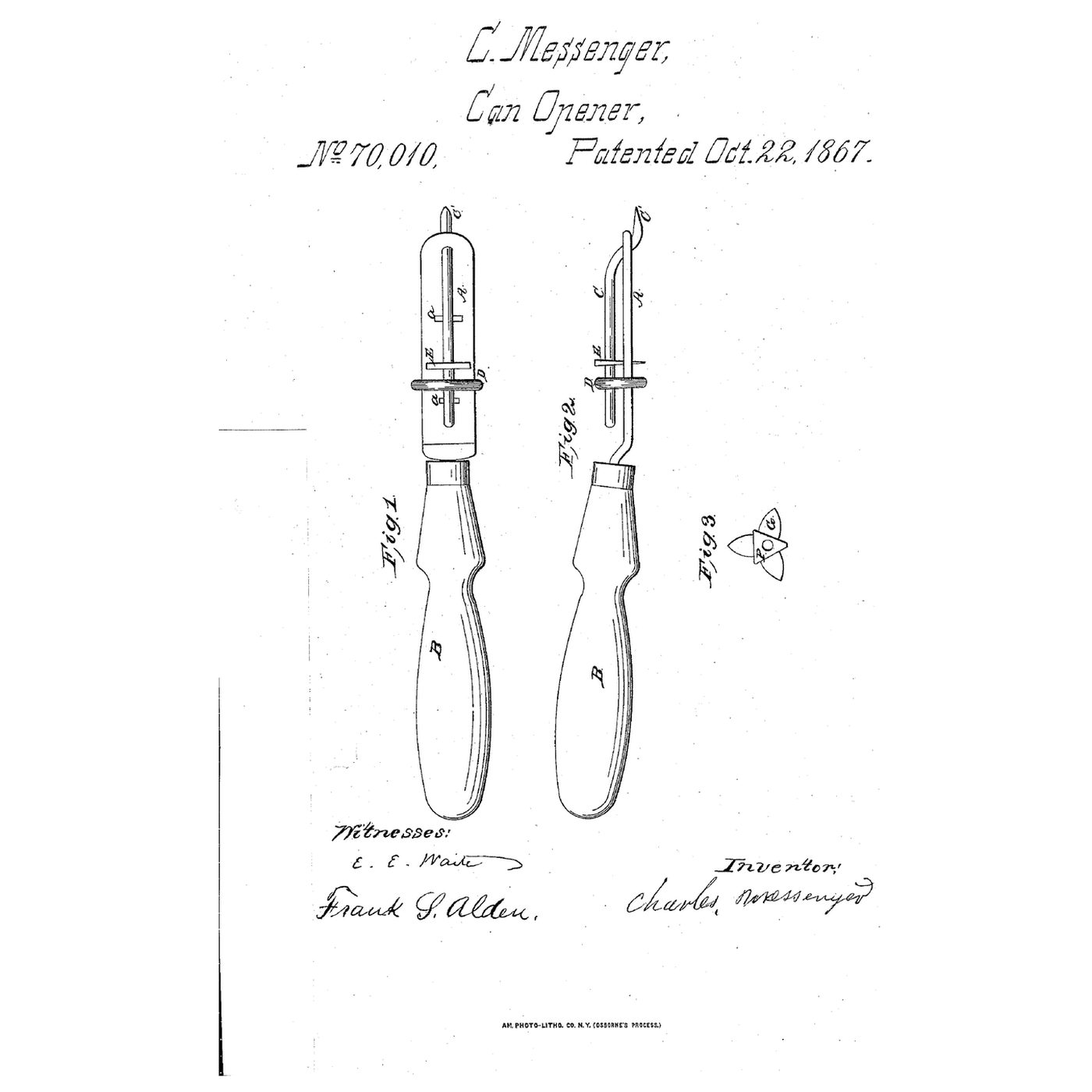
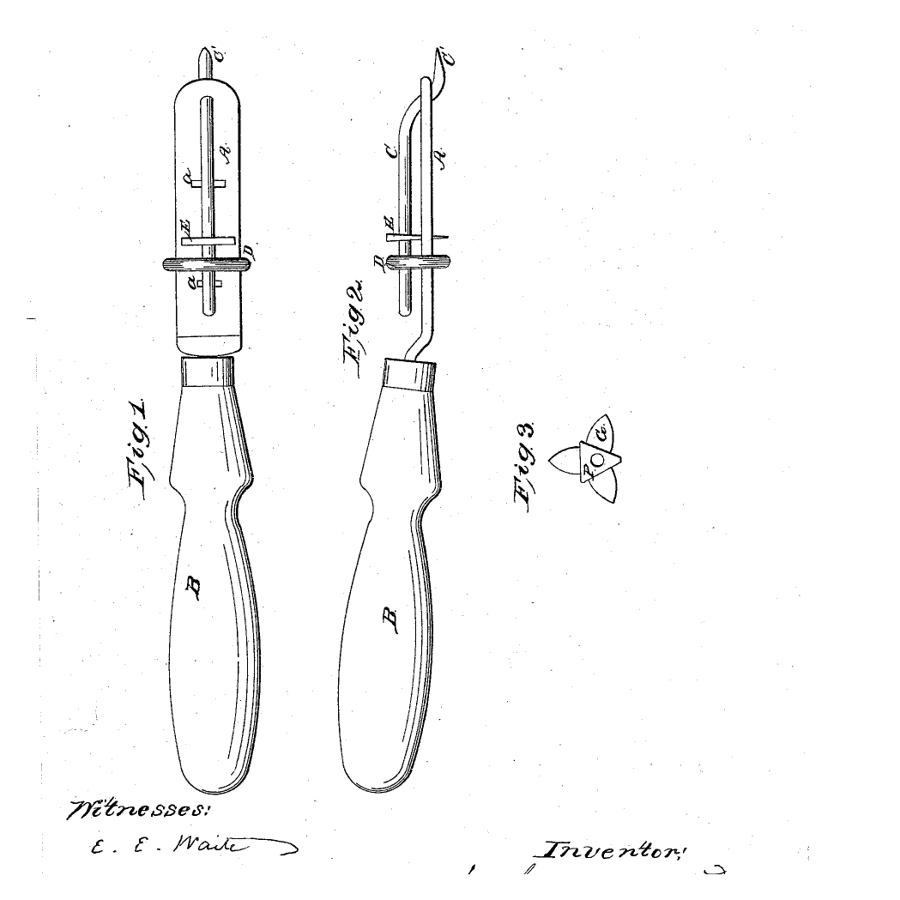
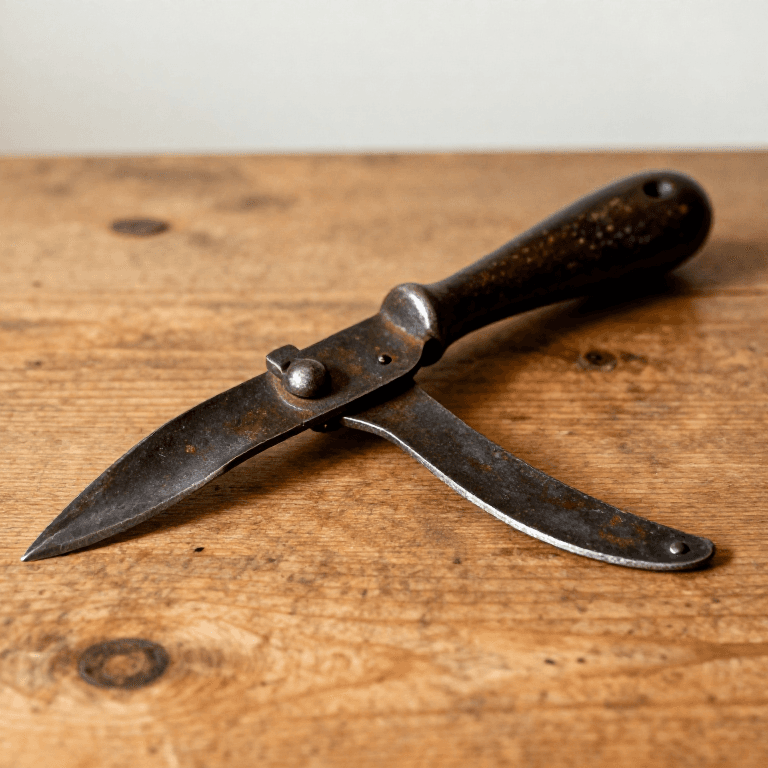
Charles Messenger of Cleveland, Ohio, received US 70,010, dated 22 October 1867, for a tool for opening sheet-metal cans: a plate fixed in a handle, a pointed rod at its end thrust through the centre of the top as a pivot, and a blade slipped on the rod through one of several holes in the plate, held by a ring; turning the handle round cuts a round hole, small or large.
This rung works out the hand force for each hole size, then builds the plate, pivot and blade from steel and opens a can.
Hagati
About 3 hours
Amabwiriza
1
1
Hole size and hand force
Hole size and hand force
Gupakira ikaye ya Jupyter…
2
2
A turning cutter before it
A turning cutter before it
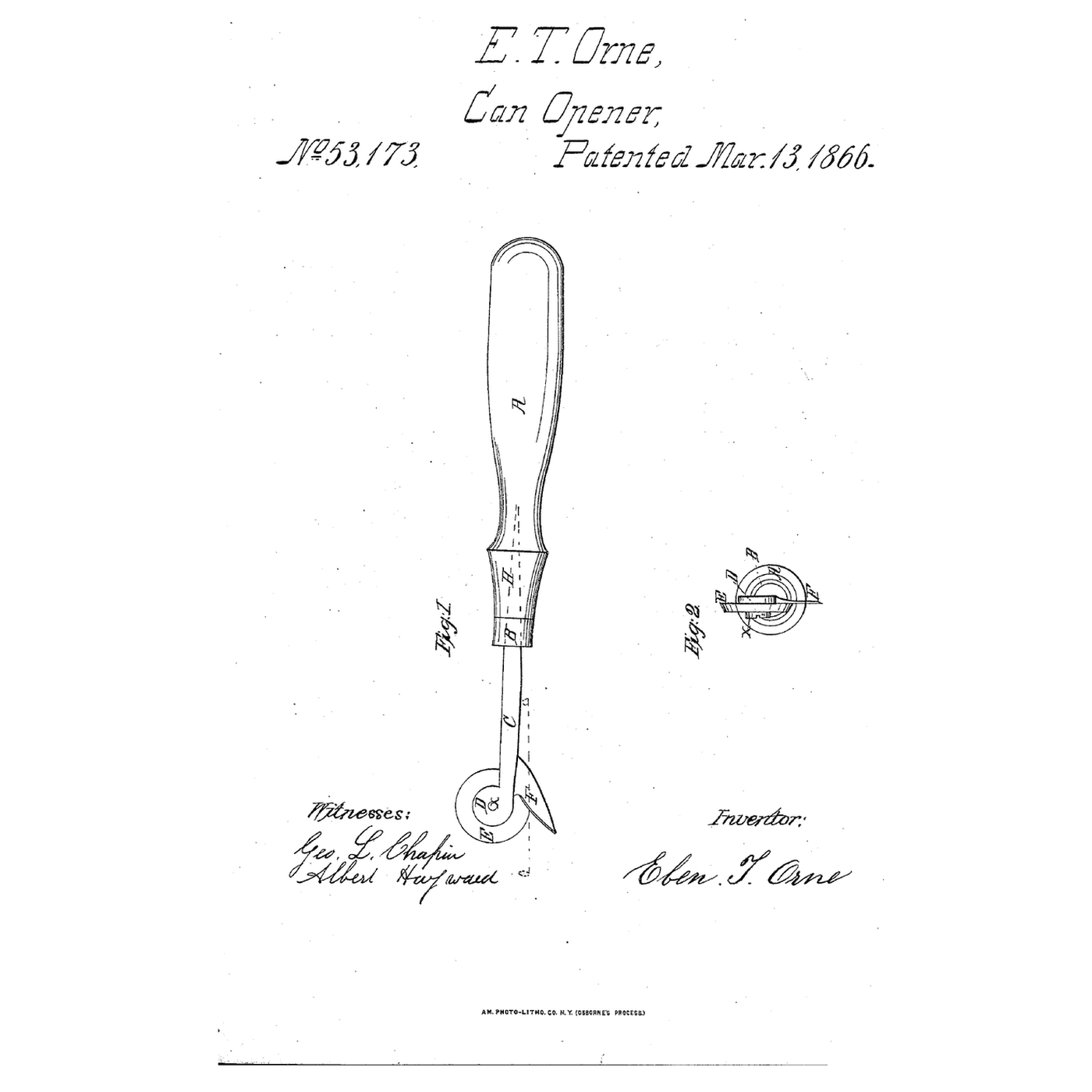
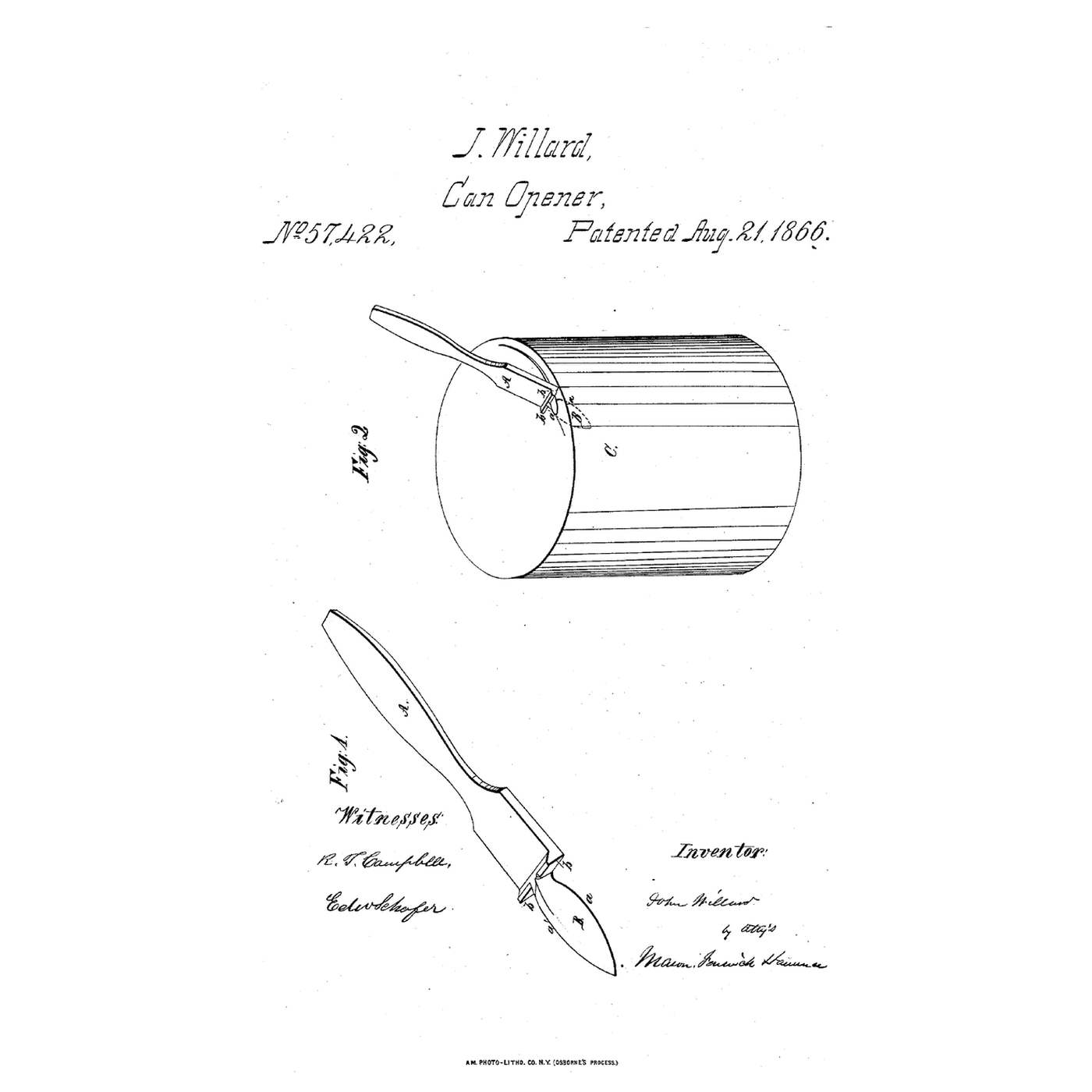
The embedded blueprint cuts tin with a turning wheel against a fixed cutter. Messenger turns the whole tool round a centre spike.
3
3
Read US 70,010
Read US 70,010
"The apparatus is held in the right hand, and the point C' thrust through the centre of the top of the can. The handle is then brought down so as to cause the blade to penetrate the cover; the instrument is turned around the circumference of the top, the point acting as a pivot, and the handle as a lever; the blade, as the instrument turns, will cut out a round hole through which the contents of the can may be emptied."
4
4
Make the plate
Make the plate
Cut 90 mm of 25 × 3 mm flat bar. Drill a 5 mm hole 6 mm from one end for the rod, and three 4 × 8 mm slots at 30, 45 and 60 mm from it for the blade. File the slots square.
Ibikoresho by'iyi ntambwe:
 Umurongo ugororotse w'icyuma cyoroshye1 igice
Ibikoresho bikenewe:
 Umucumita w'Ibyuma
 Ifatiro ry'Ameza
 Igicukuzi cyo Gushyira Ikimenyetso
 Icyuma Cyivumbura Kidafite Insinga
 Ibyuma Byinshi byo Gucukura
 Ikusanyirizo ry'Amakariso Mato
5
5
Make the rod and blade
Make the rod and blade
Cut 100 mm of 5 mm steel rod, file one end to a sharp point, and thread the other M5. Cut the blade from flat bar, drill it for the rod, and file its lower end to a cutting edge.
Ibikoresho by'iyi ntambwe:
 Umurongo Uzengurutse w'Icyuma Cyoroshye1 igiceUmurongo ugororotse w'icyuma cyoroshye1 igice
Ibikoresho bikenewe:
Umucumita w'Ibyuma Amakariso (Ikariso ry'Intoki)
 Agakoresho ko gukata imizingo y'ibyumaIcyuma Cyivumbura Kidafite InsingaIbyuma Byinshi byo Gucukura
 Ibuye ryo gutyaza
6
6
Assemble
Assemble
Push the rod through the plate's end hole so the point stands 12 mm below. Slip the blade on the rod and down through a slot; hold both with a nut on the rod's thread. Fit the plate into a hardwood handle with epoxy.
Ibikoresho by'iyi ntambwe:
 Umupira w'Impande Esheshatu1 igice
 Udukoni tw'ibiti bikomeye1 igice
 Epoksi y'Ibice Bibiri1 igice
Ibikoresho bikenewe:
Icyuma Cyivumbura Kidafite InsingaIbyuma Byinshi byo Gucukura Ipfundo Rifite Umunwa Uringaniye
7
7
The patent drawing
The patent drawing
US 70,010 drawing sheet, public domain (expired patent).
8
8
Open a can at two sizes
Open a can at two sizes
Stand a sealed can on the kitchen scale. Thrust the point into the centre, bring the handle down and turn it round; read the peak load and time a full circle. Move the blade to another slot and repeat.
Ibikoresho by'iyi ntambwe:
 Ikopo ry'icyuma1 igice
Ibikoresho bikenewe:
 Iminzani ya Digitale yo mu Gikoni
 Isaha yo Guhagarika
 Uturindantoki tw'uruhu tw'akazi
9
9
A cutter that wanders, tears or slips
A cutter that wanders, tears or slips
Pivot-point can opener troubleshooting.
Flow
Loading...
10
10
History and honest limits
History and honest limits
**Charles Messenger** of Cleveland, Ohio, received US 70,010, dated 22 October 1867, for opening oyster, paint and fruit cans. The ring slides on the rod and can be removed to change the blade; a knife with radial arms, each with two sharp edges, gives a spare edge when one is dull. His claim covers the rod, blade and ring in combination with the plate.
**Honest limits.** A nut stands in for his sliding ring, and an unhardened blade for a steel one. Your loads and times are the result.
Ibikoresho
6- Umwanya
- Umwanya
- 1 igiceUmwanya
- 1 igiceUmwanya
- 1 igiceUmwanya
- 1 igiceUmwanya
Ibikoresho bikenewe
13- Umwanya
- Umwanya
- 1 vendor sell this, none ship to you yetUmwanya
- Umwanya
- Umwanya
- Umwanya
Iki gishushanyo gikora
Blueprint zijyanye
Izi blueprint zisangira ubumenyi — uburyo, ibikoresho cyangwa amahame
CC0 Umurenge rusange
Iyi blueprint yasohowe munsi ya CC0. Ushobora gukoporora, guhindura, gukwirakwiza no gukoresha nta kwemererwa.
Shyigikira Umuremyi ugura ibicuruzwa binyuze muri Blueprint ye Komisiyo y'Umuremyi byashyizweho n'Abacuruzi, cyangwa kora verisiyo nshya y'iyi Blueprint ukayinjiza nk'isano muri Blueprint yawe kugira ngo musangire inyungu.