UBUHANZI
UBWIZA N'UBUZIMA
UBUKORIKORI
UMUCO N'AMATEKA
IMYIDAGADURO
IBIDUKIKIJE
IBIRIBWA N'IBINYOBWA
UBWUBATSI BUSUBIRA INYUMA
UBUMENYI
SIPORO
IKORANABUHANGA
IBYAMBARWA
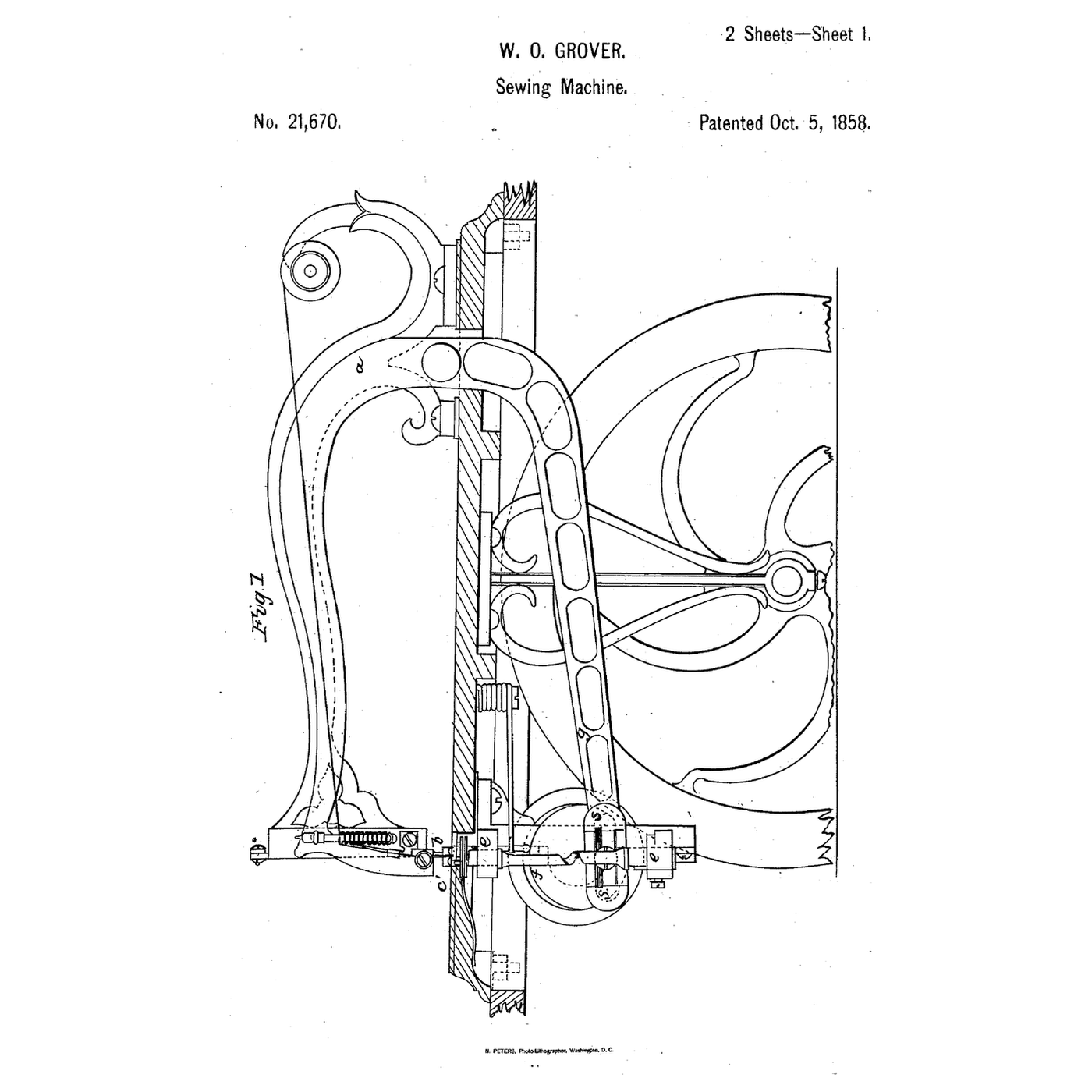


The Twisted-Shaft Needle Rocker: A Straight Push That Swings the Needle, Then Holds It Still
A sewing machine's curved needle or looper must swing through its arc at the right moment, then stand still while the other needle passes, and a crank or cam that does this is noisy and wears.
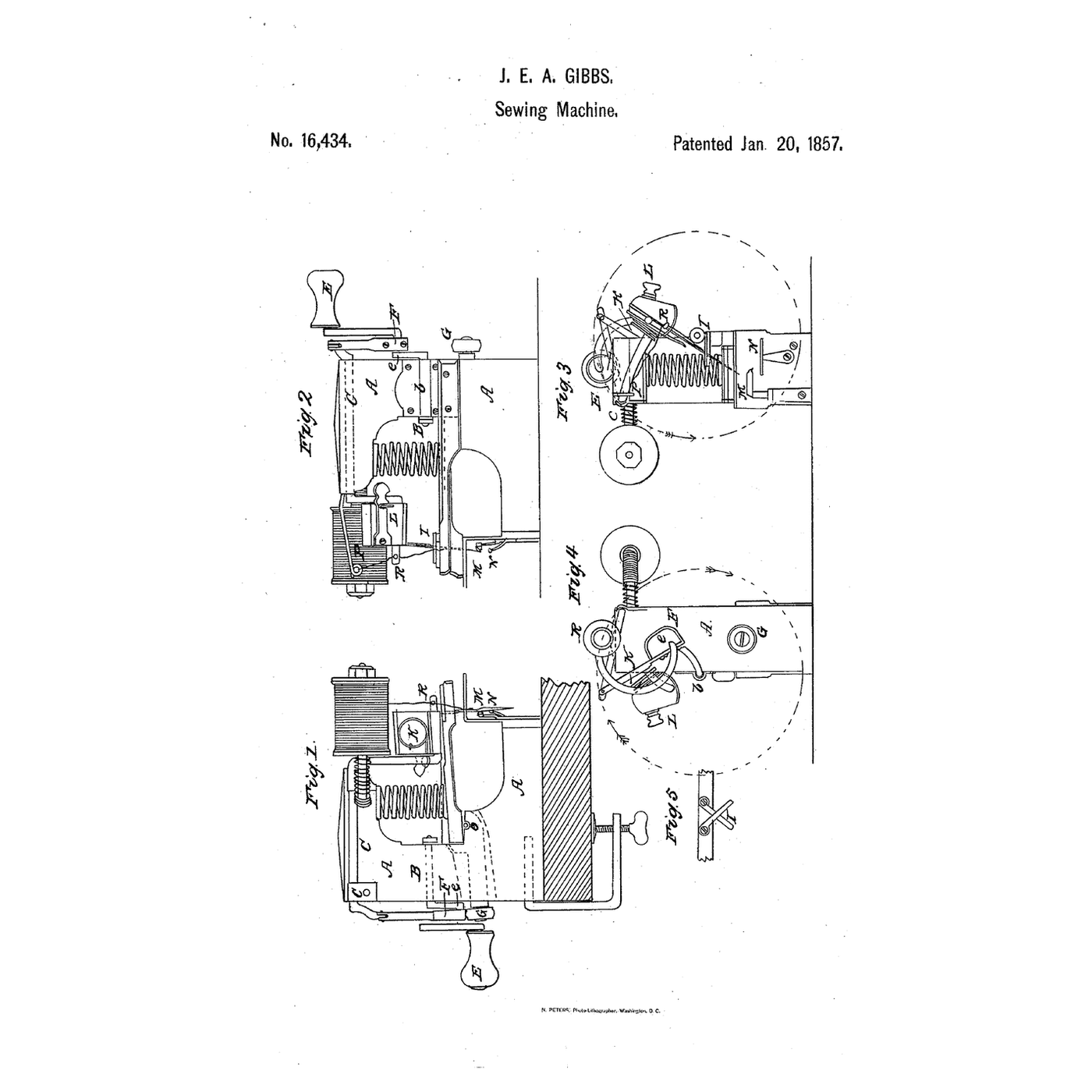
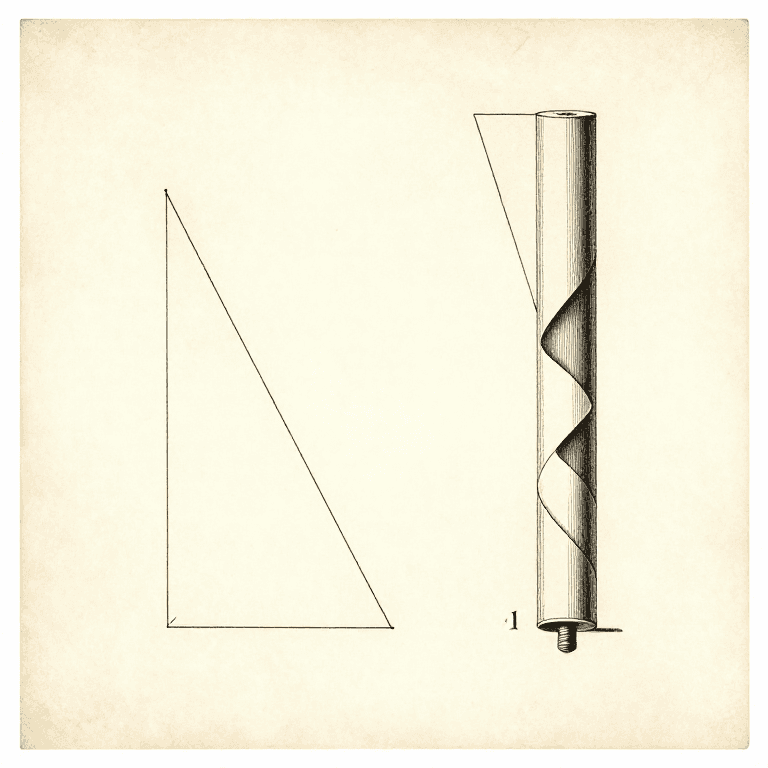
W. O. Grover of Boston received US 21,670, dated 5 October 1858, for "actuating a curved needle, looper, or hooker-on having an interrupted vibratory motion by means of the combination of an irregular-shaped spiral shaft with a reciprocating driver". The needle's shaft is flat at its top and bottom and cut between them like an American auger or gimlet; a driver moving up and down carries pieces of watch or clock spring that bear on the shaft, so it turns while the springs pass the screw and rests while they lie on the flats. Layers of rawhide or leather between the springs quiet the rattle and hold oil.
This rung works out the swing and the pause, then twists a flat bar with straight ends, mounts it with a sliding driver, and counts the swing and the rest.
Hejuru
About 6 hours
Amabwiriza
1
1
Swing and pause
Swing and pause
Gupakira ikaye ya Jupyter…
2
2
A vibrating needle before it
A vibrating needle before it
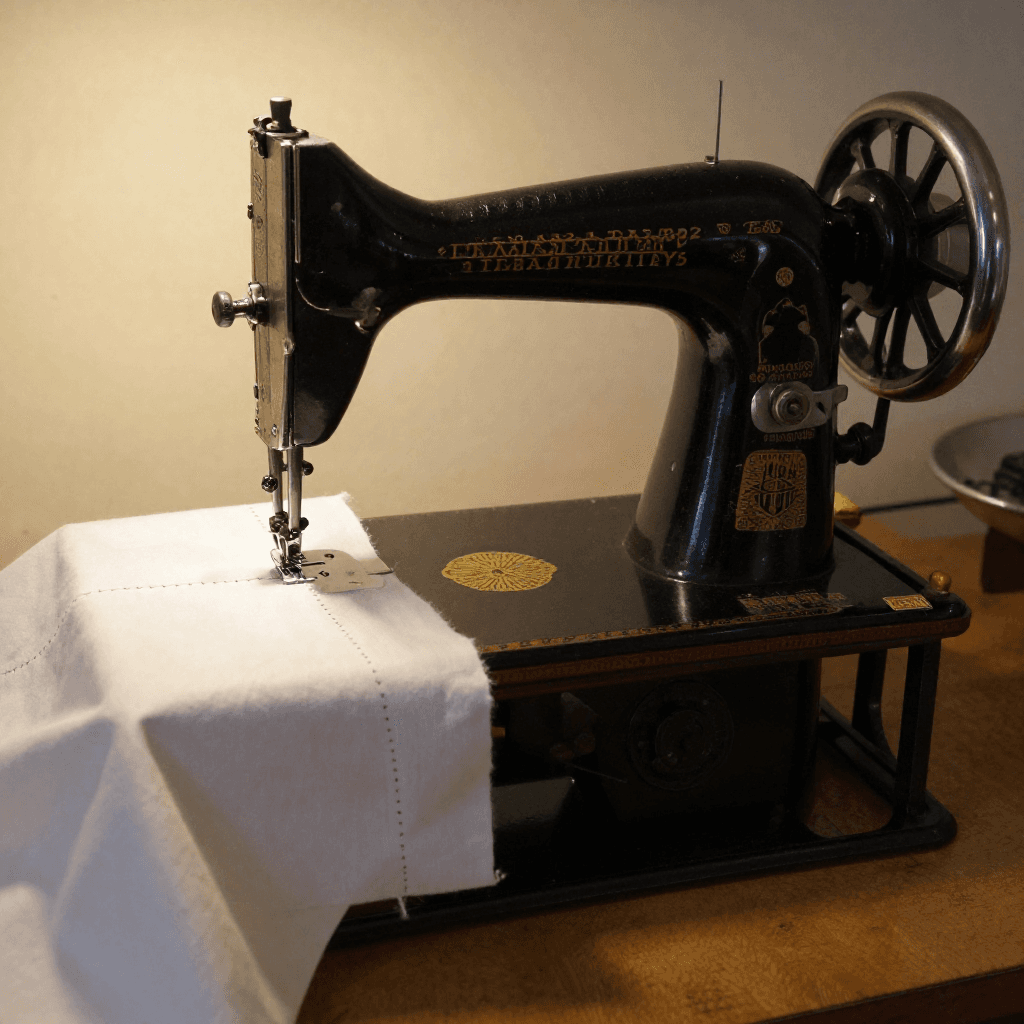
The embedded blueprint rocks its needle on a shaft turned by a crank. Grover rocks his curved needle with a twisted shaft and a sliding driver, which gives it rests between swings.
3
3
Read US 21,670
Read US 21,670
"This shaft d, at or near the center of its length, is formed either somewhat like the American auger, as shown in Figs. 3 and 4, or like an American gimlet, as shown in Figs. 1 and 2, being either a single or double threaded screw, while the thread or threads, as the case may be, terminate or gradually run into flat surfaces whose planes are parallel, or nearly so, to the axis of the shafts."
"Now, it will be clear to any mechanic that the shaft may be vibrated through any required arc by a proper number of turns or parts of a turn of a screw-thread, and that its velocity of vibration will depend upon the pitch of the thread and the speed of the driver, and that the time and period of its rests depend upon the location of the flat pieces and their length as compared with the velocity of the driver."
4
4
Build the rocker and time it
Build the rocker and time it
**Shaft.** Cut 25 cm of 20 × 3 mm mild steel flat bar. Heat its middle 3 cm red and, with the lower end in the vise, give it a quarter turn with an adjustable wrench, leaving the ends flat and parallel to each other, now at right angles.
**Frame.** Mount the shaft between two hardwood blocks on a board with a hole in each for a round pin silver-soldered to its ends, so it turns freely. Fix a short arm with a pointer to its top as the needle.
**Driver.** Cut a hardwood block that slides along a guide beside the shaft, with a slot the flat bar passes through. Line the slot's faces with two strips of spring steel, with a strip of leather behind each, so they bear on the bar's faces.
**Test.** Push the driver slowly from one end to the other. Mark the pointer's angle every 5 mm of stroke, and see where it turns and where it rests.
Ibikoresho by'iyi ntambwe:
 Umurongo ugororotse w'icyuma cyoroshye0.3 metero
 Umurongo Uzengurutse w'Icyuma Cyoroshye0.05 metero
 Isudire y'ifeza1 igice
 Umuti wo gusudira1 igice
 Ikibaho cy'Igiti Gikomeye1 igice
 Igihimba cy'Igiti Gikomeye3 ibice
 Imisumari y'ibiti10 ibice
 Umurongo w'icyuma cya sipringi0.1 metero
 Uruhu rwatunganyijwe1 igice
Ibikoresho bikenewe:
 Umucumita w'Ibyuma
 Itara rya Propane
 Ifatiro ry'Ameza
 Isupana ihinduka
 Amakariso (Ikariso ry'Intoki)
 Umucumita w'Intoki
 Ibikoresho by'amasuka y'igiti
 Icyuma Cyivumbura Kidafite Insinga
 Ibyuma Byinshi byo Gucukura
 Ikusanyirizo ry'ibitorezi
 Igipima Ingoro
 Umurongo w'ipima
 Uturindantoki twihanganira ubushyuhe
 Amadarubindi Asobanutse yo Kwirinda
5
5
A rocker that jams, slips or never rests
A rocker that jams, slips or never rests
Twisted-shaft needle rocker troubleshooting.
Flow
Loading...
6
6
History and honest limits
History and honest limits
**W. O. Grover** of Boston, Massachusetts, received US 21,670, dated 5 October 1858; he signed on 21 December 1857. His machine made the Grover & Baker stitch with two threads and a crooked needle c′ on the shaft d, driven by the reciprocating driver g on a centre; he also meant the mechanism for hookers-on and loopers. With a double-threaded shaft the springs s s embraced it and rested in slots in the driver, which he found best. His claims cover the curved needle or looper with the spiral shaft and driver, the springs, the rawhide or leather layers, and the actuating surface that embraces the shaft yet slides.
**Honest limits.** A hand-twisted flat bar and a hand-pushed wooden driver stand in for his machine's shaft and driver. The notebook treats the twist as a uniform screw; its leads and lengths are examples. Your marked angles are the result.
Ibikoresho
9- 0.3 meteroUmwanya
- 0.05 meteroUmwanya
- 1 igiceUmwanya
- 1 igiceUmwanya
- 1 igiceUmwanya
- 3 ibiceUmwanya
- 10 ibiceUmwanya
- 0.1 meteroUmwanya
- 1 igiceUmwanya
Ibikoresho bikenewe
14- Umwanya
- Umwanya
- Umwanya
- Umwanya
- Umwanya
- 1 vendor sell this, none ship to you yetUmwanya
- Umwanya
- Umwanya
- Umwanya
- Umwanya
Blueprint zijyanye
Izi blueprint zisangira ubumenyi — uburyo, ibikoresho cyangwa amahame

CC0 Umurenge rusange
Iyi blueprint yasohowe munsi ya CC0. Ushobora gukoporora, guhindura, gukwirakwiza no gukoresha nta kwemererwa.
Shyigikira Umuremyi ugura ibicuruzwa binyuze muri Blueprint ye Komisiyo y'Umuremyi byashyizweho n'Abacuruzi, cyangwa kora verisiyo nshya y'iyi Blueprint ukayinjiza nk'isano muri Blueprint yawe kugira ngo musangire inyungu.