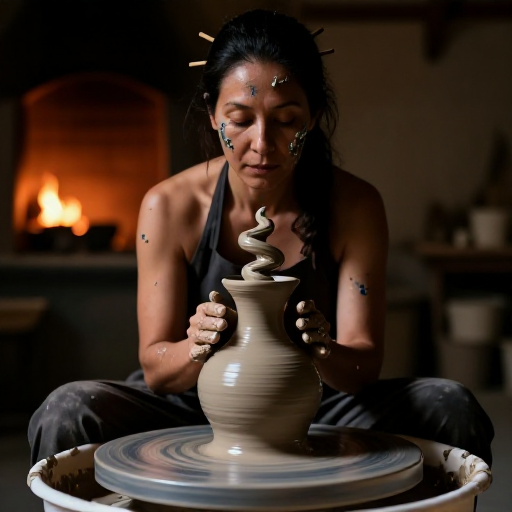

Ash Glazing Pottery — The Accidental Discovery That Made Ceramics Waterproof
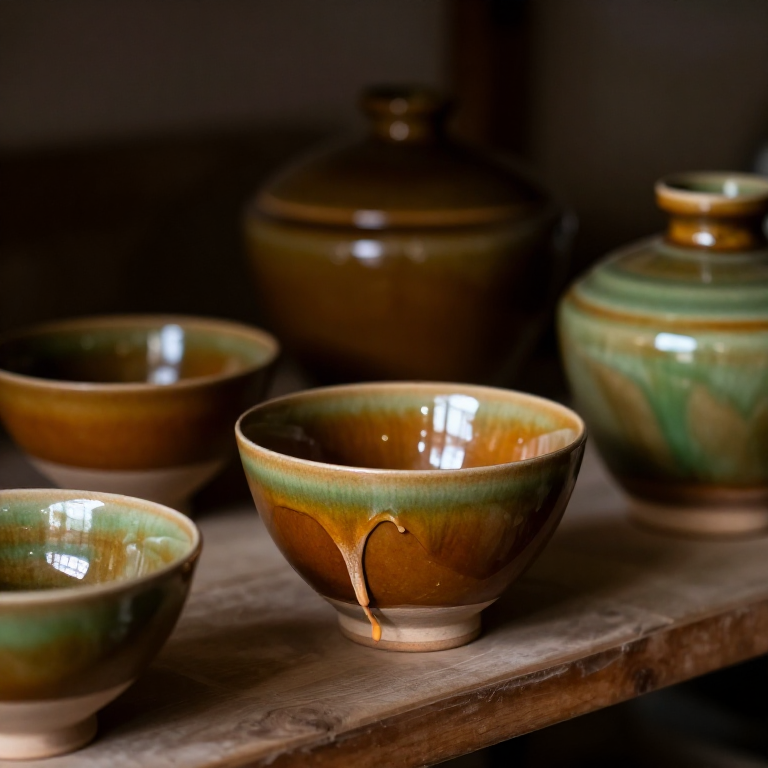
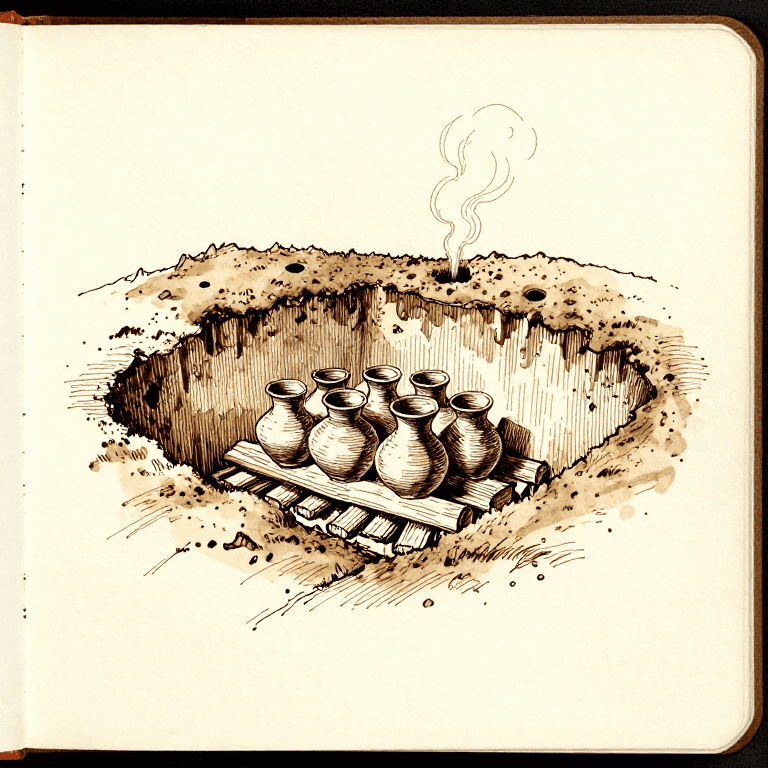
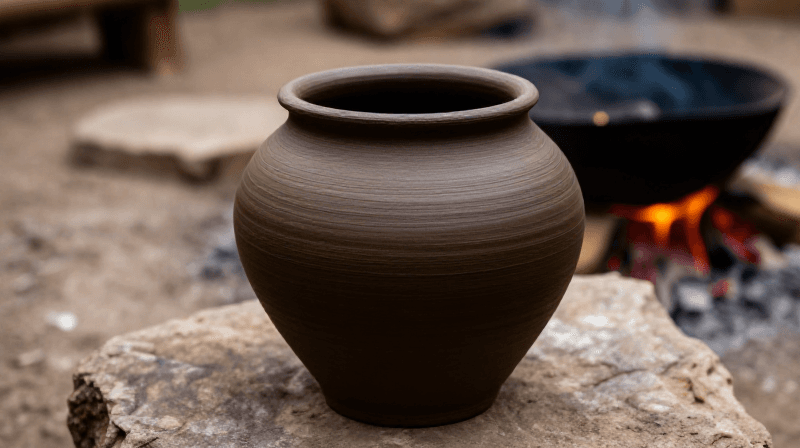
The oldest ceramic glaze was not invented — it was discovered by accident. During the Shang dynasty (approximately 1500 BCE), Chinese potters firing stoneware in wood-fueled kilns noticed that pots placed nearest the firebox developed a smooth, glassy coating where wood ash had settled on their surfaces. The ash, rich in calcium, potassium, and silica, melted at high temperatures and fused with the clay body to form a natural glaze.
This accidental 'ash fall' glazing became the foundation of all East Asian ceramic traditions. Chinese potters learned to collect and apply wood ash deliberately, creating the first controlled glazing process. The technique reached Korea by the 3rd century CE and Japan by the 5th century, where it evolved into the beloved ash glazes of Shigaraki, Bizen, and Iga wares — ceramics prized precisely for the unpredictable beauty of natural ash deposits.
Ash glaze is the simplest glaze formula possible: wood ash + clay. Nothing else is required. The ash provides the flux (the melting agent) and silica, while the clay provides additional silica and alumina for durability. Different wood species produce different colors — pine ash tends toward green, oak toward amber, straw ash toward milky white. Every ash glaze is unique to its fuel source, firing temperature, and kiln atmosphere — a direct fingerprint of the maker's local environment.
التعليمات
Collect and prepare the wood ash
Collect and prepare the wood ash
Collect ash from a complete burn of hardwood — oak, ash, beech, or pine. The wood must burn fully to white-grey ash; partially burned charcoal fragments will create black specks in the glaze. Approximately 2 kg of dry wood produces 30-50 grams of usable ash. You will need at least 500 grams of processed ash for a batch of glaze.
Sieve the raw ash through a fine mesh (1 mm or finer) to remove charcoal fragments, nails, and stones. Then wash the ash by suspending it in water — approximately 5 liters of water per 500 grams of ash. Stir thoroughly, allow to settle for 30 minutes, then carefully pour off the water. This leaching removes soluble potassium compounds that can cause crawling and pinholing in the fired glaze. Repeat the washing 2-3 times. Dry the washed ash in the sun or a low oven.
المواد لهذه الخطوة:
 رماد خشب صلب500 غ
الأدوات المطلوبة:
 غربال خيزران
 دلو
دلوMix the ash glaze
Mix the ash glaze
The simplest ash glaze is a 50/50 mixture by volume of washed wood ash and ball clay or kaolin. This ratio has remained essentially unchanged for 3,500 years because it works: the ash provides calcium and potassium as fluxes, plus silica; the clay provides alumina (which prevents the glaze from running off vertical surfaces) and additional silica.
Measure equal volumes of washed ash and dry clay powder. Combine them in a ceramic or plastic bowl and add water gradually, stirring constantly, until the mixture reaches the consistency of heavy cream. Sieve the wet mixture through a fine mesh to remove lumps. The finished glaze slip should coat a dipped finger evenly and drip slowly — if it runs off too quickly, add more dry material; if it's too thick, add water.
المواد لهذه الخطوة:
 مسحوق طين الكاولين500 غ
الأدوات المطلوبة:
 هاون ومِدَقّ حجريان
Prepare bisque-fired pots for glazing
Prepare bisque-fired pots for glazing
Ash glaze is applied to pots that have already been shaped and fired once (bisque firing) to approximately 900°C. The bisque firing drives out all moisture and organic matter from the clay, making the pot strong enough to handle but still porous enough to absorb the glaze slip. Unfired (greenware) pots are too fragile and too wet for glazing.
Ensure the bisque pots are completely dry and free of dust. Wipe each pot with a damp sponge to remove loose particles — dust on the surface prevents the glaze from adhering. The bottom of each pot should be left unglazed or wiped clean after glazing, as the glaze will melt and fuse the pot to the kiln shelf during firing.
Apply the glaze by dipping
Apply the glaze by dipping
Stir the glaze slip thoroughly — ash settles quickly. Hold the bisque pot by the base with one hand (or use tongs for small pots) and submerge it in the glaze slip for 3-5 seconds. The porous bisque absorbs water from the slip, leaving a layer of glaze material clinging to the surface. Withdraw smoothly and hold upside down for a moment to let excess glaze drip from the rim.
The glaze coating should be approximately 1-2 mm thick after dipping. Too thin and the glaze will be patchy after firing; too thick and it will run off the pot in the kiln, pooling at the base and fusing the pot to the shelf. If the coating is uneven, wait for it to dry, then touch up thin spots with a second dip or brush application. Wipe the bottom 1 cm clean with a damp sponge.
Load the kiln for glaze firing
Load the kiln for glaze firing
Place the glazed pots in the kiln on kiln shelves or sand-covered supports. Leave at least 2 cm between pots — as the glaze melts during firing, any pots touching each other will fuse together permanently. Set pots on small clay wadding balls or a bed of alumina/sand to prevent the base from sticking to the shelf.
Traditional Chinese wood-fired kilns (dragon kilns, or 'long yao') are long sloping tunnels built up a hillside, with the fire at the bottom. The natural chimney effect draws heat upward through the kiln, creating a temperature gradient. Pots placed nearest the firebox receive the heaviest ash fall and the highest temperatures; those further up receive less ash and lower temperatures, producing a range of effects in a single firing.
المواد لهذه الخطوة:
 فحم نباتي20 كغ
الأدوات المطلوبة:
 نظارة واقية من رذاذ الكيماويات
Fire to stoneware temperature
Fire to stoneware temperature
Ash glaze requires stoneware temperatures to melt properly — approximately 1200-1280°C. This is significantly hotter than the earthenware temperatures (900-1000°C) used for unglazed pottery. Raise the kiln temperature slowly over 8-12 hours, feeding wood steadily. The first phase (up to 600°C) burns out residual moisture and organic matter; the second phase (600-1000°C) sinters the clay body; the final phase (1000-1280°C) melts the glaze.
At peak temperature, the glaze melts into a viscous liquid that flows across the pot surface, filling pores and creating a watertight seal. The kiln atmosphere during this phase dramatically affects the glaze color: an oxidizing atmosphere (plenty of air) produces amber and brown tones; a reducing atmosphere (restricted air, smoky conditions) produces the classic celadon greens and grey-blues that Chinese potters prized above all other colors.
الأدوات المطلوبة:
 منفاخ
منفاخCool the kiln slowly
Cool the kiln slowly
After reaching peak temperature, seal the kiln openings and allow it to cool naturally over 24-48 hours. Rapid cooling causes thermal shock — the glaze contracts faster than the clay body, creating a network of fine cracks called crazing. While some traditions (such as Chinese guan ware and Japanese raku) deliberately exploit crazing as a decorative effect, the goal for functional ash-glazed ware is a smooth, uncracked glaze surface.
Do not open the kiln until the temperature has dropped below 200°C — opening too early introduces cold air that shocks the still-hot pots. Patience during cooling is as important as precision during firing. When the kiln is finally cool enough to touch, unload the pots carefully. The ash glaze will have transformed from a powdery coating into a smooth, glassy surface fused permanently to the clay body.
Evaluate the finished glaze
Evaluate the finished glaze
A successful ash glaze is smooth to the touch, slightly glossy, and completely waterproof. Tap the pot with a knuckle — a clear ring indicates a well-vitrified body and properly fused glaze; a dull thud suggests under-firing. Hold the pot up to light and check for pinholes (tiny holes where gas bubbles escaped during firing) and crawling (areas where the glaze pulled away from the surface).
The color of an ash glaze depends on four variables: wood species (pine, oak, straw), firing temperature, kiln atmosphere (oxidation vs. reduction), and clay body composition. The same glaze recipe fired in the same kiln will produce different results in different positions — this unpredictability is not a flaw but the defining beauty of ash-glazed ceramics. No two pots are ever identical, each one bearing the unique signature of its firing.
المواد
3- 500 غعنصر نائب
- 500 غعنصر نائب
- 20 كغعنصر نائب
الأدوات المطلوبة
5- عنصر نائب
- عنصر نائب
- عنصر نائب
- عنصر نائب
- عنصر نائب
مواد المخططات المرتبطة
هذا المخطط يصنع
المخططات ذات الصلة
هذه المخططات تشارك المعرفة مع هذا — التقنيات والمواد والمبادئ
CC0 ملكية عامة
هذا المخطط مُصدر بموجب CC0. يحق لك نسخه وتعديله وتوزيعه واستخدامه لأي غرض، دون طلب إذن.
ادعم الصانع بشراء منتجات عبر مخططه حيث يكسب عمولة الصانع يحددها البائعون، أو أنشئ نسخة جديدة من هذا المخطط وضمّنه كرابط في مخططك لمشاركة الإيرادات.