فنون
الجمال والعناية
حِرَف
الثقافة والتاريخ
ترفيه
البيئة
الطعام والمشروبات
الهندسة العكسية
العلوم
رياضة
التقنية
الأجهزة القابلة للارتداء
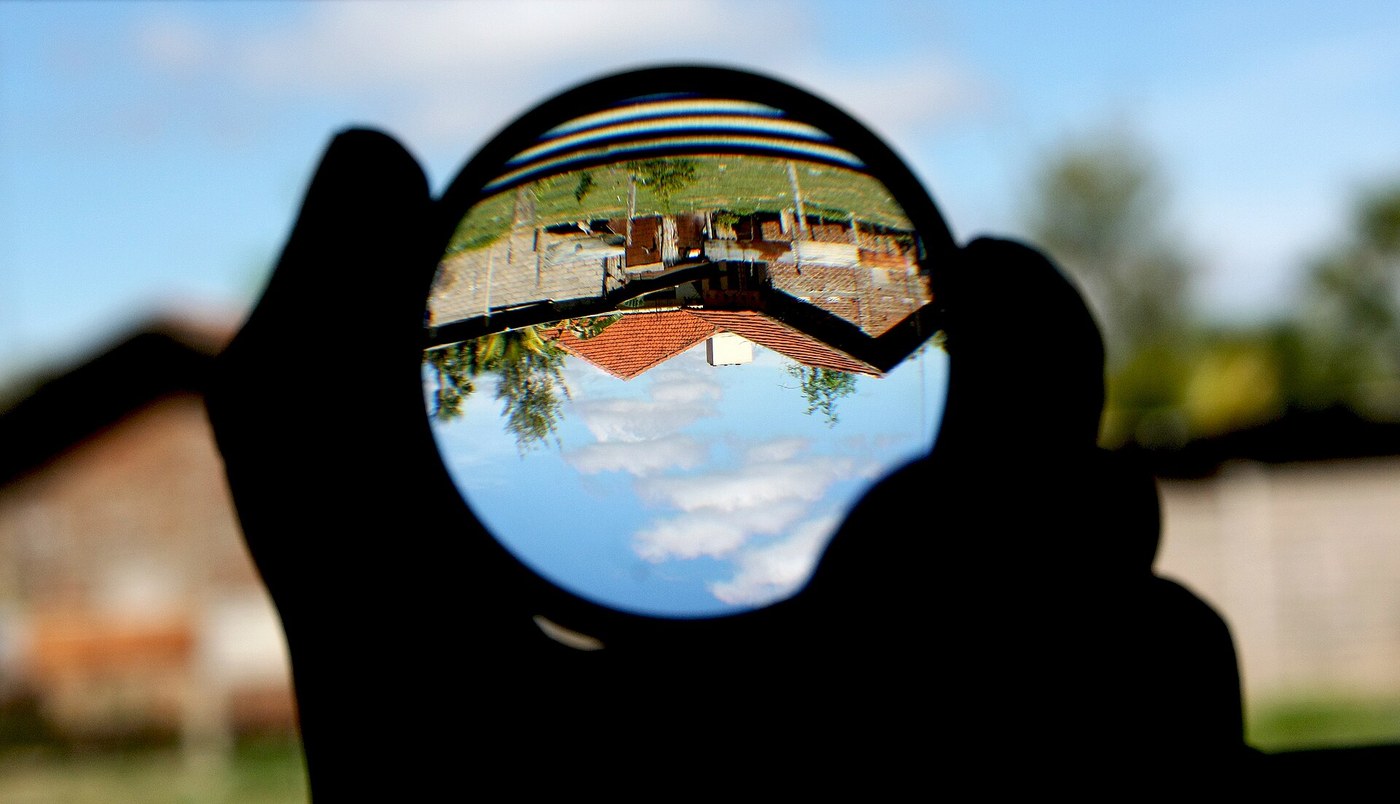


Convex and Concave Lenses Ground as a Pair
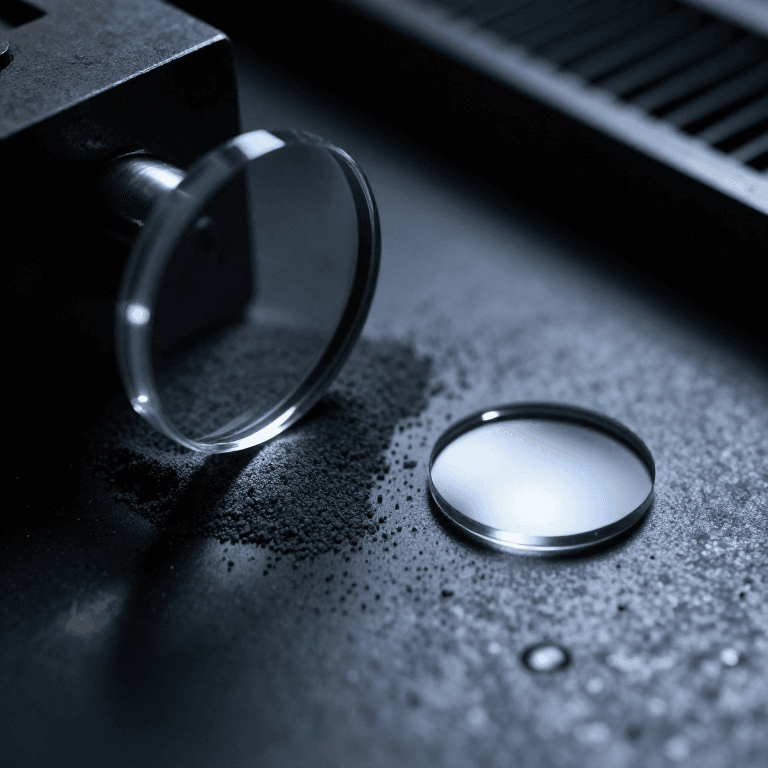
Rub one glass disc over another with wet grit and both change shape: the one on top goes hollow, the one beneath goes domed, and they stay a perfect fit. Grind both faces of a pair this way and the bottom disc becomes a double-convex lens, the top one a double-concave lens of the same curve. Longer work gives deeper curves and shorter focal lengths.
The picture: a double-convex lens held at arm's length shows the scene small and upside down.
متقدم
Several days per pair
التعليمات
1
1
Cut two discs
Cut two discs
Score two equal circles on the glass sheet, snap them out and nibble the edges round with grozing pliers. Fix a short wooden handle to the back of each with warm pitch.
المواد لهذه الخطوة:
 لوح زجاجي1 قطعة
 غراء زفت الصنوبر20 غ
 شريط خشب صلب1 قطعة
الأدوات المطلوبة:
 قاطع زجاج
 زرّادية قضم الزجاج
 نظارات أمان
2
2
Rough grind the first faces
Rough grind the first faces
Lay one disc face up on a firm table, wet it and sprinkle coarse grit. Push the other disc over it, face down, in short strokes, turning both a little all the time. The top one becomes concave, the bottom convex. Rinse and recharge as the grit wears.
المواد لهذه الخطوة:
 حبيبات كربيد السيليكون50 غ
 ماء2 لترات
الأدوات المطلوبة:
 مسطرة
مسطرة3
3
Check the curve
Check the curve
Lay a ruler across the hollow disc and measure the depth at the centre with the caliper. Keep the top disc on top to deepen the curve; swap them to flatten it.
الأدوات المطلوبة:
مسطرة قدمة رقمية 6 بوصات
4
4
Fine grind and polish
Fine grind and polish
Go through finer grits, washing everything clean between grits. Polish each face on a pitch lap pressed to the other disc's curve, with tin oxide (putty powder) and water, until clear.
المواد لهذه الخطوة:
حبيبات كربيد السيليكون30 غ أكسيد القصدير (أكسيد قصديري)30 غغراء زفت الصنوبر100 غ
5
5
Turn them over, do the second faces
Turn them over, do the second faces
Move the handles to the finished faces and grind the other sides the same way, the same disc on top, to the same depth. The bottom disc is now a double-convex lens, the top one double-concave.
المواد لهذه الخطوة:
حبيبات كربيد السيليكون60 غأكسيد القصدير (أكسيد قصديري)20 غالأدوات المطلوبة:
قدمة رقمية 6 بوصات6
6
Find the focal length
Find the focal length
Hold the convex lens in sunlight over paper and move it until the spot is smallest; that distance is its focal length. Grind more pairs to different depths for a set of focal lengths.
الأدوات المطلوبة:
مسطرة7
7
Focal length from the curve
Focal length from the curve
جارٍ تحميل دفتر Jupyter…
8
8
Limits
Limits
Which disc goes hollow is the mirror makers' rule (Sky & Telescope, Stellafane); the lens formula is from Wikipedia. Window glass is not optical glass: expect some colour fringes and bubbles.
المواد
6- 1 قطعةعنصر نائب
- 120 غعنصر نائب
- 1 قطعةعنصر نائب
- عنصر نائب
- 2 لتراتعنصر نائب
- عنصر نائب
هذا المخطط يصنع

المخططات ذات الصلة
هذه المخططات تشارك المعرفة مع هذا — التقنيات والمواد والمبادئ

CC0 ملكية عامة
هذا المخطط مُصدر بموجب CC0. يحق لك نسخه وتعديله وتوزيعه واستخدامه لأي غرض، دون طلب إذن.
ادعم الصانع بشراء منتجات عبر مخططه حيث يكسب عمولة الصانع يحددها البائعون، أو أنشئ نسخة جديدة من هذا المخطط وضمّنه كرابط في مخططك لمشاركة الإيرادات.