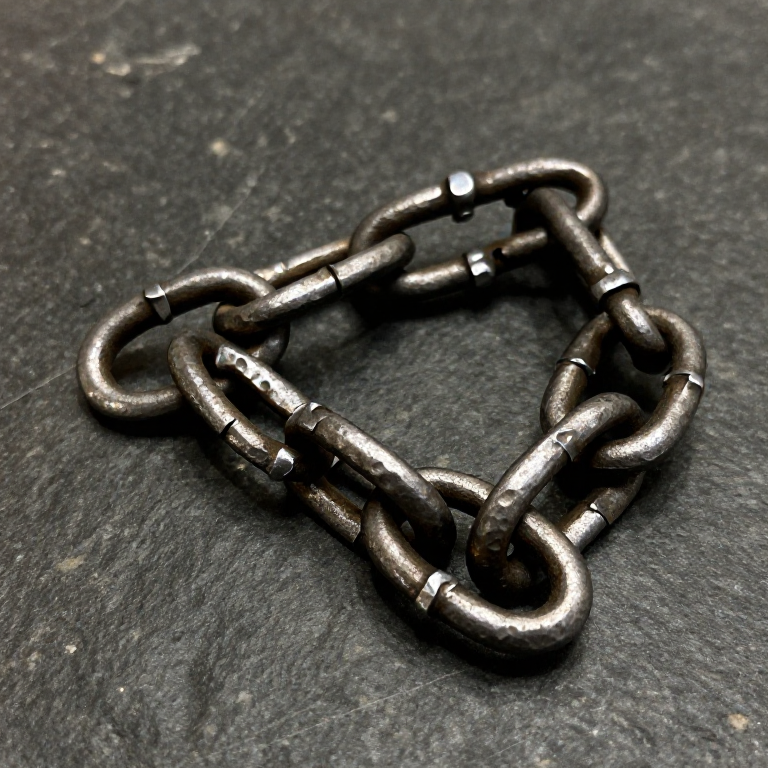


Forging an Iron Chain — Bending, Welding, and Linking
The iron chain is the strongest flexible connection in pre-industrial technology. Chains anchor ships, lift drawbridges, suspend cauldrons over fires, secure doors, and hang signs. Each link is an individual forge weld — the chain is only as strong as its weakest weld, so chain-making demands consistent technique across dozens or hundreds of identical operations.
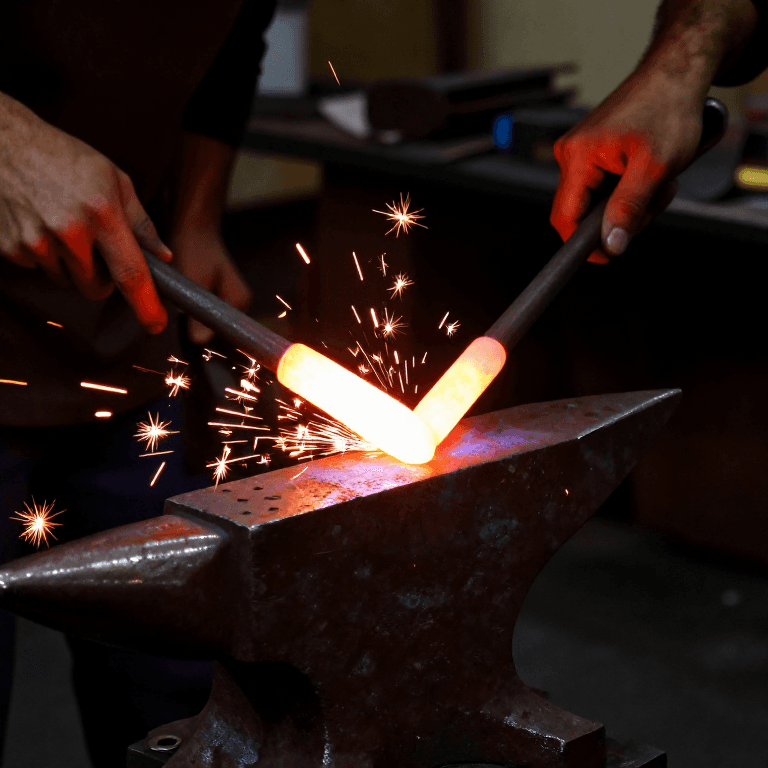
A chain is made by bending short lengths of iron rod into open ovals, threading each new link through the previous one before closing it, and forge welding the joint shut. The rhythm is repetitive: bend, thread, heat, weld, move on. A skilled chain-maker works in a continuous cycle, keeping several links at different stages in the fire at once.
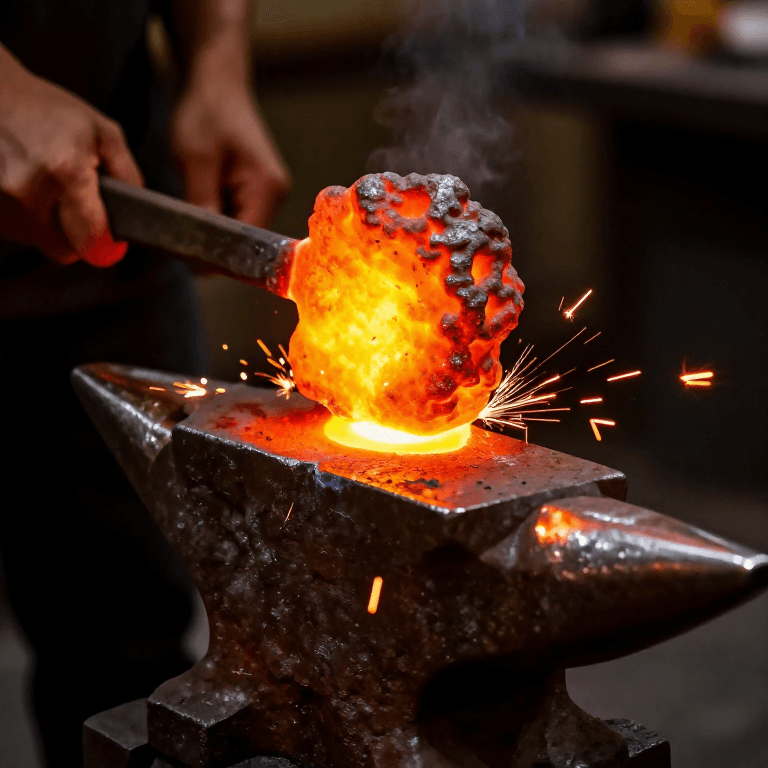
Chain-making is the ultimate test of forge welding skill. Each weld is small and must be completed quickly before the thin rod cools. There is no room to reheat and retry without risking damage to the adjacent links. It teaches economy of movement and precise heat control.
التعليمات
Cut the link blanks
Cut the link blanks
المواد لهذه الخطوة:
 فحم نباتي (قطع)5 كغ
الأدوات المطلوبة:
 مطرقة حدادة
 كلّابة حدادة
 موقد (نار الحدادة)
Scarf both ends of each blank
Scarf both ends of each blank
Bend the first link into an oval
Bend the first link into an oval
Flux and forge weld the joint
Flux and forge weld the joint
Shape the welded link
Shape the welded link
Thread and weld subsequent links
Thread and weld subsequent links
Test the chain
Test the chain
المواد
4- 5 كغعنصر نائب
- 1 قطعةعنصر نائب
- 1 قطعةعنصر نائب
- 1 قطعةعنصر نائب
الأدوات المطلوبة
3- عنصر نائب
- عنصر نائب
- عنصر نائب
مواد المخططات المرتبطة
المخططات ذات الصلة
هذه المخططات تشارك المعرفة مع هذا — التقنيات والمواد والمبادئ
CC0 ملكية عامة
هذا المخطط مُصدر بموجب CC0. يحق لك نسخه وتعديله وتوزيعه واستخدامه لأي غرض، دون طلب إذن.
ادعم الصانع بشراء منتجات عبر مخططه حيث يكسب عمولة الصانع يحددها البائعون، أو أنشئ نسخة جديدة من هذا المخطط وضمّنه كرابط في مخططك لمشاركة الإيرادات.