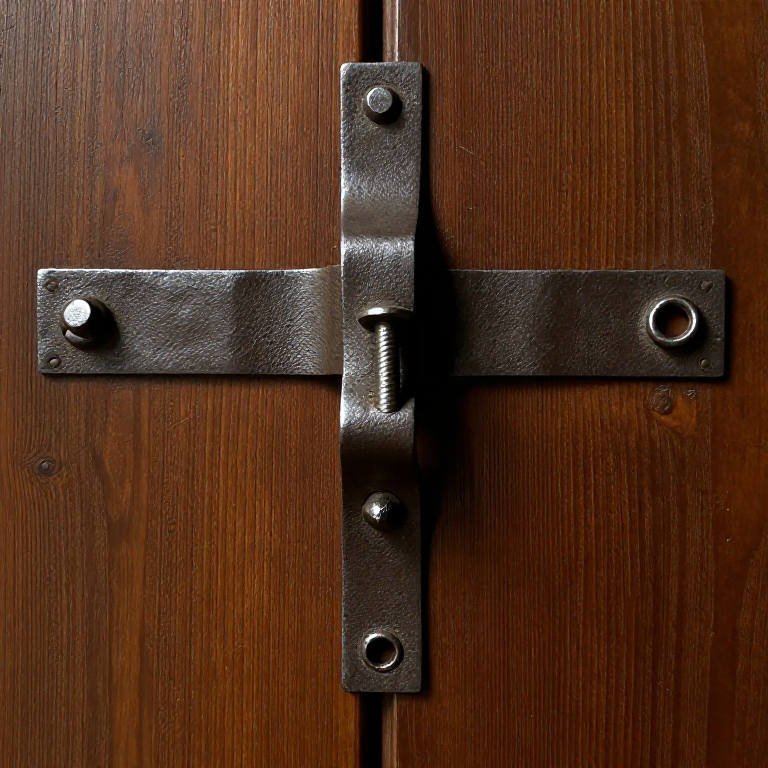


Forging an Iron Strap Hinge — The Joint That Opens Every Door
Before the iron hinge, doors were hung on leather straps or wooden pivots that wore out in months. The iron strap hinge — two flat straps joined by a pin through rolled eyes — solved this problem permanently. A well-made iron hinge lasts centuries, as demonstrated by medieval church doors still swinging on their original hinges after 800 years.
A strap hinge is forged from two flat iron bars. Each bar has one end curled into a tube (the eye) around a mandrel. A pin passes through both eyes to create the pivot. One strap is nailed to the door and the other to the frame. The hinge works because the eyes wrap around the pin with just enough clearance to rotate freely but not wobble.
This blueprint teaches three essential smithing operations: drawing flat bar, scrolling (curling metal around a mandrel), and punching nail holes. These same operations appear in gates, latches, brackets, and every other piece of architectural ironwork.
التعليمات
Cut the strap blanks
Cut the strap blanks
Forge the eye on the door strap
Forge the eye on the door strap
المواد لهذه الخطوة:
 Charcoal3 كغ
الأدوات المطلوبة:
 Forge Hammer
 Forge Tongs
 Hearth (Forge Fire)
Forge the eye on the frame strap
Forge the eye on the frame strap
Punch the nail holes
Punch the nail holes
Decorative taper (optional)
Decorative taper (optional)
Make the hinge pin
Make the hinge pin
Assemble and test the hinge
Assemble and test the hinge
المواد
4- 3 كغعنصر نائب
- عنصر نائب
- 1 قطعةعنصر نائب
- 1 قطعةعنصر نائب
الأدوات المطلوبة
3- عنصر نائب
- عنصر نائب
- عنصر نائب
مواد المخططات المرتبطة
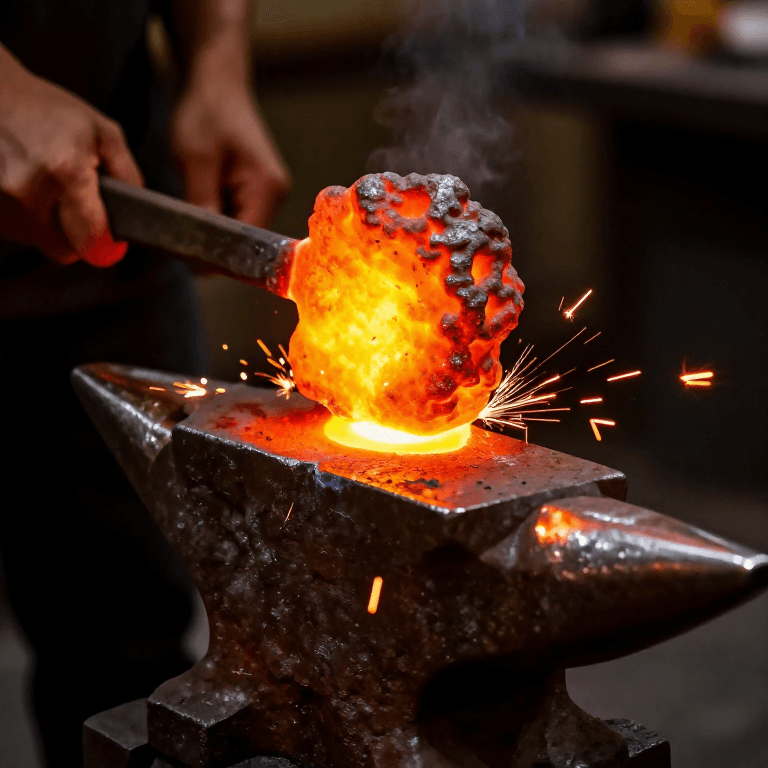
المخططات ذات الصلة
هذه المخططات تشارك المعرفة مع هذا — التقنيات والمواد والمبادئ
CC0 ملكية عامة
هذا المخطط مُصدر بموجب CC0. يحق لك نسخه وتعديله وتوزيعه واستخدامه لأي غرض، دون طلب إذن.
ادعم الصانع بشراء منتجات عبر مخططه حيث يكسب عمولة الصانع يحددها البائعون، أو أنشئ نسخة جديدة من هذا المخطط وضمّنه كرابط في مخططك لمشاركة الإيرادات.