فنون
الجمال والعناية
حِرَف
الثقافة والتاريخ
ترفيه
البيئة
الطعام والمشروبات
الهندسة العكسية
العلوم
رياضة
التقنية
الأجهزة القابلة للارتداء
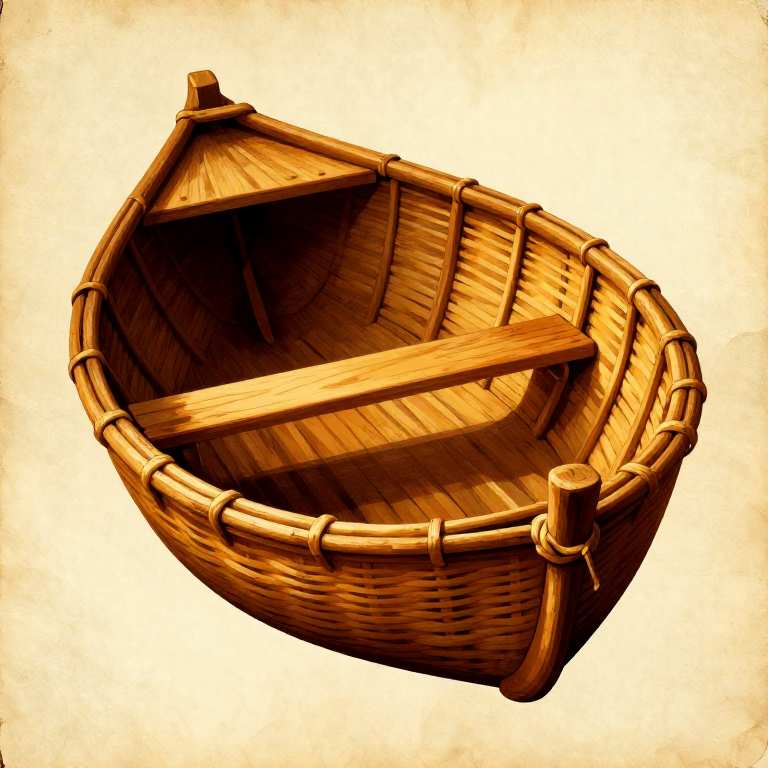


Building a Prehistoric Coracle — A One-Person Bowl Boat from Woven Branches and Animal Hide
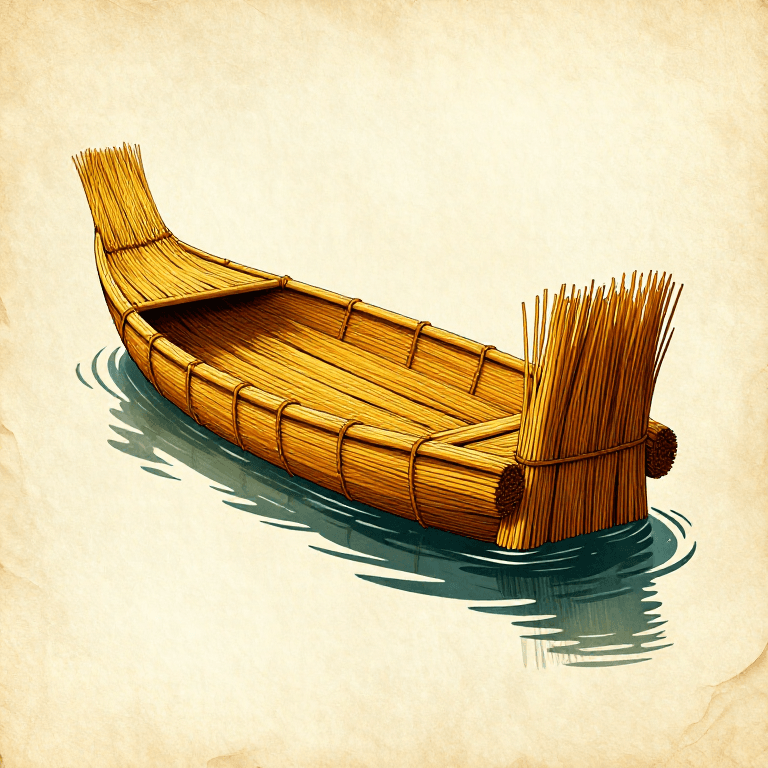
A coracle is a small, lightweight, bowl-shaped boat made from a woven frame of flexible branches covered with a single piece of animal hide. Archaeological and historical evidence places coracles among humanity's oldest watercraft — the design appears independently in Wales (cwrwgl), Ireland (currach), Scotland, India (parisil), Tibet (ku-dru), Iraq (quffa), and Vietnam (thung chai). The round shape is not primitive — it is an elegant engineering solution: circular hulls distribute water pressure evenly across the entire frame, eliminating stress concentrations that crack rigid boats. The flexible woven lattice absorbs wave energy rather than fighting it, making coracles remarkably stable in choppy water. A finished coracle weighs only 10 to 15 kg and can be carried on one person's back using the seat thwart as a yoke — critical for portaging between waterways. Coracles are propelled with a single paddle using a figure-eight sculling stroke over the bow, which pulls the boat forward without spinning it. Despite their simple appearance, coracles can carry loads of 150 to 200 kg and remain in active use today by salmon fishers on the River Towy in Wales. This blueprint teaches the complete construction using only prehistoric materials: willow or hazel withies for the frame, rawhide for the skin, cordage for lashing, and pine pitch mixed with animal fat for waterproofing the seams.
متقدم
6-8 hours
التعليمات
1
1
Harvest Flexible Withies for the Frame
Harvest Flexible Withies for the Frame
Cut 24 to 30 straight, flexible withies (young shoots) from willow, hazel, or ash — each approximately 150 to 180 cm long and 1.5 to 2.5 cm in diameter at the base. Select shoots that are at least one year old but no more than three years — older wood loses flexibility and cracks when bent. Cut in late winter or early spring when sap is down and bark peels cleanly. Strip the bark immediately if you want a smoother frame, or leave it on for extra grip when lashing. The withies must be used green (freshly cut) — dried withies snap rather than bend.
المواد لهذه الخطوة:
 غصن خشب صلب28 قطع
الأدوات المطلوبة:
 سكين صوّان
2
2
Lay Out the Frame Foundation
Lay Out the Frame Foundation
Clear a flat area of ground approximately 2 metres across. Drive a wooden peg into the centre and use a length of cordage as a compass to scribe a circle 120 to 140 cm in diameter on the ground — this is the footprint of the coracle. Lay 6 to 8 of the longest, thickest withies across the circle as the primary ribs, crossing at the centre like the spokes of a wheel. Space them evenly so the angles between spokes are equal — approximately 45 to 60 degrees apart. These primary ribs define the shape and carry the structural load.
المواد لهذه الخطوة:
 حبال1 متر
3
3
Weave the Lattice Floor
Weave the Lattice Floor
Starting from the centre where the ribs cross, weave thinner withies over and under the radial ribs in a spiral pattern, working outward toward the edges. Each weaving withy passes alternately over one rib and under the next, just like basket weaving. Pack each course tightly against the previous one by pressing down firmly. Continue weaving until the flat floor section reaches approximately 80 to 90 cm in diameter. The woven floor should be tight enough that you cannot push a finger between the withies but open enough that the frame retains some flexibility.
المواد لهذه الخطوة:
غصن خشب صلب10 قطع4
4
Bend the Ribs Upward to Form the Sides
Bend the Ribs Upward to Form the Sides
Once the flat base is woven, bend the protruding ends of the radial ribs upward at the edge of the floor to form the sides of the bowl. The ribs should curve up and slightly inward at an angle of approximately 50 to 60 degrees from horizontal. To prevent cracking, wet the bending points thoroughly and bend slowly, applying steady pressure rather than sharp force. If a rib cracks, lash a replacement alongside it with cordage. The upturned ribs should extend 30 to 40 cm above the floor, creating the hull depth.
5
5
Weave the Side Walls
Weave the Side Walls
Continue the spiral weaving pattern up the sides of the bowl, working from the base upward. Weave additional withies horizontally around the upturned ribs, alternating over-under as before. Space the horizontal courses 3 to 5 cm apart on the sides — they do not need to be as tightly packed as the floor because the hide covering provides the waterproof skin. The side weaving provides structure for the hide to press against and prevents the ribs from splaying outward under load.
المواد لهذه الخطوة:
غصن خشب صلب8 قطع6
6
Create the Gunwale Ring
Create the Gunwale Ring
Bend a thick, flexible withy (or two thinner ones twisted together) into a hoop that matches the top circumference of the woven bowl — typically 130 to 150 cm in diameter. Overlap the ends by at least 15 cm and lash them together tightly with cordage. Place this gunwale hoop inside the top of the hull where the rib tips meet, and lash each rib tip securely to the gunwale ring. This ring stiffens the entire structure and defines the final shape. Trim any rib ends that protrude above the gunwale.
المواد لهذه الخطوة:
حبال3 أمتارالأدوات المطلوبة:
سكين صوّان7
7
Install the Seat Thwart
Install the Seat Thwart
Lash a straight, strong stick across the interior of the coracle approximately 5 cm below the gunwale, spanning the full diameter. This is the seat thwart — the paddler sits on it with legs extended into the bowl. Position it slightly off-centre (about 10 cm toward the stern) so the paddler's weight trims the boat slightly bow-up, which improves tracking. The thwart also doubles as a carrying yoke: flip the coracle upside down, hook the thwart over your shoulders, and the boat rides on your back.
المواد لهذه الخطوة:
غصن خشب صلب1 قطعةالأدوات المطلوبة:
حبال8
8
Prepare the Hide Covering
Prepare the Hide Covering
Select a large piece of rawhide — a single cattle or deer hide is ideal, but multiple smaller hides can be overlapped and stitched. The hide should be freshly scraped but not tanned — rawhide shrinks as it dries, pulling tight over the frame like a drum skin. Soak the hide in water for 12 to 24 hours until it is soft, flexible, and stretchy. A hide approximately 180 by 180 cm is needed for a 130 cm diameter coracle — the excess wraps over the gunwale.
المواد لهذه الخطوة:
 جلد خام1 قطعة
9
9
Stretch the Hide Over the Frame
Stretch the Hide Over the Frame
Turn the woven frame upside down on a clean surface. Drape the soaked rawhide over the bottom of the inverted frame, centring it so there is equal overlap on all sides. Starting at opposite points, pull the hide taut and temporarily secure it to the gunwale with wooden pegs or clips. Work around the circumference, alternating between opposite sides (like tightening a drum head) to ensure even tension. Pull the hide firmly but not so tight that it distorts the frame — it will shrink further as it dries.
10
10
Lash the Hide to the Gunwale
Lash the Hide to the Gunwale
Fold the excess hide over the gunwale ring and lash it in place using a continuous spiral of cordage. Pass the cordage through small holes punched in the hide (use a bone awl) and around the gunwale, spacing the lashing points 5 to 8 cm apart. Pull each stitch tight before moving to the next. The folded hide over the gunwale creates a double-thickness rim that resists abrasion when the coracle is dragged ashore. Trim any excess hide hanging below the lashing with a flint knife.
المواد لهذه الخطوة:
حبال5 أمتارالأدوات المطلوبة:
 مِخرز عظميسكين صوّان
11
11
Let the Hide Dry and Shrink onto the Frame
Let the Hide Dry and Shrink onto the Frame
Set the coracle right-side-up in a shaded, well-ventilated area and allow the rawhide to dry for 24 to 48 hours. As the hide dries, it shrinks by 10 to 15 percent, pulling drum-tight over the woven frame. Do not dry in direct sun — rapid drying causes uneven shrinkage and cracking. The finished skin should be taut enough that tapping it with a knuckle produces a hollow drumming sound. Any loose spots can be re-wetted and re-stretched.
12
12
Waterproof the Seams with Pine Pitch and Animal Fat
Waterproof the Seams with Pine Pitch and Animal Fat
Melt pine pitch and mix it with rendered animal fat in an approximate ratio of 3 parts pitch to 1 part fat. The fat makes the pitch flexible — pure pitch is too brittle and cracks with the flexing of the hull. Apply the warm mixture generously to every seam, lashing point, and any spot where the hide meets the frame using a stick or wadded grass as a brush. Pay special attention to the gunwale lashing and any overlap seams between hides. Apply at least two coats, allowing the first to cool and set before applying the second.
المواد لهذه الخطوة:
 غراء زفت الصنوبر200 غ
 شحم حيواني (لية)70 غ
13
13
Coat the Entire Hull with Tallow
Coat the Entire Hull with Tallow
Rub a thick coating of rendered animal fat (tallow) over the entire exterior of the hide hull. This additional waterproofing layer fills the pores of the rawhide and prevents water absorption. Rawhide that absorbs water becomes soft, heavy, and prone to rot. Re-apply the tallow coating before each use — traditional coracle operators in Wales coated their boats with tar or tallow before every fishing session. Work the fat into the hide with firm circular motions until the surface has a uniform greasy sheen.
المواد لهذه الخطوة:
شحم حيواني (لية)150 غ14
14
Launch and Test the Coracle
Launch and Test the Coracle
Carry the finished coracle to calm, shallow water. Place it gently on the surface — it should float high with the gunwale well above the waterline. Step into the centre (never onto the edge) and sit on the thwart with your weight centred. The coracle should settle only 5 to 10 cm deeper. Check for leaks at the seams — small leaks can be patched with additional pine pitch. Paddle using a figure-eight sculling stroke: reach forward over the bow, sweep the paddle blade in a figure-eight pattern just below the surface. This pulls the coracle forward smoothly without the spinning that a conventional stroke would cause in a round hull.
المواد
5- 47 قطععنصر نائب
- 9 أمتارعنصر نائب
- 1 قطعةعنصر نائب
- 200 غعنصر نائب
- 220 غعنصر نائب
مواد المخططات المرتبطة
المخططات ذات الصلة
هذه المخططات تشارك المعرفة مع هذا — التقنيات والمواد والمبادئ


CC0 ملكية عامة
هذا المخطط مُصدر بموجب CC0. يحق لك نسخه وتعديله وتوزيعه واستخدامه لأي غرض، دون طلب إذن.
ادعم الصانع بشراء منتجات عبر مخططه حيث يكسب عمولة الصانع يحددها البائعون، أو أنشئ نسخة جديدة من هذا المخطط وضمّنه كرابط في مخططك لمشاركة الإيرادات.