التعاون
فنون
الجمال والعناية
حِرَف
الثقافة والتاريخ
ترفيه
البيئة
الطعام والمشروبات
الهندسة العكسية
العلوم
رياضة
التقنية
الأجهزة القابلة للارتداء
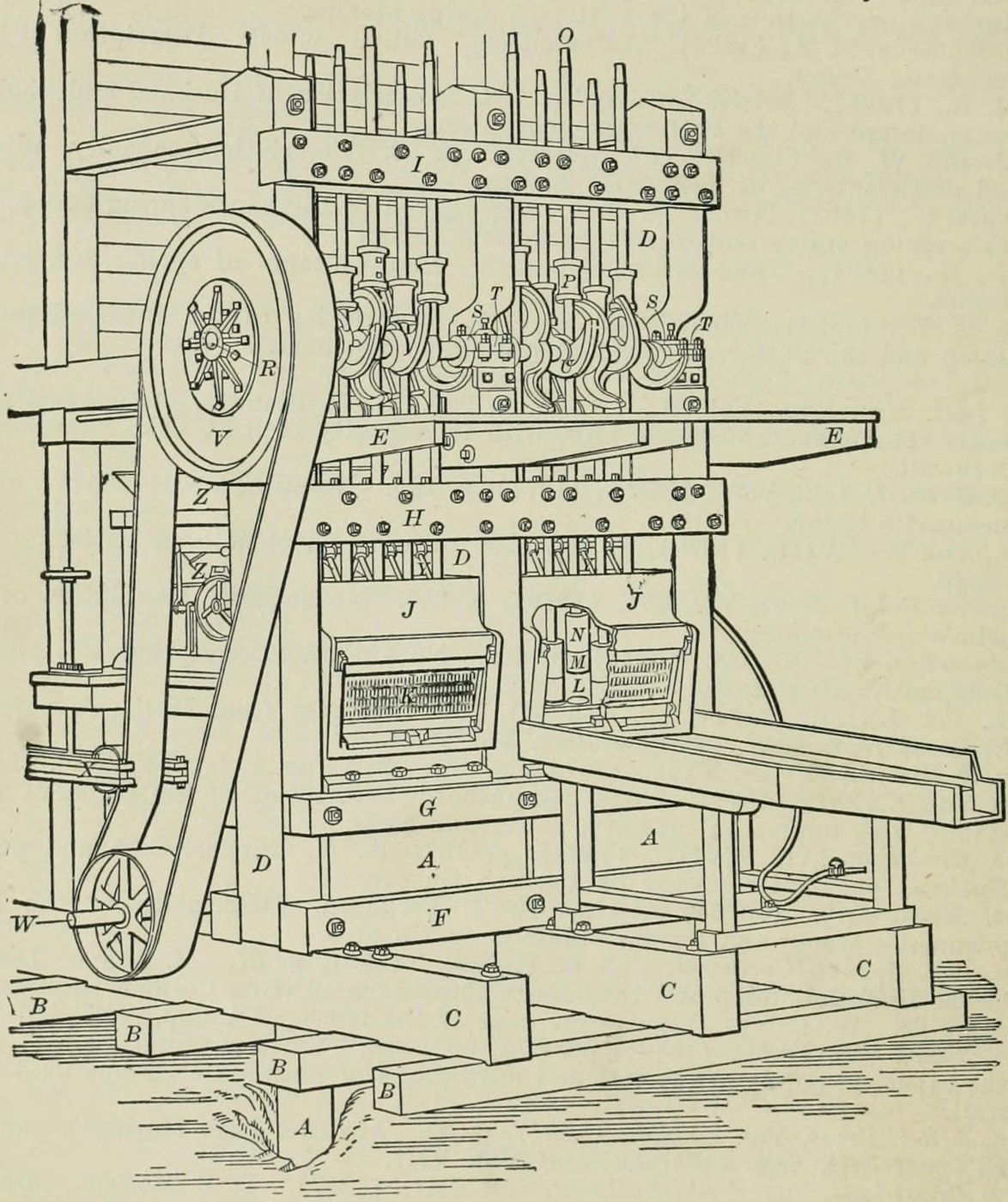

Stamp Mill: California Five-Stamp Battery (Richards, Ore Dressing 1903)
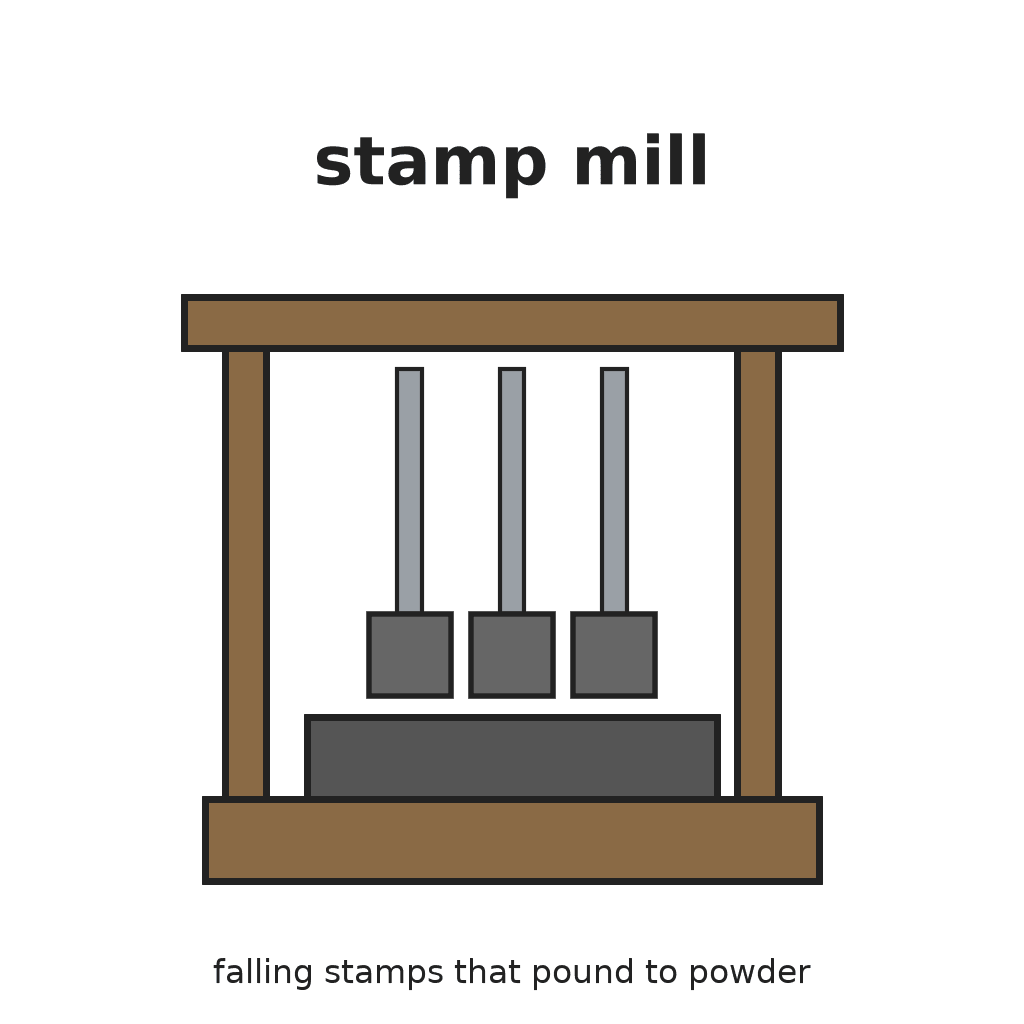
The gravity stamp mill: five heavy iron stamps stand in a cast-iron mortar on a timber block. Cams on a turning shaft lift each stamp by its tappet and let it fall by its own weight onto the ore on a die. Water washes the crushed ore out through a screen.
Result: a stamp battery that pounds ore to sand, at 80 to 110 drops a minute.
Source: R. H. Richards, Ore Dressing, vol. I (1903), Chapter V, Gravity Stamps. Unknown: one complete set of sizes; Richards gives the range found in the mills. Picture: Fig. 90 of the book.
متقدم
Unknown
التعليمات
1
1
Dig and level the foundation
Dig and level the foundation
Dig a trench in gravel, or blast one in rock, about 2 feet longer than the mortar block at each end and about 2 feet wider at each side. Level the bottom with tamped concrete, sand or clay. Concrete should be at least 30 inches thick, or it may crumble. Two layers of 2-inch plank spiked together may go on top.
المواد لهذه الخطوة:
 خرسانة1 levelling layer
 لوح خشبي منشور1 two layers of 2-inch plank
الأدوات المطلوبة:
 مِجرفة حفر
 مطرقة
2
2
Stand the mortar block
Stand the mortar block
Stand timbers or planks on end in the trench as the mortar block, sized for one five-stamp mortar. The mills used everything from 30 x 30 inch squared timbers to 2 x 12 inch planks bolted together. Set vertical bolts 3 to 4 feet long into the block to hold the mortar down. Not given: the bolts' metal.
المواد لهذه الخطوة:
 خشب مربّع المقطع1 mortar block
 معدن غير معروف1 hold-down bolts
الأدوات المطلوبة:
 طقم مفاتيح ربط
 أبعاد غير معروفة
3
3
Build the frame
Build the frame
On mud sills and cross sills, stand the posts (end posts 12 x 24 inches in most mills) with buckstaves, a platform, and lower and upper guide timbers. The guides keep the stamp stems vertical. Fit finger bars on a jack shaft between the posts, so each stamp can be propped up under its tappet. The frame carries the cam shaft and the drive.
المواد لهذه الخطوة:
خشب مربّع المقطع1 sills, posts, guide timbers, platformمعدن غير معروف1 bolts and jack shaftالأدوات المطلوبة:
طقم مفاتيح ربطأبعاد غير معروفة4
4
Set the mortar, dies and screen
Set the mortar, dies and screen
Bed the cast-iron mortar on tarred blankets or sheet rubber on the mortar block, for an even bearing, and bolt it down. Put the dies in its bottom: cylinders on square foot plates that fill the floor of the mortar. Mount a screen of punched Russia sheet iron in a wooden frame over the opening in front.
المواد لهذه الخطوة:
 مسبوكات الحديد الزهر1 mortar and five dies
 صفيحة مطاط طبيعي1 packing
 صفائح الحديد الروسي1 screen
الأدوات المطلوبة:
طقم مفاتيح ربط5
5
Make the five stamps
Make the five stamps
Each stamp has four parts. The shoe is chilled cast iron, its butt cast in heavy chills and its shank in sand. The boss is tough cast iron, the shoe's diameter and often 18 inches long, with sockets for the shoe shank and the stem and two keyways for knock-out wedges. The stem is solid wrought iron or mild steel, turned true and tapered at both ends so it can be reversed. The tappet is cast iron, with a flange above and below, locked on the stem by a gib and keys. Put the extra weight in the boss. Louis designs for 11 to 14 pounds of stamp per square inch of die; the mills used stamps of 650 to 1,100 pounds.
المواد لهذه الخطوة:
مسبوكات الحديد الزهر1 shoes, bosses, tappets قضيب حديد مطاوع1 stems, gibs, keys
الأدوات المطلوبة:
 مخرطة معادنأبعاد غير معروفة
6
6
Fit the cam shaft and drive
Fit the cam shaft and drive
Turn a wrought-iron or steel cam shaft true, with a key seat, and key on five cams. Each cam usually has two arms with spiral lifting faces, cast iron with chilled faces or cast steel. Drive the shaft by a rubber belt from the main shaft, over a pulley of wood built on a cast-iron hub and flanges, with a tightener. Not given: the engine or wheel that turns the main shaft.
المواد لهذه الخطوة:
قضيب حديد مطاوع1 cam shaftمسبوكات الحديد الزهر1 cams, pulley hub and flangesلوح خشبي منشور1 pulley rim سير الإدارة1 rubber belt
الأدوات المطلوبة:
مخرطة معادنطقم مفاتيح ربط7
7
Add the water and the feed
Add the water and the feed
Run one or two 1-inch water pipes into the back of the mortar, each with a plug cock that stays where it is set. Feed ore from the bin by a chute to an automatic feeder. One stamp trips the feeder when the ore layer on its die gets too thin, and a hand screw adjusts the point where it trips. Ore can also be fed by hand with a shovel.
المواد لهذه الخطوة:
 أنبوب ماء1 water pipes
 صمام مجهول1 plug cocksمعدن غير معروف1 feeder and chute
الأدوات المطلوبة:
طقم مفاتيح ربط مجرفة
8
8
Set up each stamp
Set up each stamp
Lay a 3-inch plank on the dies and set the bosses on it. Lower the stems into them and tap each stem down with a hammer, a board guarding its top, then drop it a few times at a very low drop. Hoist the stamp, put the shoe in place with wooden staves around its shank, and drop it on the plank to drive the shoe home; the staves swell when wet and hold it. Swap the plank for a block as high as the drop. Slip the tappet on, turn the cam until the tappet rests on its point, drive the keys home and drop the stamp gently a few times.
المواد لهذه الخطوة:
 أوتاد شقّ خشبية1 staves
الأدوات المطلوبة:
لوح خشبي منشورمطرقة بكرة مركّبة
9
9
Run the battery
Run the battery
Drop the stamps in order 1, 3, 5, 2, 4 (numbered from the left, standing behind the battery), so no two neighbours fall one after the other. The California practice is 80 to 110 drops a minute with a 5 to 9 inch drop. The cams turn the stamps as they lift, which evens out wear on shoes and dies. Lubricate the cams; soft soap with graphite is best. As shoes and dies wear, reset the tappets to restore the drop, and keep the height of discharge, from die to screen, the same.
الأدوات المطلوبة:
 مسحوق الغرافيت
 مادة غير معروفةطقم مفاتيح ربط
المواد
12- 1 levelling layerعنصر نائب
- 1 pulley rimعنصر نائب
- 1 sills, posts, guide timbers, platformعنصر نائب
- 1 feeder and chuteعنصر نائب
- 1 cams, pulley hub and flangesعنصر نائب
- 1 packingعنصر نائب
- 1 screenعنصر نائب
- 1 cam shaftعنصر نائب
- 1 rubber beltعنصر نائب
- 1 water pipesعنصر نائب
- 1 plug cocksعنصر نائب
- 1 stavesعنصر نائب
مواد المخططات المرتبطة

إسناد 10%
Casting Iron in a Cupola Furnace — Re-Melting Pig Iron into Finished Castings
بواسطة Piett
أشغال المعادن
51
0
0
0
6
0

إسناد 10%
Puddling Wrought Iron from Pig Iron — Burning Out the Carbon in a Reverberatory Furnace
بواسطة Palpatine
أشغال المعادن
63
0
0
0
6
0
إسناد 10%
Timber Beams Hewn Square from the Log
بواسطة Woody
أعمال الخشب
26
0
0
0
1
0

إسناد 10%
Mixing Roman Concrete (Opus Caementicium) — Volcanic Ash Hydraulic Cement
بواسطة Emma
بناء حجري
172
0
0
0
6
0
إسناد 10%
Graphite Powder Ground from Plumbago
بواسطة Mary
غير عضوي
13
0
0
0
2
0
هذا المخطط يصنع
المخططات ذات الصلة
هذه المخططات تشارك المعرفة مع هذا — التقنيات والمواد والمبادئ

CC0 ملكية عامة
هذا المخطط مُصدر بموجب CC0. يحق لك نسخه وتعديله وتوزيعه واستخدامه لأي غرض، دون طلب إذن.
ادعم الصانع بشراء منتجات عبر مخططه حيث يكسب عمولة الصانع يحددها البائعون، أو أنشئ نسخة جديدة من هذا المخطط وضمّنه كرابط في مخططك لمشاركة الإيرادات.