فنون
الجمال والعناية
حِرَف
الثقافة والتاريخ
ترفيه
البيئة
الطعام والمشروبات
الهندسة العكسية
العلوم
رياضة
التقنية
الأجهزة القابلة للارتداء
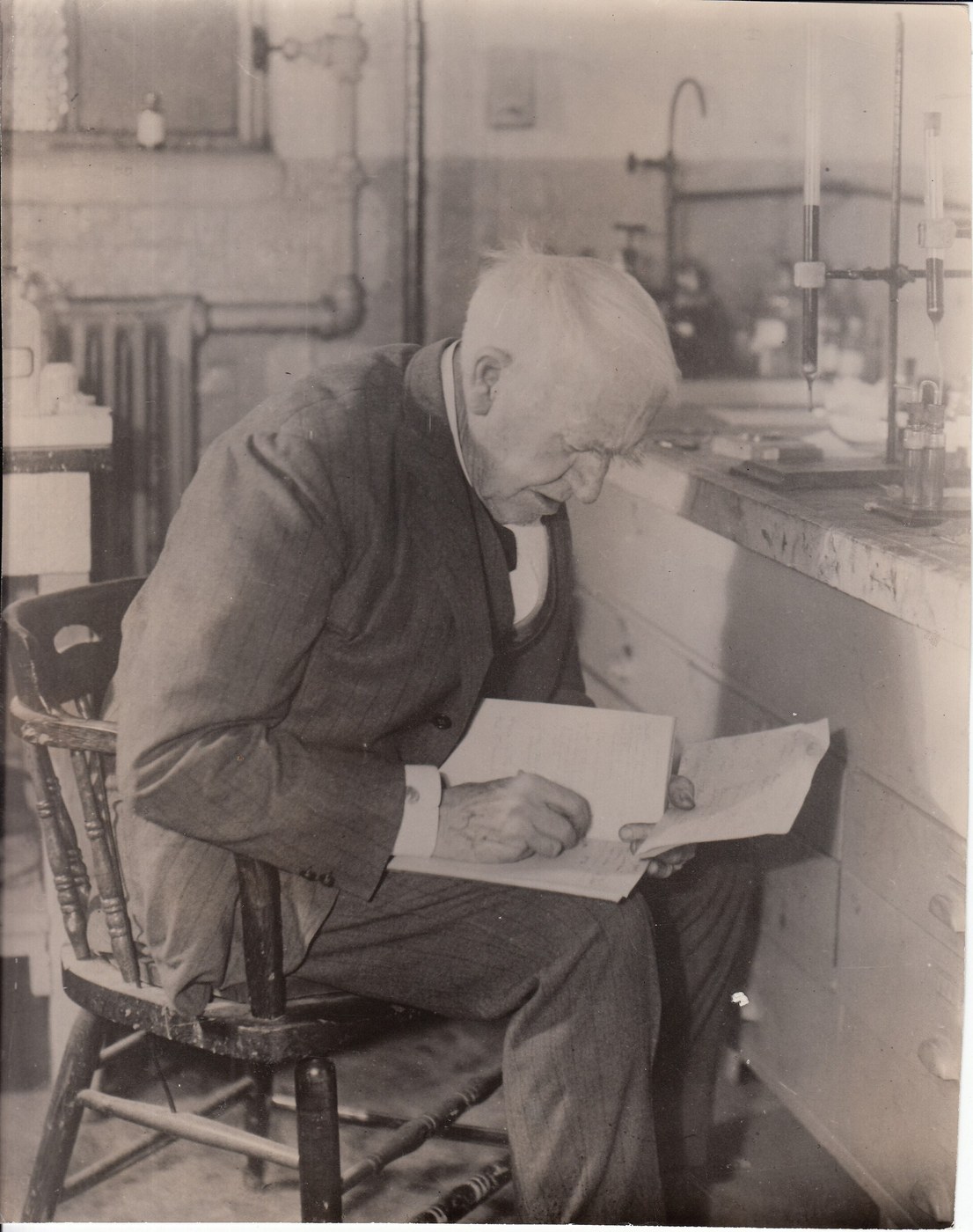


The Notebook: Write a Page Somebody Else Can Repeat
A notebook is not tidiness. It is what makes a measurement REPEATABLE, which is the only property that makes it worth anything to anyone other than you.
So this rung does not tell you how to keep a notebook. It puts the claim to a test you can fail. You will build a pendulum, measure its period, and write the page. Then somebody else — or you, a week later — rebuilds the pendulum from your page ALONE, with the original out of sight, and measures it again.
If the two sessions agree to within the scatter of hand timing, the page was good. If they do not, something the first session depended on never made it onto paper, and you will find out exactly what it was. That is a far more useful thing to learn than a list of rules.
مبتدئ
45 minutes for the first session, 20 minutes for the repeat
التعليمات
1
1
Build the pendulum and run session A, writing as you go
Build the pendulum and run session A, writing as you go
Tie a flat washer to a length of cotton twine and tape the free end to the edge of a table or a shelf so the washer hangs clear of everything. Aim for roughly half a metre of free string — the exact figure does not matter, but MEASURING the exact figure does.
Measure the length from the pivot point to the CENTRE of the washer, not to the top of it, and write the number down with its units. Write down how you decided where the centre was. This single line is the one most people leave out, and it is the one that sinks the repeat.
Pull the washer aside by a small angle — no more than about ten degrees, roughly a tenth of the string length sideways — and release it without a push. Time TEN complete swings with the stopwatch and divide by ten. Do that ten times, writing each figure down as it happens, on the page, in ink, in the order it happened.
Write down the failures too: the run where you fumbled the stopwatch, the one where the string touched the table edge. Rule one line through them so they stay readable. A notebook containing only successes is a notebook that has been edited.
Date the page. Note the time and the room temperature. Four seconds of writing, and it is the first thing you will want when the two sessions disagree.
المواد لهذه الخطوة:
 خيط قطني1 metre
 حلقة تثبيت مسطحة1 قطعة
الأدوات المطلوبة:
 ساعة إيقاف
 شريط قياس
 دفتر
دفتر قلم تعليم
 شريط لاصق ورقي
2
2
Write down what you EXPECTED, and what you held fixed
Write down what you EXPECTED, and what you held fixed
Before you look at your mean, write down on the same page what you expected the period to be. For a pendulum swinging through a small angle the period is close to T = 2π√(L/g) — for half a metre that is about 1.42 seconds. One line, and it protects you from the strongest bias there is: the one that makes a result look reasonable after the fact, because you have quietly adjusted what you consider reasonable.
Then list what you held fixed, with the actual values, not the intention: the length, the washer, the release angle, who was pressing the stopwatch, where the pivot was taped. That list is what lets a later disagreement be traced instead of argued about.
Write the raw readings first and the arithmetic second, both on the page. If the stopwatch said 14.21 s for ten swings, write 14.21 s — not the divided, averaged figure you intend to use. Raw readings can be recalculated a different way later; a calculated result cannot be taken apart again, and every batch eventually contains one calculation that turns out to have been done wrong.
Finish the session with two or three lines: what you found, what you are not sure about, what to do next. Written while the apparatus is still hanging in front of you those lines are accurate. Written a week later they are a reconstruction, and it is the 'not sure about' line that always goes missing first.
الأدوات المطلوبة:
دفترقلم تعليم آلة حاسبة
3
3
Session B: rebuild from the page alone
Session B: rebuild from the page alone
Take the pendulum down completely. Untape it, untie it, put the twine and the washer back in the drawer.
Now hand your page to somebody else and ask them to rebuild it and measure it. If you are working alone, leave it a week and do it yourself — you will not remember, which is the entire point.
The rule for session B is strict and it is what makes the test worth anything: work from the WRITTEN PAGE ONLY. No asking. No 'oh, I used the big washer'. If the page does not say it, the person doing session B gets to choose, and their choice is the evidence.
Have them measure the length they ended up with and write it down, then run the same ten timings of ten swings.
Where the two sessions differ, the difference is not carelessness. It is a line that was missing from your page, and now you know which one.
المواد لهذه الخطوة:
خيط قطني1 metreحلقة تثبيت مسطحة1 قطعةالأدوات المطلوبة:
ساعة إيقافشريط قياسدفترقلم تعليمشريط لاصق ورقي4
4
Did it reproduce?
Did it reproduce?
جارٍ تحميل دفتر Jupyter…
الأدوات المطلوبة:
دفترآلة حاسبة5
5
Compendium: what the failures teach
Compendium: what the failures teach
**The repeat came out short and I cannot see why.** Check the length line first. 'About 50 cm of string' and 'pivot to washer centre, 0.500 m' are different instructions, and they build pendulums whose periods differ by more than hand timing can hide. Length enters the period as a square root, so a 1 % error in L moves T by about 0.5 %.
**Does the mass of the washer matter?** No — and that is worth discovering rather than being told. Swap the washer for a heavier one, keep the length identical, and measure again. The period does not care. Amplitude does, slightly, once you go past about ten degrees, which is why step 1 asks you to keep it small.
**Why time ten swings instead of one?** Your reaction time lands on the two stopwatch presses whether you time one swing or ten, so spreading it over ten divides its effect by ten. This is the cheapest precision available anywhere in measurement.
**Ink or pencil?** Ink, in a bound book with numbered pages. Loose sheets separate and get lost; pencil fades and can be changed without trace. When something is wrong, rule ONE line through it so it stays readable and write the correction beside it — never scribble it out or tear the page. The struck-through value is evidence about the session, and once in a while it turns out to have been the correct one.
**Is this not overkill for a washer on a string?** The pendulum is the cheapest apparatus that can fail the test. Every habit it exposes — the missing length convention, the unrecorded release angle, the tidied-away fumble — costs the same on a kiln schedule, a dye bath or an alloy melt, where rebuilding the session to find out costs a day.
**Where this goes.** Repeats and spread come from the sibling rung on why one reading is not a measurement; zero, tare and blank come from its neighbour. This rung is what makes either of them survive the week.
الأدوات المطلوبة:
دفترالمخططات ذات الصلة
هذه المخططات تشارك المعرفة مع هذا — التقنيات والمواد والمبادئ

CC0 ملكية عامة
هذا المخطط مُصدر بموجب CC0. يحق لك نسخه وتعديله وتوزيعه واستخدامه لأي غرض، دون طلب إذن.
ادعم الصانع بشراء منتجات عبر مخططه حيث يكسب عمولة الصانع يحددها البائعون، أو أنشئ نسخة جديدة من هذا المخطط وضمّنه كرابط في مخططك لمشاركة الإيرادات.