فنون
الجمال والعناية
حِرَف
الثقافة والتاريخ
ترفيه
البيئة
الطعام والمشروبات
الهندسة العكسية
العلوم
رياضة
التقنية
الأجهزة القابلة للارتداء
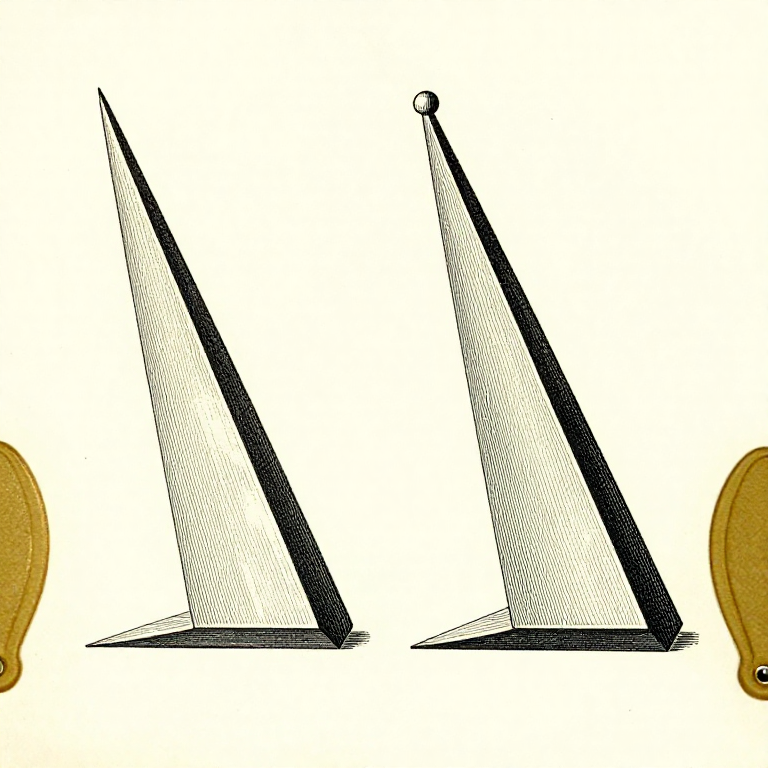


What Sharp Actually Is: Two Surfaces Meeting at a Line
An edge is not a thing. It is the LINE where two polished surfaces meet, and it has no width at all when it is perfect. Everything about sharpening follows from that one sentence, and most of the confusion around it comes from not having heard it.
A dull edge is not worn away — it is ROUNDED. Where two flat surfaces used to meet at a line there is now a tiny cylinder, a few micrometres across, and that cylinder pushes fibres aside instead of parting them. Sharpening does not add anything; it removes metal from both surfaces until they meet again.
Twenty-two edge tools are published on Youblob — bronze chisels, stone adzes, Viking sickles, a drawknife — and not one of them works for long without this. It is the same problem on every one.
مبتدئ
2 hours
التعليمات
1
1
Look at a dull edge and see the line of light
Look at a dull edge and see the line of light
Hold a blunt blade edge-up under a bright lamp and look straight down at the edge. Tilt it slowly.
A dull edge catches the light and shows as a thin bright line, because the rounded tip is a surface and surfaces reflect. A truly sharp edge has no surface to catch the light and simply disappears — you cannot see it at all.
That is the only sharpness test you always have with you, it takes two seconds, and it is more reliable than dragging a thumb across the edge. Bright spots along an otherwise invisible edge are nicks; a bright line along its whole length means the whole edge is round.
الأدوات المطلوبة:
 طقم أزاميل - حافة مشطوفة
 عدسة صائغ
2
2
Sharpening removes metal — it does not restore anything
Sharpening removes metal — it does not restore anything
Draw across the bevel of a blunt chisel with a permanent marker, then take a few strokes on a stone and look at what the marker shows.
Where the ink is gone, the stone touched. Where it remains, it did not. This is the most useful diagnostic in sharpening and it costs nothing: it tells you exactly where your strokes are landing, which is almost never where you assume.
It also makes the principle concrete. You are not reviving an edge, you are grinding the whole bevel back until it meets the flat side again. A chisel gets shorter over its life, and that is correct.
الأدوات المطلوبة:
طقم أزاميل - حافة مشطوفة حجر السنّ
 قلم تعليم ثابت
3
3
The angle is a compromise, not a preference
The angle is a compromise, not a preference
جارٍ تحميل دفتر Jupyter…
الأدوات المطلوبة:
 آلة حاسبة
4
4
Sharp is a property of the steel, not only the grinding
Sharp is a property of the steel, not only the grinding
A blade too soft will not hold the edge you put on it; one too hard will chip rather than dull. Both feel like a sharpening failure and neither is.
If an edge goes from sharp to useless within a few cuts with no visible damage, the steel is too soft — it is deforming, rolling over. If it comes back from the stone perfect and then shows tiny bright nicks, it is too hard or too thin for the work. The heat-treatment blueprint published here is where that is set.
This matters for the bronze and stone tools in the catalogue too. A bronze chisel cannot hold a razor angle — it work-hardens at the edge and then deforms — so it is sharpened blunter on purpose, and that is not a compromise but the correct angle for that metal.
الأدوات المطلوبة:
طقم أزاميل - حافة مشطوفةعدسة صائغ لوح خشب لين جاف
المخططات ذات الصلة
هذه المخططات تشارك المعرفة مع هذا — التقنيات والمواد والمبادئ

CC0 ملكية عامة
هذا المخطط مُصدر بموجب CC0. يحق لك نسخه وتعديله وتوزيعه واستخدامه لأي غرض، دون طلب إذن.
ادعم الصانع بشراء منتجات عبر مخططه حيث يكسب عمولة الصانع يحددها البائعون، أو أنشئ نسخة جديدة من هذا المخطط وضمّنه كرابط في مخططك لمشاركة الإيرادات.