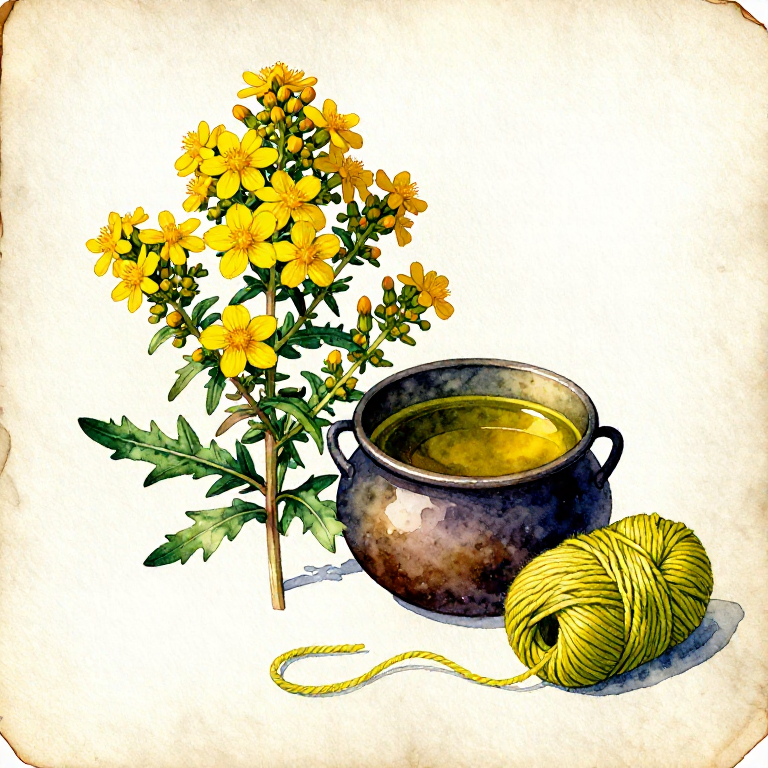

Dyeing Yellow-Green with St. John's Wort — The Midsummer Herb of European Dyers
St. John's wort (Hypericum perforatum) is a perennial herb native to Europe, Western Asia, and North Africa. It has been used in European herbal medicine for centuries, but its role as a textile dye is equally ancient. The flowering tops contain hypericin — a red pigment visible as dark dots when leaves are held to the light — along with flavonoids including rutin and quercetin. Together, these produce a range of colours on wool: from yellow-green to olive-gold with alum mordant, and deep olive-green with iron.
The plant flowers around the summer solstice — its common name refers to St. John's Day (June 24th) when it was traditionally gathered for both medicinal and dyeing use. This midsummer harvest coincides with peak pigment content. The entire flowering top (flowers, buds, and upper leaves) is used for dyeing. Fresh material gives different results from dried: fresh flowers produce a more yellow-green shade because the hypericin is less concentrated, while dried flowers produce deeper, more olive tones.
St. John's wort was a common household dye plant throughout medieval and early modern Europe. Its abundance in meadows, roadsides, and waste ground meant it was freely available to rural dyers. In Scandinavian traditions, it was paired with birch bark and onion skins in the domestic dyer's plant collection. The colours it produces — warm yellow-greens and soft olives — are among the most natural-looking shades in the plant dyer's palette, complementing the brighter yellows from weld and the deep browns from walnut.
คำแนะนำ
Weigh the dried St. John's wort flowering tops
Weigh the dried St. John's wort flowering tops
Use 100-200% WOF of dried flowering tops. For 100 g of wool, weigh out 100-200 g of dried plant material. Harvest when at least half the flowers on each stem are open — typically late June to early July in temperate climates. Cut the top 20-30 cm of stems including flowers, buds, and upper leaves. Dry loosely bundled in shade for 1-2 weeks. Well-dried St. John's wort retains its yellow flowers and has a distinctive resinous, herbal scent.
วัสดุสำหรับขั้นตอนนี้:
 ยอดดอกเซนต์จอห์นสวอร์ต (แห้ง)150 ก.
เครื่องมือที่ต้องใช้:
 เครื่องชั่งดิจิทัลสำหรับครัว
Soak the plant material overnight
Soak the plant material overnight
Place the dried St. John's wort in a dye pot with 4-5 litres of room temperature water and soak overnight (8-12 hours). The water will turn a yellowish-green as the flavonoids dissolve. Unlike some plant dyes, St. John's wort benefits from a longer soak — the hypericin and other pigments release gradually from the flower heads and stems. By morning, the liquid should be a clear greenish-gold.
เครื่องมือที่ต้องใช้:
 หม้อต้มซุปใบใหญ่
Simmer the plant at 80°C for 45 minutes
Simmer the plant at 80°C for 45 minutes
Bring the pot to a gentle simmer (75-80°C) and hold for 45 minutes. Do not boil — temperatures above 85°C degrade the hypericin and shift the colour toward muddy brown. Stir occasionally. The liquid will deepen to a rich golden-green. The flowers will lose their yellow colour and the leaves will darken as the pigment transfers to the water. A faint reddish tinge may appear at the water surface — this is hypericin, which contributes the olive undertone to the final colour.
เครื่องมือที่ต้องใช้:
 เทอร์โมมิเตอร์สำหรับปรุงอาหาร
 ช้อนไม้สำหรับคน
Strain out the plant material
Strain out the plant material
Strain the dye liquor through a fine mesh strainer into a clean pot. Press the plant material to extract all remaining liquid. St. John's wort stems are woody and strain out cleanly, but the flower heads may be soft — strain thoroughly to remove all fragments. The strained liquor should be a warm, clear golden-green with a subtle olive undertone.
เครื่องมือที่ต้องใช้:
 ตะแกรงร่อนตาถี่
Dye alum-mordanted wool at 75-80°C for 45-60 minutes
Dye alum-mordanted wool at 75-80°C for 45-60 minutes
Pre-wet the alum-mordanted wool in lukewarm water for 15 minutes. Lower it into the St. John's wort dye bath at room temperature and slowly raise to 75-80°C. Hold for 45-60 minutes, turning the wool gently every 10 minutes. The wool will develop a warm yellow-green — a distinctive shade that is more green-tinted than pure flavonoid yellows like goldenrod or weld. This green undertone comes from the interplay between the yellow flavonoids and the red hypericin. The alum mordant produces the clearest, most vibrant version of this colour.
วัสดุสำหรับขั้นตอนนี้:
 ไจเส้นด้ายขนแกะ100 ก.
 สารส้ม (โพแทสเซียมอะลัม)10 ก.
Cool overnight, rinse, and dry
Cool overnight, rinse, and dry
Turn off the heat and leave the wool in the dye bath overnight. The colour will deepen and the olive undertone will become more pronounced during cooling. Remove, squeeze gently, and rinse in lukewarm water until the runoff is clear. The final colour is a warm yellow-green to soft olive-gold — natural-looking and versatile. Lightfastness is moderate. The colour will gradually shift toward a warmer, more golden tone with light exposure over months. Dry in shade.
วัสดุ
3- ตัวยึดตำแหน่ง
- 100 ก.ตัวยึดตำแหน่ง
- ตัวยึดตำแหน่ง
เครื่องมือที่จำเป็น
5- ตัวยึดตำแหน่ง
- ตัวยึดตำแหน่ง
- ตัวยึดตำแหน่ง
- ตัวยึดตำแหน่ง
- ตัวยึดตำแหน่ง
วัสดุจากพิมพ์เขียวที่เชื่อมต่อ
บลูพริ้นท์ที่เกี่ยวข้อง
บลูพริ้นท์เหล่านี้แบ่งปันความรู้ — เทคนิค วัสดุ หรือหลักการ
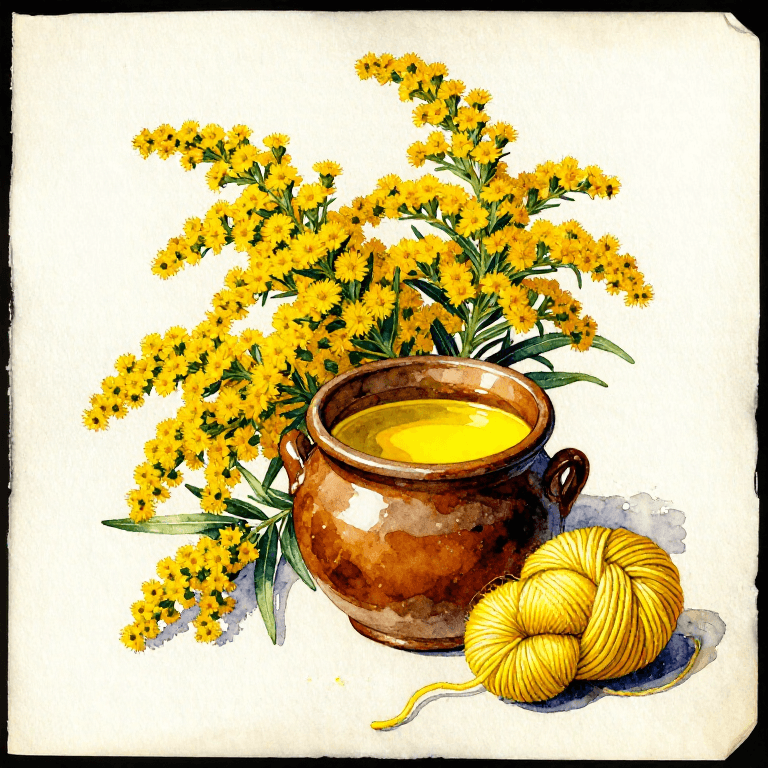
Dyeing Yellow with Goldenrod — One of the Best Wild-Plant Dyes in Nature
โดย Tex
สิ่งทอและหนัง
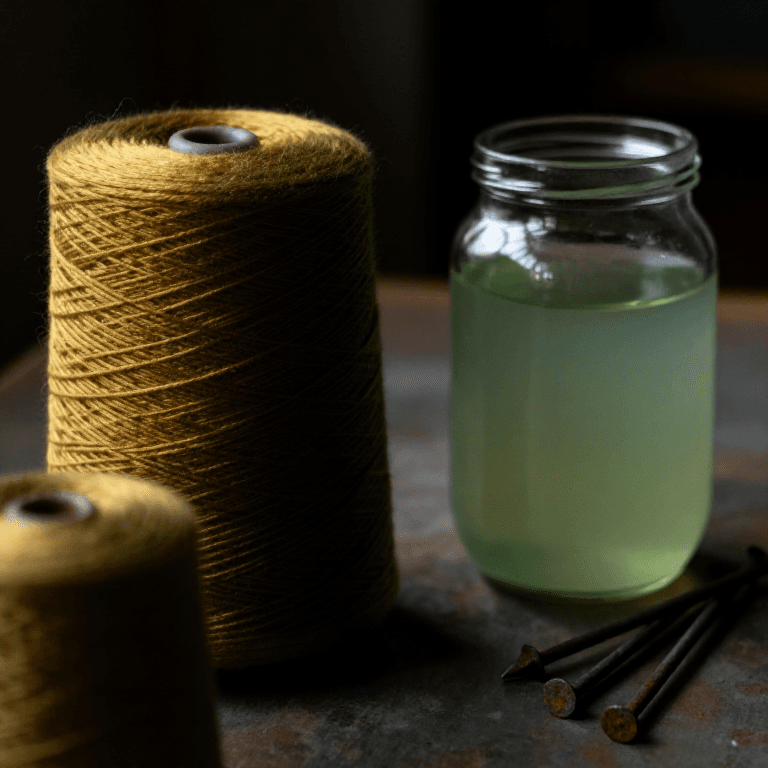
Iron Saddening — Darkening and Shifting Natural Dye Colours with Iron Water
โดย Tex
สิ่งทอและหนัง
Dyeing Gold with Onion Skins — The Most Accessible Natural Dye in Any Kitchen
โดย Tex
สิ่งทอและหนัง
CC0 สาธารณสมบัติ
พิมพ์เขียวนี้เผยแพร่ภายใต้ CC0 คุณสามารถคัดลอก แก้ไข แจกจ่าย และใช้งานผลงานนี้เพื่อวัตถุประสงค์ใดก็ได้ โดยไม่ต้องขออนุญาต
สนับสนุนเมกเกอร์โดยซื้อสินค้าผ่านพิมพ์เขียวของพวกเขา ซึ่งพวกเขาจะได้รับ ค่าคอมมิชชันเมกเกอร์ ที่ผู้ขายกำหนด หรือสร้างเวอร์ชันใหม่ของพิมพ์เขียวนี้และรวมเป็นการเชื่อมต่อในพิมพ์เขียวของคุณเพื่อแบ่งรายได้