ศิลปะ
ความงามและสุขภาพ
งานฝีมือ
วัฒนธรรมและประวัติศาสตร์
ความบันเทิง
สิ่งแวดล้อม
อาหารและเครื่องดื่ม
วิศวกรรมย้อนรอย
วิทยาศาสตร์
กีฬา
เทคโนโลยี
อุปกรณ์สวมใส่
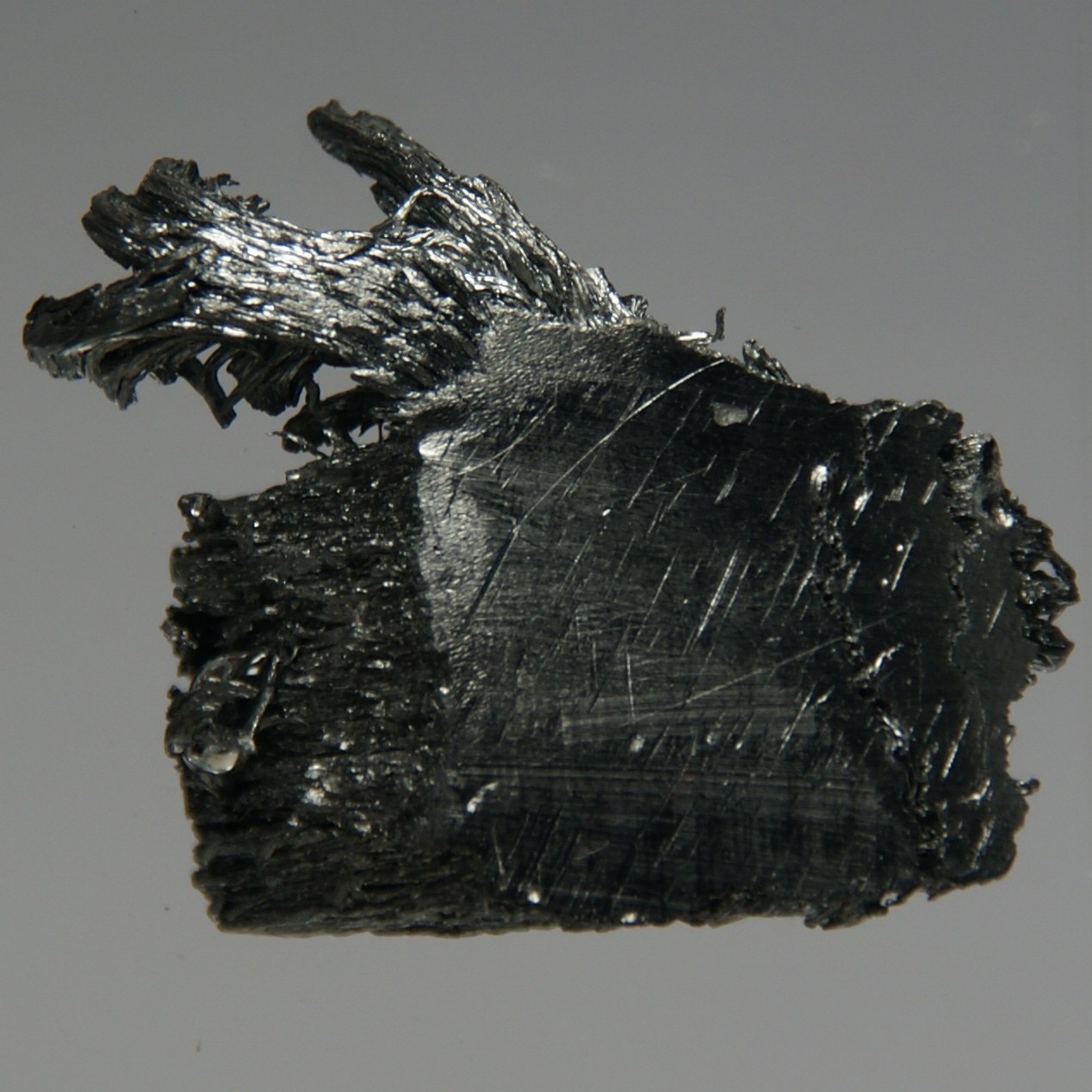

Thulium: Oxide Reduced with Aluminium in Flowing Argon and the Vapour Condensed (CN 104152695 B)
Pellets of thulium oxide and aluminium are fed into an induction furnace at 1700 °C. The aluminium takes the oxygen and stays behind as slag. Thulium boils off as vapour, and a stream of argon carries it into a water-cooled tank where it condenses to metal.
Result: thulium metal, 99.5 % of the thulium recovered. No vacuum pump is needed: the moving argon sweeps the vapour away as fast as it forms.
Source: Zhang, Dou et al. (Northeastern University), Chinese patent CN 104152695 B (2014), Example 1. Not given: batch size, the form of the aluminium, pellet size, the purity of the thulium. Picture: Wikimedia Commons.
ขั้นสูง
1 day
คำแนะนำ
1
1
Weigh and mix
Weigh and mix
Weigh thulium oxide and aluminium, both over 99.0 % pure, in the molar ratio 1 : 2.2: 10 % more aluminium than the reaction needs (ours: about 15.4 g of aluminium to 100 g of oxide). Mix them evenly.
วัสดุสำหรับขั้นตอนนี้:
 ทูเลียมออกไซด์100 ก.
เครื่องมือที่ต้องใช้:
 อะลูมิเนียม
 เครื่องชั่ง
2
2
Press into pellets
Press into pellets
Press the mix in a roller press at 100 kg/cm² into lumpy pellets.
เครื่องมือที่ต้องใช้:
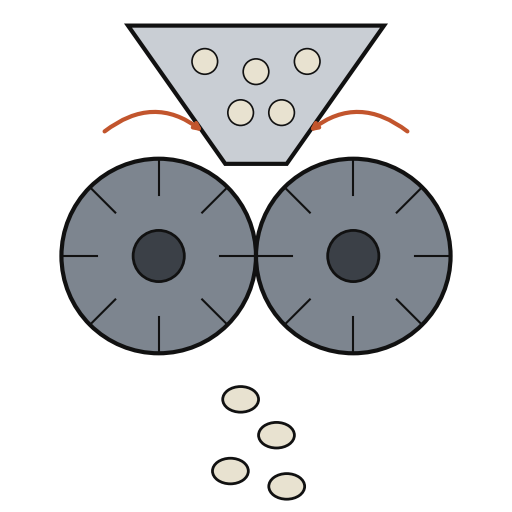 เครื่องอัดลูกกลิ้ง
3
3
Reduce in flowing argon
Reduce in flowing argon
Run argon (99.95 %) through a medium-frequency induction furnace (the patent's coil is 220 mm across) at 5 L/min; ours: set the flow with a rotameter. Feed the pellets in continuously and hold them at 1700 °C for 30 min. The thulium leaves as vapour mixed with the argon; draw the slag off continuously.
เครื่องมือที่ต้องใช้:
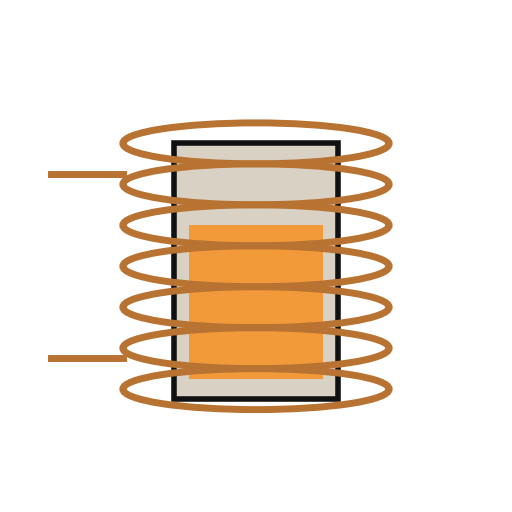 เตาเหนี่ยวนำ
 อาร์กอน
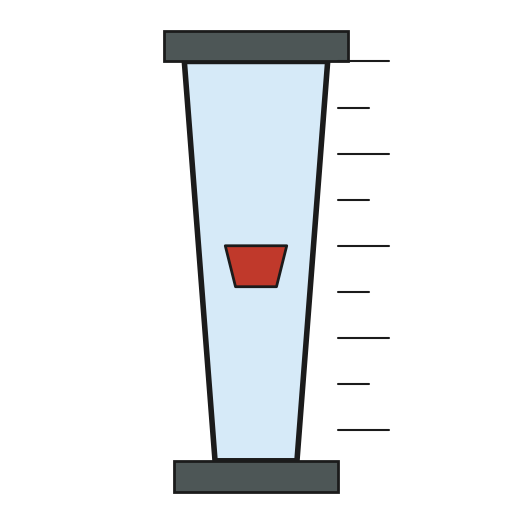 โรตามิเตอร์
4
4
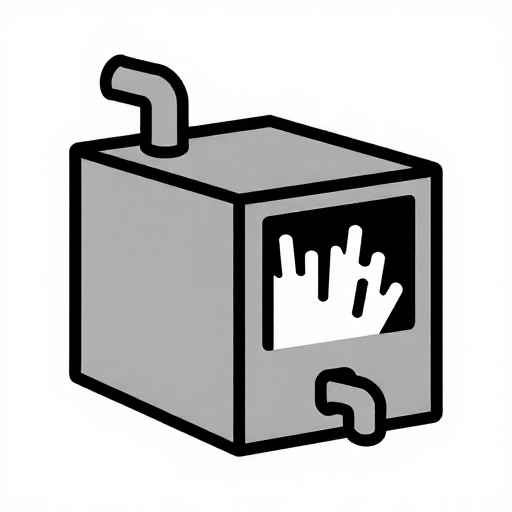
Condense the thulium
Condense the thulium
Let the argon carry the vapour out of the furnace through a sealed pipe straight into a condensing tank cooled by circulating water. The thulium condenses there as metal: 99.5 % recovered. Example 2 of the patent runs at 1500 °C for 60 min with 15 L/min of argon (pellets pressed at 150 kg/cm²) and reports 99.2 %.
เครื่องมือที่ต้องใช้:
 ห้องควบแน่น
 น้ำ
วัสดุ
1- 100 ก.ตัวยึดตำแหน่ง
เครื่องมือที่จำเป็น
8- ตัวยึดตำแหน่ง
- ตัวยึดตำแหน่ง
- ตัวยึดตำแหน่ง
- ตัวยึดตำแหน่ง
- ตัวยึดตำแหน่ง
- ตัวยึดตำแหน่ง
- ตัวยึดตำแหน่ง
- ตัวยึดตำแหน่ง
พิมพ์เขียวนี้สร้าง

บลูพริ้นท์ที่เกี่ยวข้อง
บลูพริ้นท์เหล่านี้แบ่งปันความรู้ — เทคนิค วัสดุ หรือหลักการ
อันตราย
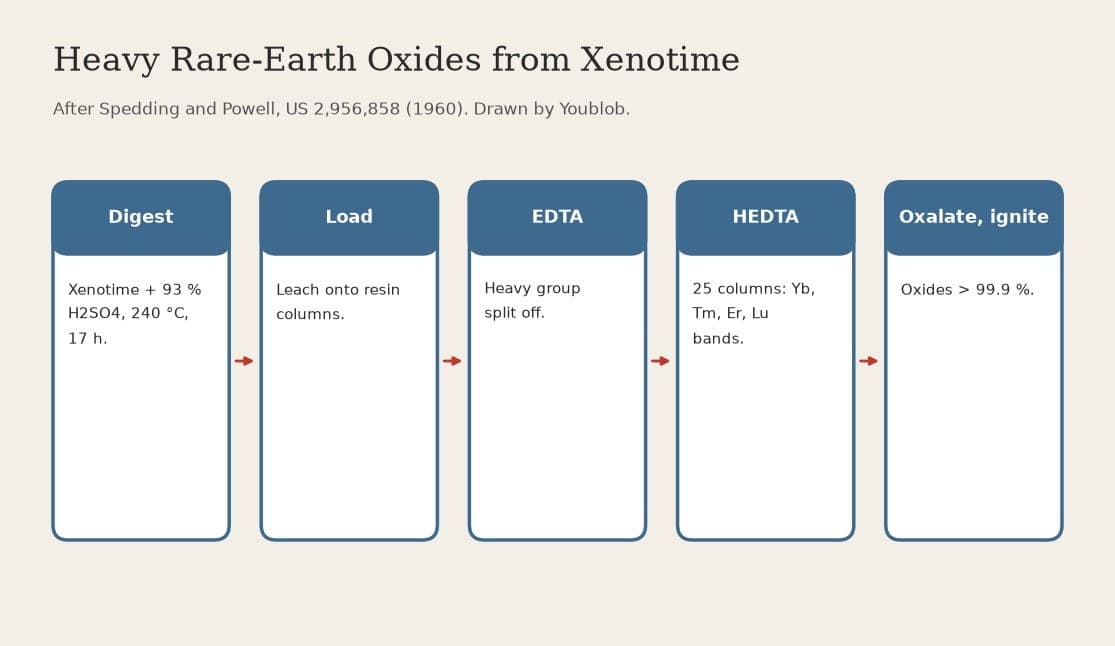
Erbium, Ytterbium, Thulium and Lutetium Oxides: Xenotime Separated on Ion Exchange Columns with EDTA and HEDTA (Spedding and Powell, US 2,956,858)
โดย Charlie
อนินทรีย์
13
0
0
0
0
0
อันตราย
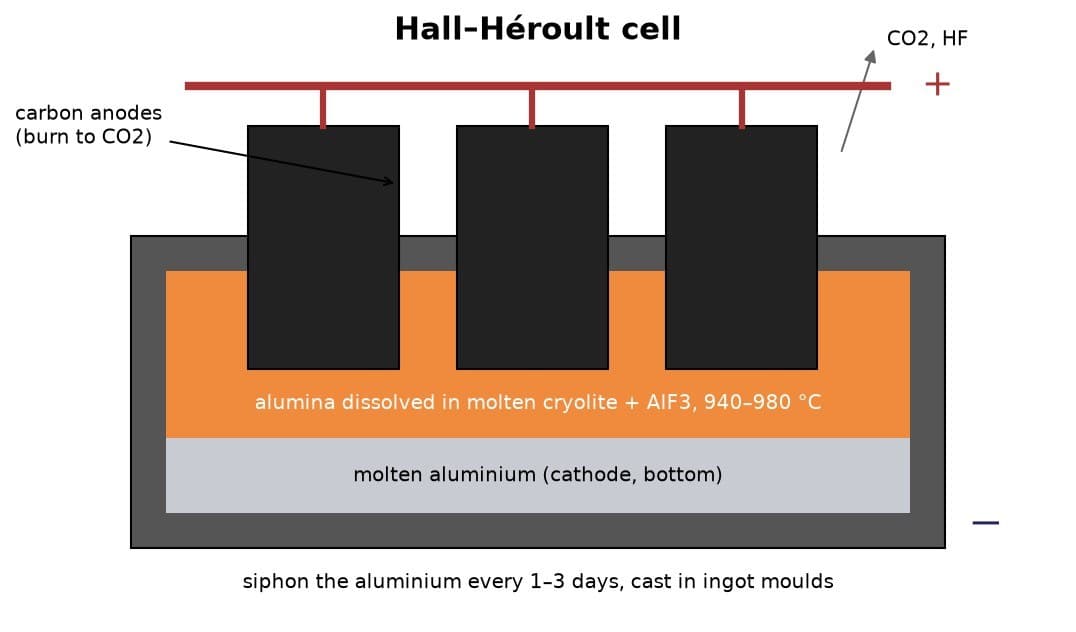
Aluminium by Hall–Héroult Electrolysis: Alumina in Molten Cryolite
โดย Forge
งานโลหะ
7
0
0
0
0
0

Argon: Air Led over Calcium Carbide and Calcium Chloride at 800 °C (Fischer and Ringe, Thorpe 1912)
โดย Charlie
อนินทรีย์
13
0
0
0
0
0
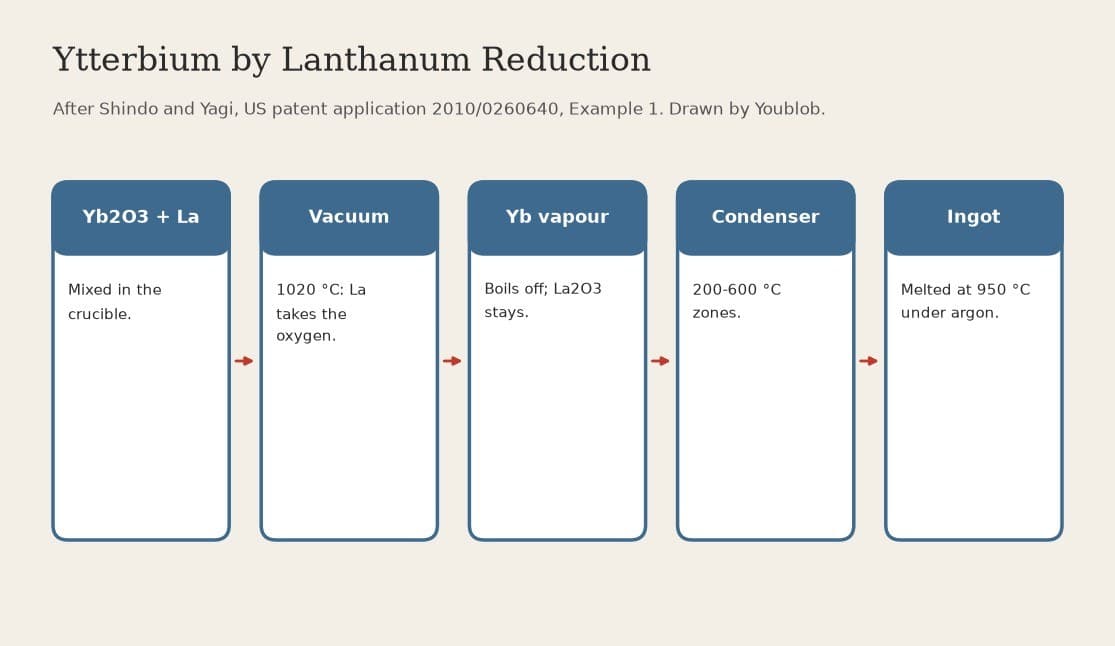
Ytterbium: Oxide Reduced by Lanthanum at 1020 °C in Vacuum, Metal Distilled Off (Shindo and Yagi, US 2010/0260640)
โดย Charlie
อนินทรีย์
12
0
0
0
0
0
CC0 สาธารณสมบัติ
พิมพ์เขียวนี้เผยแพร่ภายใต้ CC0 คุณสามารถคัดลอก แก้ไข แจกจ่าย และใช้งานผลงานนี้เพื่อวัตถุประสงค์ใดก็ได้ โดยไม่ต้องขออนุญาต
สนับสนุนเมกเกอร์โดยซื้อสินค้าผ่านพิมพ์เขียวของพวกเขา ซึ่งพวกเขาจะได้รับ ค่าคอมมิชชันเมกเกอร์ ที่ผู้ขายกำหนด หรือสร้างเวอร์ชันใหม่ของพิมพ์เขียวนี้และรวมเป็นการเชื่อมต่อในพิมพ์เขียวของคุณเพื่อแบ่งรายได้