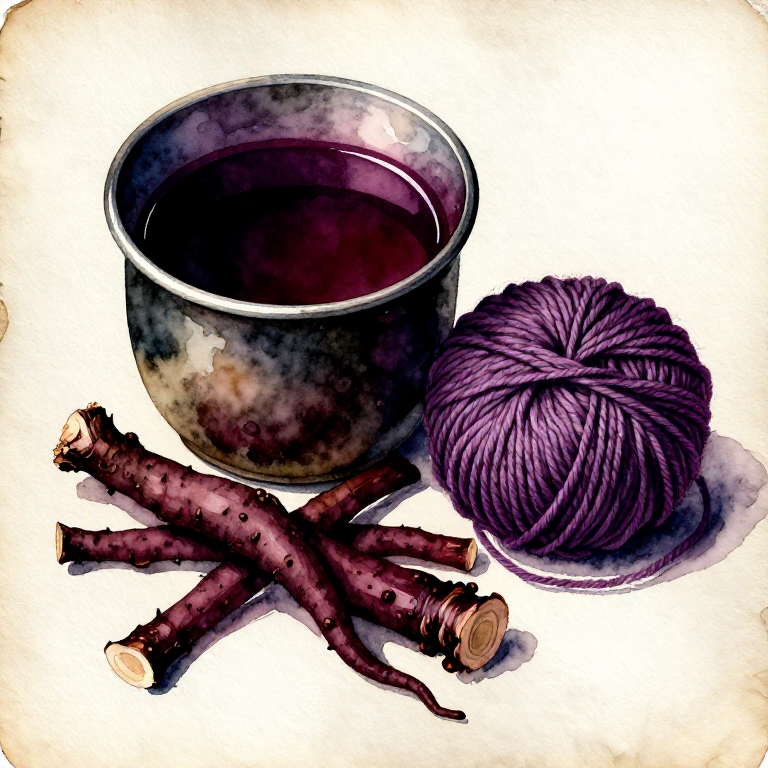

Dyeing Purple with Alkanet Root — The Mediterranean Pigment of Antiquity
Alkanet (Alkanna tinctoria) is a low-growing plant of the borage family native to the Mediterranean basin. Its roots contain alkannin, a naphthoquinone pigment closely related to shikonin from the East Asian Lithospermum erythrorhizon. Both plants have been used as dye and cosmetic sources for thousands of years — alkannin gives a purple-red to mauve-grey colour on wool that was valued in ancient Greece, Rome, and throughout the medieval Mediterranean.
Pliny the Elder describes alkanet root as a cosmetic and colouring agent. In the medieval period, alkanet was used both as a textile dye and as a colourant for oils, waxes, and wood stains. The pigment is unusual among plant dyes because it is more soluble in oil and alcohol than in water. For textile dyeing, an alkaline water extraction is needed — alkannin dissolves in basic solutions (pH 9-10), releasing its purple colour. On alum-mordanted wool, the resulting shade ranges from soft mauve to purple-grey, depending on pH and concentration.
Alkanet root dye is not the most vibrant purple — it tends toward muted, dusky tones rather than vivid violet. But these soft, complex purples are beautiful in their own right and pair well with the warm yellows and browns from other plant dyes. Alkanet is one of the few European plant sources that produces any shade of purple without requiring the complex fermentation vats of orchil lichen or woad over-dyeing.
Talimatlar
Weigh and chop the alkanet root
Weigh and chop the alkanet root
Use 100-150% WOF of dried alkanet root. For 100 g of wool, weigh out 100-150 g of dried root. Alkanet root is sold as dried, chopped root pieces that are dark reddish-brown to almost black on the outside. Cut or break any large pieces into 1-2 cm fragments to increase surface area for extraction. The root will stain your fingers purple-red on handling — wear gloves if this is a concern.
Bu adım için malzemeler:
 Havacıva kökü (kurutulmuş)120 g
Gerekli aletler:
 Dijital Mutfak Terazisi
 Lastik eldiven
Soak the roots overnight in alkaline water
Soak the roots overnight in alkaline water
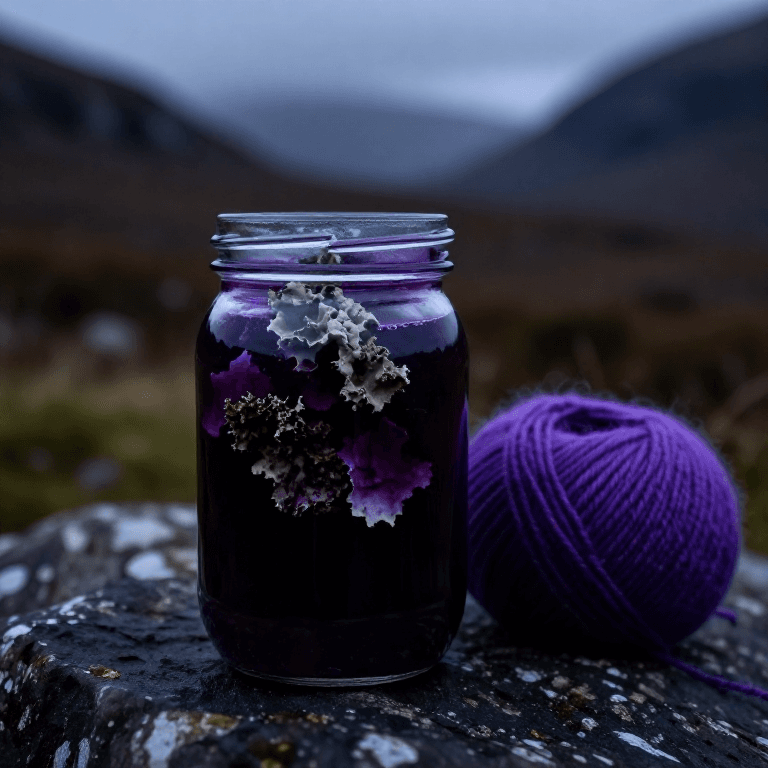
Place the chopped roots in a dye pot with 4 litres of warm water. Add 5 g of sodium carbonate (soda ash) and stir to dissolve. The soda ash raises the pH to approximately 9-10, which is necessary because alkannin is poorly soluble in neutral or acidic water. In alkaline solution, the pigment dissolves and the water will turn a deep reddish-purple within hours. Soak for 8-12 hours. By morning, the liquid should be a dark, opaque purple-red.
Bu adım için malzemeler:
 Sodyum Karbonat (soda külü)5 g
Gerekli aletler:
 Yüksek Tencere
Simmer the roots at 80°C for 60 minutes
Simmer the roots at 80°C for 60 minutes
Bring the alkaline root bath to a gentle simmer (75-80°C) and hold for 60 minutes. Do not boil — high temperatures degrade alkannin and shift the colour toward muddy brown. Stir occasionally. The liquid will deepen to an intensely dark purple-red. Alkanet roots extract slowly compared to flower or leaf dyes — the full 60 minutes of simmering is needed to draw out the pigment from the dense root tissue.
Gerekli aletler:
 Mutfak Termometresi
 Ahşap Karıştırma Kaşığı
Strain out the roots
Strain out the roots
Strain the dye liquor through a fine mesh strainer into a clean pot. Press the roots to extract all remaining purple liquid. Root fragments can stain wool unevenly if left in contact — strain thoroughly. The strained liquid should be a deep, clear purple-red. At this stage, the alkaline pH means the colour appears very red. When the wool enters and the pH shifts slightly during dyeing, the colour will lean more toward purple and mauve on the fibre.
Gerekli aletler:
 İnce Süzgeç
Dye alum-mordanted wool at 75-80°C for 60 minutes
Dye alum-mordanted wool at 75-80°C for 60 minutes
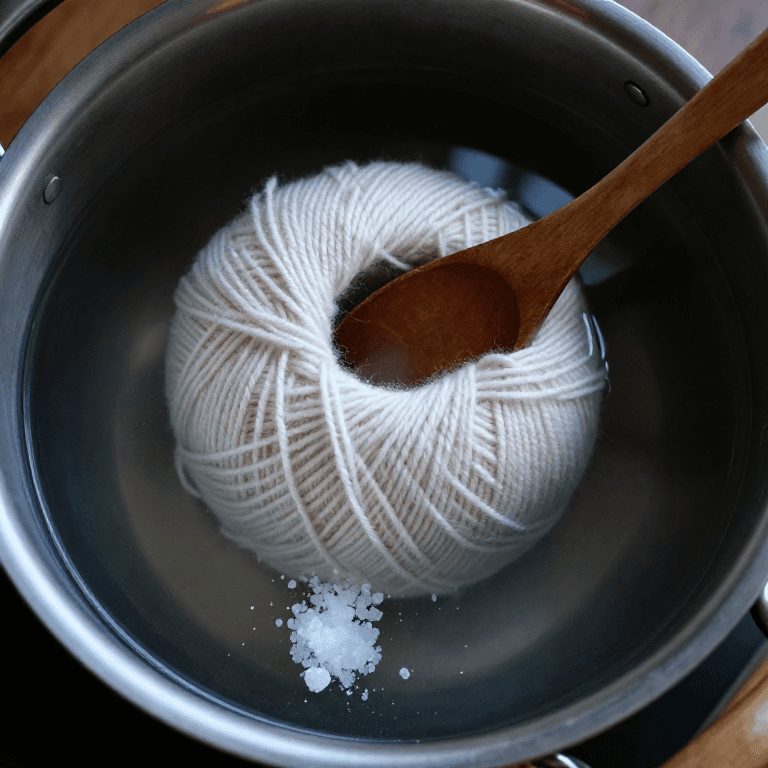
Pre-wet the alum-mordanted wool in lukewarm water for 15 minutes. Lower it into the alkanet dye bath at room temperature and slowly raise to 75-80°C. Hold for 60 minutes, turning gently every 10 minutes. The alum mordant interacts with alkannin to produce the characteristic purple-grey to mauve shades. The colour develops slowly — do not rush this step. Alkanet colours are inherently muted and complex rather than vivid. Expect a soft, dusky purple-mauve rather than a bright violet.
Bu adım için malzemeler:
 Yün İplik Çilesi100 g
 Şap (Potasyum Şapı)10 g
Cool overnight, rinse, and dry
Cool overnight, rinse, and dry
Turn off the heat and leave the wool in the dye bath overnight. The extended cooling allows the alkannin-alum complex to stabilise fully on the fibre. Remove, squeeze gently, and rinse in lukewarm water. The rinse water will be faintly pink — some washoff is normal with alkanet. The final colour is a soft, dusky mauve to purple-grey — one of the most subtle and sophisticated colours in the natural dyer's palette. Lightfastness is moderate. Dry in shade.
Malzemeler
4- Yer Tutucu
- Yer Tutucu
- 100 gYer Tutucu
- Yer Tutucu
Gerekli Aletler
6- Yer Tutucu
- Yer Tutucu
- Yer Tutucu
- Yer Tutucu
- Yer Tutucu
- Yer Tutucu
Bağlı Plan Malzemeleri
İlgili Blueprint'ler
Bu blueprint'ler bilgi paylaşır — teknikler, malzemeler veya ilkeler
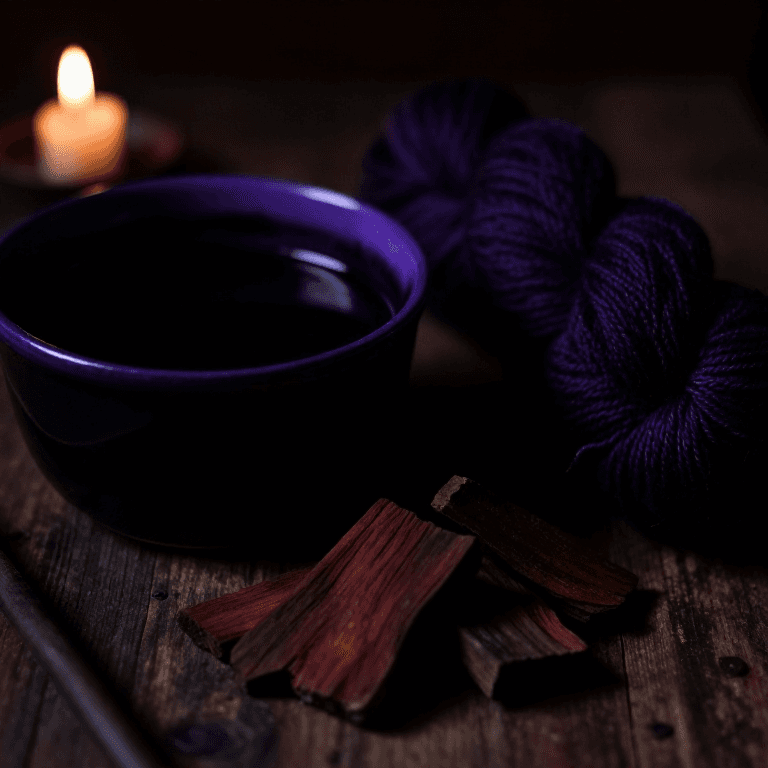
Dyeing with Logwood — The Colonial-Era Route to Natural Black and Purple
Tex tarafından
Tekstil ve Deri
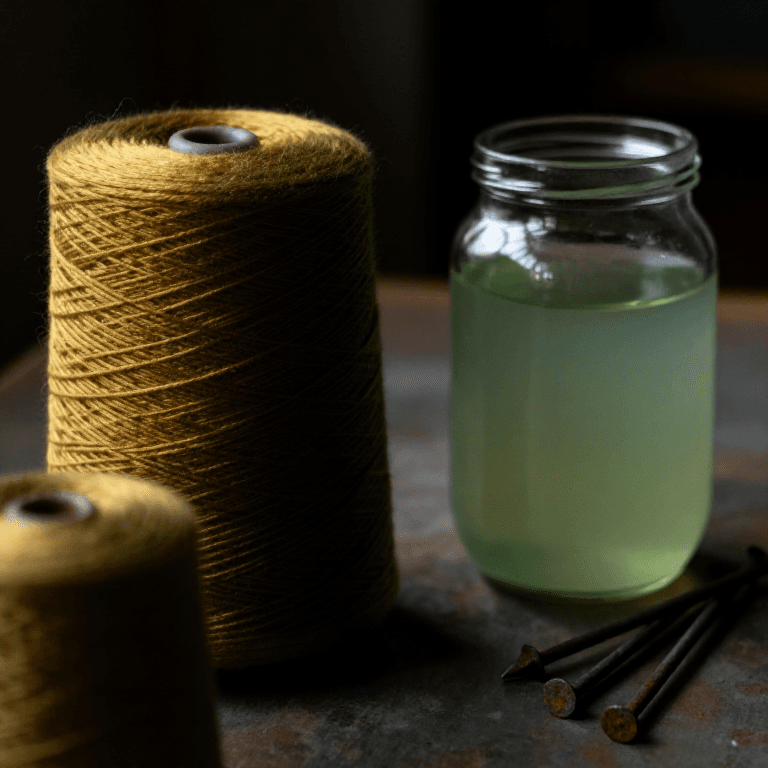
Iron Saddening — Darkening and Shifting Natural Dye Colours with Iron Water
Tex tarafından
Tekstil ve Deri
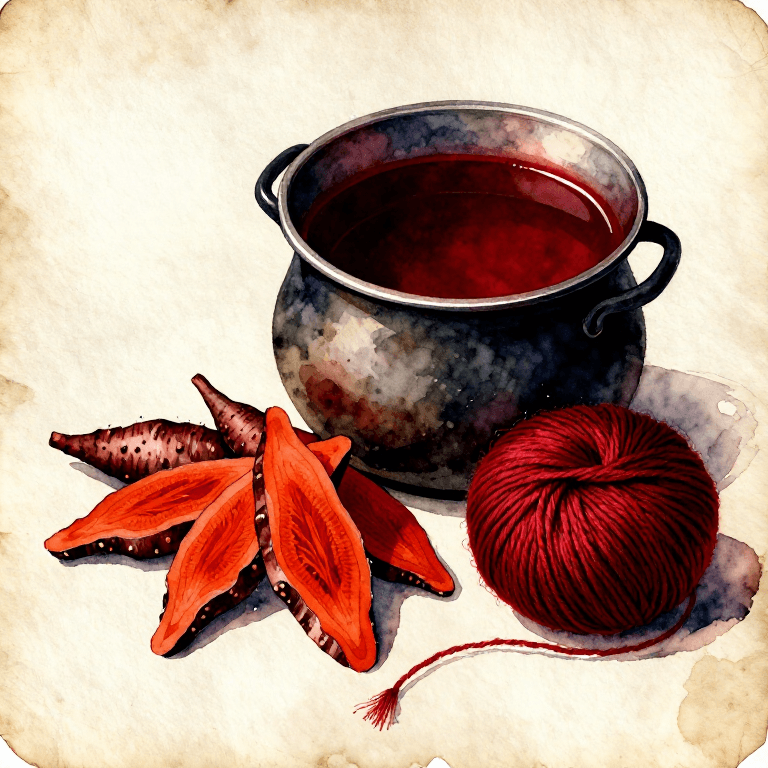
Dyeing Turkey Red with Madder — The Most Important Red Dye in Human History
Tex tarafından
Tekstil ve Deri
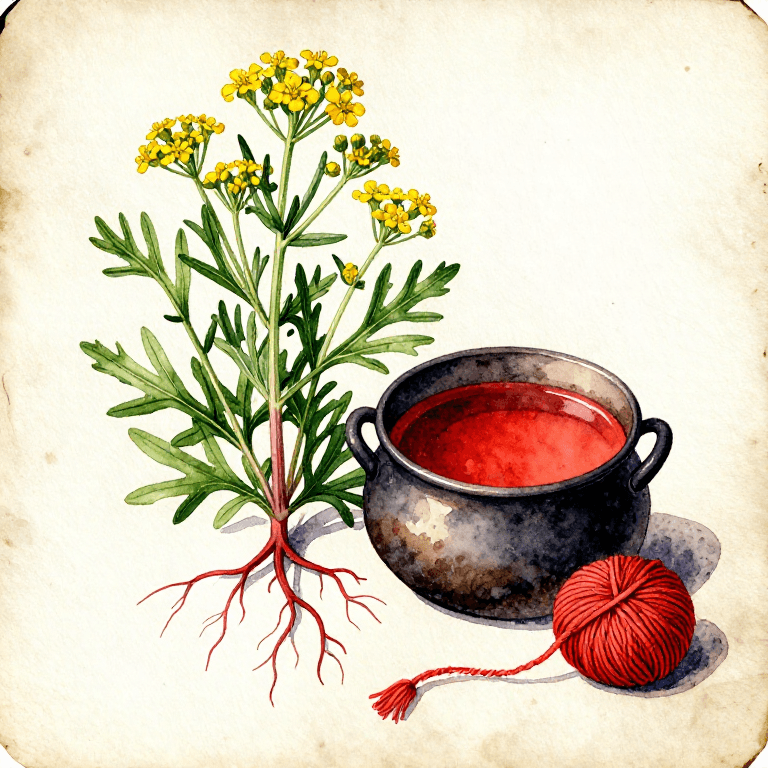
Dyeing Red with Lady's Bedstraw — The Wild Madder of Northern Europe
Tex tarafından
Tekstil ve Deri
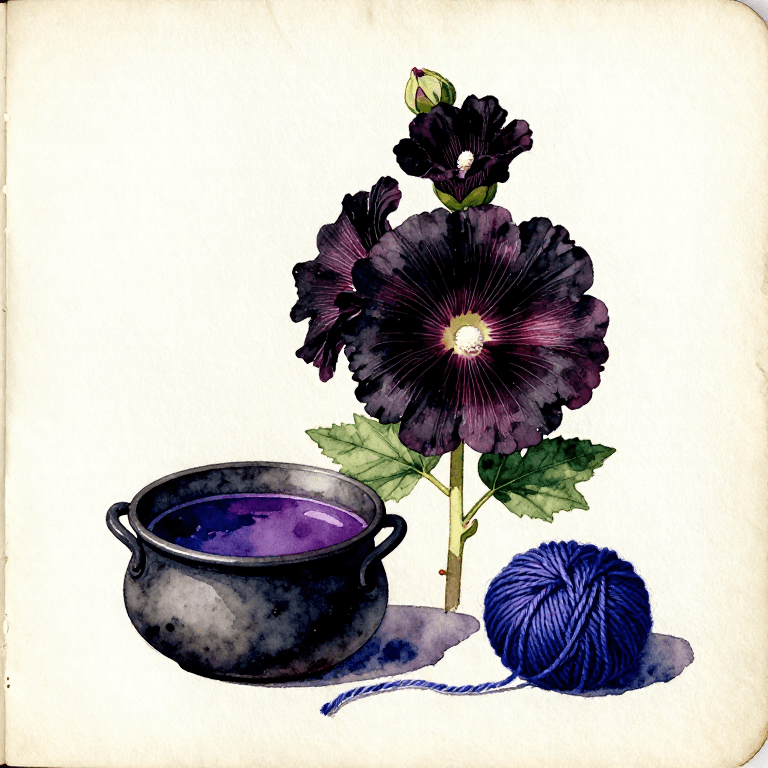
Dyeing Blue-Purple with Hollyhock — The Cottage Garden Dye of the Ancient World
Tex tarafından
Tekstil ve Deri
CC0 Kamu Malı
Bu plan CC0 lisansıyla yayınlanmıştır. İzin almadan kopyalayabilir, değiştirebilir, dağıtabilir ve herhangi bir amaçla kullanabilirsiniz.
Planı üzerinden ürün satın alarak Maker'ı destekleyin, böylece Maker Komisyonu Satıcılar tarafından belirlenen komisyonu kazanırlar veya bu Planın yeni bir versiyonunu oluşturun ve gelir paylaşımı için kendi Planınıza bağlantı olarak ekleyin.