SANAT
GÜZELLİK & SAĞLIK
ZANAAT
KÜLTÜR & TARİH
EĞLENCE
ÇEVRE
YİYECEK & İÇECEK
TERS MÜHENDİSLİK
BİLİMLER
SPOR
TEKNOLOJİ
GİYİLEBİLİR ÜRÜNLER
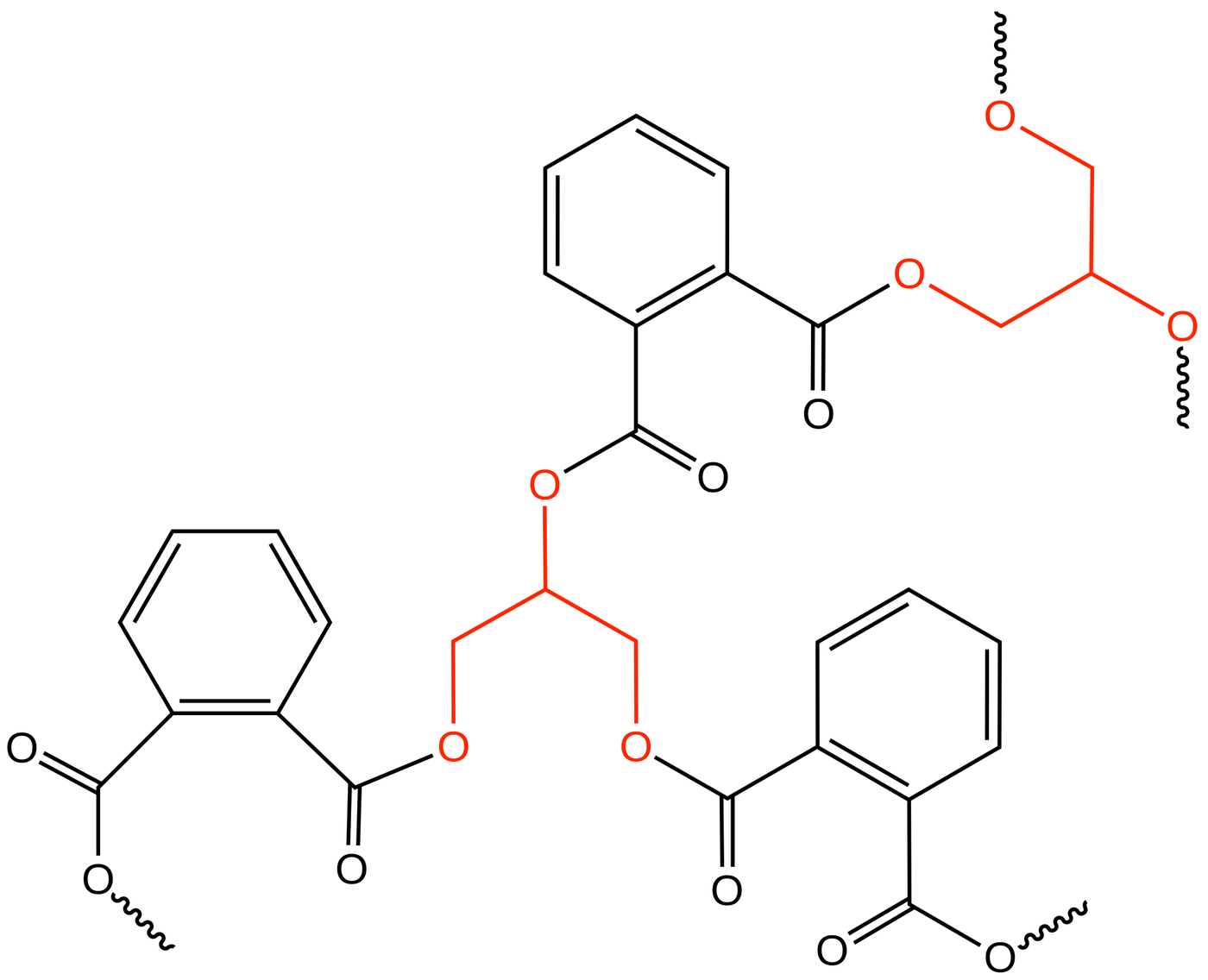


Glyptal Resin from Glycerin and Phthalic Anhydride: Callahan, 1914
Michael J. Callahan of General Electric patented this in 1914, US 1,108,329 (filed 1912): glycerin and phthalic anhydride heated together give a brittle, transparent, yellowish resin that dissolves in acetone and serves as a varnish. Heated afterwards at a moderate temperature for a long time it turns hard, infusible and insoluble, free of bubbles, with high dielectric strength, for insulating coils and wires. Resins of glycerol and phthalic acid like this were the original alkyds, sold under the name Glyptal.
İleri
Workshop process
Talimatlar
1
1
Weigh out the charge
Weigh out the charge
Jupyter defteri yükleniyor…
2
2
Fuse the charge
Fuse the charge
Mix two parts by weight of phthalic anhydride with one part of glycerin and heat slowly in a suitable container. At about 100 °C the two fuse to a clear liquid and a slight distillation begins.
Bu adım için malzemeler:
 Ftalik anhidrit2 parts by weight
 Gliserol1 part by weight
Gerekli aletler:
 Borosilikat Beher
 Isıtıcı Tabla
 Termometre
 Cam Karıştırma Çubuğu
3
3
Hold at 185 °C until distillation stops
Hold at 185 °C until distillation stops
Raise the temperature to about 185 °C and keep it there until distillation ceases. Then go on heating at this temperature, or a little higher, about 210 °C, until the first stage of the reaction is complete.
Gerekli aletler:
Isıtıcı TablaTermometre4
4
Test samples and stop in time
Test samples and stop in time
Take small samples from the mass and let them cool. As soon as a sample is hard and brittle, without stickiness, stop heating and let the product cool. It sets to a brittle, transparent, somewhat yellowish mass that melts again on heating and dissolves in acetone. Do not heat further: the second stage then starts with a rapid rise in temperature, violent boiling sets in at about 275 °C, and the result is a hard, brittle mass full of cavities.
Gerekli aletler:
Cam Karıştırma ÇubuğuTermometre5
5
Dissolve it in acetone for varnish
Dissolve it in acetone for varnish
Dissolve the resin in acetone. The solution is clear and can be used as a varnish: impregnate the fibrous covering of coils or wires with it, or paint it on, then evaporate the acetone.
Gerekli aletler:
Borosilikat BeherCam Karıştırma Çubuğu İnce fırçalar
 Aseton
6
6
Harden it slowly
Harden it slowly
Harden the coated or cast resin by heating it at a moderate temperature, preferably about 85 to 100 °C, for a time that depends on the mass: a layer about 0.2 inch thick takes about 15 to 20 hours. In some cases a higher temperature, say 135 °C, can be used. No bubbles form, and the product is hard, dense, infusible and practically insoluble in the usual solvents.
Gerekli aletler:
 Kurutma fırınıTermometre
Bu planla yapılan

İlgili Blueprint'ler
Bu blueprint'ler bilgi paylaşır — teknikler, malzemeler veya ilkeler

CC0 Kamu Malı
Bu plan CC0 lisansıyla yayınlanmıştır. İzin almadan kopyalayabilir, değiştirebilir, dağıtabilir ve herhangi bir amaçla kullanabilirsiniz.
Planı üzerinden ürün satın alarak Maker'ı destekleyin, böylece Maker Komisyonu Satıcılar tarafından belirlenen komisyonu kazanırlar veya bu Planın yeni bir versiyonunu oluşturun ve gelir paylaşımı için kendi Planınıza bağlantı olarak ekleyin.