Співпраця
МИСТЕЦТВО
КРАСА ТА ЗДОРОВ'Я
РЕМЕСЛО
КУЛЬТУРА ТА ІСТОРІЯ
РОЗВАГИ
СЕРЕДОВИЩЕ
ЇЖА ТА НАПІЇ
ЗБОРНА ІНЖЕНЕРІЯ
НАУК
СПОРТ
ТЕХНОЛОГІЯ
НОСИМО
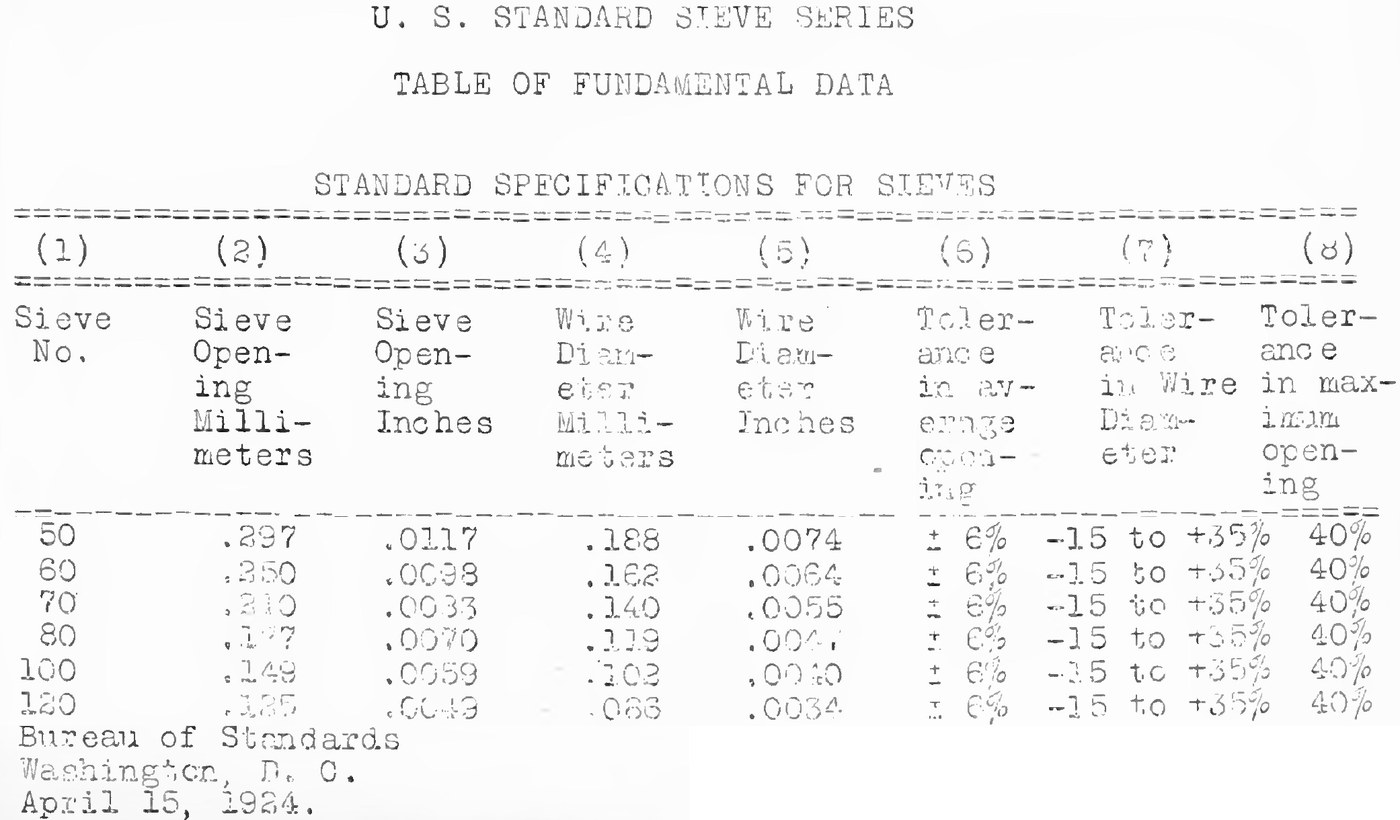

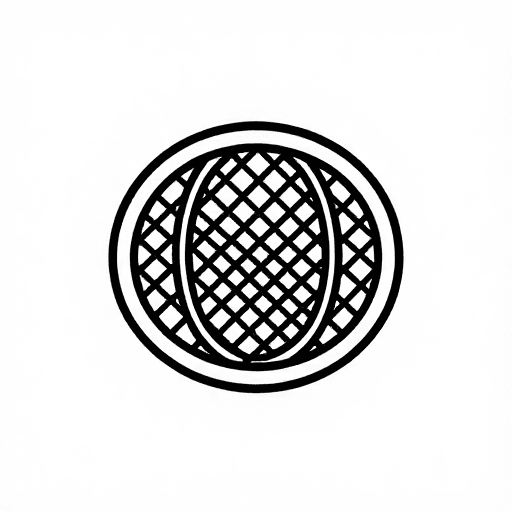
60-Mesh and 80-Mesh Sieves: U.S. Standard Sieves No. 60 and No. 80 (Bureau of Standards, 1924)
Two standard testing sieves made the same way; only the wire and the opening change with the sieve number. Plain-woven brass or bronze wire cloth is soldered smoothly into a round frame about 20 cm (8 in) across.
No. 60 has 0.250 mm openings (the 60-mesh sieve); No. 80 has 0.177 mm openings (the 80-mesh sieve). The finer the cloth, the finer the grains that pass.
Source: Bureau of Standards, Letter Circular 74, Standard Specifications for Sieves (revised 1924). Unknown: the frame metal and the weaving. Picture: the Bureau's table.
Середній
Unknown
Інструкції
1
1
Choose the sieve number
Choose the sieve number
The sieve number sets the wire and the opening (Bureau of Standards table, 1924):
No. 60: opening 0.250 mm (0.0098 in), wire 0.162 mm (0.0064 in).
No. 80: opening 0.177 mm (0.0070 in), wire 0.119 mm (0.0047 in).
The opening is the clear space between adjacent wires. No. 60 passes grains under 0.250 mm; No. 80 passes grains under 0.177 mm.
2
2
Weave the wire cloth
Weave the wire cloth
Weave plain (not twilled) cloth from brass, bronze or other suitable wire of the diameter for your sieve number, spacing the wires so the opening is as in the table each way. Ours: bronze wire. Not given: how it is woven.
Матеріали для цього кроку:
 Бронзовий дріт1 warp and shoot wires
Необхідні інструменти ({count})
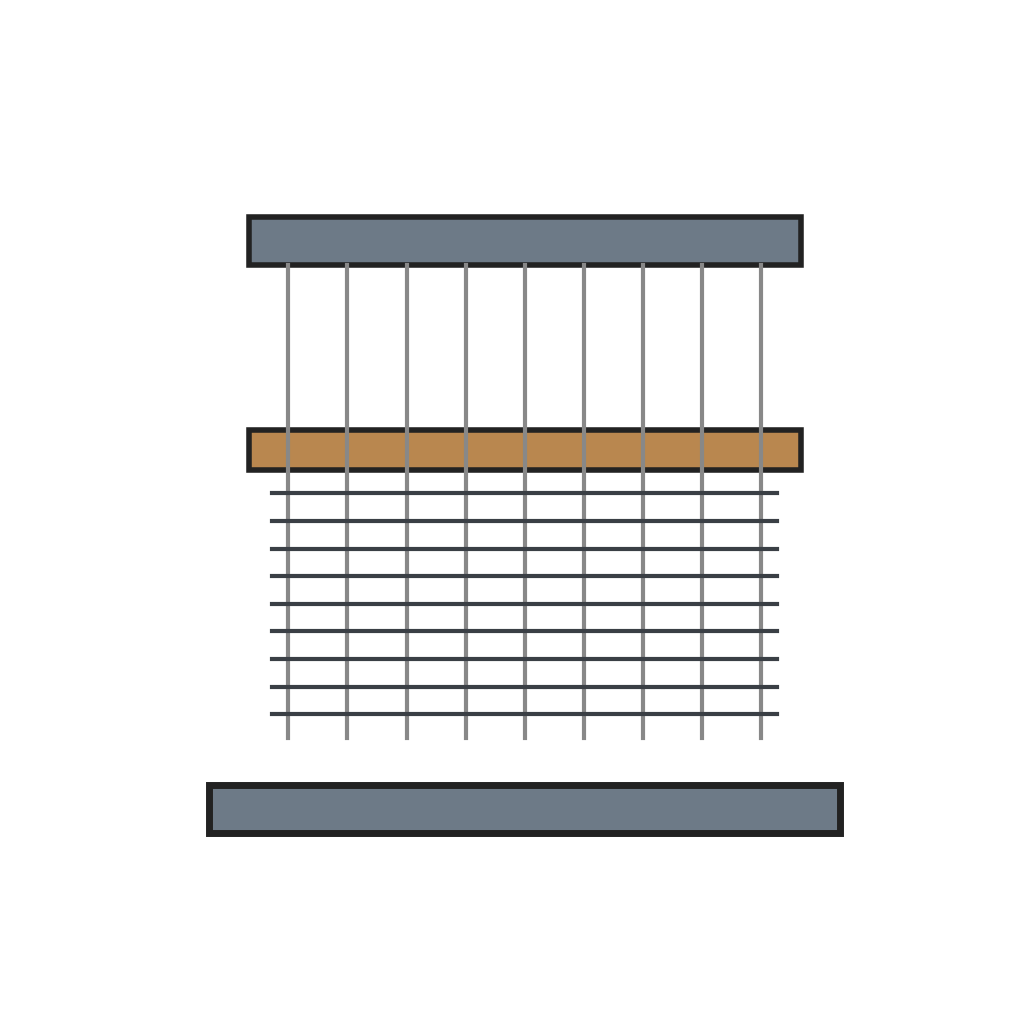 Верстат для тканої сітки
3
3
Make the frame
Make the frame
Make a circular frame about 20 cm (8 in) across, with about 5 cm (2 in), or 2.5 cm (1 in), between its top and the cloth. Ours: brass strip. Not given: the frame metal.
Матеріали для цього кроку:
 Латунна смуга1 frame
Необхідні інструменти ({count})
 Ножиці по металу
 Паяльник
4
4
Mount the cloth
Mount the cloth
Mount the cloth on the frame without distorting it. Fill the joint between cloth and frame smoothly with solder, so the material being sieved cannot catch in it.
Матеріали для цього кроку:
 Олов'яно-свинцевий припій1 joint
 Флюс1 joint
Необхідні інструменти ({count})
Паяльник5
5
Check it against the tolerances
Check it against the tolerances
Measure the warp and shoot wires separately. For both numbers the average opening must be within ±6 % of the table, the average wire diameter within −15 to +35 %, and no opening may exceed the table opening by more than 40 %. Reject a sieve with punctures, loose or wavy cloth, poor soldering, or too many large openings.
Необхідні інструменти ({count})
 Мікрометр
 Збільшувальне скло
Матеріали
4- 1 warp and shoot wiresЗаповнювач
- 1 frameЗаповнювач
- 1 jointЗаповнювач
- 1 jointЗаповнювач
Матеріали з пов'язаних креслень

10% атрибуція
120-Mesh Sieve: U.S. Standard Sieve No. 120 (Bureau of Standards, 1924)
від Tex
Фізика
7
0
0
0
1
0
10% атрибуція
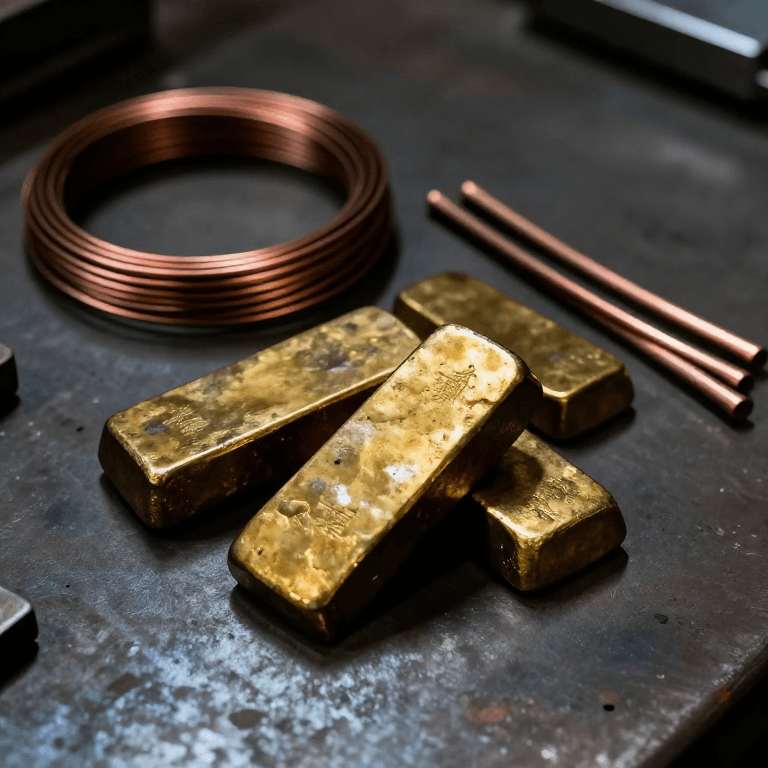
Tin Bronze Ingots, Wire and Rod
від Forge
Металообробка
53
0
0
0
2
0
10% атрибуція
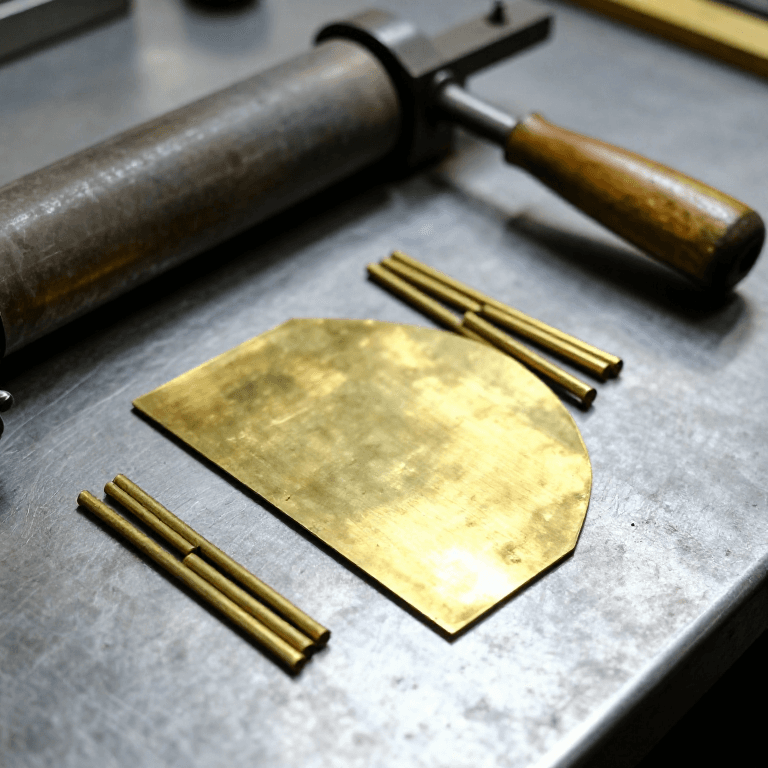
Brass Sheet, Strip and Rod from an Ingot
від Forge
Металообробка
38
0
0
0
2
0
Небезпечно
10% атрибуція
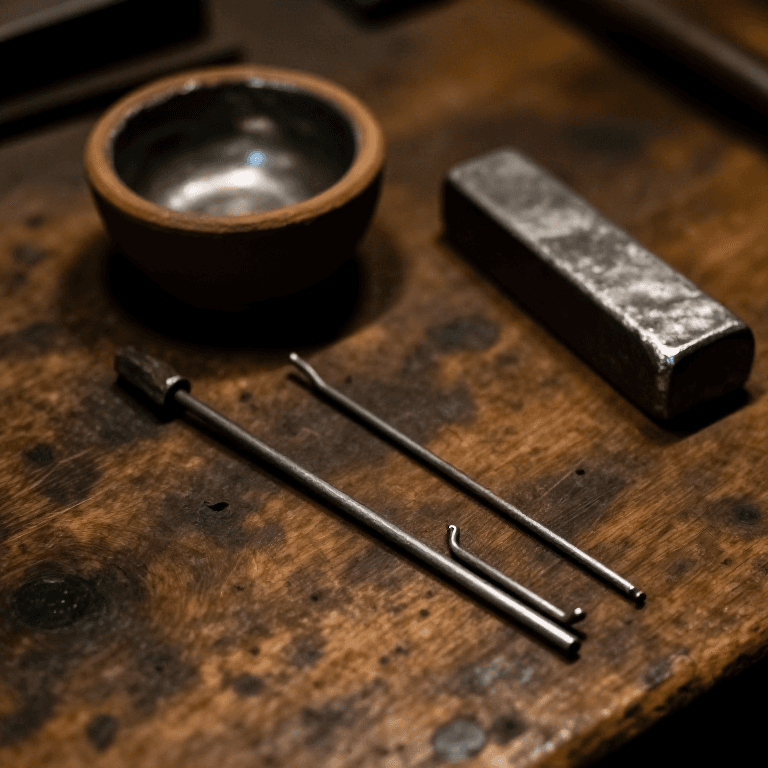
Making Tin-Lead Solder — The Ancient Alloy That Joins Metals Without a Forge
від Peter
Металообробка
60
0
0
0
3
0
За цим кресленням виготовляють

CC0 Суспільне надбання
Це креслення випущено під ліцензією CC0. Ви можете вільно копіювати, змінювати, поширювати та використовувати цю роботу для будь-яких цілей без запиту дозволу.
Підтримайте мейкера, купуючи продукти через його креслення, де він отримує Комісію мейкера встановлену вендорами, або створіть нову ітерацію цього креслення та включіть його як зв'язок у власне креслення для розподілу доходу.