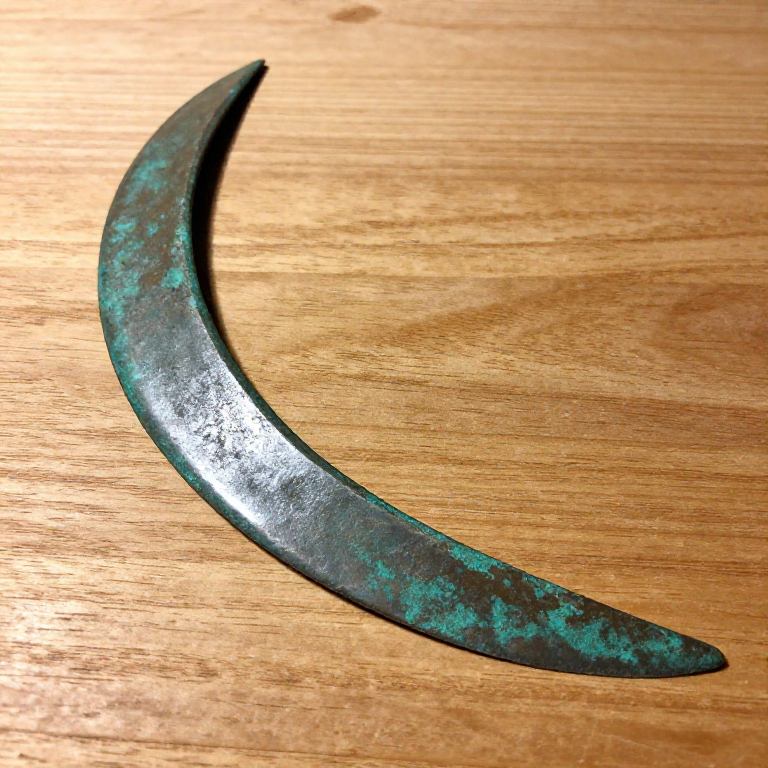


Casting a Bronze Sickle — The Harvesting Tool That Fed Civilisation
The bronze sickle was the tool that made large-scale grain agriculture possible. Its curved blade could cut a handful of wheat or barley stalks in a single sweeping motion — ten times faster than plucking individual seed heads by hand. When bronze sickles replaced flint-toothed sickles around 2000 BCE, a single farmer's harvest yield increased enough to feed several non-farming specialists, enabling the growth of cities, armies, and craft guilds.
The sickle is cast in a bivalve stone mould as a flat crescent blade with a tang for hafting. The inner (cutting) edge is cold-hammered and ground sharp while the outer edge remains thick for rigidity. The curved form naturally guides the stalks into the blade as the farmer sweeps through a stand of grain.
Archaeological examples show distinctive wear polish (sickle sheen) on the cutting edge from contact with silica-rich grass stems — a telltale sign that identifies even fragmentary bronze sickles in the archaeological record.
Інструкції
Prepare the bivalve mould
Prepare the bivalve mould
Матеріали для цього кроку:
 Блок талькохлориту2 штук
Assemble and bind the mould
Assemble and bind the mould
Матеріали для цього кроку:
 Смуги сириці1 m
Melt and pour the bronze
Melt and pour the bronze
Матеріали для цього кроку:
 Кускове деревне вугілля3 кг
Необхідні інструменти ({count})
 Кліщі для тиглів
Cool, demould, and remove sprue
Cool, demould, and remove sprue
Матеріали для цього кроку:
 Пісковик (абразив)1 штука
Cold-hammer the cutting edge
Cold-hammer the cutting edge
Необхідні інструменти ({count})
 Кам'яний відбійник
 Пласка кам'яна плита
Grind and sharpen
Grind and sharpen
Матеріали для цього кроку:
 Точильний брусок1 штука
Shape the wooden handle
Shape the wooden handle
Haft the sickle and secure
Haft the sickle and secure
Матеріали
6- 2 штукЗаповнювач
- 1 mЗаповнювач
- Заповнювач
- 1 штукаЗаповнювач
- 1 штукаЗаповнювач
- 1 штукаЗаповнювач
Необхідні інструменти
4- Заповнювач
- Заповнювач
- Заповнювач
- Заповнювач
Матеріали з пов'язаних креслень
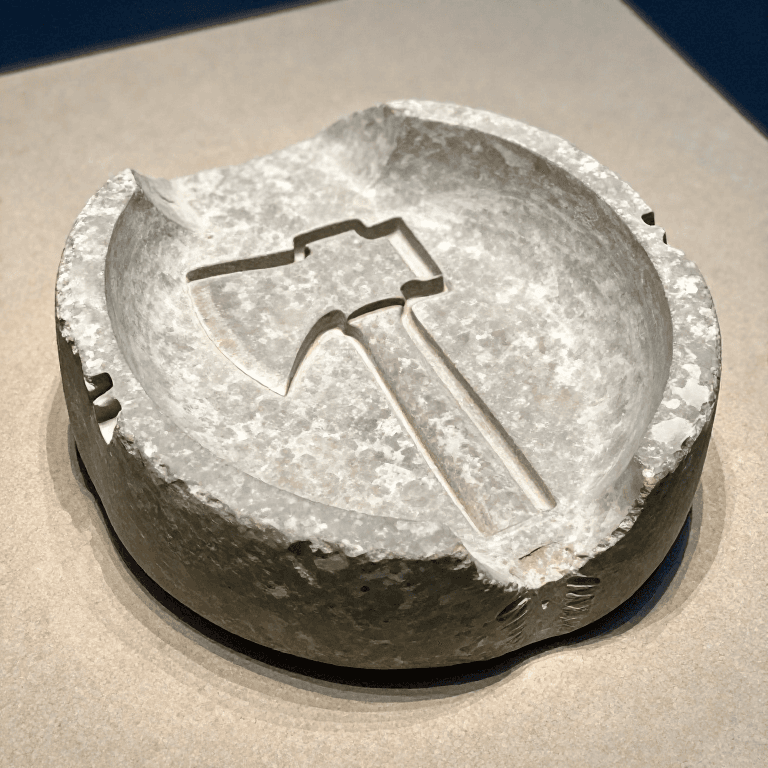
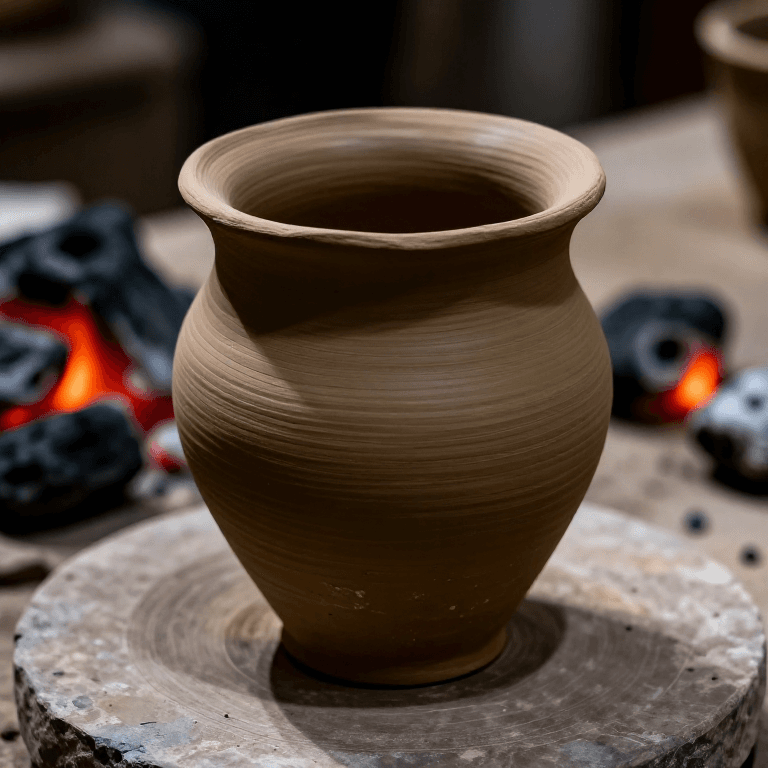
Пов'язані креслення
Ці креслення діляться знаннями — техніки, матеріали або принципи
CC0 Суспільне надбання
Це креслення випущено під ліцензією CC0. Ви можете вільно копіювати, змінювати, поширювати та використовувати цю роботу для будь-яких цілей без запиту дозволу.
Підтримайте мейкера, купуючи продукти через його креслення, де він отримує Комісію мейкера встановлену вендорами, або створіть нову ітерацію цього креслення та включіть його як зв'язок у власне креслення для розподілу доходу.