
Співпраця
МИСТЕЦТВО
КРАСА ТА ЗДОРОВ'Я
РЕМЕСЛО
КУЛЬТУРА ТА ІСТОРІЯ
РОЗВАГИ
СЕРЕДОВИЩЕ
ЇЖА ТА НАПІЇ
ЗБОРНА ІНЖЕНЕРІЯ
НАУК
СПОРТ
ТЕХНОЛОГІЯ
НОСИМО
Trick Lariat That Will Not Twist: Brass Swivels in the Rope and a Choker on the Hondoo (La Rue, 1935)
Tex

Створено

Tex

13. листопад 2026FO
8
0
0
0
0

Trick Lariat That Will Not Twist: Brass Swivels in the Rope and a Choker on the Hondoo (La Rue, 1935)

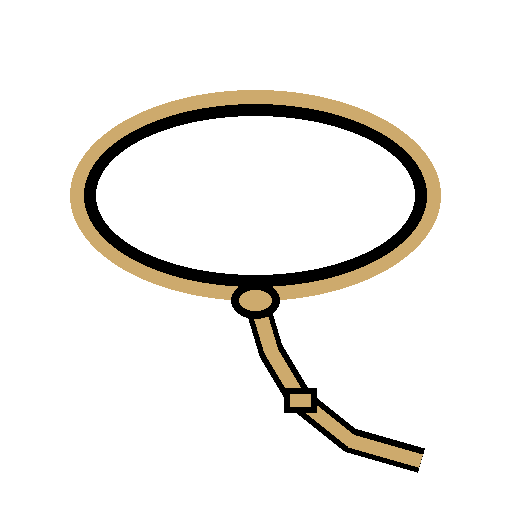
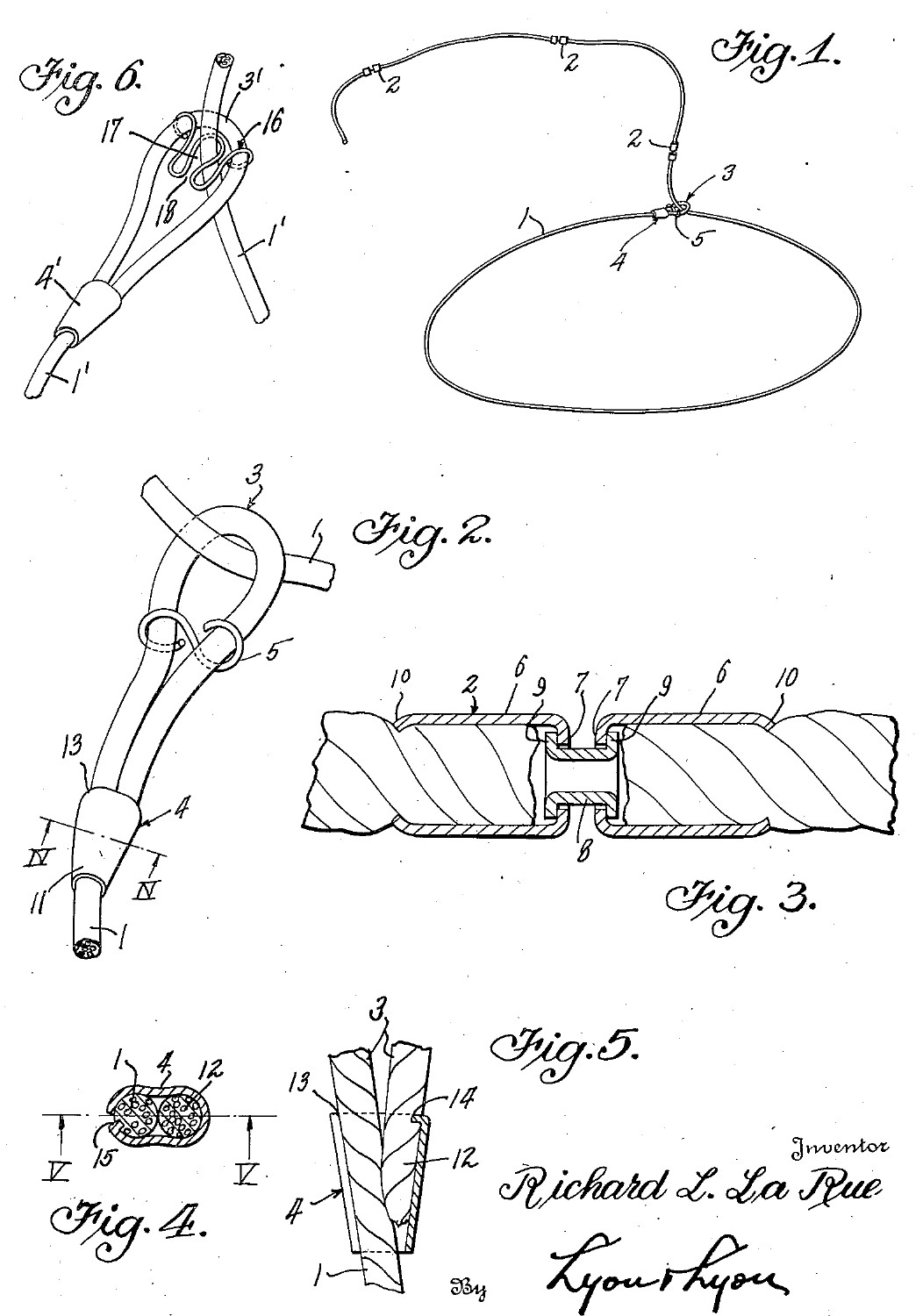
Richard L. La Rue of Los Angeles received US 1,993,010, dated 5 March 1935, for a lariat that beginners can spin. A spinning loop twists the rope; an expert lets it roll in the hand, a beginner cannot. La Rue cuts the rope into sections joined by small brass swivels, so the twist runs out. The hondoo, the eye the rope runs through, is clamped in a brass ferrule, and a wire choker can lock the loop at one size. We make it from cotton rope and brass tube. All sizes are ours.
Середній
About 4 hours

Інструкції

1

Where the swivels go

Завантаження блокнота Jupyter…
2

Read US 1,993,010

"In accordance with the present invention, twisting of the rope is prevented by inserting several swivels at intervals along the rope, so that no matter how the operator holds it there is always at least one swivel between his hand and the loop. The swivels are made substantially the same outside diameter as the rope so that they pass readily through the hondoo."
3

Cut the rope

Cut 6 m of 10 mm braided cotton rope (ours) into the sections the notebook gives. Wrap tape round each place before cutting so the ends do not fray.

Матеріали для цього кроку:

Бавовняна линваБавовняна линва1 штука

Необхідні інструменти ({count})

РулеткаРулетка
Макетний ніжМакетний ніж
4

Make the ferrules

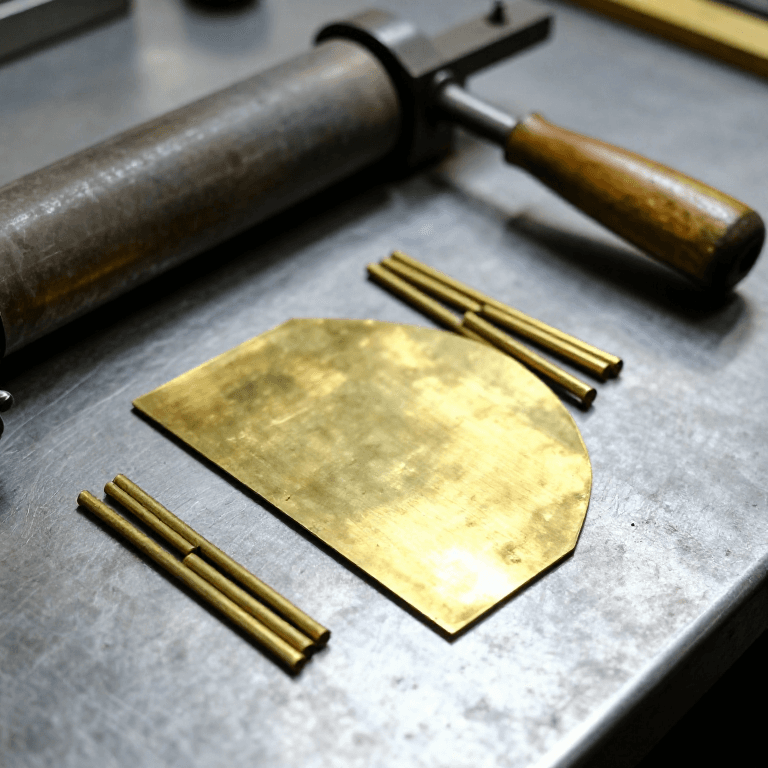
For three swivels cut six 25 mm pieces of 3/8 in brass tube (ours), his ferrules 6, and file the ends square. Soften the brass by heating each piece to a dull red with the torch and dropping it in water. On the anvil, tap one end of each inward all round with the hammer, turning it as you go, until the opening is about 4.5 mm: his end wall 7. Flare the other end out a little so the rope will go in.

Матеріали для цього кроку:

Латунна трубка 9,5 мм зовнішнього діаметраЛатунна трубка 9,5 мм зовнішнього діаметра1 штука

Необхідні інструменти ({count})

Ножівка по металуНожівка по металу
Набір напилківНабір напилків
Пропановий пальникПропановий пальник
Гартівна діжкаГартівна діжка
ВодаВода
КовадлоКовадло
Слюсарний молоток із кульковим бойкомСлюсарний молоток із кульковим бойком
Захисні окуляриЗахисні окуляри
5

Join the ferrules into swivels

Cut three 10 mm pieces of 4 mm brass tube (ours), his member 8. Put two ferrules end wall to end wall, push the small tube through both openings, and flare its ends with a centre punch from inside each ferrule until they cannot pull back through: his flanges 9. The two halves must turn freely on each other.

Матеріали для цього кроку:

Латунна трубкаЛатунна трубка1 штука

Необхідні інструменти ({count})
Ножівка по металуНожівка по металу
КернерКернер
Слюсарний молоток із кульковим бойкомСлюсарний молоток із кульковим бойком
Слюсарні лещатаСлюсарні лещата
6

Fit the rope into the swivels

Push a rope end into each open ferrule as far as it goes. Squeeze the flared end back in, with the hammer on the anvil or in the vice, until it digs into the rope all round. Pull hard on each joint to test it.

Необхідні інструменти ({count})

Слюсарний молоток із кульковим бойкомСлюсарний молоток із кульковим бойком
КовадлоКовадло
Слюсарні лещатаСлюсарні лещата
7

Make the hondoo

Cut 40 mm of brass tube big enough to take the rope doubled (ours) and saw it open along its length. Squeeze one end round the single rope; flatten the other end into an oval. Pass the loop end of the rope through, from the small end, then double its butt end back and push it into the oval end as far as it will go, leaving a small eye: his hondoo 3. Dent the oval end to hold the butt (his 14) and turn one cut edge in against the rope (his 15).

Матеріали для цього кроку:

Латунна трубкаЛатунна трубка1 штука

Необхідні інструменти ({count})

Ножівка по металуНожівка по металу
Слюсарні лещатаСлюсарні лещата
ПлоскогубціПлоскогубці
КернерКернер
Слюсарний молоток із кульковим бойкомСлюсарний молоток із кульковим бойком
8

Bend the choker

Bend 2.5 mm steel wire (ours) into a figure 8 round the two rope parts of the hondoo, one eye on each, so it slides when pushed but stays put by friction. Pass the free end of the rope through the hondoo to make the loop.

Матеріали для цього кроку:

Сталевий дрітСталевий дріт1 штука

Необхідні інструменти ({count})

БокорізиБокорізи
КруглогубціКруглогубці
ПлоскогубціПлоскогубці
9

Use it

With the choker pushed up to the ferrule, the rope runs freely through the hondoo like any lariat. To spin a loop of one size, slide the choker away from the ferrule until the hondoo grips the running rope: the loop then stays the same size while it spins.
10

Troubleshooting

Swivel trick lariat troubleshooting.

Flow

Loading...
11

History and honest limits

**Richard L. La Rue** of Los Angeles, US 1,993,010, dated 5 March 1935, filed 16 November 1932, for "a lariat for use by amateurs in performing tricks". He claimed the choker, "a figure 8 clamp of heavy wire", and a clamp "movable back and forth over the doubled rope constituting the hondoo for varying the size of the eye". He also shows a second choker of bent wire (Fig. 6), not built here. He names no rope and gives no sizes: the cotton rope, its length, the tubes, the annealing, the wire and all sizes are ours.

Матеріали

4

Необхідні інструменти

15

За цим кресленням виготовляють

Пов'язані креслення

Ці креслення діляться знаннями — техніки, матеріали або принципи

CC0 Суспільне надбання

Це креслення випущено під ліцензією CC0. Ви можете вільно копіювати, змінювати, поширювати та використовувати цю роботу для будь-яких цілей без запиту дозволу.

Підтримайте мейкера, купуючи продукти через його креслення, де він отримує Комісію мейкера встановлену вендорами, або створіть нову ітерацію цього креслення та включіть його як зв'язок у власне креслення для розподілу доходу.

Обговорення

(0)

Увійти щоб приєднатися до обговорення

Завантаження коментарів...