ART
BEAUTY & WELLNESS
CRAFT
CULTURE & HISTORY
ENTERTAINMENT
ENVIRONMENT
FOOD & DRINKS
REVERSE ENGINEERING
SCIENCES
SPORTS
TECHNOLOGY
WEARABLES
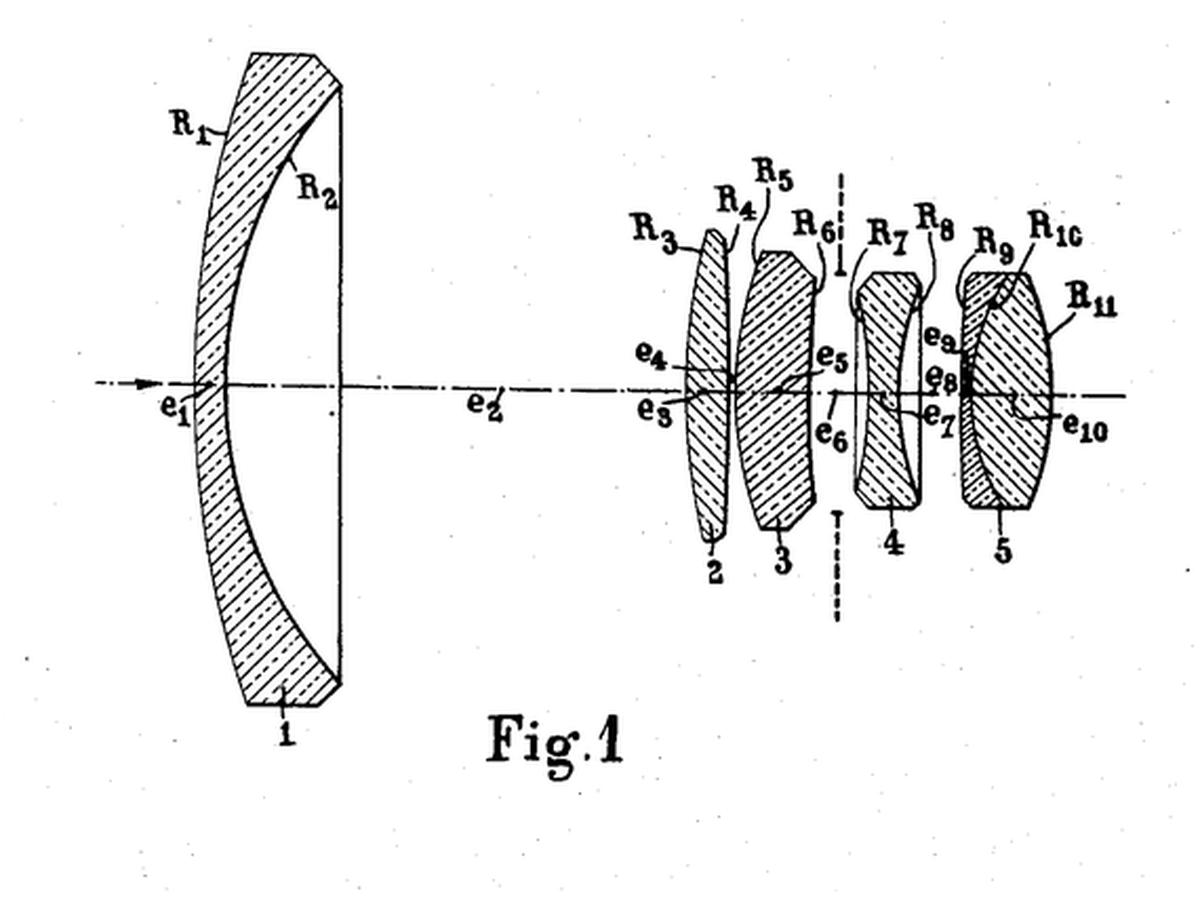


Retrofocus Wide-Angle Lens
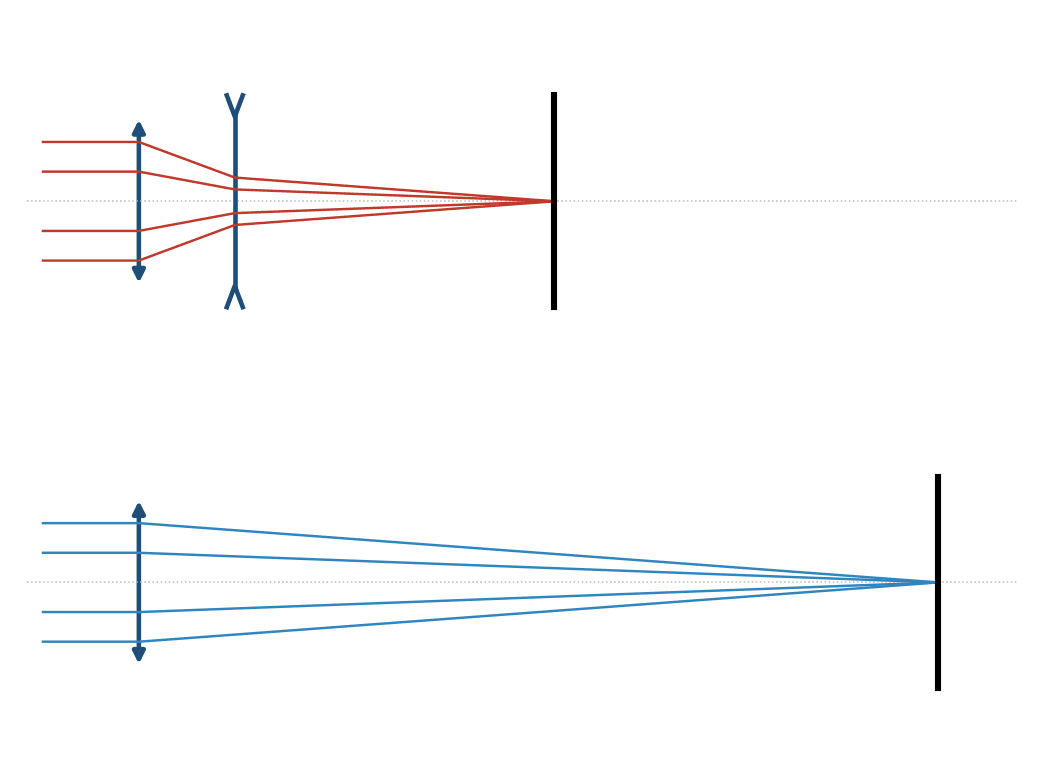
Reflex cameras put a mirror between the lens and the film, and a conventional wide-angle lens needs to sit closer to the film than the mirror allows. Pierre Angénieux in Paris reversed the telephoto idea: a diverging group in front, a converging group well behind it, so the lens's focus lies further back than its focal length.
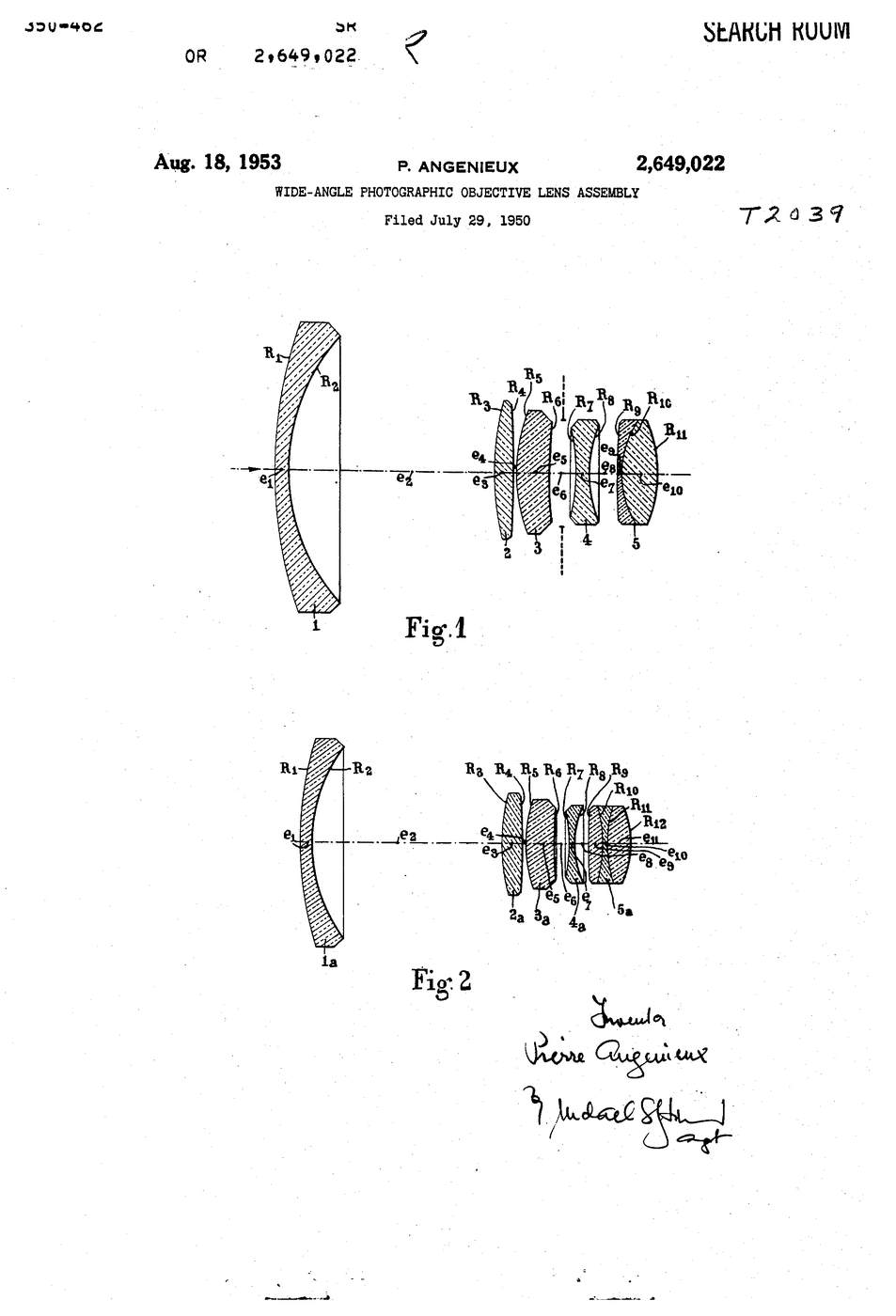
**US 2,649,022**, "Wide-angle photographic objective lens assembly", Angénieux, filed 29. July 1950, granted 18. August 1953, describes an objective whose "distance along the axis between the back surface of the last lens and the focal plane … is relatively very large with respect to the focal length". (His US 2,649,021 of the same day is a different lens - a large-aperture projection objective.)
**You build one on the bench**, measure its back focus against its focal length, and fit a mirror in the room it leaves.
Beginner
90 minutes
Instructions
1
1
Two lenses, reversed
Two lenses, reversed
Front: concave about -50 mm, facing the scene. Rear: convex about 50 mm, 60 mm behind it. Aim out of a window.
Materials for this step:
 Concave Lens1 piece
 Convex Lens Set (Assorted Focal Lengths)1 set
Tools needed:
 Optical Bench & Rail
 Lens Holder Set
2
2
Find the focus
Find the focus
Move a tracing-paper screen until the distant scene is sharp. Measure rear lens to screen: the back focus. Measure the height of one far feature on the screen.
Materials for this step:
 Pattern Tracing Paper Roll1 sheet
 Masking Tape1 roll
Tools needed:
 Steel Ruler
3
3
Compare one lens
Compare one lens
Remove the concave lens. The +50 mm lens alone focuses about 50 mm behind itself; measure the same feature's height.
Tools needed:
Steel Ruler4
4
Fit the mirror
Fit the mirror
Put the concave lens back. Stand a small mirror at 45 degrees between the rear lens and the screen position and turn the screen to catch the image from the side - a reflex viewfinder. With the single lens there is no room.
Materials for this step:
 Flat Mirror1 piece
5
5
Back focus vs focal length
Back focus vs focal length
Loading Jupyter Notebook...
6
6
History & Context
History & Context
**What the patent specifies:** a diverging meniscus front element and a converging group far behind it, giving a back focal distance large compared with the focal length. **Modern build (derived):** two stock lenses and a mirror.
Angénieux sold it as the Retrofocus; nearly every SLR wide-angle since uses the layout. Its limits: the asymmetry brings barrel distortion, and the big front element makes the lens larger and heavier than a symmetric design.
Materials
5- 1 piecePlaceholder
- 1 setPlaceholder
- 1 sheetPlaceholder
- 1 rollPlaceholder
- 1 piecePlaceholder
Related Blueprints
These blueprints share knowledge with this one — techniques, materials, or principles that connect them in the learning graph.

CC0 Public Domain
This blueprint is released under CC0. You are free to copy, modify, distribute, and use this work for any purpose, without asking permission.
Support the Maker by purchasing products through their Blueprint where they earn a Maker Commission set by Vendors, or create a new iteration of this Blueprint and include it as a connection in your own Blueprint to share revenue.