Collaboration
ART
BEAUTY & WELLNESS
CRAFT
CULTURE & HISTORY
ENTERTAINMENT
ENVIRONMENT
FOOD & DRINKS
REVERSE ENGINEERING
SCIENCES
SPORTS
TECHNOLOGY
WEARABLES
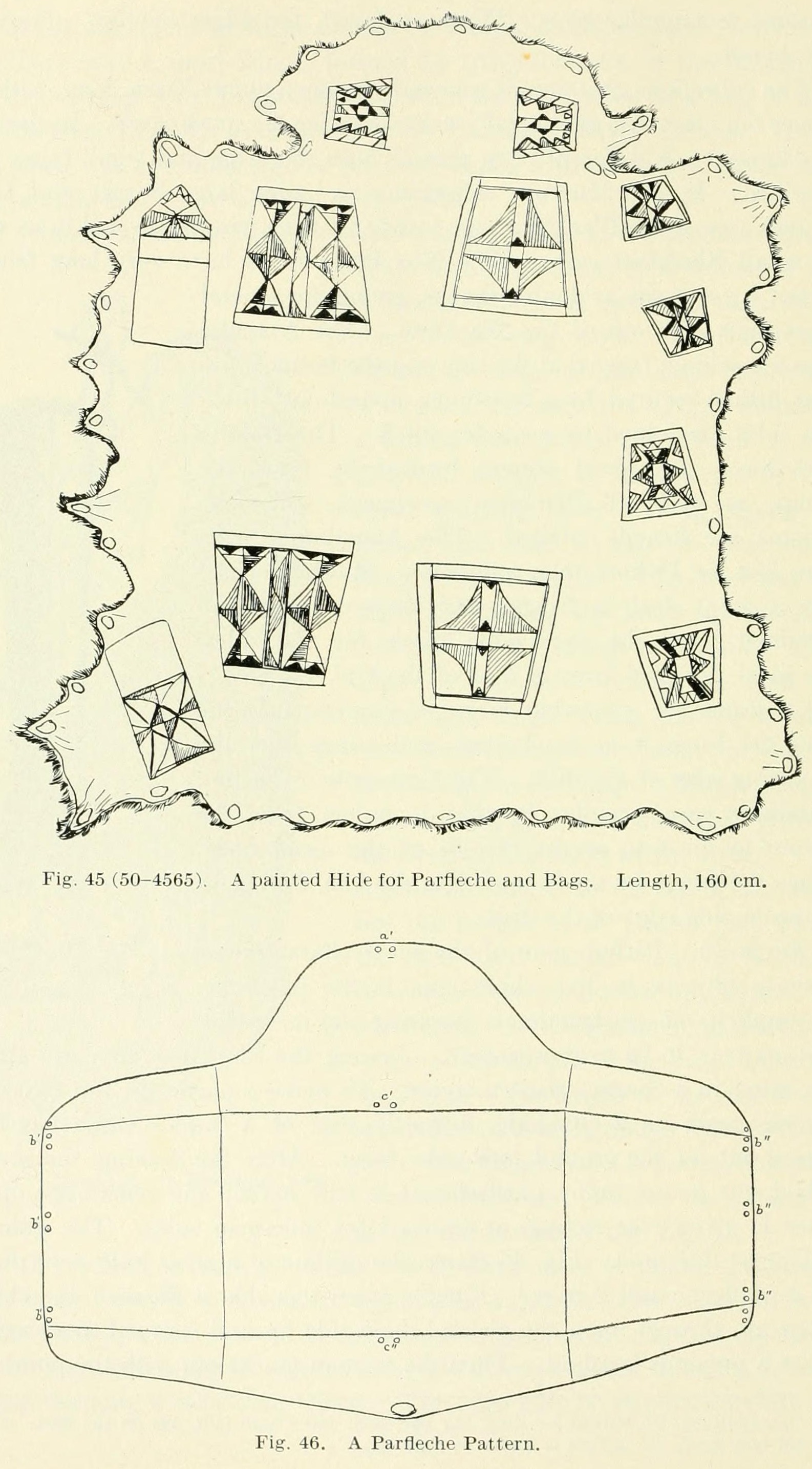

Blackfoot Parfleche: Rawhide Pegged Out, Fleshed, Painted While Staked, Scraped Even, Cut and Folded Like an Envelope (Wissler, 1910)
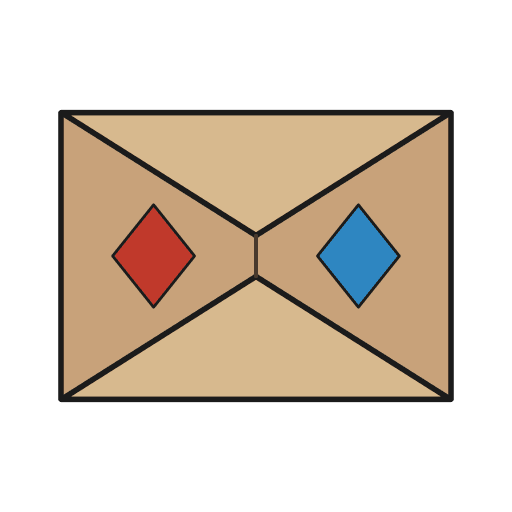
The Blackfoot (Niitsitapi) parfleche as Clark Wissler recorded it: a cow or buffalo hide pegged out hair side down, fleshed, sun-cured, painted with several parfleche designs at once while still staked, planed even with an adze-like scraper, then cut out, folded like an envelope and closed with rawhide laces. It held pemmican, dried meat and berries.
Intermediate
A week, mostly sun-curing
Instructions
1
1
Read Wissler
Read Wissler
"Its simplicity of construction is inspiring and its usefulness scarcely to be over-estimated."
2
2
Peg out and flesh
Peg out and flesh
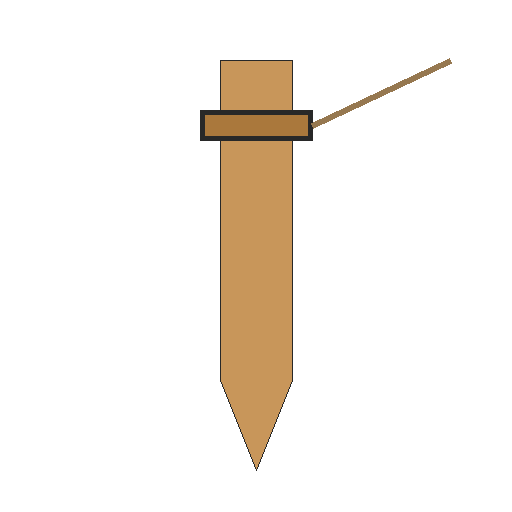
Stretch the fresh hide on the ground hair side down and peg it with wooden stakes. Rake and hack off the flesh and fat with a fleshing tool; if the hide stiffens, wet it with warm water.
Materials for this step:
 Raw Hide1 piece
 Water1 piece
Tools needed:
 Tent Stake
 Wooden Mallet
 Fleshing Tool
3
3
Cure in the sun
Cure in the sun
Leave it to cure and bleach in the sun for some days, now and then pouring warm water over it.
Materials for this step:
Water1 pieceTools needed:
Tent Stake4
4
Lay out and paint
Lay out and paint
While it is still staked, mark out as many parfleche as the hide will take (his Fig. 45: a 160 cm steer hide with two parfleche, two bags and three toy parfleche) and paint the designs. Ours: earth paints with a little water, laid on with a brush.
Materials for this step:
 Raw Ochre1 piece
 Yellow Ochre Pigment (Raw)1 piece
 Charcoal1 piece
Tools needed:
 Fine Brushes
 Knife
5
5
Scrape it even
Scrape it even
Pull the stakes and lay the stiff hide in shade. Stand on it, lean over and plane the flesh side down to an even thickness with an adze-like scraper, sideways strokes taking off chips and shavings; turn it and scrape the hair off the same way.
Tools needed:
 Adze
6
6
Cut, fold and lace
Cut, fold and lace
Mark the outlines with a knife point and cut them out (Fig. 46: a long rectangle with a big flap; sides irregular). Trim, and make pairs of lace holes (ours: a punch). Fill it by putting the contents in the middle, fold the big flap over and lace it, turn in the ends and lace them, then tie it shut with the looped thongs. Blackfoot ones average 60 x 38 cm.
Materials for this step:
 Rawhide Lacing1 piece
Tools needed:
Knife Leather Hole Punch
7
7
Troubleshooting
Troubleshooting
Parfleche troubleshooting.
Flow
Loading...
8
8
History and honest limits
History and honest limits
From Clark Wissler, *Material Culture of the Blackfoot Indians*, **Anthropological Papers of the American Museum of Natural History** vol. V (1910), pp. 63-64, 79-81 and Figs. 45-47 (checked on the archive.org scan materialcultureo00wiss). By 1910 parfleche were kept as mementos of buffalo days and given as gifts, often ending up cut into moccasin soles. Wissler does not say what paints were used here; the paints, brush and punch are ours.
Materials
6- 1 piecePlaceholder
- 2 piecesPlaceholder
- 1 piecePlaceholder
- 1 piecePlaceholder
- 1 piecePlaceholder
- 1 piecePlaceholder
Tools Required
7- Placeholder
- Placeholder
- Placeholder
- Placeholder
- Placeholder
- Placeholder
- Placeholder
This blueprint makes
Related Blueprints
These blueprints share knowledge with this one — techniques, materials, or principles that connect them in the learning graph.
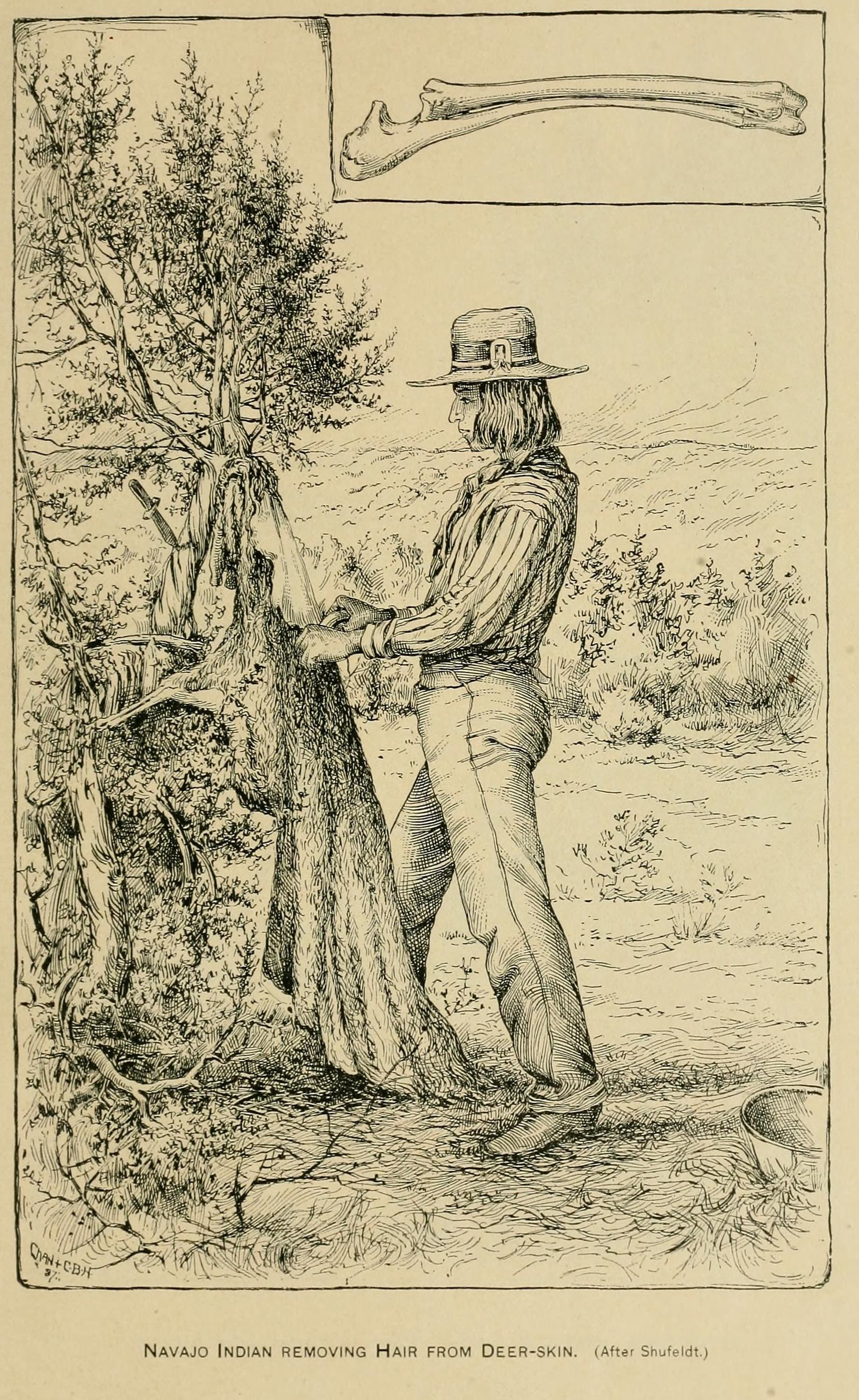
Navajo Buckskin: Hair Shaved with the Deer's Own Foreleg Bone, Brains Rubbed In, Wrung on a Tree, Worked Dry over the Feet (Shufeldt, 1888)
by Tex
Textile & Leather
2
0
0
0
0
0
Blackfoot Face Paints: Yellow Earth Burned Red, Earths Applied Wet or Worked into Tallow on the Face (Wissler, 1910)
by Charlie
Painting
2
0
0
0
0
0
CC0 Public Domain
This blueprint is released under CC0. You are free to copy, modify, distribute, and use this work for any purpose, without asking permission.
Support the Maker by purchasing products through their Blueprint where they earn a Maker Commission set by Vendors, or create a new iteration of this Blueprint and include it as a connection in your own Blueprint to share revenue.