Collaboration
ART
BEAUTY & WELLNESS
CRAFT
CULTURE & HISTORY
ENTERTAINMENT
ENVIRONMENT
FOOD & DRINKS
REVERSE ENGINEERING
SCIENCES
SPORTS
TECHNOLOGY
WEARABLES

Blackfoot Sinew Thread: Dried Leg and Neck Sinew Shredded, Softened and Rolled Between the Palms (Wissler, 1910)
Blackfoot (Niitsitapi) sewing thread as Clark Wissler recorded it: broad bands of sinew from an animal's legs and neck dried and stored, shreds pulled off as needed, softened in water and smoothed with the fingers, then twisted into thread by rolling between the palms, one end held fast; twisted threads braided together make heavy cord.
Beginner
A few days drying; minutes per thread
Instructions
1
1
Read Wissler
Read Wissler
"Then placing one end in the mouth, the shreds are twisted by rolling between the palms."
2
2
Dry the sinew
Dry the sinew
Take the broad bands of sinew from the legs and neck, clean off any flesh, and dry and store them (ours: on a rack in dry air until hard).
Materials for this step:
 Animal Leg Tendons1 piece
Tools needed:
 Knife
 Drying Rack
3
3
Shred, soften and roll
Shred, soften and roll
When thread is needed, pull shreds off the dried sinew (the Blackfoot used their teeth; ours: an awl point), soften them in water and smooth them out with the fingers. Hold one end fast (Wissler: in the mouth, or under the foot) and roll the shreds between the palms to twist them into thread. Twist or braid several threads together for heavy cord.
Materials for this step:
 Water1 piece
Tools needed:
 Bone Awl
4
4
Sew with it
Sew with it
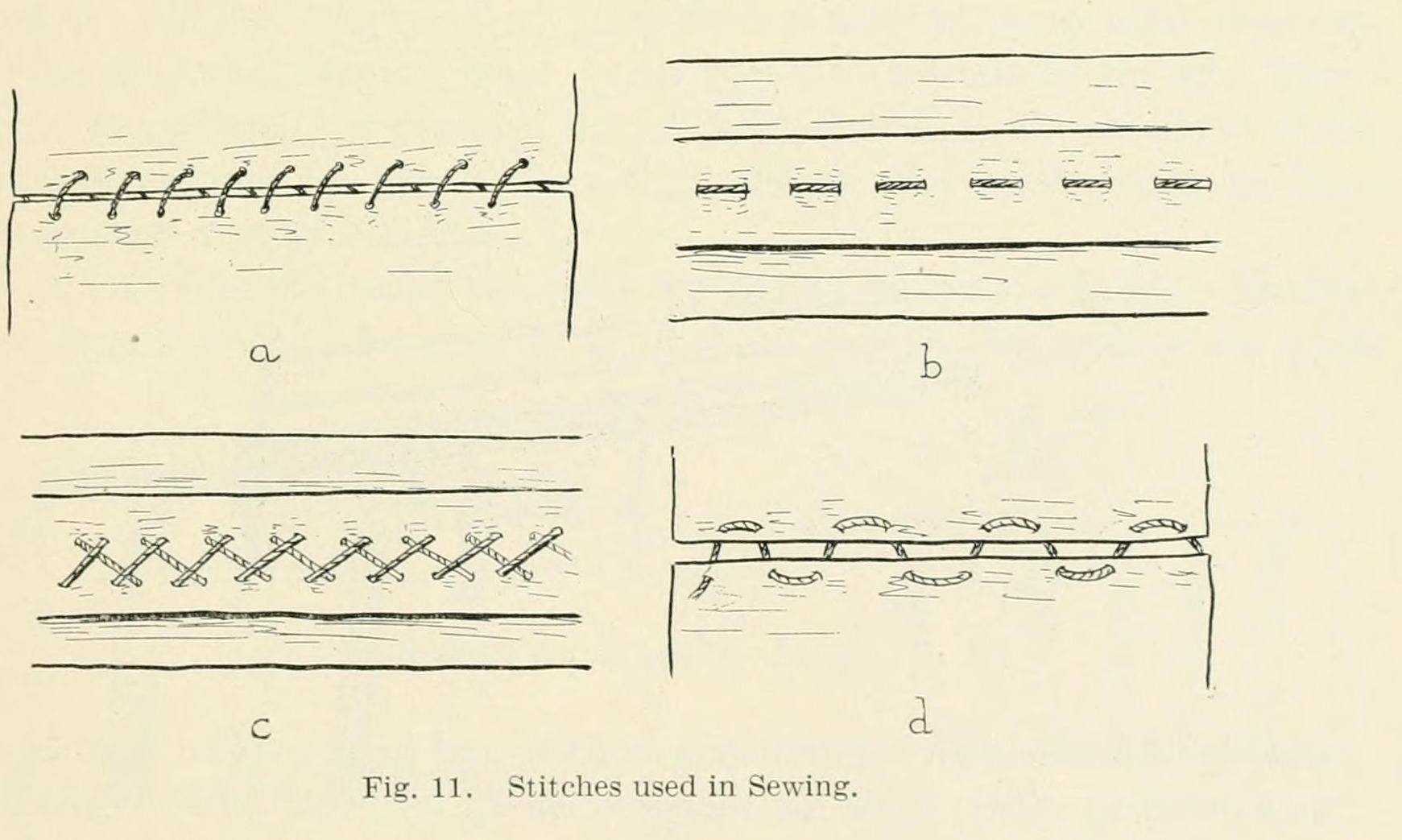
Sew with a bone or metal bodkin. The Blackfoot used an over-and-over stitch for seams and moccasin soles, a running stitch for borders, a mending stitch and an ornamental one (Fig. 11), always with a single thread.
Tools needed:
Bone Awl5
5
Troubleshooting
Troubleshooting
Sinew thread troubleshooting.
Flow
Loading...
6
6
History and honest limits
History and honest limits
From Clark Wissler, *Material Culture of the Blackfoot Indians*, **Anthropological Papers of the American Museum of Natural History** vol. V (1910), pp. 53-54 and Fig. 11 (checked on the archive.org scan materialcultureo00wiss). In 1910 the sinew came from steers; buffalo before. Sewing with two threads, as in European shoemaking, was unknown to them. Drying details are ours.
This blueprint makes

Related Blueprints
These blueprints share knowledge with this one — techniques, materials, or principles that connect them in the learning graph.
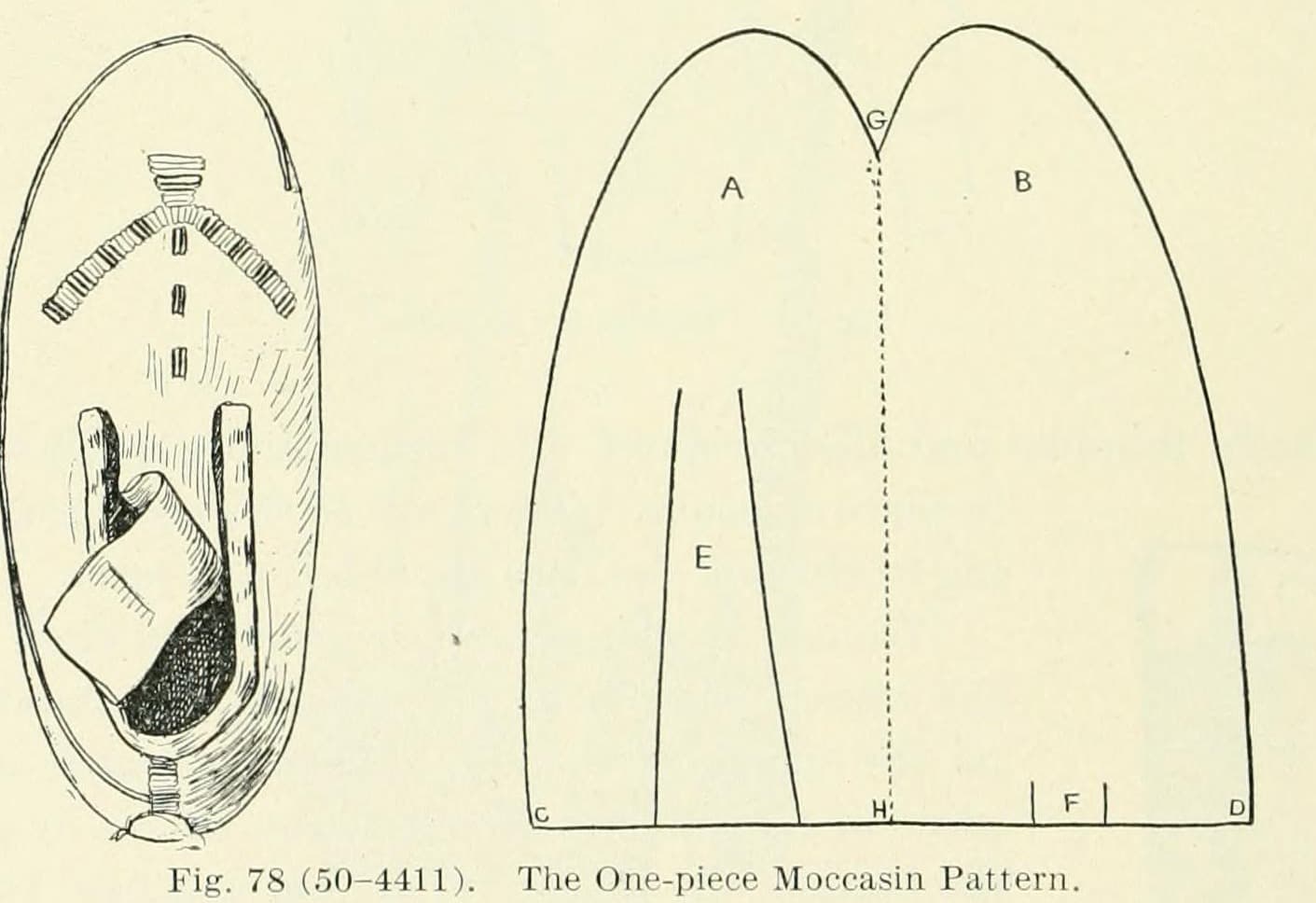
Blackfoot One-Piece Moccasin: One Skin Folded Lengthwise, Seamed Round the Toes, Heel Seam with Trailer, Ankle Flap (Wissler, 1910)
by Tex
Textile & Leather
4
0
0
0
0
0
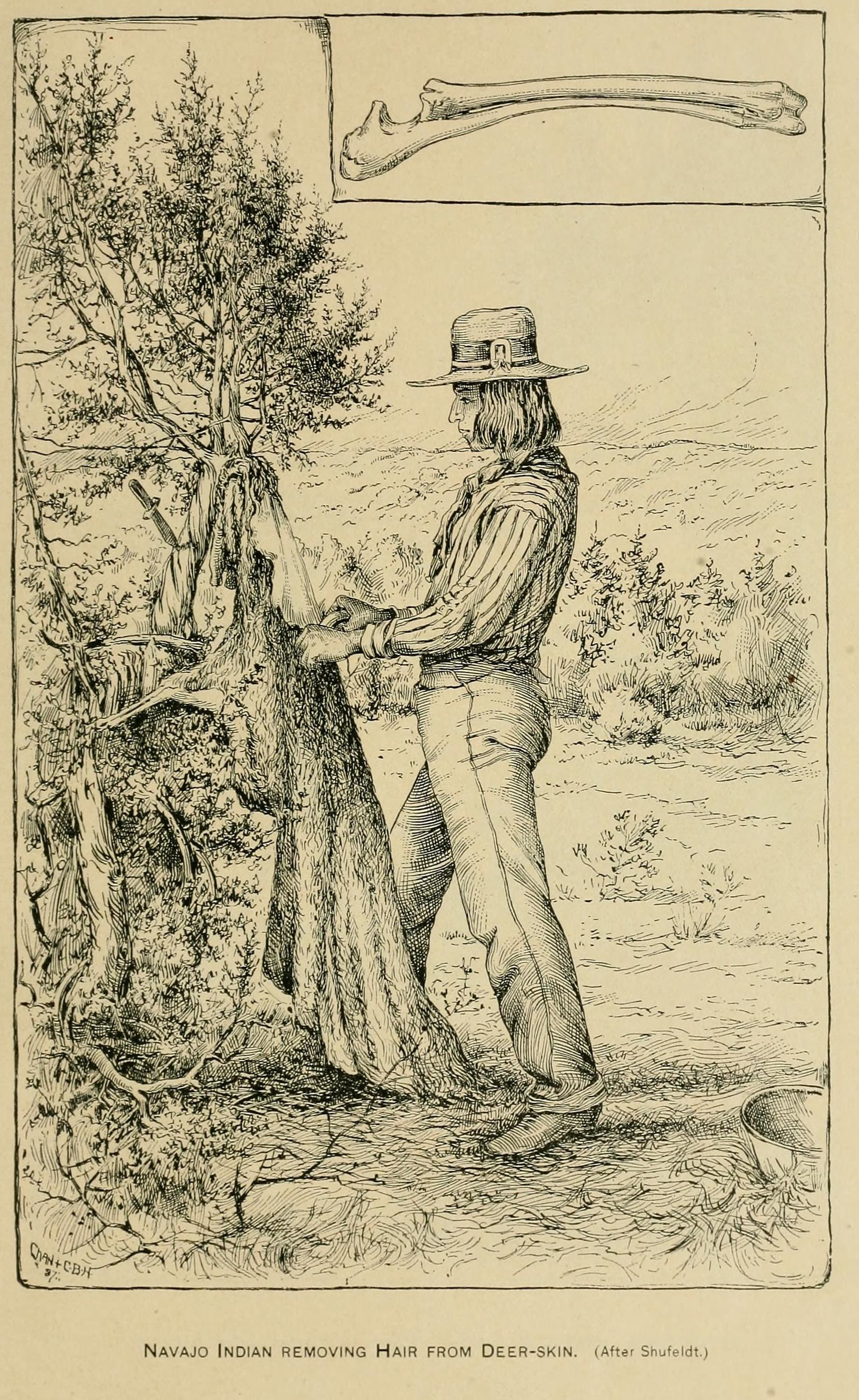
Navajo Buckskin: Hair Shaved with the Deer's Own Foreleg Bone, Brains Rubbed In, Wrung on a Tree, Worked Dry over the Feet (Shufeldt, 1888)
by Tex
Textile & Leather
4
0
0
0
0
0
CC0 Public Domain
This blueprint is released under CC0. You are free to copy, modify, distribute, and use this work for any purpose, without asking permission.
Support the Maker by purchasing products through their Blueprint where they earn a Maker Commission set by Vendors, or create a new iteration of this Blueprint and include it as a connection in your own Blueprint to share revenue.