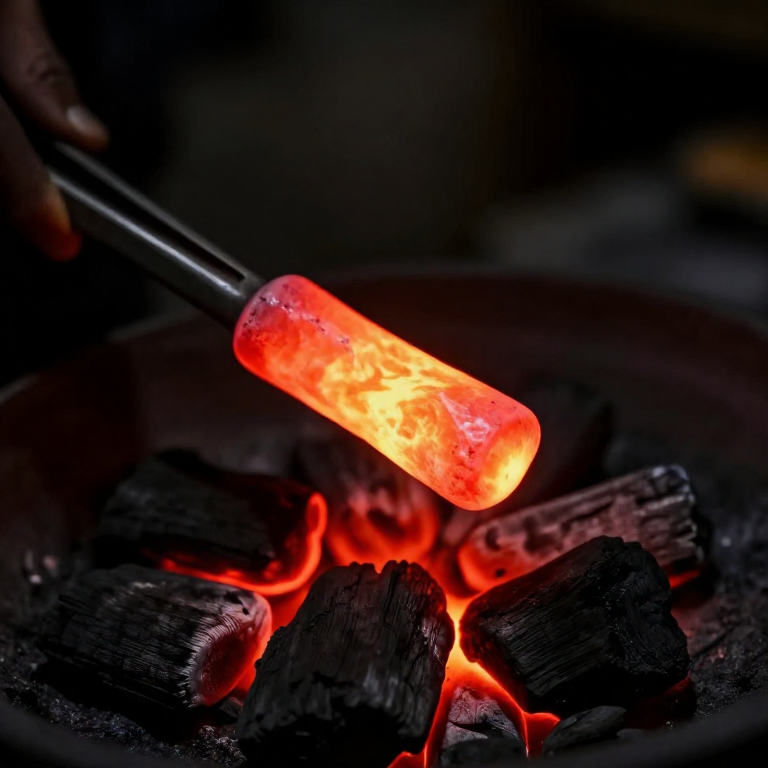


Annealing and Cold-Working Bronze — Hardening Without a Forge
Annealing and cold-working are the two inseparable halves of Bronze Age metallurgy. Every bronze tool, weapon, and ornament was shaped and strengthened by this cycle — hammer to harden, heat to soften, hammer again. Understanding these two processes is the foundation of all pre-industrial metalwork.
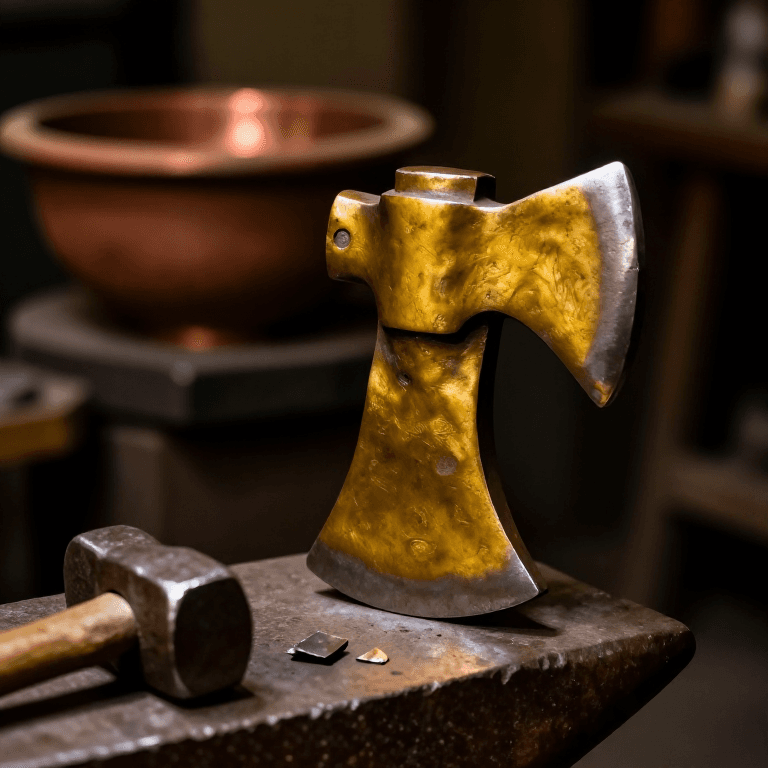
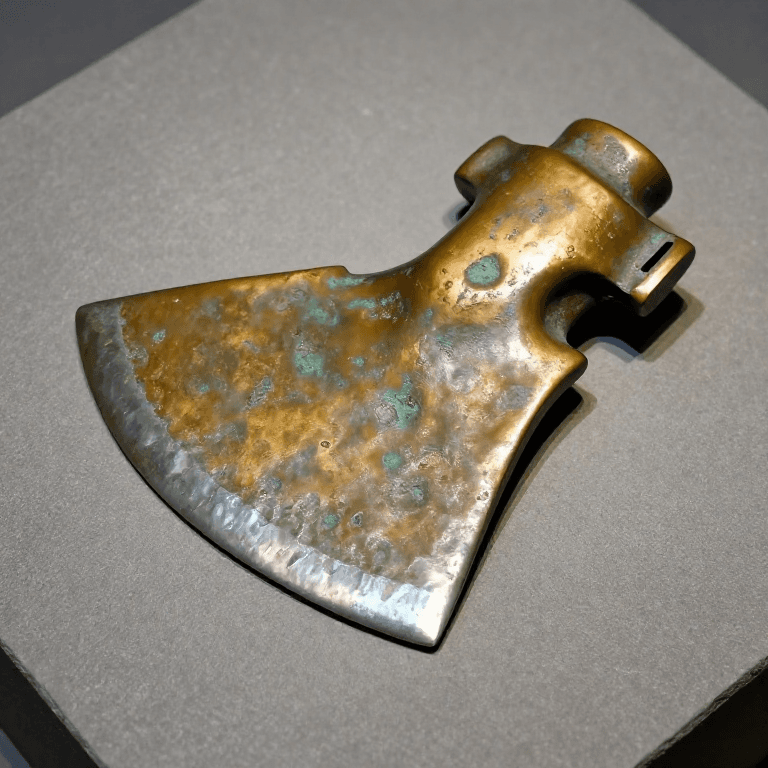
Cold-working means deforming metal at room temperature. Each hammer blow compresses the crystal grains, creating dislocations that resist further movement — the metal becomes harder and stiffer. This is called work-hardening. A freshly cast bronze axe at 80 HV (Vickers hardness) can be cold-worked to 200+ HV, rivalling mild steel.
But work-hardening has a limit. Continue hammering past it and the bronze cracks. Annealing resets the process: heating to 500-600 °C causes the distorted grains to recrystallise into new, strain-free grains. The metal is soft again and ready for the next cycle. A Bronze Age smith might anneal the same piece 15 times during a single project.
Instructions
Prepare a test piece
Prepare a test piece
Materials for this step:
 Copper Sheet (0.5-1mm)100 g
Test as-cast hardness
Test as-cast hardness
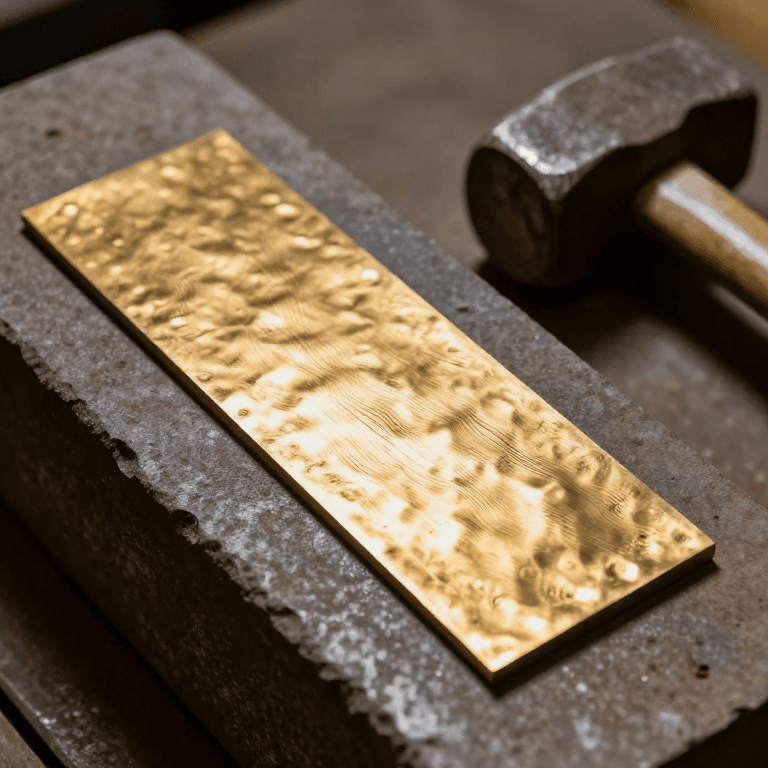
Cold-work one half
Cold-work one half
Tools needed:
 Hammerstone
 Flat Stone Slab
Compare hardness
Compare hardness
Anneal the cold-worked section
Anneal the cold-worked section
Materials for this step:
 Charcoal500 g
Tools needed:
 Long-Handled Tongs
Test annealed hardness
Test annealed hardness
Demonstrate the full cycle on a cutting edge
Demonstrate the full cycle on a cutting edge
Understand the critical differences from steel
Understand the critical differences from steel
Tools Required
3- Placeholder
- Placeholder
- Placeholder
Connected Blueprint Materials
Related Blueprints
These blueprints share knowledge with this one — techniques, materials, or principles that connect them in the learning graph.
CC0 Public Domain
This blueprint is released under CC0. You are free to copy, modify, distribute, and use this work for any purpose, without asking permission.
Support the Maker by purchasing products through their Blueprint where they earn a Maker Commission set by Vendors, or create a new iteration of this Blueprint and include it as a connection in your own Blueprint to share revenue.