Collaboration
ART
BEAUTY & WELLNESS
CRAFT
CULTURE & HISTORY
ENTERTAINMENT
ENVIRONMENT
FOOD & DRINKS
REVERSE ENGINEERING
SCIENCES
SPORTS
TECHNOLOGY
WEARABLES
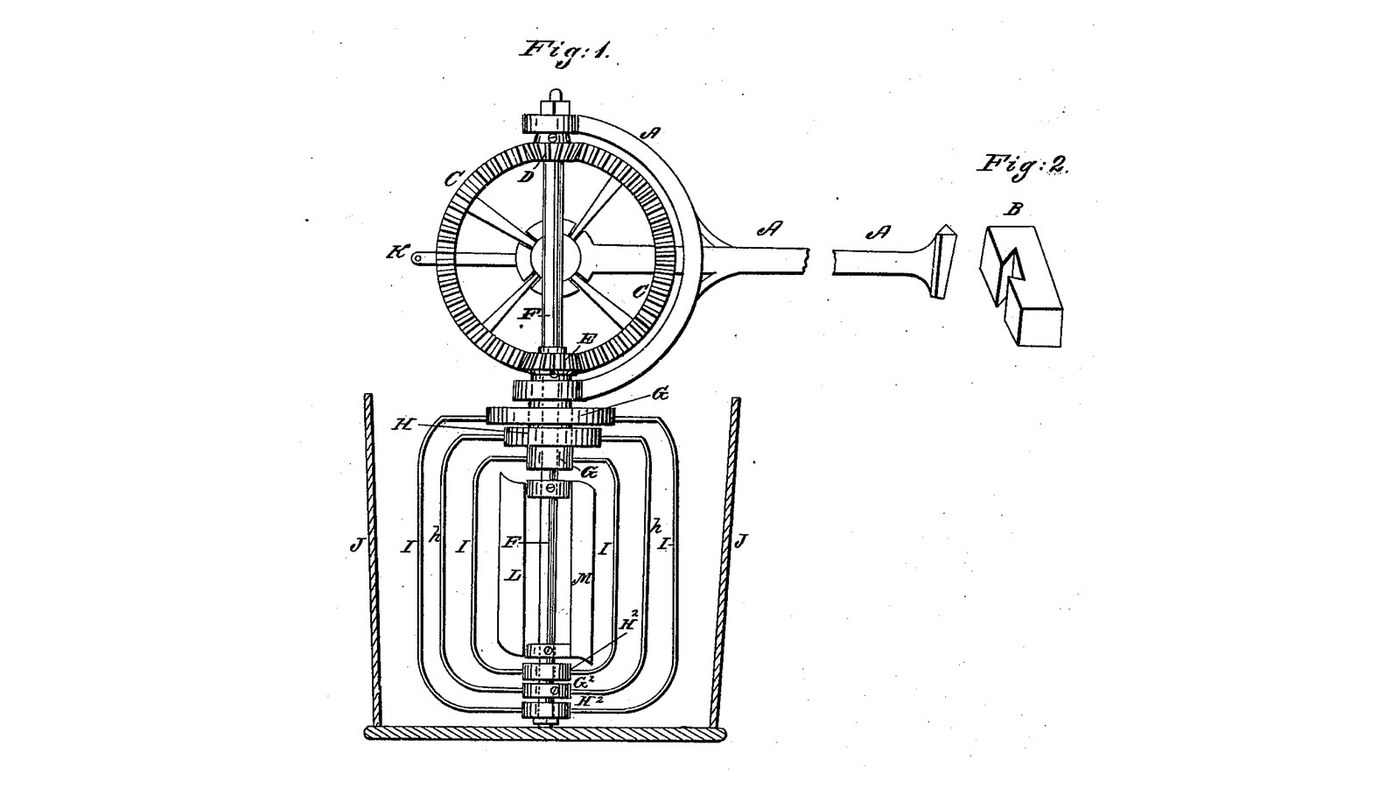

Three-Series Beater Churn: Outer and Inner Loops Turn One Way, the Middle Loops and Centre Blades the Other
Simon G. Cheever of Boston received US 28,560, dated 5 June 1860, for a machine for mixing paints, oils and powders that "may also be used as a butter mill or churn". Three nested series of loop beaters hang on one shaft: the outer and inner series turn one way and the middle series the other, while curved blades at the centre throw the cream outward into them. One crank drives it all through a wheel with a pinion on each side.
This builds it as a churn. The patent gives no sizes; every size here is ours.
Advanced
About 2 days, plus printing
Instructions
1
1
Three series, two directions
Three series, two directions
Loading Jupyter Notebook...
2
2
Nested dashers driven by one wheel and two pinions, seven weeks before
Nested dashers driven by one wheel and two pinions, seven weeks before
Dunham and Hipple nest two frames. Cheever nests three, the middle one turning against the other two.
3
3
Read US 28,560
Read US 28,560
"... the arrangement of the pinions on opposite sides of the driving wheel, and their connections through the collars with the outer and inner series of beaters or mixers, and the action of the central curved blades, is to throw the material constantly from the center to the circumference and there to submit it to the opposing forces of the beaters revolving in opposite directions."
4
4
Print the driving wheel C
Print the driving wheel C
Crown wheel, 36 teeth on its face, module 2, with a hub; bored 12.4 mm. PETG, 0.2 mm layers, 40 % infill, 4 walls.
5
5
Print the pinion D
Print the pinion D
Spur pinion, 16 teeth, module 2, with a hub; bored 12.4 mm for the shaft F. PETG, 0.2 mm layers, 40 % infill, 4 walls.
6
6
Print the pinion E
Print the pinion E
Spur pinion, 16 teeth, module 2, with a hub; bored 18.4 mm for the sleeve of collar G. PETG, 0.2 mm layers, 40 % infill, 4 walls.
7
7
Outer and inner series I, I on collars G and H2
Outer and inner series I, I on collars G and H2
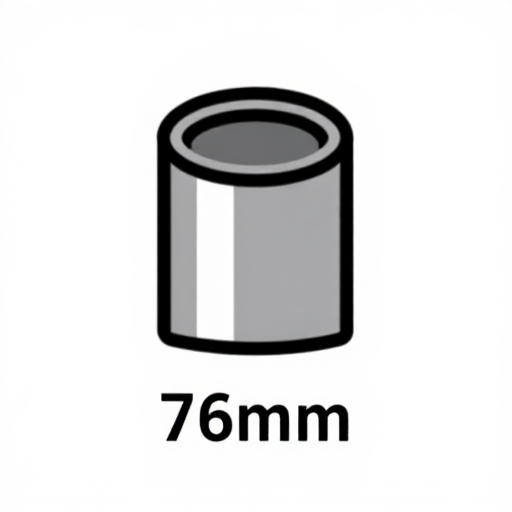
Bend 6 mm stainless rod into two outer loops 220 mm across and 300 tall and two inner loops 120 across and 220 tall, open at the middle of top and bottom. Cut 130 mm of 18 mm stainless tube as the sleeve of collar G and fix two printed or hardwood hubs 32 mm across on it, 40 mm apart; screw the outer loops' top ends to the upper hub and the inner loops' to the lower, crossed at right angles. Screw their bottom ends to two hubs H2 bored 12.6 mm, which turn free on the shaft.
Materials for this step:
 Stainless Steel Rod4 pieces
 Stainless Steel Tube1 piece
 Hardwood Board1 piece
 Machine Screws16 pieces
 PETG Filament1 piece
Tools needed:
 FDM 3D Printer
 Bench Vise
 Hacksaw
 Files (Hand File)
 Cordless Drill
 Drill Bit Set
 Screwdriver Set
8
8
Middle series h, collars H and G2, blades L and M
Middle series h, collars H and G2, blades L and M
Bend two middle loops 170 mm across and 260 tall. Screw their top ends to a ring H 44 mm across, bored 18.6 mm, that rides on the sleeve between G's two hubs, and their bottom ends to a hub G2 pinned to the shaft F between the two H2 hubs, set 45 degrees from the outer loops. Pin two curved printed blades, 180 tall and reaching 50 mm, on the shaft inside the inner loops.
Materials for this step:
Stainless Steel Rod2 piecesMachine Screws8 pieces Split Pin3 piecesPETG Filament1 piece
Tools needed:
Bench ViseHacksawFiles (Hand File)Cordless DrillDrill Bit SetScrewdriver Set9
9
Shaft F, bridge, arm A, wheel C and crank K
Shaft F, bridge, arm A, wheel C and crank K
Pass a 12 mm stainless shaft F, 500 mm long, up through G2, H2 and the sleeve. Cut a hardwood bridge 350 x 330 x 15 mm to lie on the bucket's rim, bored 24 mm in the middle for the sleeve. Fix the pinion E on the sleeve's top, and the pinion D on the shaft above it. Screw two hardwood arms to the bridge carrying a 12 mm stainless axle with the wheel C meshing E below and D above, and a crank K on its end; a hardwood bracket over D holds the shaft's top.
Materials for this step:
Stainless Steel Rod2 piecesHardwood Board2 pieces Hardwood Dowels1 piece
 Wood Glue1 piece
 Wood Screws10 pieces
 Shaft Collar4 piecesPETG Filament1 piece
Tools needed:
 Table Saw
 Spade Bit SetCordless DrillDrill Bit SetHacksaw
 Bar ClampScrewdriver Set
 Tape Measure
10
10
The build in 3D
The build in 3D
FreeCAD model of this build, the bucket cut open: the outer and inner loops on collar G and the H2 hubs, the middle loops on collar H and G2, the central blades, and on the bridge the wheel C with pinion E below and D above.
11
11
Churn
Churn
Pour about 8 litres of heavy cream at about 15 °C, checked with the thermometer, into the bucket, lower the beaters in and set the bridge on the rim. Turn the crank steadily, timing it. When the butter comes, lift the bridge and beaters out, take out the butter, pour the buttermilk into a bowl, wash the butter in cold water until it runs clear, salt and weigh it.
Materials for this step:
 Heavy Cream8 l
 Coarse Sea Salt1 piece
 Water1 piece
Tools needed:
 Leave-In Probe Thermometer
 Stopwatch
 Digital Kitchen Scale
 Stainless Steel Mixing Bowl (Large)
12
12
Troubleshooting
Troubleshooting
Three-series beater churn troubleshooting.
Flow
Loading...
13
13
History and honest limits
History and honest limits
**Simon G. Cheever** of Boston, US 28,560, 5 June 1860, "Machine for Mixing Paints". He did not claim opposed pinions on one wheel, nor mixers or churn dashers turning oppositely, but the arrangement of the collars so the middle series turns against the outer and inner, with the central curved blades. His arm is metal and clamps into a dovetail socket on any bench; ours is hardwood on a bridge across the bucket. He leaves the number and shape of the beaters open; our loops, counts and every size are ours.
Materials
13- 4 piecesPlaceholder
- 1 piecePlaceholder
- 2 piecesPlaceholder
- 24 piecesPlaceholder
- 3 piecesPlaceholder
- 3 piecesPlaceholder
- 1 piecePlaceholder
- 1 piecePlaceholder
- 10 piecesPlaceholder
- 4 piecesPlaceholder
- 8 lPlaceholder
- 1 piecePlaceholder
- 1 piecePlaceholder
Tools Required
15- Placeholder
- Placeholder
- Placeholder
- Placeholder
- 1 vendor sell this, none ship to you yetPlaceholder
- Placeholder
- Placeholder
- 1 vendor sell this, none ship to you yetPlaceholder
- Placeholder
- Placeholder
- 1 vendor sell this, none ship to you yetPlaceholder
- Placeholder
- Placeholder
- Placeholder
- Placeholder
Design Files
4This blueprint makes

Related Blueprints
These blueprints share knowledge with this one — techniques, materials, or principles that connect them in the learning graph.
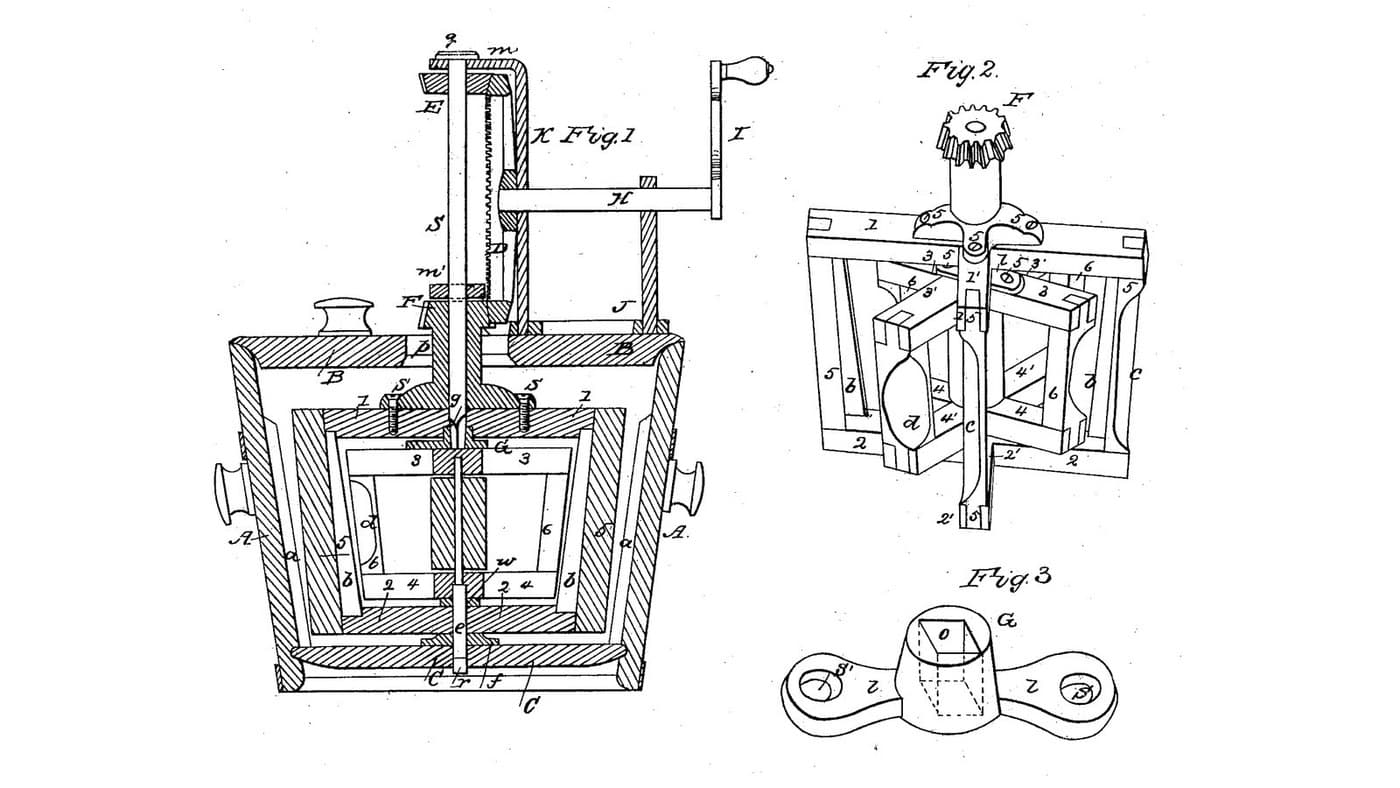
Nested Hollow-Dasher Churn: Two Dasher Frames Turn Contrary Ways, Their Hollowed Side Pieces Driving Cream at Webs
by Buttercup
Woodworking
0
0
0
0
0
0
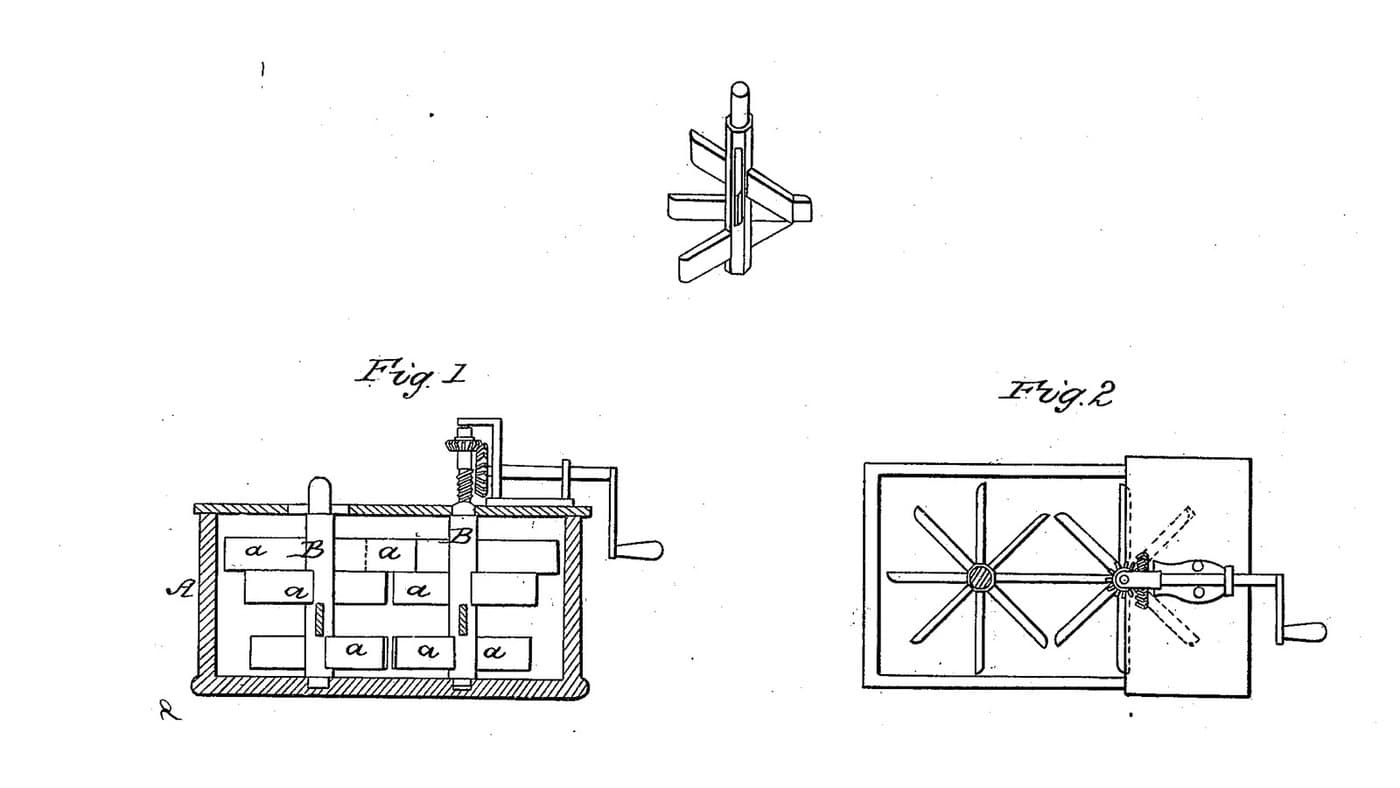
Interlapping Spiral-Dasher Churn: Two Upright Shafts With Arms Set in Screw Form Interlap, One Turning the Other
by Buttercup
Woodworking
0
0
0
0
0
0

Churning Butter from Cream — The 5,000-Year-Old Fat Separation
by TheChef
CRAFT
60
0
0
0
0
0
CC0 Public Domain
This blueprint is released under CC0. You are free to copy, modify, distribute, and use this work for any purpose, without asking permission.
Support the Maker by purchasing products through their Blueprint where they earn a Maker Commission set by Vendors, or create a new iteration of this Blueprint and include it as a connection in your own Blueprint to share revenue.