ART
BEAUTY & WELLNESS
CRAFT
CULTURE & HISTORY
ENTERTAINMENT
ENVIRONMENT
FOOD & DRINKS
REVERSE ENGINEERING
SCIENCES
SPORTS
TECHNOLOGY
WEARABLES
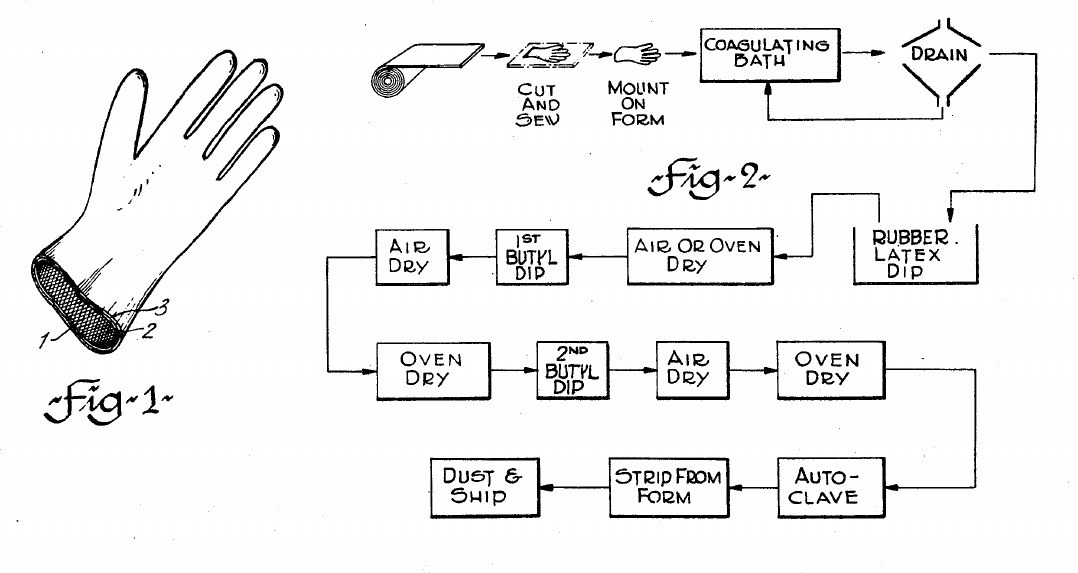


Chemical-Resistant Gloves: Butyl Latex over Natural Rubber on a Cotton Liner (Hart & Collyer, US 4,190,685, 1980)
Dipped rubber gloves built in layers on a knitted cotton liner: one coat of natural rubber, then five coats of butyl rubber, which lets very little liquid or vapour through. Each coat is dipped from latex on a porcelain hand form, and the whole glove is cured under steam and air pressure. Made in Canada to protect soldiers against chemical warfare agents; worn gloves showed no penetration in 24 hours of field use.
Result: flexible, soft chemical-resistant gloves with a comfortable cotton lining.
Source: J. A. Hart and J. C. Collyer, US 4,190,685 (1980), latex method. Unknown: sizes, the pigments. Picture: the patent drawing.
Advanced
Unknown
Instructions
1
1
Sew the cotton liner
Sew the cotton liner
Cut knitted or interlock cotton fabric to a glove shape and sew it into a glove. It stretches both ways, soaks up sweat and makes the glove easy to put on and take off. Not given: sizes, the knit.
Materials for this step:
 Knitted Cotton Fabric1 liner
Tools needed:
 Scissors
 Sewing Machine
 Unknown Dimensions
2
2
Dip in coagulant
Dip in coagulant
Pull the liner onto a porcelain hand form and flame it to smooth off the surface. Dip it in a 10 % solution of acetic acid in acetone, then turn the form for about 2½ minutes at 24 °C until it is dry. The coagulant sets the latex before it can soak through the cloth.
Materials for this step:
 Acetic Acid (Glacial)1 10 % in acetone
 Acetone1 solvent
Tools needed:
 Glove Former
 Propane Torch
3
3
Dip the natural rubber coat
Dip the natural rubber coat
Dip the liner into natural rubber latex (the patent uses LOTOL 1185) and leave it 5 seconds. Draw it out, turn it upside down and let it dry. Scrub the rubber film with an abrasive cleaner, a brush and water, and dry it again.
Materials for this step:
 Natural Rubber Latex1 bath
 Abrasive Cleaner1 as needed
Tools needed:
Glove Former Scrub Brush
4
4
Mix the butyl latex bath
Mix the butyl latex bath
Mix, in parts by dry weight: butyl rubber latex 100, sulphur 3, zinc dibutyldithiocarbamate 4, zinc oxide 5, formaldehyde 0.1 as a preservative, a liquid dithiocarbamate curing accelerator 4 (Merac 255 in the patent), and 6.5 of pigments (olive drab in the patent). Not given: the pigments.
Materials for this step:
 Butyl Rubber Latex100 parts dry
 Sulfur3 parts
 Zinc Dibutyldithiocarbamate4 parts
 Zinc Oxide Powder5 parts
 Formaldehyde Solution (37% Formalin)0.1 parts formaldehyde
 Liquid Dithiocarbamate Accelerator4 parts
 Unknown Material6.5 parts pigment
Tools needed:
 Stirrer
5
5
Dip five butyl coats
Dip five butyl coats
Dip the glove into the butyl latex and draw it out at 10 cm per minute. At once turn the form at about 8 rpm at 24 °C until the film has gelled, then dry it upside down in an oven at 66 °C for 1 hour. Wash, dip and dry again until there are five butyl coats; do not use the abrasive cleaner on the butyl film.
Tools needed:
Glove Former Drying Oven
6
6
Cure and finish
Cure and finish
Dry the glove at 66 °C for 1 hour. Cure it for 3 hours in a pressure vessel with 30 psi steam in the jacket (131 °C) and 26 psi air in the chamber. Strip the gloves from the forms while hot; when cool, trim them and wash them in soapy water.
Materials for this step:
 Soap1 as needed
Tools needed:
 Benchtop AutoclaveScissors
Materials
13- 1 linerPlaceholder
- 1 10 % in acetonePlaceholder
- 1 solventPlaceholder
- 1 bathPlaceholder
- 1 as neededPlaceholder
- 100 parts dryPlaceholder
- 3 partsPlaceholder
- 4 partsPlaceholder
- 5 partsPlaceholder
- 0.1 parts formaldehydePlaceholder
- Placeholder
- 6.5 parts pigmentPlaceholder
- 1 as neededPlaceholder
Tools Required
9- Placeholder
- Placeholder
- Placeholder
- Placeholder
- Placeholder
- Placeholder
- Placeholder
- Placeholder
- Placeholder
Connected Blueprint Materials

10% Attribution
กรีดยางพารา — การเก็บน้ำยางธรรมชาติจากต้นยางพารา
by SomchaiSang
Agriculture
52
0
0
0
1
0

Hazardous
10% Attribution
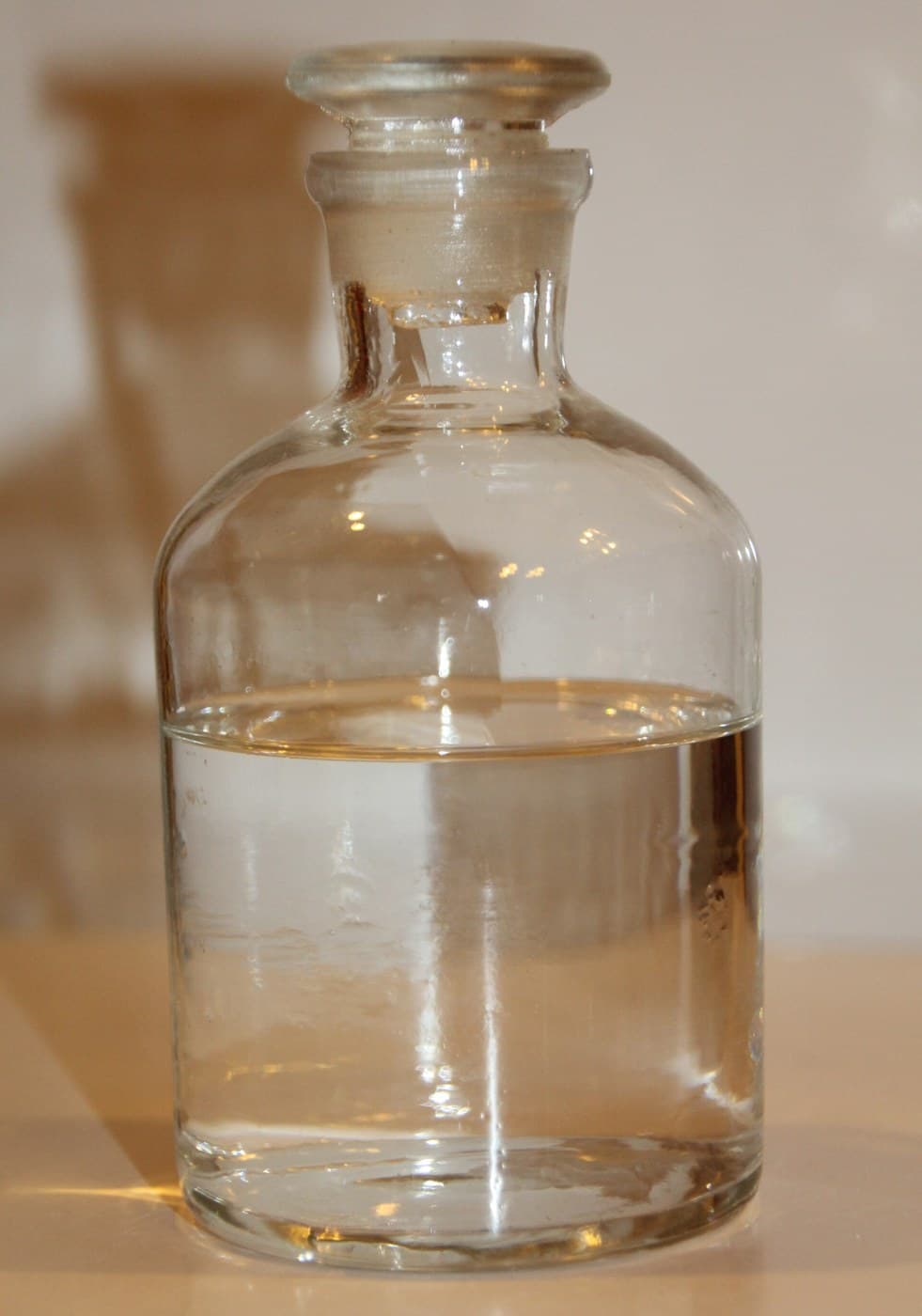
Glacial Acetic Acid from Wood Vinegar: Acetate of Soda, Oil of Vitriol and Freezing
by Charlie
Industrial
19
0
0
0
1
0
10% Attribution
Acetone by Dry Distillation of Acetate of Lime
by Charlie
Chemistry
29
0
0
0
1
0
10% Attribution
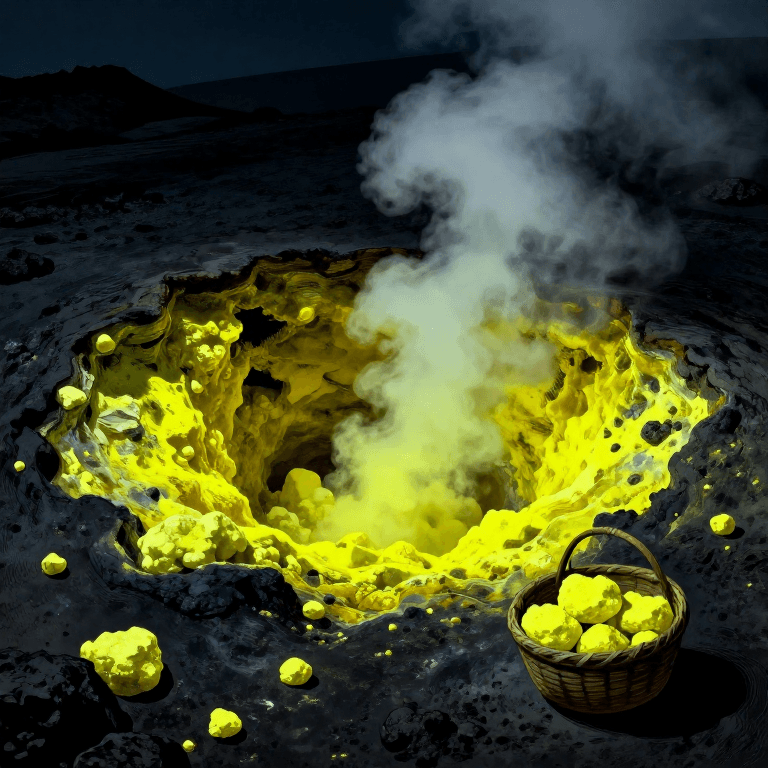
Collecting Native Sulfur from Volcanic Deposits
by Peter
Desert
93
0
0
0
6
0
10% Attribution
Making Zinc White Pigment — The Non-Toxic Replacement for Lead White
by Charlie
ART
67
0
0
0
6
0
This blueprint makes

CC0 Public Domain
This blueprint is released under CC0. You are free to copy, modify, distribute, and use this work for any purpose, without asking permission.
Support the Maker by purchasing products through their Blueprint where they earn a Maker Commission set by Vendors, or create a new iteration of this Blueprint and include it as a connection in your own Blueprint to share revenue.