Collaboration
ART
BEAUTY & WELLNESS
CRAFT
CULTURE & HISTORY
ENTERTAINMENT
ENVIRONMENT
FOOD & DRINKS
REVERSE ENGINEERING
SCIENCES
SPORTS
TECHNOLOGY
WEARABLES
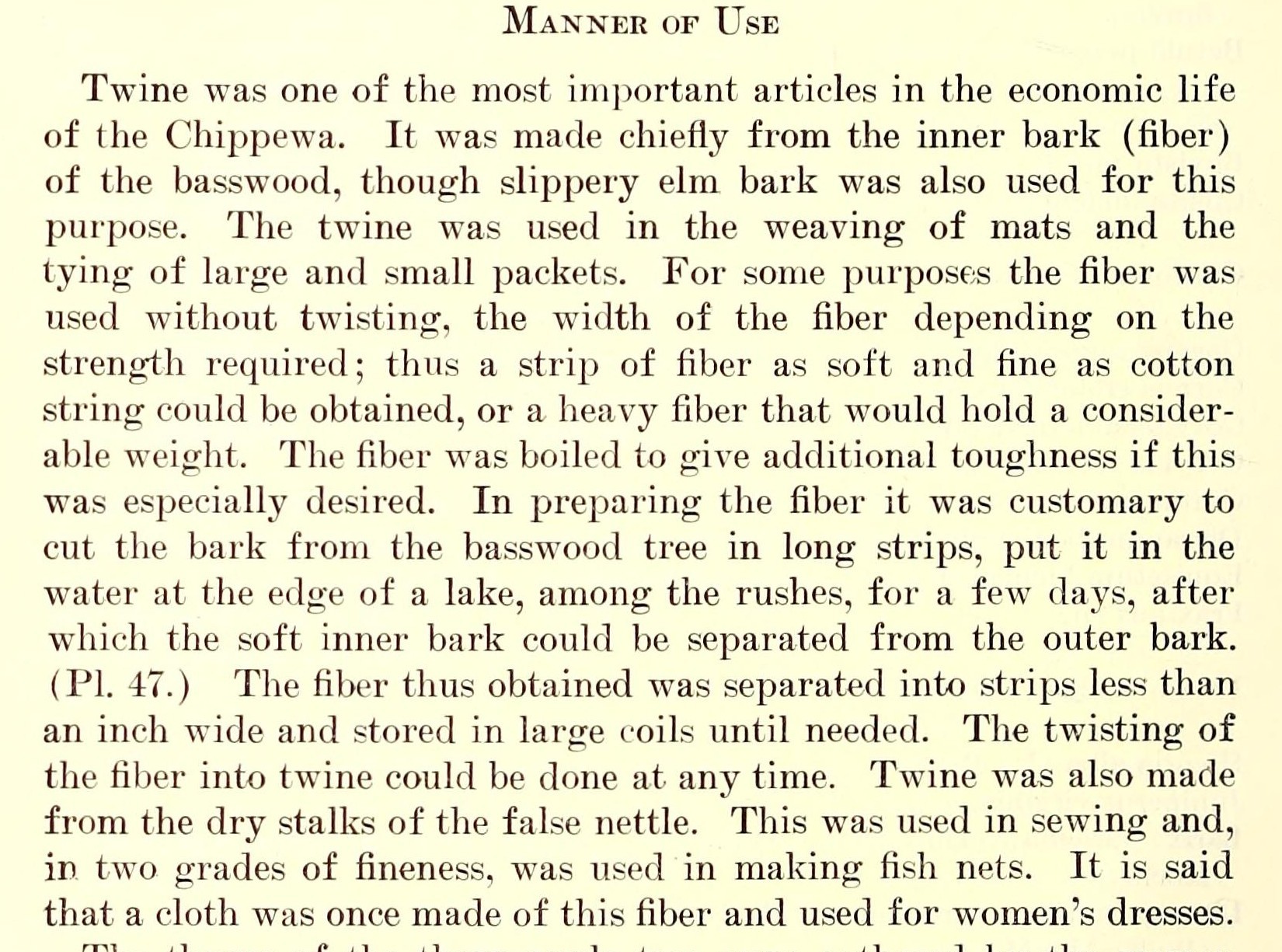


Chippewa Basswood Fiber and Twine: Bark Strips Soaked at the Lake Edge, Inner Bark Peeled and Coiled (Densmore, 1928)
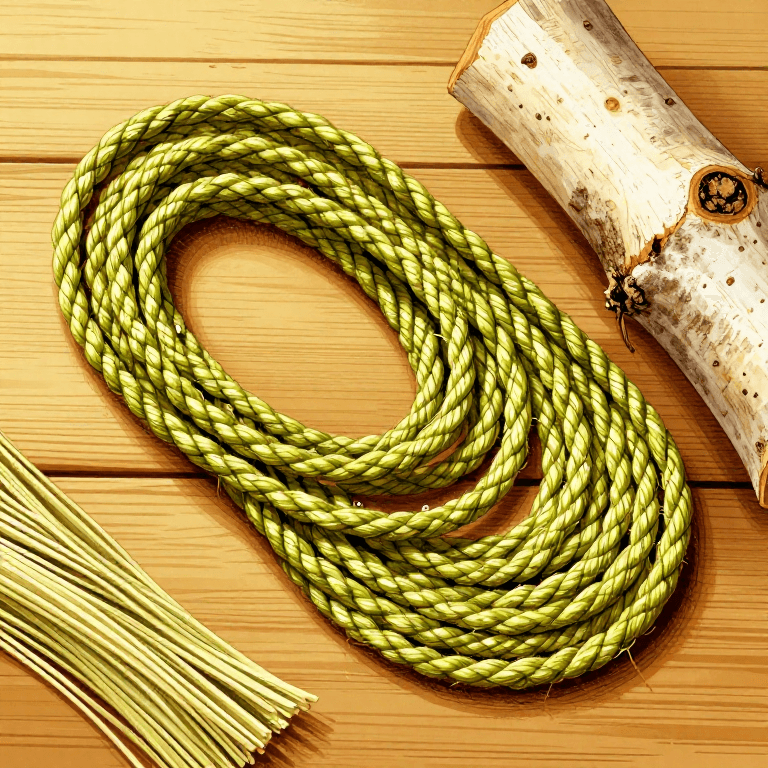
How the Chippewa (Ojibwe) got their most important twine, from Frances Densmore's record: long strips of basswood bark left a few days in the water among the rushes at a lake edge, the soft inner bark peeled off, split into strips under an inch wide and kept in coils, used flat or twisted into twine, and boiled when extra toughness was wanted.
Beginner
A few days of soaking, then an afternoon
Instructions
1
1
Read Densmore
Read Densmore
"Twine was one of the most important articles in the economic life of the Chippewa."
2
2
Cut the bark
Cut the bark
Cut the bark from a basswood tree in long strips. (Slippery elm bark was also used.)
Materials for this step:
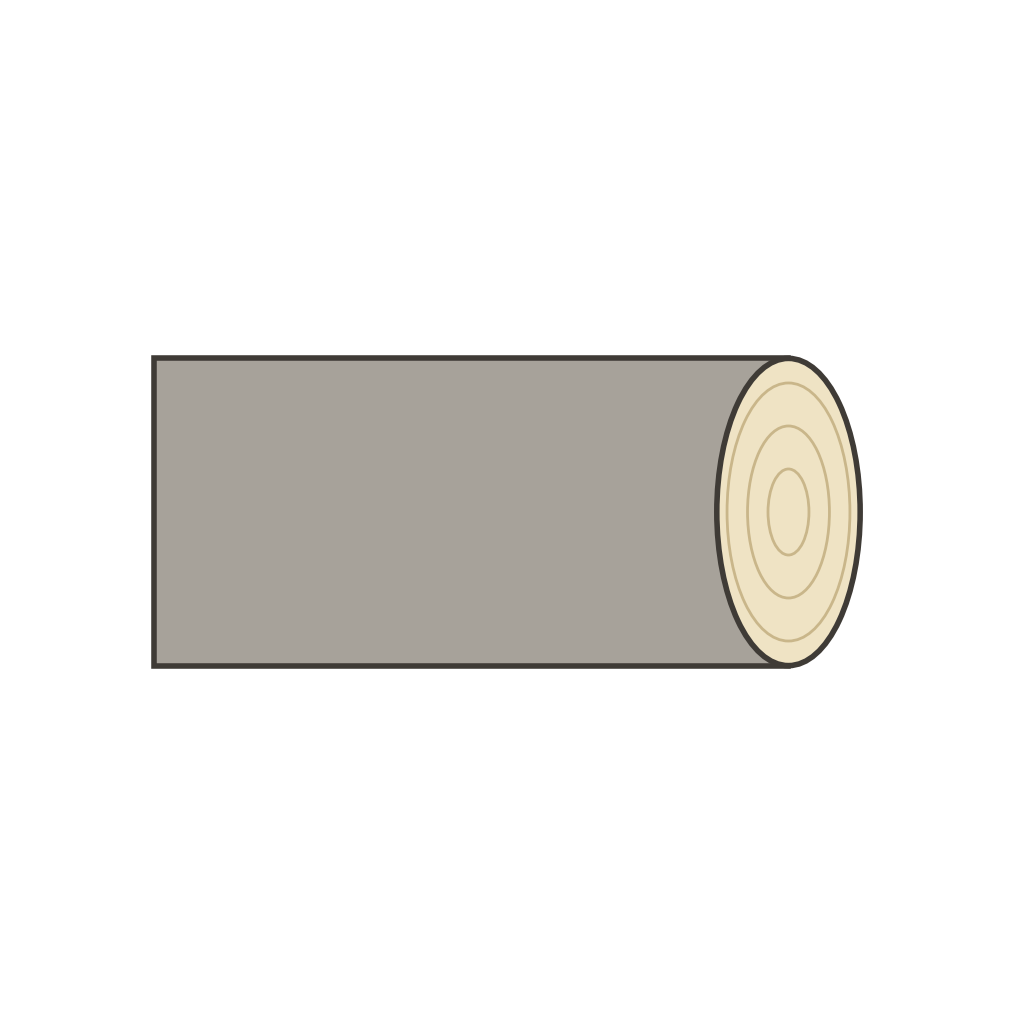 Basswood Log (Tilia americana)1 piece
Tools needed:
 Knife
3
3
Soak at the lake edge
Soak at the lake edge
Put the strips in the water at the edge of a lake, among the rushes, for a few days.
Materials for this step:
 Water1 piece
Tools needed:
Knife4
4
Peel and coil the fiber
Peel and coil the fiber
Separate the soft inner bark from the outer bark. Split the fiber into strips less than an inch (25 mm) wide, narrow for string as soft and fine as cotton, wider for a heavy load. Store it in large coils, somewhat moist, in a dark, cool place.
Tools needed:
Knife5
5
Toughen and twist
Toughen and twist
Boil the fiber if you want it extra tough. Use it flat for tying, or twist it into twine whenever you like. She does not say how; ours: roll two strands on the thigh so each twists one way, then let them wind round each other.
Materials for this step:
Water1 pieceTools needed:
 Iron Kettle
 Fire Pit
6
6
Troubleshooting
Troubleshooting
Basswood fiber troubleshooting.
Flow
Loading...
7
7
History and honest limits
History and honest limits
From Frances Densmore, *Uses of Plants by the Chippewa Indians*, **44th Annual Report of the Bureau of American Ethnology** (1928), pp. 378-379 (checked on the archive.org scan usesofplantsbych00dens). The twine wove bulrush floor mats, passed over and under the rushes on a frame. Soaking time beyond "a few days", the knife, boiling time and the twisting method are not given; ours.
This blueprint makes

Related Blueprints
These blueprints share knowledge with this one — techniques, materials, or principles that connect them in the learning graph.

CC0 Public Domain
This blueprint is released under CC0. You are free to copy, modify, distribute, and use this work for any purpose, without asking permission.
Support the Maker by purchasing products through their Blueprint where they earn a Maker Commission set by Vendors, or create a new iteration of this Blueprint and include it as a connection in your own Blueprint to share revenue.