Collaboration
ART
BEAUTY & WELLNESS
CRAFT
CULTURE & HISTORY
ENTERTAINMENT
ENVIRONMENT
FOOD & DRINKS
REVERSE ENGINEERING
SCIENCES
SPORTS
TECHNOLOGY
WEARABLES
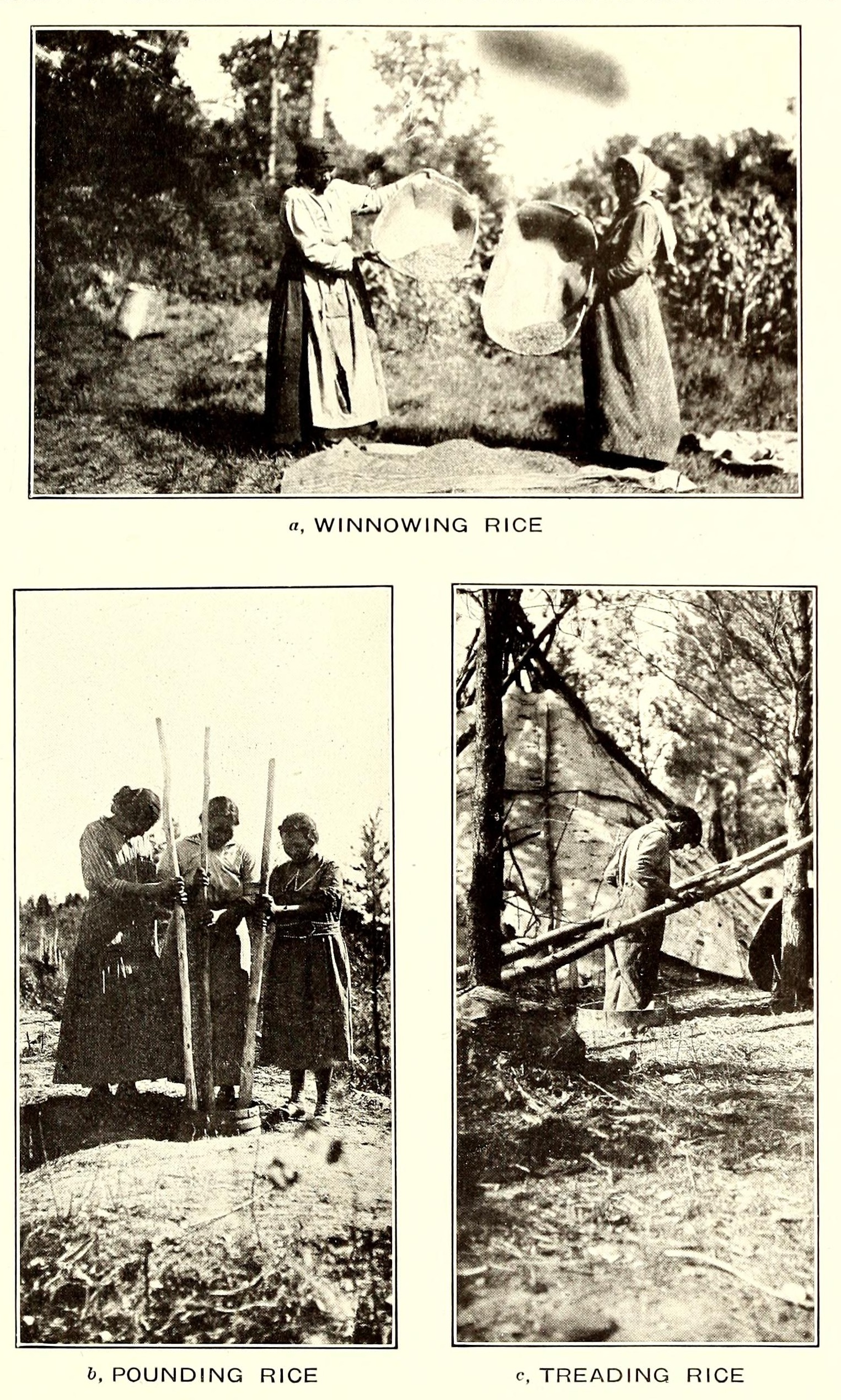


Chippewa Wild Rice: Knocked into the Canoe with Two Sticks, Parched, Pounded, Winnowed and Trodden (Densmore, 1928)
How the Chippewa (Ojibwe) harvested and finished wild rice, from Frances Densmore's account: the ripe kernels knocked into a poled canoe with two rice sticks, dried a day on birch bark, parched a peck at a time in a slanting kettle, pounded with dropped pestles, winnowed in the breeze and trodden in a sunken tub to free the last husk.
Intermediate
A day to gather a canoeful; a day and a half to finish it
Instructions
1
1
Her measures
Her measures
Loading Jupyter Notebook...
2
2
Read Densmore
Read Densmore
"Wild rice constitutes the chief cereal food of the Chippewa."
3
3
Knock the rice
Knock the rice
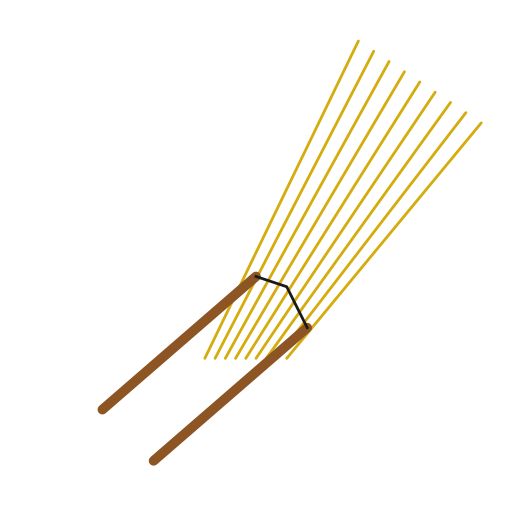
In warm, still weather, pole a canoe into the rice (a pole forked at the end). From the stern, bend a few stalks over the canoe with one stick and free the kernels with a sweeping, gentle stroke of the other, on both sides. Take only the ripe kernels and come back in a few days for more; leave some to fall as seed. A canoeful is a day's gathering.
Tools needed:
 Canoe
 Threshing Sticks
4
4
Dry a day
Dry a day
Spread the rice on sheets of birch bark in the sun, but not so hot that it heats, and stir it often. Allow about 24 hours.
Materials for this step:
 Birch Bark Sheets1 piece
Tools needed:
 Wooden Paddle
5
5
Parch it
Parch it
Prop a large kettle slanting over a carefully kept fire and stir about a peck (9 L) at a time with a slender paddle for about an hour, without burning it. This loosens the husk and gives the flavour. (Oldest way, "hard rice": spread it about 3 in., 8 cm, deep on hay over a frame above a slow fire: greenish black, keeps indefinitely and can be sown.)
Materials for this step:
 Hay1 piece
Tools needed:
 Iron Kettle
 Fire PitWooden Paddle
 Drying Rack
6
6
Pound it
Pound it
Put the rice in a barrel or a wooden mortar with sloping sides. Work wooden pestles about 5 1/2 ft (1.7 m) long up and down near the edge, letting them drop of their own weight, never forcing them, so the husk loosens and the kernel stays whole.
Tools needed:
 Wooden Barrel
 Wooden Pestle
7
7
Winnow
Winnow
Where a breeze blows, toss the rice in a winnowing tray, or pour it slowly from the tray onto birch bark on the ground; the wind takes the chaff.
Tools needed:
 Winnowing Tray
8
8
Tread it
Tread it
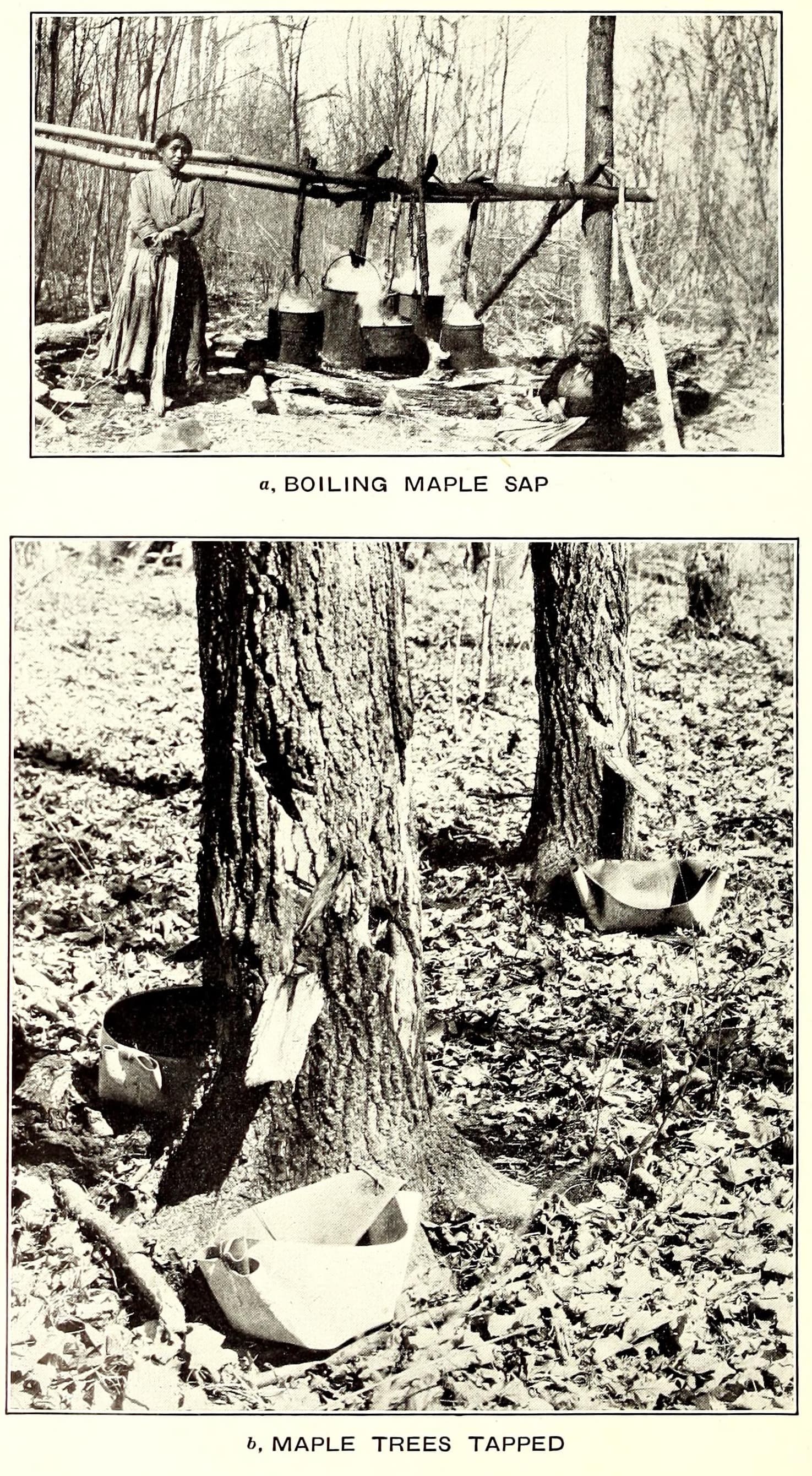
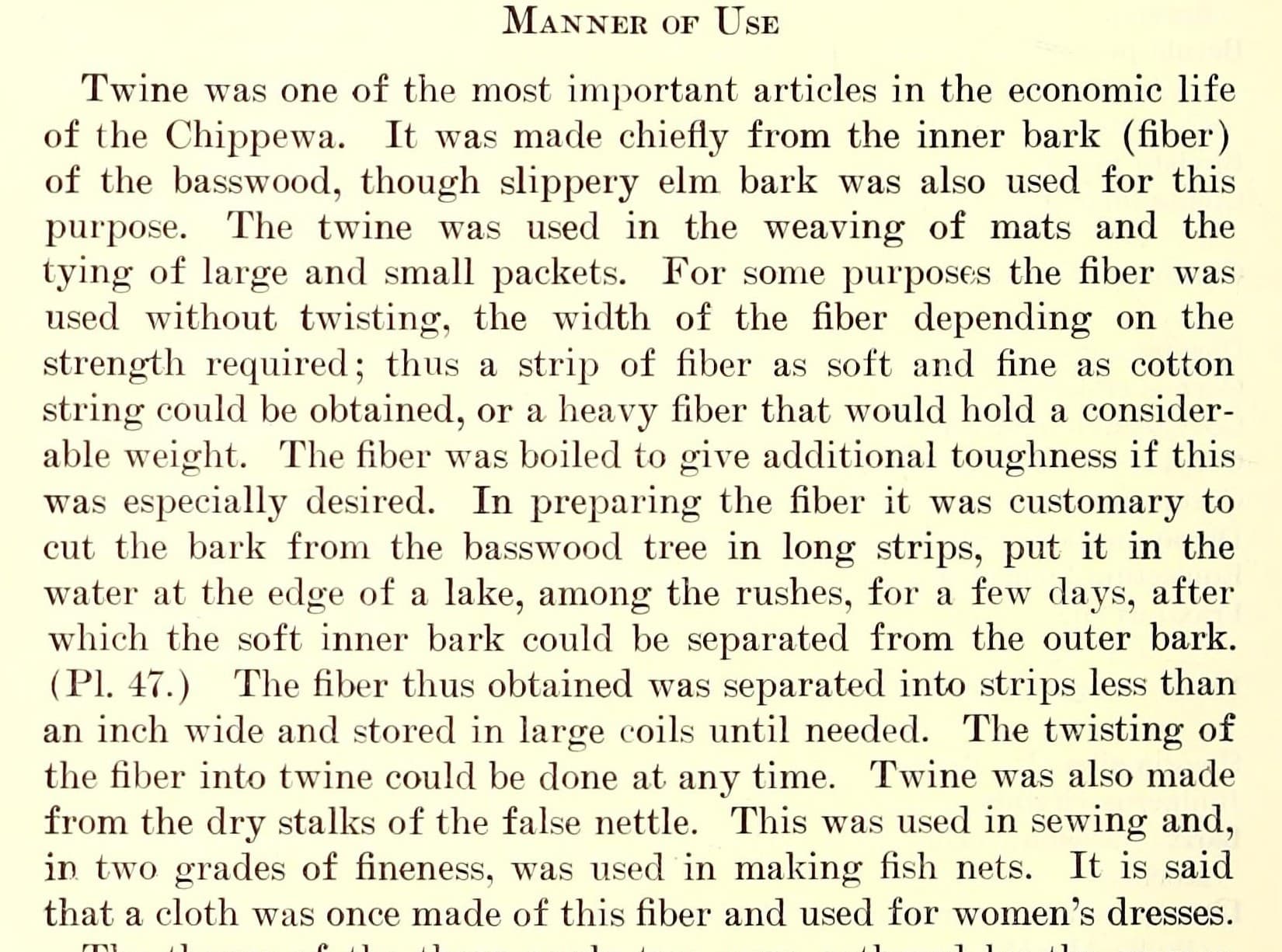
Sink a small wooden tub of about a bushel partly into the ground, with a stout pole either side fixed to a tree about 4 ft (1.2 m) up. In clean moccasins, lean on the poles and tread lightly, like dancing, to free the last bits of husk. Winnow again. Keep the chaff: it cooks like rice. Store the rice in bags with straw on top, sewn shut with basswood twine.
Materials for this step:
 Straw1 piece
 Cordage1 piece
Tools needed:
Wooden Barrel MoccasinsWinnowing Tray
9
9
Troubleshooting
Troubleshooting
Wild rice troubleshooting.
Flow
Loading...
10
10
History and honest limits
History and honest limits
From Frances Densmore, *Uses of Plants by the Chippewa Indians*, **44th Annual Report of the Bureau of American Ethnology** (1928), pp. 313-316 (checked on the archive.org scan usesofplantsbych00dens). A woman could also claim her rice about 10 days before it ripened by tying it in small sheaves with basswood fiber, drawn to her with a rice hoop; tied rice tasted slightly different and needed longer boiling. In old times the treading pit was lined with deerskin. Metric is ours.
Materials
4- 1 piecePlaceholder
- 1 piecePlaceholder
- 1 piecePlaceholder
- 1 piecePlaceholder
This blueprint makes
Related Blueprints
These blueprints share knowledge with this one — techniques, materials, or principles that connect them in the learning graph.

CC0 Public Domain
This blueprint is released under CC0. You are free to copy, modify, distribute, and use this work for any purpose, without asking permission.
Support the Maker by purchasing products through their Blueprint where they earn a Maker Commission set by Vendors, or create a new iteration of this Blueprint and include it as a connection in your own Blueprint to share revenue.