ART
BEAUTY & WELLNESS
CRAFT
CULTURE & HISTORY
ENTERTAINMENT
ENVIRONMENT
FOOD & DRINKS
REVERSE ENGINEERING
SCIENCES
SPORTS
TECHNOLOGY
WEARABLES



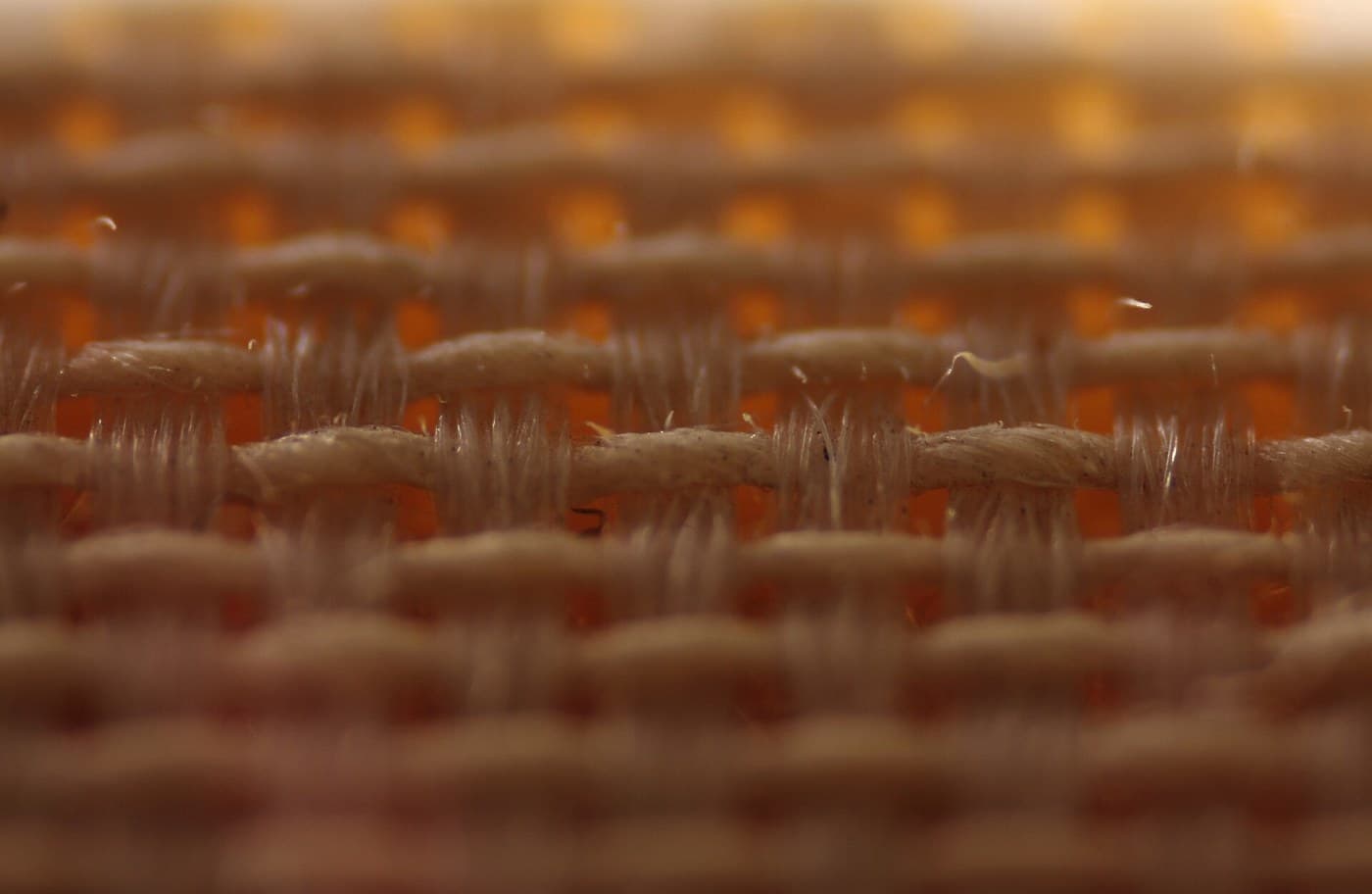
Cotton Gauze: Fine Cotton Thread in a Loose, Open Weave
Gauze is thin, see-through cloth with a loose, open weave. Woven loosely from cotton it soaks up and wicks moisture, which is why it is used for dressings. Set the loom with few threads to the centimetre, weave a plain weave with a light beat so the gaps stay open, then wash and dry it.
The picture: a folded cotton gauze swab.
Beginner
Two days
Instructions
1
1
Warp the loom openly
Warp the loom openly
Measure the warp (step 5) and thread it through the rigid heddle, leaving slots or holes empty between ends so they lie well apart. Wind it on under even tension.
Materials for this step:
 Cotton Thread450 m
Tools needed:
 Rigid Heddle Loom
 Ruler
Ruler Scissors
2
2
Weave with a light beat
Weave with a light beat
Weave plain weave, each pick over one warp and under the next, beating only lightly so the picks stay as far apart as the warp ends and the cloth stays open.
Materials for this step:
Cotton Thread400 mTools needed:
Rigid Heddle Loom ShuttleRuler
3
3
Cut off
Cut off
Cut the cloth off the loom and knot the warp ends in small groups.
Tools needed:
Scissors4
4
Wash and dry
Wash and dry
Boil the gauze in soapy water, rinse it well and hang it to dry (ours).
Tools needed:
 Large Cooking Pot
 Water
Water Soap
Soap Firewood
 Bamboo Drying Rack
5
5
Thread for the gauze
Thread for the gauze
Loading Jupyter Notebook...
Materials
1- 850 mPlaceholder
This blueprint makes

Related Blueprints
These blueprints share knowledge with this one — techniques, materials, or principles that connect them in the learning graph.

CC0 Public Domain
This blueprint is released under CC0. You are free to copy, modify, distribute, and use this work for any purpose, without asking permission.
Support the Maker by purchasing products through their Blueprint where they earn a Maker Commission set by Vendors, or create a new iteration of this Blueprint and include it as a connection in your own Blueprint to share revenue.