ART
BEAUTY & WELLNESS
CRAFT
CULTURE & HISTORY
ENTERTAINMENT
ENVIRONMENT
FOOD & DRINKS
REVERSE ENGINEERING
SCIENCES
SPORTS
TECHNOLOGY
WEARABLES
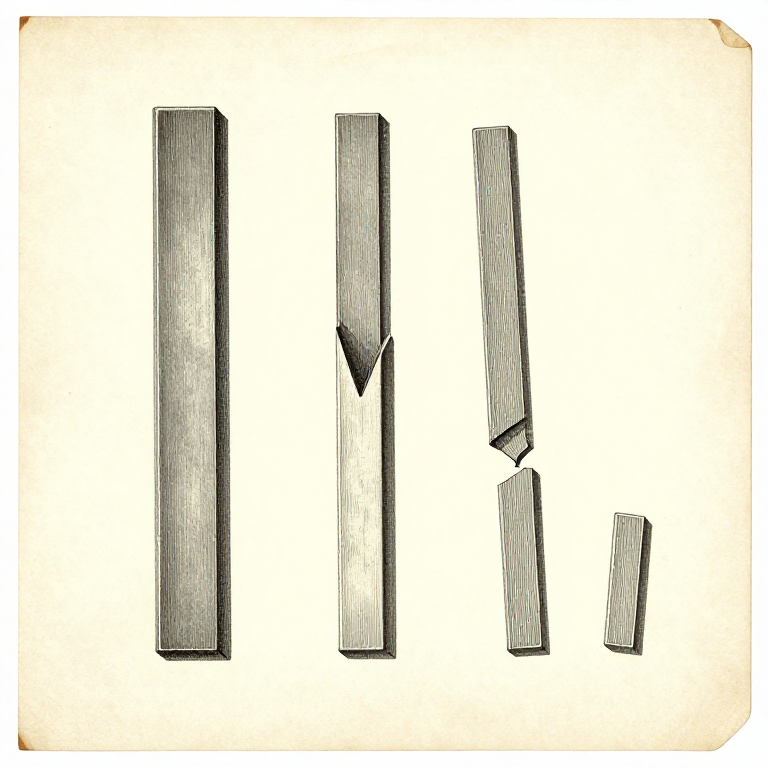


Cutting Hot Metal: The Hardy, the Chisel, and Never Through to the Face
Hot steel cuts like hard cheese. A chisel that would barely mark a cold bar sinks through a bright orange one in a few blows, which makes cutting to length a forge operation rather than a saw one.
The rule that governs all of it: never cut all the way through onto the anvil FACE. The face is hardened and a chisel driven into it leaves a permanent notch that prints into everything you forge afterwards.
So you cut nearly through, then break — or you cut over the soft step, or over the hardy hole, where going through costs nothing.
Intermediate
2 hours
Instructions
1
1
The hot cut hardy: the chisel that points up
The hot cut hardy: the chisel that points up
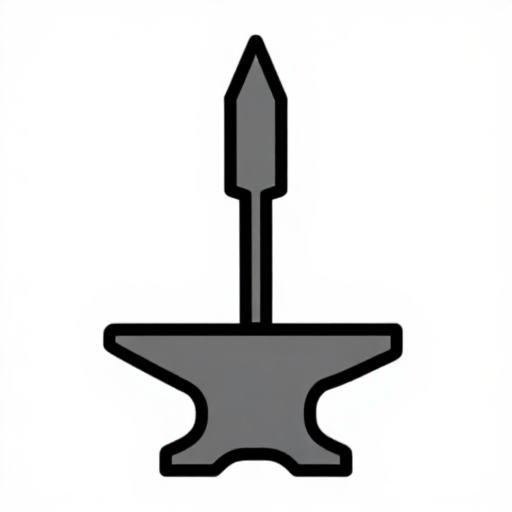
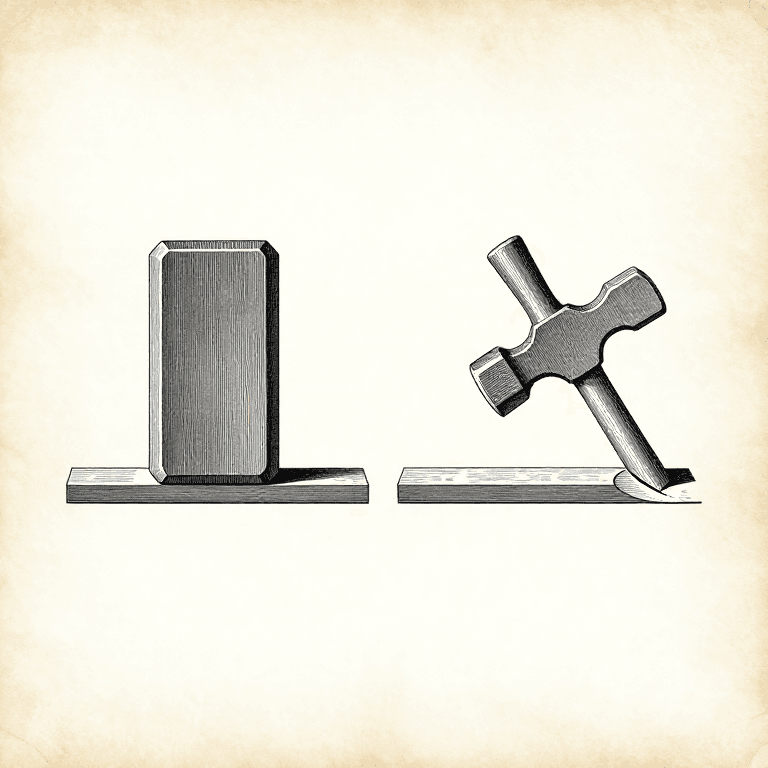
Drop a hot cut hardy into the hardy hole and it becomes an upward-facing chisel. Lay the hot bar on it and hammer from above, and the bar is cut between the hammer and the hardy edge.
Rotate the bar as you go, cutting a groove all the way round rather than driving straight through one side. A bar cut from one side only ends up with a long drawn-out tail rather than a square end.
Stop before you go right through — leave a thin web — and break the piece off by bending it. Driving the last of the cut through drives the bar down onto the hardy's edge, and a hardy is much easier to damage than to replace.
Materials for this step:
 Mild Steel Bar1 piece
 Charcoal - Lump1 piece
Tools needed:
 Hot Cut Hardy
 Anvil
Anvil Blacksmith Hammer
 Blacksmith Tongs
2
2
A hot chisel from above, over the step
A hot chisel from above, over the step
A hand-held hot chisel does the same job from the top, which suits cutting part way in — a shoulder, a slit for a joint, a decorative line.
Work over the soft STEP of the anvil, not the face, wherever the chisel might go through. That is what the step is for, and it is why it is deliberately left unhardened.
Keep the hot chisel cool: dip it every few blows exactly as with a punch. A hot chisel is not hardened as far as a cold chisel — it relies on the work being softer than it is — so letting it get hot ruins the edge quickly.
Materials for this step:
Mild Steel Bar1 piece Water1 piece
Tools needed:
AnvilBlacksmith HammerBlacksmith Tongs Leather Gauntlet Gloves
3
3
Hot chisel and cold chisel are different tools
Hot chisel and cold chisel are different tools
A COLD chisel is ground to a stout angle — around 60 degrees — because it has to survive cutting metal that is not giving way. A HOT chisel is ground much thinner, around 30 degrees, because hot steel offers little resistance and a thin edge cuts far better.
Use them the wrong way round and both fail: a cold chisel in hot steel is slow and leaves a rough cut, and a hot chisel in cold steel chips its edge off immediately.
Mark them so you cannot confuse them — a band of paint, a different handle, separate racks. The angle rung in the sharpening batch is where those numbers come from, and it is the same logic: the angle follows the job.
Tools needed:
 Magnifying LoupeHot Cut Hardy
 Wire Brush Set
4
4
Mind where the offcut goes
Mind where the offcut goes
A short hot offcut breaks free suddenly and flies. It is at forging heat, it is sharp, and it lands somewhere you were not looking.
Cut so the offcut falls away from you and downward, keep the floor clear of anything that will burn, and know where it went before you take the next heat. A hot offcut on the floor looks exactly like a cold one after a minute.
The same habit as the cooling rung: anything that has been in the fire is hot until proved otherwise, and it goes in one designated place. None of this makes the work risky — it is the small set of habits that makes it ordinary.
Materials for this step:
Mild Steel Bar1 pieceTools needed:
Blacksmith Tongs Clear Safety GlassesLeather Gauntlet Gloves
Materials
3- 1 piecePlaceholder
- 1 piecePlaceholder
- 1 piecePlaceholder
Related Blueprints
These blueprints share knowledge with this one — techniques, materials, or principles that connect them in the learning graph.
CC0 Public Domain
This blueprint is released under CC0. You are free to copy, modify, distribute, and use this work for any purpose, without asking permission.
Support the Maker by purchasing products through their Blueprint where they earn a Maker Commission set by Vendors, or create a new iteration of this Blueprint and include it as a connection in your own Blueprint to share revenue.