
Dyeing with Elderberries — Fugitive Purple from the Hedgerow
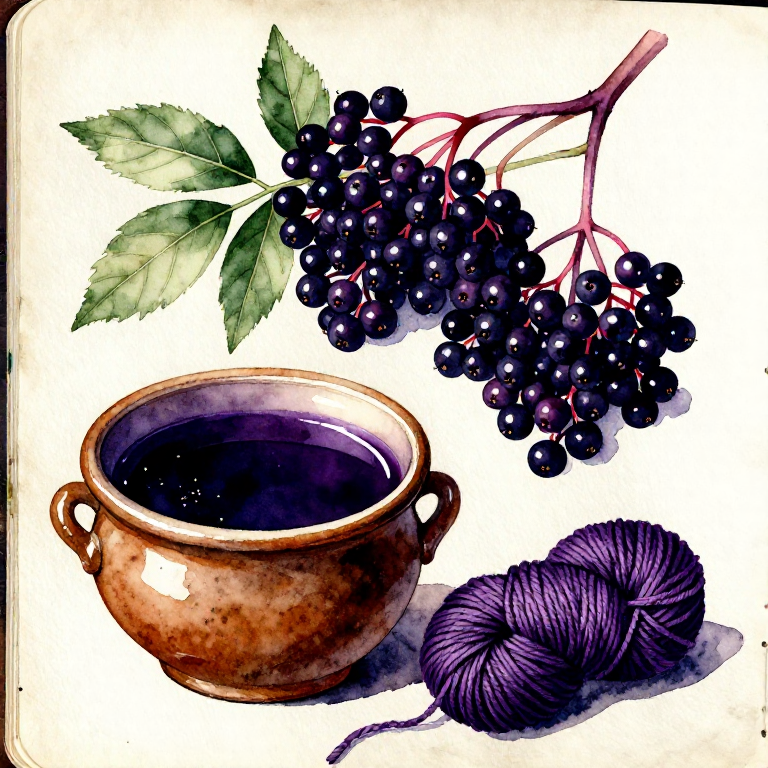
Elderberries (Sambucus nigra) produce one of the most vivid purple dye baths in nature — a deep, inky violet that looks spectacular in the pot. The berries are free and abundant in European hedgerows (in North America the related American elder, Sambucus canadensis, grows wild), and the colour is immediate and intense. But elderberry has a secret that every natural dyer must learn: it is a fugitive dye. The anthocyanin pigments that make elderberry juice so dramatically purple are inherently unstable — they fade rapidly in light and wash out over time, regardless of mordant.
This makes elderberry one of the most important teaching dyes in textile arts. It demonstrates a fundamental principle: not all vivid colours are permanent colours. A beginning dyer who skips elderberry will eventually waste time and fibre chasing unstable pigments without understanding why. Elderberry teaches the difference between a lightfast dye that stays in the fibre and a fugitive colour that fades in light and washes away. The lesson is worth a skein of wool.
Despite its poor lightfastness, elderberry colour is far from useless: elderberry juice is an approved natural food colourant today (for example in the United States and Japan). On fibre, with an alum mordant, it gives a muted purple. The colour is beautiful while it lasts, and it holds up far longer in items kept away from light — sachets, linings, pieces displayed in shade.
Instructions
Gather and weigh the elderberries
Gather and weigh the elderberries
Use 200-300% WOF of fresh elderberries, or 100% WOF of dried. For 100 g of wool, gather 200-300 g of fresh ripe berries or 100 g of dried elderberries. The berries must be fully ripe — deep purple-black, not red or green. Unripe berries contain less anthocyanin and produce weaker, duller colour. Strip the berries from their stems by running a fork through the clusters, and remove as much stem as you can: except for the flowers and ripe berries, all parts of the elder, including the stems, leaves and seeds, contain a cyanogenic glycoside and are poisonous raw. Do not eat from the dye bath, and use a pot and tools kept for dyeing only. The juice also stains hands intensely, so wear gloves.
Materials for this step:
 Elderberries (Dried)100 g
Tools needed:
 Digital Kitchen Scale
 Rubber Gloves
Heat the berries to extract the dye
Heat the berries to extract the dye
Place the berries in the dye pot with about 4 litres of water. Heat to about 80°C, below a simmer, and hold for 45 minutes, mashing the berries occasionally with the stirring spoon to release more juice. The liquid will turn an intense, opaque purple — one of the most dramatic dye baths in natural dyeing. Do not boil vigorously — high heat degrades anthocyanins and shifts the colour toward muddy brown.
Tools needed:
 Stock Pot
 Wooden Stirring Spoon
Strain out the berry pulp
Strain out the berry pulp
Strain the dye liquor through a fine mesh strainer into a clean pot, pressing the pulp to extract all the purple liquid. The strained bath should be a deep, vivid purple — almost black in concentration. Discard or compost the spent pulp. The colour of this bath is deceptively beautiful — it looks like it could produce permanent purple, which is precisely the lesson elderberry teaches.
Tools needed:
 Fine Mesh Strainer
Add alum-mordanted wool and dye at 80°C for 45 minutes
Add alum-mordanted wool and dye at 80°C for 45 minutes
Let the strained dye bath cool to room temperature. Pre-wet the alum-mordanted wool, squeeze out excess, and lower it into the bath. Slowly raise to 80°C and hold for 45 minutes, turning every 10 minutes. The wool will take up the purple quickly. The skein will emerge a rich, deep purple-violet that looks magnificent while wet.
Materials for this step:
 Wool Yarn Skein100 g
 Alum (Potassium Alum)10 g
Tools needed:
 Cooking Thermometer (0-200°C)
Cool, rinse, and observe the initial colour
Cool, rinse, and observe the initial colour
Let the wool cool in the bath overnight, then remove and rinse in lukewarm water. The rinse water will run purple — more colour washes out than with well-fixed mordant dyes like madder or cochineal, which is the first sign of elderberry's fugitive nature. The dried wool will be a soft lavender-purple, lighter than expected from such a dark dye bath. Hang in shade to dry.
Test lightfastness — the lesson of fugitive dyes
Test lightfastness — the lesson of fugitive dyes
Cut the dried skein in half. Store one half in a dark drawer. Pin the other half to your sunniest window. Compare the two samples side by side after two weeks and again after a month. The window sample will fade, from purple toward grey or brownish tones, and the difference grows the longer it hangs. This is the core lesson: elderberry anthocyanins are pH-sensitive, photosensitive, and weakly bonded. No mordant makes it lightfast — the pigment molecule itself is unstable. Understanding this principle saves the dyer from wasting expensive fibre on other fugitive dyes (fresh blackberry, red cabbage, beetroot) that produce vivid but impermanent colour.
Materials
3- 100 gPlaceholder
- Placeholder
- Placeholder
Tools Required
6- Placeholder
- Placeholder
- Placeholder
- Placeholder
- Placeholder
- Placeholder
Connected Blueprint Materials
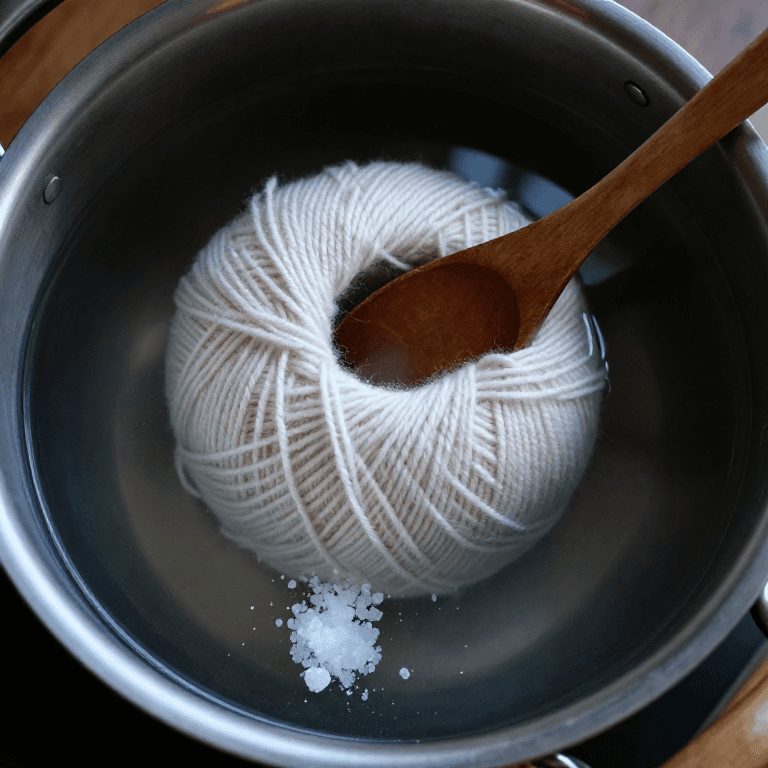
Mordanting Wool with Alum — The Foundation of Natural Dyeing
by Tex
Textile & Leather
Dyeing Purple-Grey with Blackberries — The Hedgerow Dye of Prehistoric Europe
by Tex
Textile & Leather
Dyeing Blue-Purple with Hollyhock — The Cottage Garden Dye of the Ancient World
by Tex
Textile & Leather
Related Blueprints
These blueprints share knowledge with this one — techniques, materials, or principles that connect them in the learning graph.
CC0 Public Domain
This blueprint is released under CC0. You are free to copy, modify, distribute, and use this work for any purpose, without asking permission.
Support the Maker by purchasing products through their Blueprint where they earn a Maker Commission set by Vendors, or create a new iteration of this Blueprint and include it as a connection in your own Blueprint to share revenue.