Collaboration
ART
BEAUTY & WELLNESS
CRAFT
CULTURE & HISTORY
ENTERTAINMENT
ENVIRONMENT
FOOD & DRINKS
REVERSE ENGINEERING
SCIENCES
SPORTS
TECHNOLOGY
WEARABLES
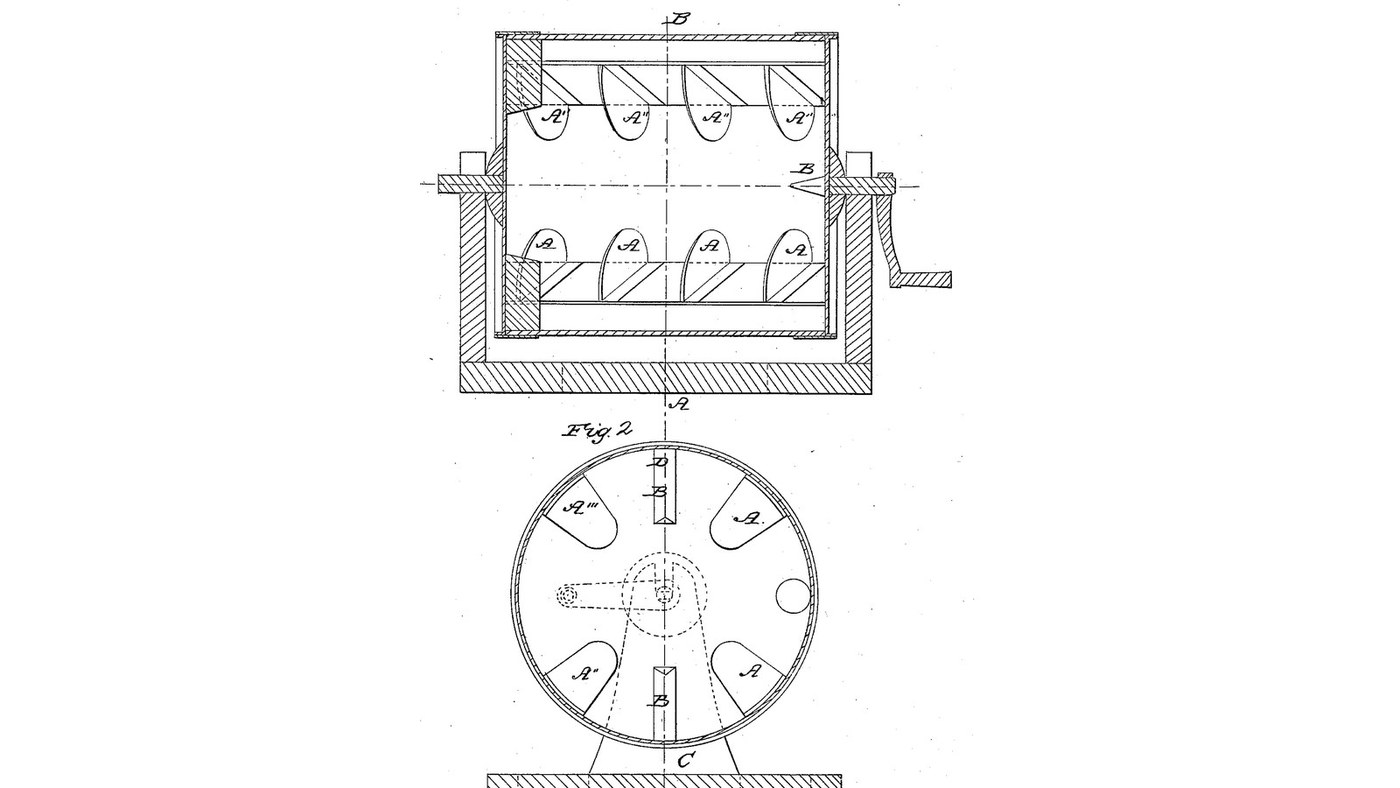

Oblique-Slat Barrel Churn: Rows of Slats Inside a Turning Barrel Point Opposite Ways and Throw the Cream End to End
Pearson Embree of West Chester, Pennsylvania, received US 27,536, dated 20 March 1860, for a churn. Inside a common barrel churn turned by a crank, rows of wooden slats about a quarter of the diameter high point obliquely to the barrel's motion, each row the opposite way to the last. Some throw the cream toward one end, some toward the other; it strikes other slats or the projections on the heads and turns back.
The slats' height follows the patent's proportion; every other size here is ours.
Intermediate
About 2 days
Instructions
1
1
Slats a quarter of the diameter high
Slats a quarter of the diameter high
Loading Jupyter Notebook...
2
2
Cream thrown end to end, two weeks before
Cream thrown end to end, two weeks before
Newbrough rocks his barrel so the cream runs end to end through pins. Embree turns his, and oblique slats throw it.
3
3
Read US 27,536
Read US 27,536
"The slats A A A, etc., throw the cream toward an end of the churn (one portion of the slats throwing to one end and the remaining portion to the other end); as the cream is thrown violently toward the end it either strikes other slats, or the projections B B by either of which means its course is reversed and great agitation of the cream produced."
4
4
Barrel, heads and door
Barrel, heads and door
Cut 430 mm of food-grade PE pipe 315 mm across with a 12 mm wall. Cut two heads from 15 mm HDPE sheet to fit inside it and bore both 20 mm on the centre. Cut a door 200 x 120 mm in the pipe's side, between two rows of slats; keep the piece, screw two HDPE strips along its long edges so it rests on the pipe, and hold it with two hooks and eyes.
Materials for this step:
 HDPE Pipe1 piece
 HDPE Sheet1 piece
 Hook and Eye2 pieces
 Machine Screws4 pieces
 Nylon Insert Lock Nut4 pieces
Tools needed:
 Jigsaw
 Cordless Drill
 Drill Bit Set
 Spade Bit Set
 Files (Hand File)
 Screwdriver Set
 Tape Measure
5
5
Slats A, A', A'', A''' and projections B
Slats A, A', A'', A''' and projections B
Cut four hardwood strips 30 x 18 mm, 390 long, and sixteen hardwood slats 90 x 12 mm standing 73 mm from the barrel's wall, a quarter of its 291 mm inside diameter; round their ends if you like. Set four slats in each strip, 100 mm apart, each at 45 degrees to the strip: in the first and third strips one way, in the second and fourth the other. Screw the strips inside the barrel a quarter turn apart, through the wall with stainless screws and lock nuts, sealed with silicone, so each row points the opposite way from the row before. Screw two hardwood projections B, 20 x 90 mm and 30 deep, on each head's inner face, opposite each other, between the rows.
Materials for this step:
 Hardwood Board1 piece
 Wood Glue1 pieceMachine Screws16 piecesNylon Insert Lock Nut16 pieces
 Silicone Sealant1 piece
 Wood Screws8 pieces
Tools needed:
 Table Saw
 ProtractorCordless DrillDrill Bit Set
 Bar Clamp
 SandpaperScrewdriver Set
 Adjustable Spanner
6
6
Shaft, stand and crank
Shaft, stand and crank
Pass a 20 mm stainless shaft 680 mm long through both heads, press the heads into the pipe's ends, screw them through the wall and seal the heads and the shaft's passages with silicone sealant. Make a hardwood stand: a base 600 x 400 mm and two uprights 40 x 120 mm, 30 mm beyond each end of the barrel, bored 20.8 mm 260 mm above the floor. Rest the shaft in them with collars, and fit a hardwood crank 130 mm long with a dowel handle on its long end.
Materials for this step:
 Stainless Steel Rod1 pieceSilicone Sealant1 pieceMachine Screws8 piecesHardwood Board2 piecesWood Glue1 pieceWood Screws8 pieces
 Shaft Collar2 pieces
 Hardwood Dowels1 piece
Tools needed:
 HacksawFiles (Hand File)Table SawCordless DrillDrill Bit SetSpade Bit SetScrewdriver Set
7
7
The build in 3D
The build in 3D
FreeCAD model of this build, the barrel cut through the middle: four rows of oblique slats, alternate rows pointing opposite ways, the projections B on the heads, the door, the shaft, stand and crank.
8
8
Churn
Churn
Turn the door uppermost, pour in about 8 litres of heavy cream at about 15 °C, checked with the thermometer, and close it. Turn the crank steadily, timing it. When the butter comes, stop with the door uppermost, open it, tip the buttermilk out into a bowl, take out the butter, wash it in cold water until it runs clear, salt and weigh it.
Materials for this step:
 Heavy Cream8 l
 Coarse Sea Salt1 piece
 Water1 piece
Tools needed:
 Leave-In Probe Thermometer
 Stopwatch
 Digital Kitchen Scale
 Stainless Steel Mixing Bowl (Large)
9
9
Troubleshooting
Troubleshooting
Oblique-slat barrel churn troubleshooting.
Flow
Loading...
10
10
History and honest limits
History and honest limits
**Pearson Embree** of West Chester, Chester County, Pennsylvania, US 27,536, 20 March 1860, "Churn". He claimed the slats or projections on the inner surface, each row pointing obliquely in the line of motion and the next row the opposite way. He says they make butter "in much less time than by the ordinary revolving churns". The slat height follows his quarter-diameter; the PE barrel, the 45-degree angle, the counts and all other sizes are ours.
Materials
15- 1 piecePlaceholder
- 1 piecePlaceholder
- 2 piecesPlaceholder
- 28 piecesPlaceholder
- 20 piecesPlaceholder
- 2 piecesPlaceholder
- 2 piecesPlaceholder
- 2 piecesPlaceholder
- 16 piecesPlaceholder
- 1 piecePlaceholder
- 2 piecesPlaceholder
- 1 piecePlaceholder
- 8 lPlaceholder
- 1 piecePlaceholder
- 1 piecePlaceholder
Tools Required
17- 1 vendor sell this, none ship to you yetPlaceholder
- 1 vendor sell this, none ship to you yetPlaceholder
- Placeholder
- Placeholder
- Placeholder
- Placeholder
- 1 vendor sell this, none ship to you yetPlaceholder
- 1 vendor sell this, none ship to you yetPlaceholder
- Placeholder
- Placeholder
- Placeholder
- Placeholder
- Placeholder
- Placeholder
- Placeholder
- Placeholder
- Placeholder
Design Files
1This blueprint makes

Related Blueprints
These blueprints share knowledge with this one — techniques, materials, or principles that connect them in the learning graph.
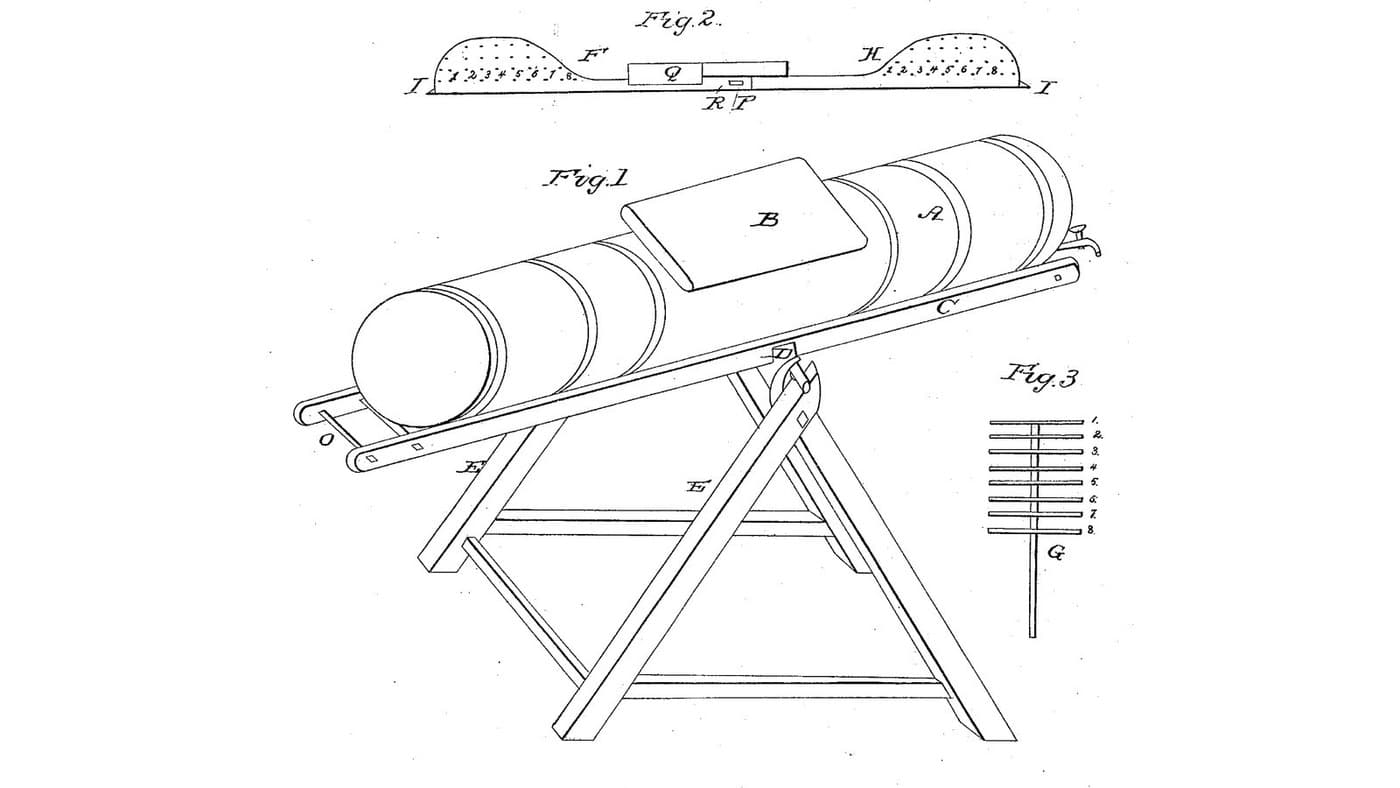
Rocking Barrel Brake-Pin Churn: Cream Rushes End to End Through Rows of Pins, a Diagonal Board Gathers the Butter
by Buttercup
Woodworking
0
0
0
0
0
0
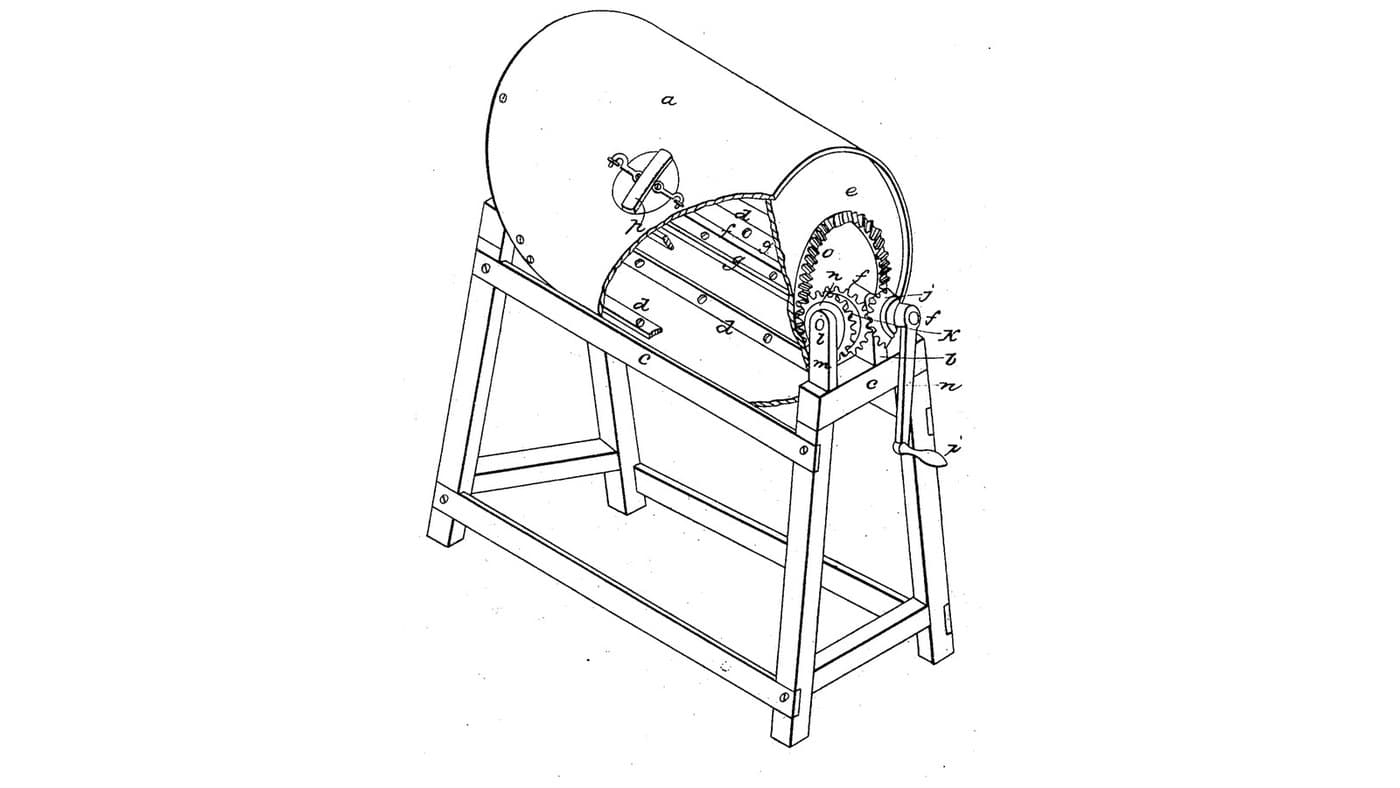
Counter-Turning Cylinder Churn: The Ribbed Cylinder Turns One Way While the Dashers Inside Turn the Other
by Buttercup
Woodworking
0
0
0
0
0
0

Churning Butter from Cream — The 5,000-Year-Old Fat Separation
by TheChef
CRAFT
60
0
0
0
0
0
CC0 Public Domain
This blueprint is released under CC0. You are free to copy, modify, distribute, and use this work for any purpose, without asking permission.
Support the Maker by purchasing products through their Blueprint where they earn a Maker Commission set by Vendors, or create a new iteration of this Blueprint and include it as a connection in your own Blueprint to share revenue.