ART
BEAUTY & WELLNESS
CRAFT
CULTURE & HISTORY
ENTERTAINMENT
ENVIRONMENT
FOOD & DRINKS
REVERSE ENGINEERING
SCIENCES
SPORTS
TECHNOLOGY
WEARABLES
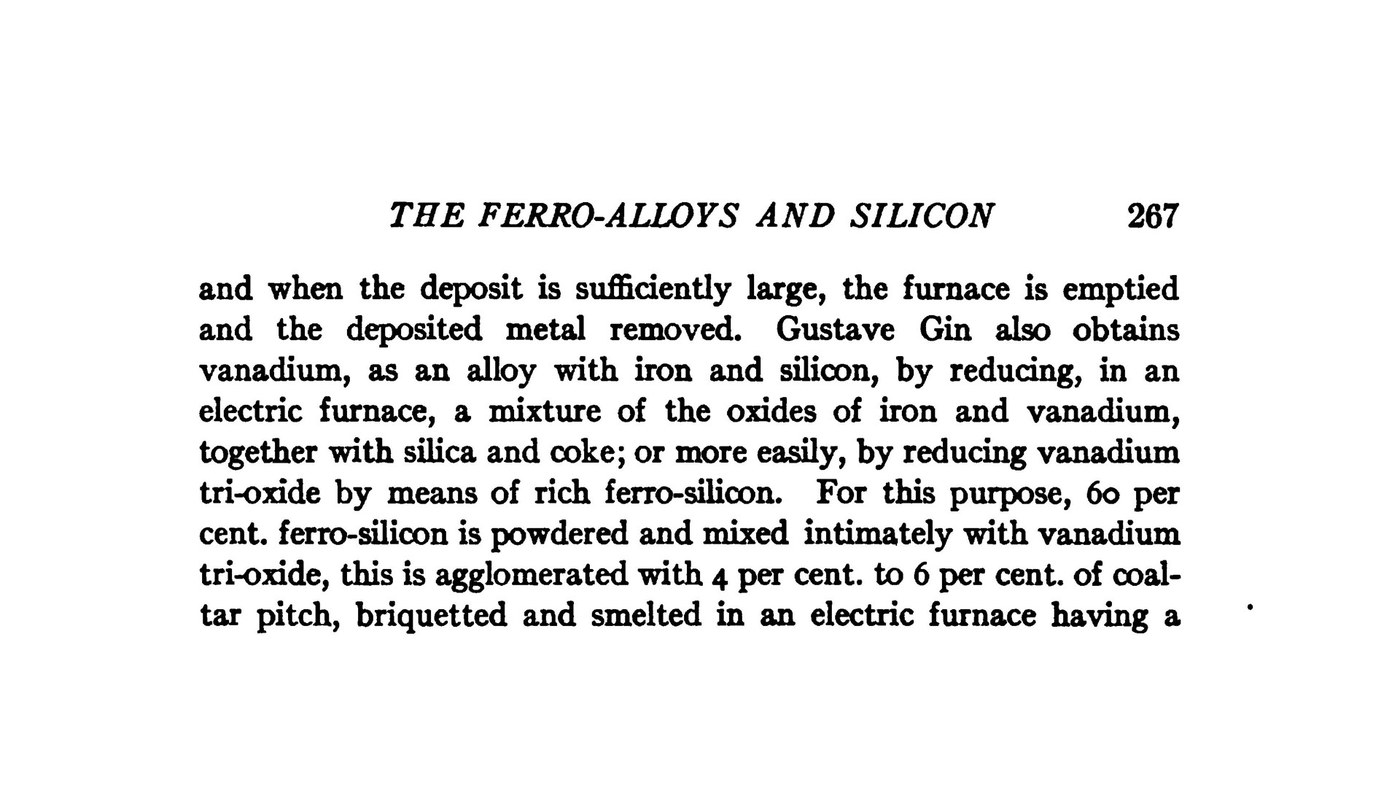


Ferrovanadium: Gin's Ferro-Silicon Reduction of Vanadium Trioxide (Stansfield, 1914)
Ferro-vanadium for steelmaking by Gustave Gin's easier route: powdered 60 per cent ferro-silicon is mixed with vanadium trioxide, bound with a little coal-tar pitch into briquettes, and smelted in an electric furnace on a magnesite hearth; the silicon takes the oxygen and the vanadium alloys with the iron.
A magnesite hearth keeps the alloy from picking up carbon from a carbon lining.
Source: A. Stansfield, The Electric Furnace, 2nd ed. (1914), p. 267. Picture: the book's text.
Advanced
Unknown
Instructions
1
1
Mix the charge
Mix the charge
Powder 60 per cent ferro-silicon and mix it intimately with vanadium trioxide. The ratio is not given.
Materials for this step:
 Ferrosilicon1 60 per cent grade, powdered
 Vanadium Trioxide1 piece
Tools needed:
 Mortar and Pestle
2
2
Briquette
Briquette
Agglomerate the mixture with 4 to 6 per cent of coal-tar pitch and press it into briquettes.
Materials for this step:
 Coal Tar Pitch1 4-6 per cent
Tools needed:
Mortar and Pestle3
3
Smelt
Smelt
Smelt the briquettes in an electric furnace with a magnesite hearth.
Tools needed:
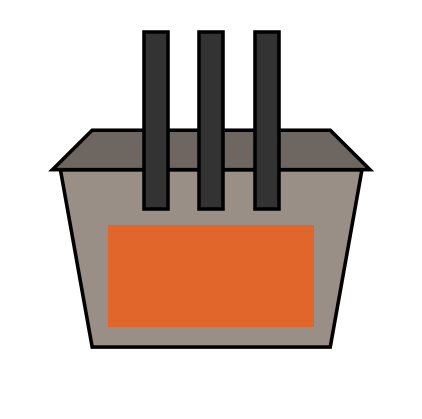 Electric Arc Furnace
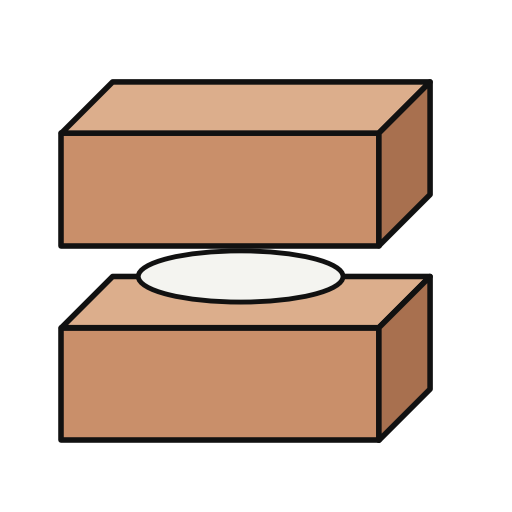 Magnesite Blocks
Materials
3- 1 60 per cent grade, powderedPlaceholder
- 1 piecePlaceholder
- 1 4-6 per centPlaceholder
Tools Required
3- Placeholder
- Placeholder
- Placeholder
Connected Blueprint Materials


This blueprint makes
CC0 Public Domain
This blueprint is released under CC0. You are free to copy, modify, distribute, and use this work for any purpose, without asking permission.
Support the Maker by purchasing products through their Blueprint where they earn a Maker Commission set by Vendors, or create a new iteration of this Blueprint and include it as a connection in your own Blueprint to share revenue.