ART
BEAUTY & WELLNESS
CRAFT
CULTURE & HISTORY
ENTERTAINMENT
ENVIRONMENT
FOOD & DRINKS
REVERSE ENGINEERING
SCIENCES
SPORTS
TECHNOLOGY
WEARABLES
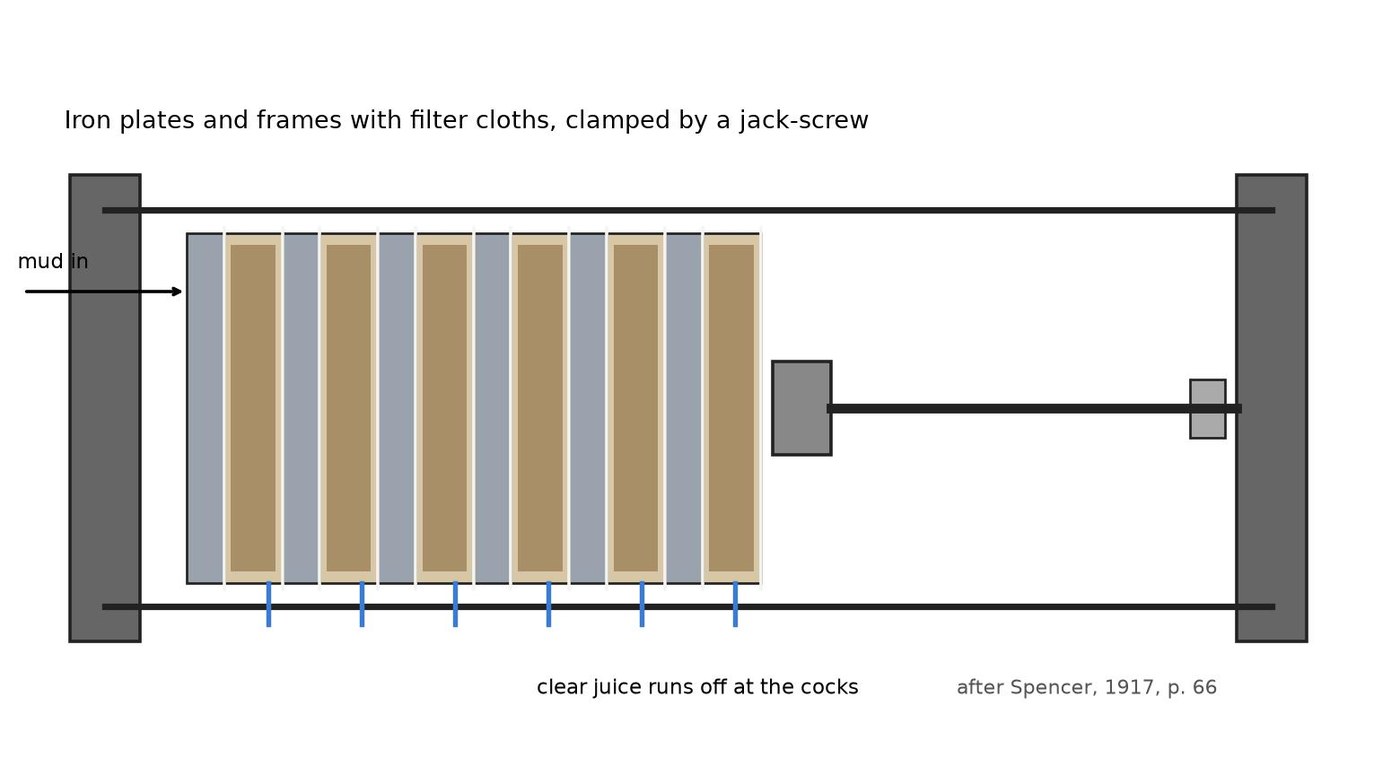

Filter Press: Iron Plates and Frames Clamped by a Jack-Screw (Spencer, 1917)
The sugar-house filter press: a row of iron plates and frames, each covered with filter cloth, hung on a heavy framework and squeezed together by a strong jack-screw. The cloth itself seals the joints. Mud pumped in collects as cake in the frames, and the clear liquid runs out through cocks on the plates.
Result: a plate-and-frame filter press that works best at about 40 lb per square inch.
Source: G. L. Spencer, A Handbook for Cane-Sugar Manufacturers (1917), pp. 66-67. Unknown: sizes and the number of chambers. Picture: a drawn diagram.
Advanced
Unknown
Instructions
1
1
Make the plates and frames
Make the plates and frames
Make the plates and frames of iron, with outlet openings and cocks on the plates for the filtered liquid. For a frame (side-feed) press, cast a lug on each frame and plate with an opening, so the lugs line up into a mud channel. For a centre-feed press, make heavy recessed plates with a round opening in each instead. Ours: iron castings. Not given: sizes, the number of chambers.
Materials for this step:
 Iron Castings1 plates and frames
 Unknown Valve1 outlet cocks
Tools needed:
 Milling Machine
 Drill Press
 Unknown Dimensions
2
2
Build the frame and jack-screw
Build the frame and jack-screw
Build a heavy framework that carries the plates and frames in a row, with a powerful jack-screw at one end to clamp them together. Not given: the framework's sizes and metal.
Materials for this step:
 Unknown Metal1 framework and jack-screw
Tools needed:
Drill PressUnknown Dimensions3
3
Dress it with cloth
Dress it with cloth
Hang a heavy cotton filter cloth over each plate, with a thin cotton cloth over it to protect it from wear; the cloth makes the joints between plates and frames. In a frame press the cloth has no hole, and rubber rings or cloth 'stockings' seal between the lugs. In a centre-feed press, cut a hole in the cloth to match each plate's opening and clamp the cloth to the plate there. Screw the pack tight.
Materials for this step:
 Coarse Cotton Filter Cloth1 heavy cloths
 Fine Cotton Filter Cloth1 thin cover cloths
 Natural Rubber Sheet1 lug rings
Tools needed:
 Scissors
4
4
Steam it and press
Steam it and press
Before use, blow steam through the press until it comes freely from the cocks. Pump the mud in: about 40 lb per square inch gives very good work, and juice is pumped in at up to about 45 lb. More pressure risks breaking the press and blinding the cloths. The solids collect in the frames and the clear liquid runs off at the cocks. To wash the cake, close the cocks on the water plates and force water through it. Ours: a diaphragm pump.
Tools needed:
 Steam Boiler
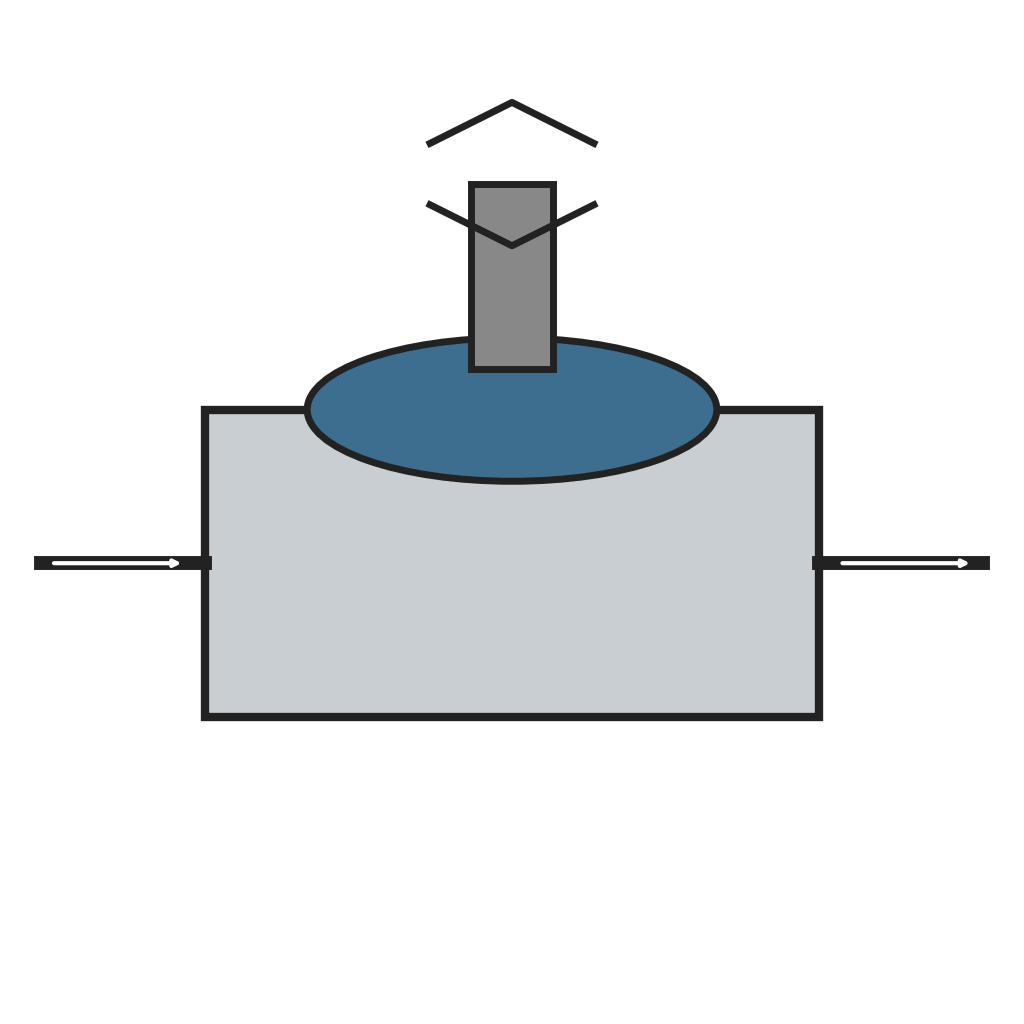 Diaphragm Pump
Materials
6- 1 plates and framesPlaceholder
- 1 outlet cocksPlaceholder
- 1 framework and jack-screwPlaceholder
- 1 heavy clothsPlaceholder
- 1 thin cover clothsPlaceholder
- 1 lug ringsPlaceholder
Tools Required
6- Placeholder
- Placeholder
- Placeholder
- Placeholder
- Placeholder
- Placeholder
Connected Blueprint Materials

10% Attribution
Casting Iron in a Cupola Furnace — Re-Melting Pig Iron into Finished Castings
by Piett
Metalworking
50
0
0
0
6
0
10% Attribution
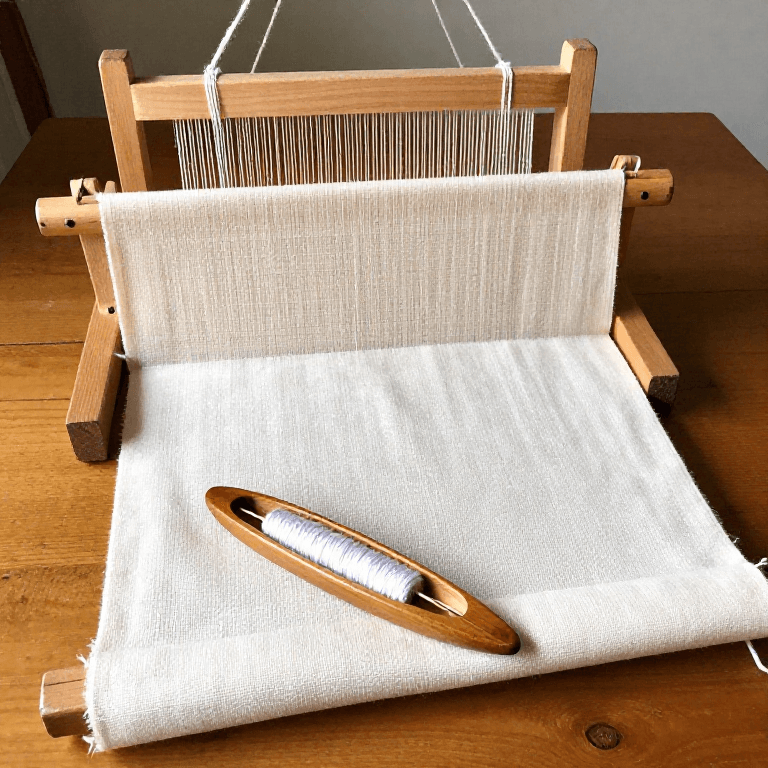
Plain-Weave Cotton Cloth on a Rigid Heddle Loom
by Tex
Textile & Leather
39
0
0
0
1
0
10% Attribution
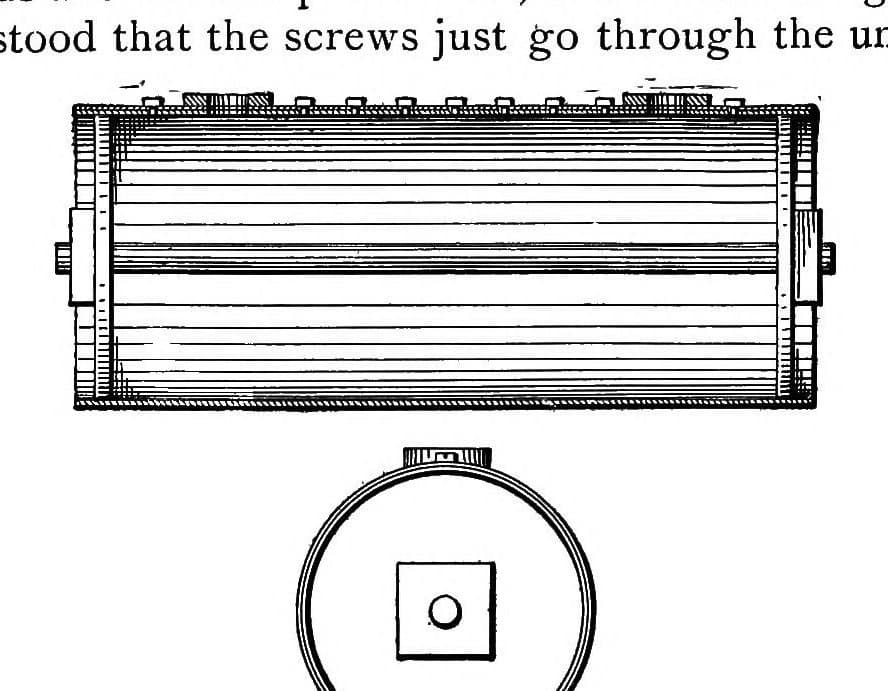
Steam Boiler: Small Brass Shell Boiler, Screwed and Soldered (Hopkins, Model Engines and Small Boats, 1898)
by Volt
Thermodynamics
1
0
0
0
2
0
This blueprint makes

CC0 Public Domain
This blueprint is released under CC0. You are free to copy, modify, distribute, and use this work for any purpose, without asking permission.
Support the Maker by purchasing products through their Blueprint where they earn a Maker Commission set by Vendors, or create a new iteration of this Blueprint and include it as a connection in your own Blueprint to share revenue.