Collaboration
ART
BEAUTY & WELLNESS
CRAFT
CULTURE & HISTORY
ENTERTAINMENT
ENVIRONMENT
FOOD & DRINKS
REVERSE ENGINEERING
SCIENCES
SPORTS
TECHNOLOGY
WEARABLES
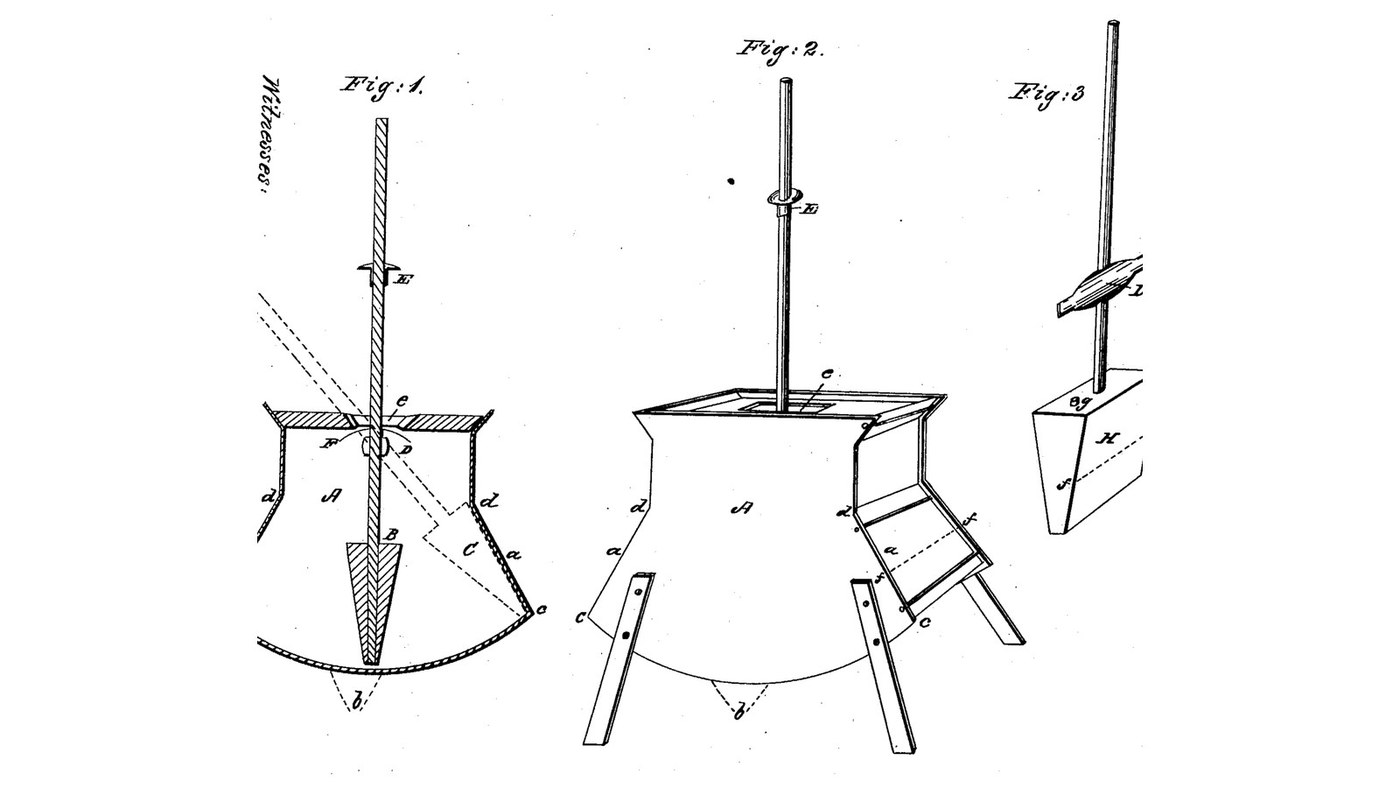

Swinging-Wedge Churn: A Wedge Dasher Sweeps a Curved Bottom and Strikes the Sloping Ends Squarely
Josiah P. Fitch of New York received US 26,841, dated 17 January 1860, for a churn. A dasher shaped like a truncated wedge swings back and forth on a cross-head under the cover, sweeping the tub's curved bottom and meeting its sloping ends squarely, so the cream is squeezed against the ends and, unable to run back under the dasher, rises and falls over it. A curved guard on the staff closes the slot in the cover, and a hand rest adjusts to the churner's height.
The patent gives no sizes; every size here is ours.
Intermediate
About 2 days
Instructions
1
1
Setting out the tub from the wedge
Setting out the tub from the wedge
Loading Jupyter Notebook...
2
2
A dasher rocked about a level pivot, two months before
A dasher rocked about a level pivot, two months before
Bunting rocked his dasher from a crank. Fitch swings his by hand and shapes the tub round its path.
3
3
Read US 26,841
Read US 26,841
"The churn tub being partly filled with cream, the dasher is moved back and forth. This operation causes the cream to be compressed between the inclined portions of the ends of the tub and the taper sides of the dasher and also to be kept in circulation, for as it is impossible for it to run back under the bottom of the dasher, it necessarily rises and falls over the top of the same back into the center of the tub."
4
4
Tub A
Tub A
Mark the pivot on two 20 mm hardwood sides and set out the inside outline from the notebook: the bottom an arc of 360 mm radius about the pivot, each end rising from it along a line 27.6 degrees from upright to a point 157 mm out and 149 mm below the pivot, then upright to 50 mm above the pivot. Cut the sides 20 mm outside that outline, rout a rebate along it, and bore each 17 mm at the pivot. Bend 1.5 mm stainless sheet, 260 mm wide, to the outline and screw it into the rebates with silicone sealant, the sides 260 mm apart inside. Fit four legs and a cover with a slot 36 mm wide, 150 mm long, across the middle.
Materials for this step:
 Hardwood Board3 pieces
 Stainless Steel Sheet1 piece
 Silicone Sealant1 piece
 Wood Screws40 pieces
 Wood Glue1 piece
Tools needed:
 Compass
 Jigsaw
 Router
 Table Saw
 Tin Snips
 Cordless Drill
 Drill Bit Set
 Bar Clamp
 Tape Measure
5
5
Wedge B, cross-head D, guard F and hand rest E
Wedge B, cross-head D, guard F and hand rest E
Cut the wedge from hardwood 250 mm across: 110 mm wide at its top, 50 at its foot, 230 tall. Fix it on a 30 mm hardwood staff so its foot is 350 mm below the pivot. Make the cross-head a hardwood bar 40 x 30 mm across the tub, fixed on the staff, with a 16 mm stainless rod through it whose ends turn in the sides' holes. Above it bend a strip of stainless sheet 60 mm wide to a 45 mm radius round the pivot, reaching 80 degrees each way, and fix it to the staff as the guard F under the cover's slot. Make the hand rest a hardwood collar with a handle, held at any height on the staff by a set screw.
Materials for this step:
Hardwood Board1 piece Hardwood Dowels1 piece
 Stainless Steel Rod1 pieceStainless Steel Sheet1 piece
 Shaft Collar2 pieces
 Machine Screws3 piecesWood Glue1 piece
Tools needed:
Table SawJigsawCordless DrillDrill Bit Set Hacksaw
 Files (Hand File)Tin Snips
 Screwdriver Set
 Sandpaper
6
6
The build in 3D
The build in 3D
FreeCAD model of this build, one side and the cover cut away: the tub with its curved bottom and sloping ends, the wedge on its staff and cross-head, the guard and the hand rest. The wedge was swung through its full travel; at each end it lies against the sloping end.
7
7
Churn
Churn
Pour heavy cream at about 15 °C into the tub, checked with the thermometer, about a third full (about 10 litres). Set the hand rest at a comfortable height and swing the staff steadily from end to end, timing it. When the butter comes, lift the cover and dasher out, take out the butter, drain the buttermilk, wash the butter in cold water until it runs clear, salt and weigh it.
Materials for this step:
 Heavy Cream10 l
 Coarse Sea Salt1 piece
 Water1 piece
Tools needed:
 Leave-In Probe Thermometer
 Stopwatch
 Digital Kitchen Scale
 Stainless Steel Mixing Bowl (Large)
8
8
Troubleshooting
Troubleshooting
Swinging-wedge churn troubleshooting.
Flow
Loading...
9
9
History and honest limits
History and honest limits
**Josiah P. Fitch** of New York, US 26,841, 17 January 1860, "Churn". He claimed the curved guard F on the dasher staff with the dasher and tub, and the adjustable hand rest E with them. His dasher could be hollow, to hold hot water; ours is solid. The patent gives no sizes; every size here is ours, and setting the sloping ends along the wedge's faces at the end of its swing is our reading of "strikes ... squarely".
Materials
12- 3 piecesPlaceholder
- 1 piecePlaceholder
- 1 piecePlaceholder
- 40 piecesPlaceholder
- 2 piecesPlaceholder
- 1 piecePlaceholder
- 1 piecePlaceholder
- 2 piecesPlaceholder
- 3 piecesPlaceholder
- 10 lPlaceholder
- 1 piecePlaceholder
- 1 piecePlaceholder
Tools Required
17- Placeholder
- 1 vendor sell this, none ship to you yetPlaceholder
- Placeholder
- 1 vendor sell this, none ship to you yetPlaceholder
- Placeholder
- 1 vendor sell this, none ship to you yetPlaceholder
- Placeholder
- Placeholder
- 1 vendor sell this, none ship to you yetPlaceholder
- Placeholder
- Placeholder
- Placeholder
- Placeholder
- Placeholder
- Placeholder
- Placeholder
- Placeholder
Design Files
1This blueprint makes

Related Blueprints
These blueprints share knowledge with this one — techniques, materials, or principles that connect them in the learning graph.
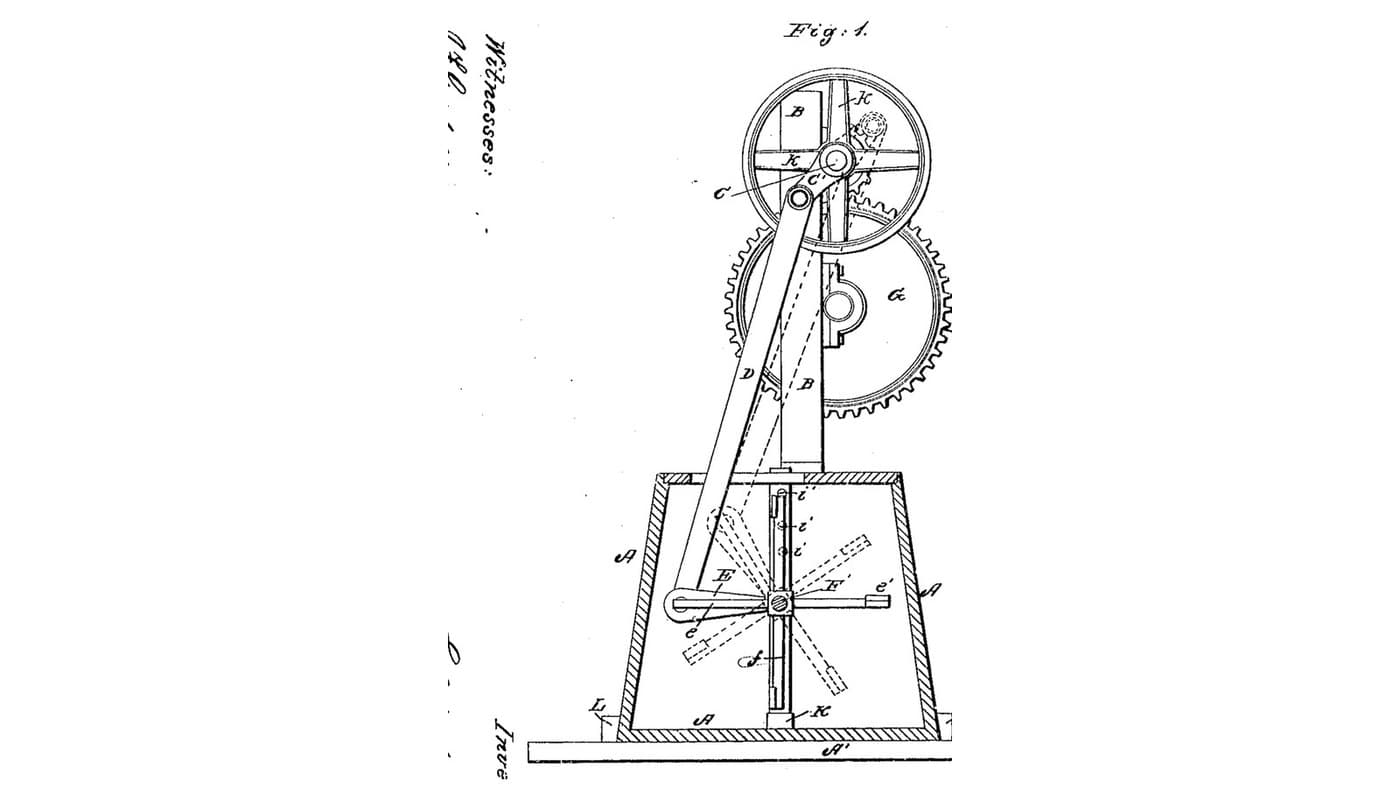
Rocking Bucket-Dasher Churn: A Crank and Rod Rock a Dasher of Bucketed Arms, a Fixed Bucket Breaks the Current
by Buttercup
Woodworking
0
0
0
0
0
0
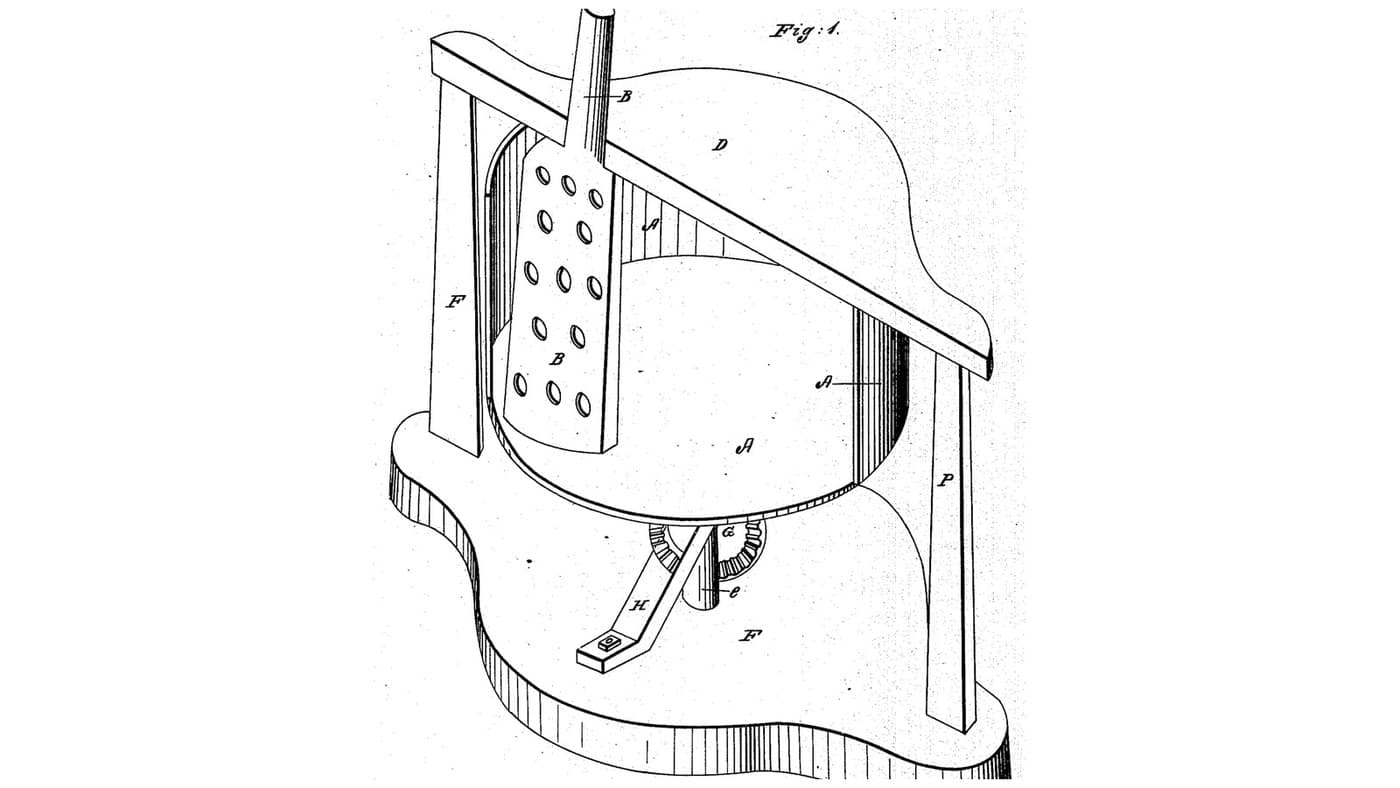
Rotating-Receiver Stationary-Break Churn: The Whole Cream Vessel Turns, a Narrow Fixed Break Churns It
by Buttercup
Woodworking
0
0
0
0
0
0

Churning Butter from Cream — The 5,000-Year-Old Fat Separation
by TheChef
CRAFT
60
0
0
0
0
0
CC0 Public Domain
This blueprint is released under CC0. You are free to copy, modify, distribute, and use this work for any purpose, without asking permission.
Support the Maker by purchasing products through their Blueprint where they earn a Maker Commission set by Vendors, or create a new iteration of this Blueprint and include it as a connection in your own Blueprint to share revenue.