Collaboration
ART
BEAUTY & WELLNESS
CRAFT
CULTURE & HISTORY
ENTERTAINMENT
ENVIRONMENT
FOOD & DRINKS
REVERSE ENGINEERING
SCIENCES
SPORTS
TECHNOLOGY
WEARABLES

Rocking-Churns Water-Jacket Churn: Two Small Churns Rock and Their Dashers Plunge, Wings Turn Above
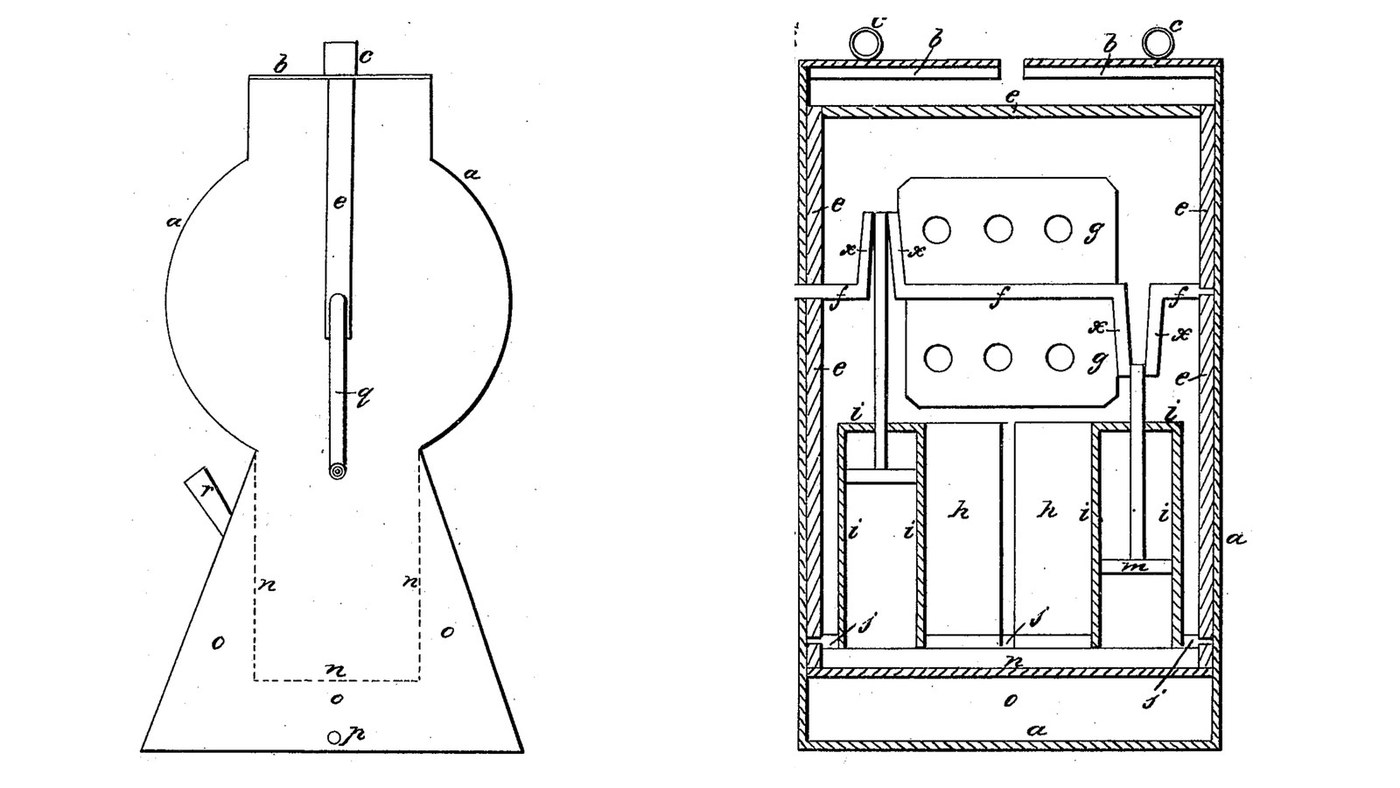
Samuel Gissinger of Allegheny, Pennsylvania, received US 25,502, dated 20 September 1859, for a churn. Inside a case with a water space under its bottom and sides, a lift-out frame holds two shafts. The upper one turns with wings on it and two cranks; from each crank a stem works a dasher inside a small churn hung on the lower shaft, so the dashers plunge while the churns and the wings between them rock. Warm or cold water in the jacket sets the cream's temperature.
The patent gives no sizes; every size here is ours. Its drawing shows the two dashers at different heights; with both churns fixed on one shaft that would bind, so here the cranks are in step.
Advanced
About 3 days, plus printing
Instructions
1
1
How a stem rocks its churn
How a stem rocks its churn
Loading Jupyter Notebook...
2
2
A churn with a water chamber, a few weeks before
A churn with a water chamber, a few weeks before
Langdon's box turned round a fixed dash-frame. Gissinger's case stands still with water under and beside it, and the dashers work inside two small churns that rock.
3
3
Read US 25,502
Read US 25,502
"Having all things arranged as represented in Fig. 1 of the drawings, the milk or cream is put in the case (a), and warm or cold water as the case may require is put in the chamber (o) at pipe (r) the exit opening being closed with a suitable stopple. And now by turning crank (q) which will revolve the shaft (f) with its wings (g), and also operate the dashers (m) and give to the churns (i) and their wings (h) an oscillating motion"
4
4
Print the churns i
Print the churns i
A churn 120 mm across and 108 mm deep with a lug under its floor bored 12.6 mm for shaft j and a cross hole for a pin. Print two. PETG, 0.2 mm layers, 40 % infill, 4 walls.
5
5
Print the dashers m
Print the dashers m
A disc 108 mm across and 8 mm thick with six 14 mm holes and a boss bored 8.4 mm for the stem. Print two. PETG, 0.2 mm layers, 40 % infill, 4 walls.
6
6
Print the wings g
Print the wings g
A paddle 60 x 96 x 6 mm with three 20 mm holes on a split hub that clamps round the 12 mm shaft with two M4 screws. Print two. PETG, 0.2 mm layers, 40 % infill, 4 walls.
7
7
Case a, chamber o, lid b
Case a, chamber o, lid b
From 20 mm hardwood make the inner case n 460 x 260 mm and 380 mm deep inside. Build the outer case round it with a 30 mm space under the bottom and along both long sides, sharing the two ends; set a spacer strip under the middle. Close the tops of the side spaces with strips, fit a short brass tube in one as the supply pipe r, and bore a hole low in the other side for a rubber stopper as the exit p. In one end cut a slot 26 mm wide from the top down to 217 mm for the crank shaft. Glue two strips 18 x 20 mm up the inside of each end, 124 mm apart, as the guides. Make the lid in two halves with a handle c on each. Fill the case and the chamber with water overnight so they swell tight, then empty them.
Materials for this step:
 Hardwood Board5 pieces
 Wood Glue1 piece
 Wood Screws40 pieces
 Brass Tube1 piece
 Rubber Stoppers1 piece
 Hardwood Dowels1 piece
Tools needed:
 Table Saw
 Hand Saw
 Cordless Drill
 Drill Bit Set
 Spade Bit Set
 Mortise Chisel
 Wooden Mallet
 Bar Clamp
 Try Square
 Tape Measure
 Water
8
8
Frame e and the two shafts
Frame e and the two shafts
Cut two end plates 122 x 20 mm, 375 mm long, to stand between the guides, and bore each 12.8 mm at 230 mm and 40 mm up. Bend 12 mm stainless rod into the shaft f: two cranks of 40 mm throw, 280 mm apart and pointing the same way, each pin 30 mm long, heating each bend red with the torch; leave one end long enough to pass through the slot and bend it into the crank q, 130 mm long, with a hardwood handle. Cut shaft j from the same rod, 456 mm long.
Materials for this step:
Hardwood Board1 piece Stainless Steel Rod2 piecesHardwood Dowels1 pieceWood Glue1 piece
Tools needed:
Table SawCordless DrillDrill Bit Set Propane Torch
 Bench Vise
 Hammer
 Heat-Resistant Gloves
 Hacksaw
 Files (Hand File)
9
9
Churns, dashers, stems and wings
Churns, dashers, stems and wings
Pin the two churns on shaft j under the cranks, mouths up, and pin a hardwood wing h, 150 x 95 x 20 mm, on j between them. Cut two stems from 8 mm stainless rod, fix each in a dasher's boss, and bend its top into an eye round its crank pin so the pin sits 110 mm above the dasher, closing it with the torch and pliers. Clamp the two wings g on the shaft f between the cranks, pointing opposite ways. Put shafts f and j through the end plates and the dashers into the churns.
Materials for this step:
Stainless Steel Rod1 pieceHardwood Board1 piece Machine Screws4 pieces
 Nylon Insert Lock Nut4 pieces
 Split Pin6 pieces
 PETG Filament1 piece
Tools needed:
 FDM 3D PrinterPropane TorchBench ViseHeat-Resistant GlovesHacksawCordless DrillDrill Bit Set
 Screwdriver Set
 Sandpaper
10
10
The build in 3D
The build in 3D
FreeCAD model of this build, the case cut through its middle: the water space under and beside the inner case, the frame's end plates in their guides, the bent shaft f with its two cranks in step and its wings, the churns on shaft j with the wing between them, and the dashers on their stems. The crank was turned through 24 positions.
11
11
Churn
Churn
Stopper the exit and pour warm or cold water into the chamber through the pipe until the cream will sit at about 15 °C. Lower the frame into its guides, pour in about 22 litres of heavy cream, checking it with the thermometer, and put the lid on. Turn the crank steadily, timing it. When the butter comes, lift the frame out, gather the butter, drain the buttermilk and the chamber, wash the butter in cold water until it runs clear, salt and weigh it.
Materials for this step:
 Heavy Cream22 l
 Coarse Sea Salt1 pieceWater1 piece
Tools needed:
 Leave-In Probe Thermometer
 Stopwatch
 Digital Kitchen Scale
 Stainless Steel Mixing Bowl (Large)
12
12
Troubleshooting
Troubleshooting
Rocking-churns churn troubleshooting.
Flow
Loading...
13
13
History and honest limits
History and honest limits
**Samuel Gissinger** of Allegheny, Pennsylvania, US 25,502, 20 September 1859, "Churn". He claimed the arrangement in the movable frame e of the oscillating churns i with dashers m and wings h, in combination with the revolving shaft f and its wings g. The patent gives no sizes; every size here is ours. His Fig. 1 draws the two dashers at different heights, but both churns are "secured to the shaft (j)": cranks out of step would push them opposite ways and bind, so ours are in step. His case is rounded at the ends and the water chamber tapered; ours is square.
Materials
14- 5 piecesPlaceholder
- 2 piecesPlaceholder
- 40 piecesPlaceholder
- 1 piecePlaceholder
- 1 piecePlaceholder
- 1 piecePlaceholder
- 2 piecesPlaceholder
- 4 piecesPlaceholder
- 4 piecesPlaceholder
- 6 piecesPlaceholder
- 1 piecePlaceholder
- 22 lPlaceholder
- 1 piecePlaceholder
- 1 piecePlaceholder
Tools Required
24- 1 vendor sell this, none ship to you yetPlaceholder
- Placeholder
- 1 vendor sell this, none ship to you yetPlaceholder
- Placeholder
- Placeholder
- Placeholder
- Placeholder
- Placeholder
- Placeholder
- 1 vendor sell this, none ship to you yetPlaceholder
- Placeholder
- Placeholder
- Placeholder
- Placeholder
- Placeholder
- Placeholder
- Placeholder
- Placeholder
- Placeholder
- Placeholder
- Placeholder
- Placeholder
- Placeholder
- Placeholder
Design Files
4This blueprint makes

Related Blueprints
These blueprints share knowledge with this one — techniques, materials, or principles that connect them in the learning graph.
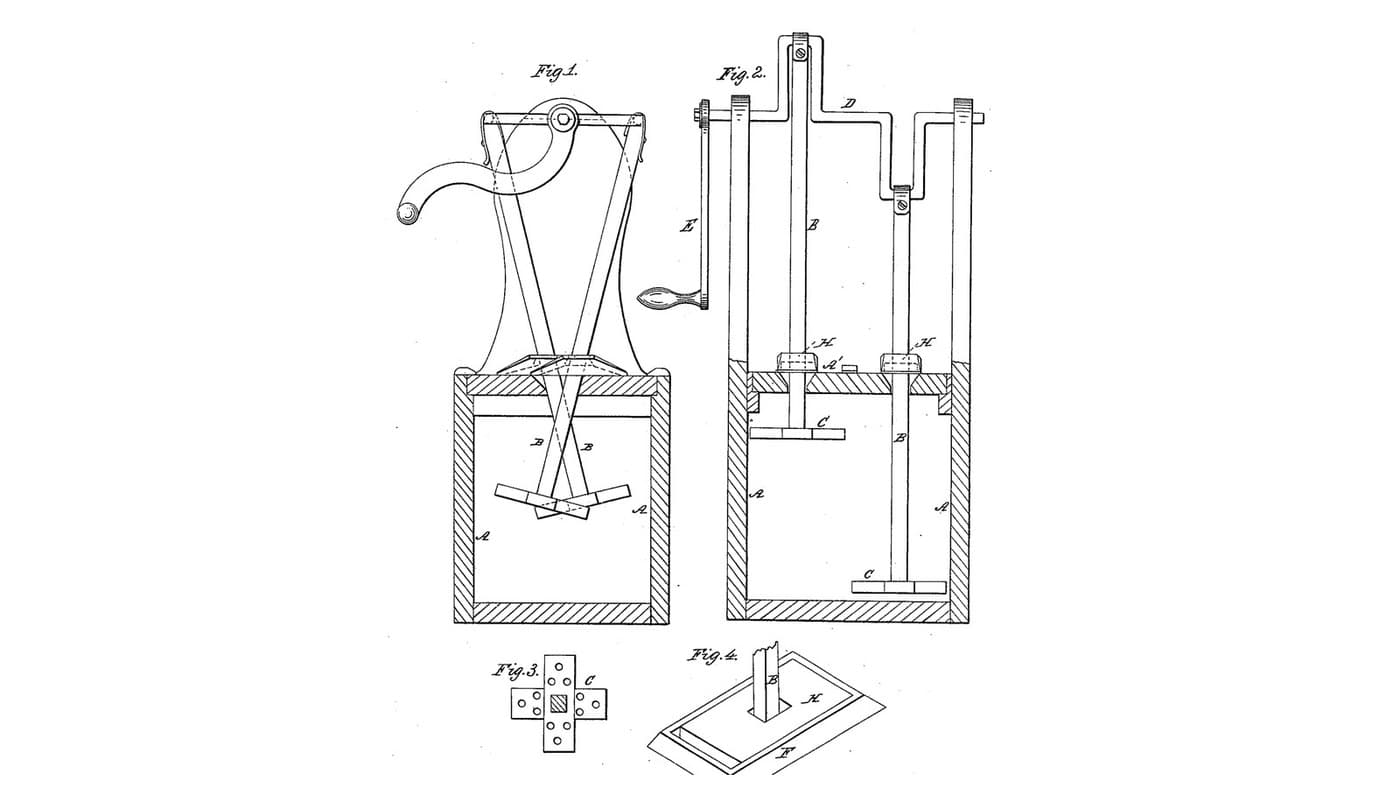
Twin-Crank Slide-Top Churn: Two Dashers on a Bent Crank Shaft, Sliding Plates Keep the Milk In
by Buttercup
Woodworking
0
0
0
0
0
0
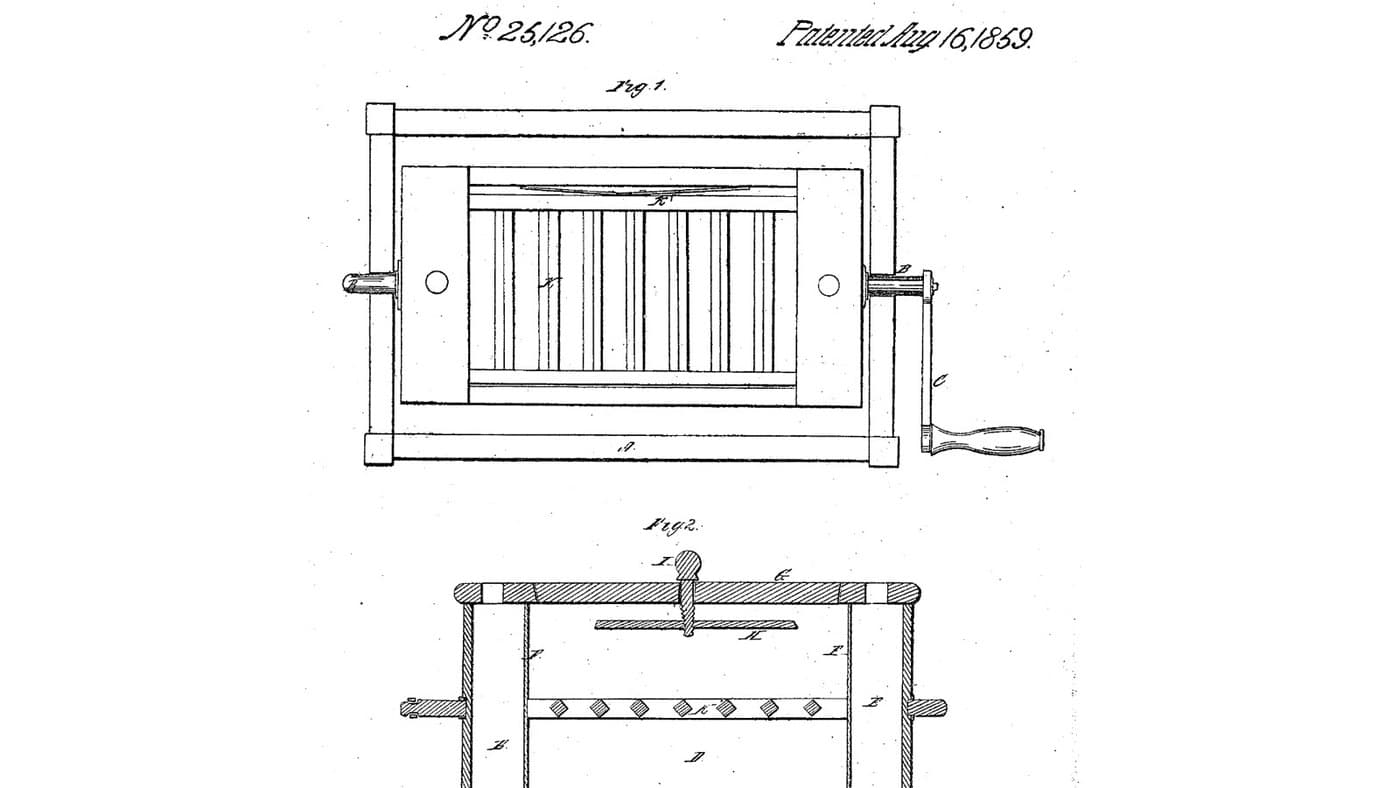
Water-Chamber Box Churn: A Turning Box With a Dash-Frame You Lower to Free the Butter
by Buttercup
Woodworking
1
0
0
0
0
0

Churning Butter from Cream — The 5,000-Year-Old Fat Separation
by TheChef
CRAFT
60
0
0
0
0
0
CC0 Public Domain
This blueprint is released under CC0. You are free to copy, modify, distribute, and use this work for any purpose, without asking permission.
Support the Maker by purchasing products through their Blueprint where they earn a Maker Commission set by Vendors, or create a new iteration of this Blueprint and include it as a connection in your own Blueprint to share revenue.