ART
BEAUTY & WELLNESS
CRAFT
CULTURE & HISTORY
ENTERTAINMENT
ENVIRONMENT
FOOD & DRINKS
REVERSE ENGINEERING
SCIENCES
SPORTS
TECHNOLOGY
WEARABLES
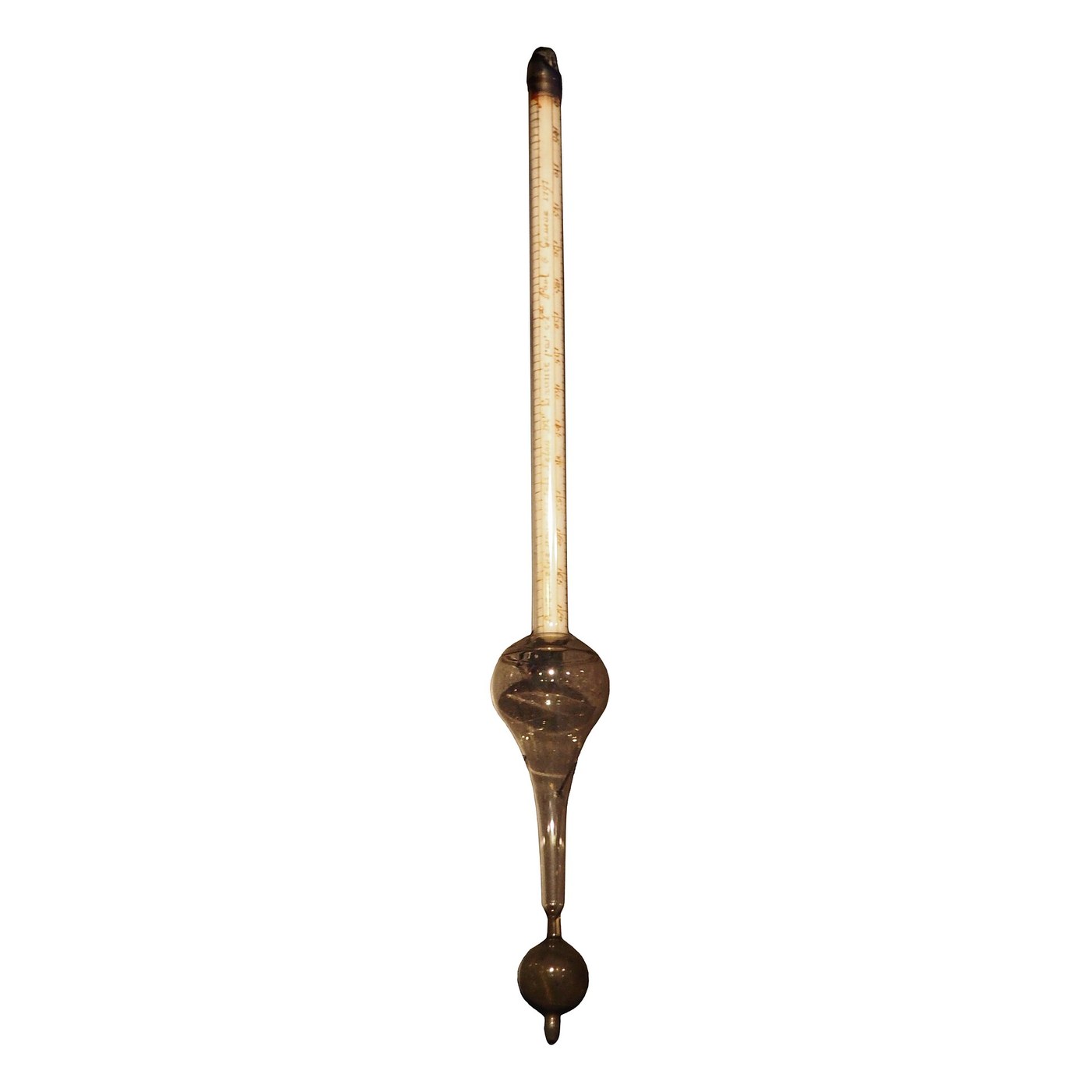


Glass Hydrometer: Blown, Weighted with Shot, Calibrated in Known Liquids
A hydrometer is a glass float with a thin stem: it sinks deeper in light liquids and rides higher in dense ones, so a scale on the stem reads specific gravity. Baumé fixed his scale at two points, pure water and 15 % brine (Ure, 1839); here the scale is marked in sugar solutions of known strength, giving degrees Brix, and in liquids weighed for their specific gravity.
The picture: an old glass hydrometer with a paper scale inside its stem and a ballast bulb below.
Advanced
A day
Instructions
1
1
Blow the float
Blow the float
On a tube, blow an elongated bulb, then a small second bulb below it for ballast, and draw the tube above into a thin, even stem.
Materials for this step:
 Glass Tubing Kit1 piece
Tools needed:
 Bench Glassblowing Torch
 Safety Glasses
 Heat-Resistant Gloves
2
2
Ballast and scale paper
Ballast and scale paper
Drop small lead shot into the lower bulb until the float stands upright in water with most of the stem out. Slide a paper strip into the stem.
Materials for this step:
 Lead Ingot50 g
 Paper1 piece
Tools needed:
 Balance Scale
3
3
Seal the top
Seal the top
Heat the top of the stem and draw it closed. Check that it floats upright and does not leak.
Tools needed:
Bench Glassblowing TorchSafety Glasses4
4
Mark the water point
Mark the water point
Float it in water at room temperature in the cylinder and mark where the surface cuts the stem: specific gravity 1.000 and 0 °Brix.
Materials for this step:
 Water1 liter
Tools needed:
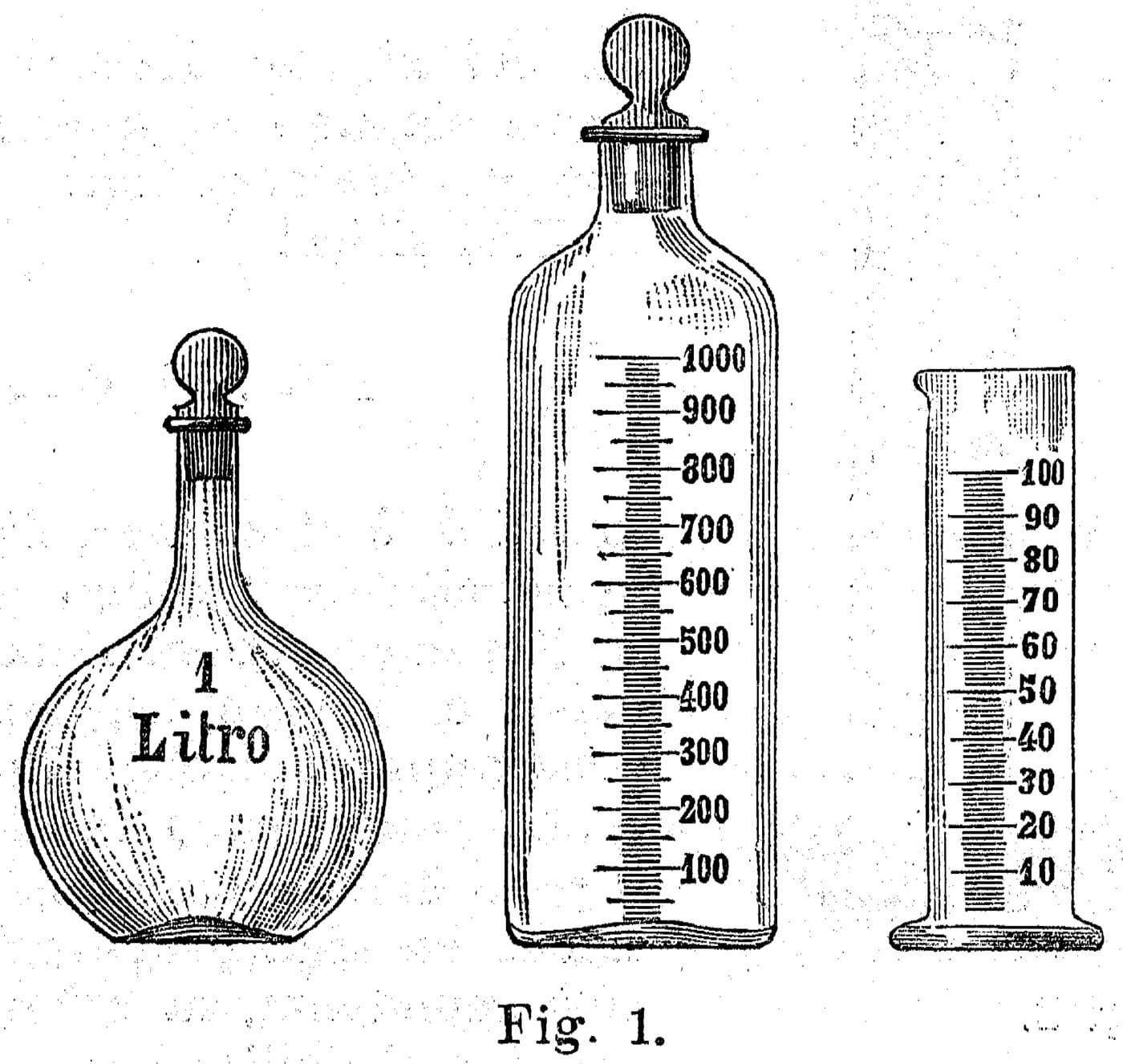
 Graduated Cylinder
 Thermometer
 Diamond Scriber
5
5
Mark the other points
Mark the other points
Make sugar solutions by weight (see the notebook) and salt brines; float the hydrometer in each and mark the stem. Weigh 100 mL of each liquid to write its specific gravity beside the mark. Copy the marks onto the paper strip in ink and reseal if you opened it.
Materials for this step:
 White Sugar0.3 kg
 Salt0.3 kgWater2 liters
 Iron Gall Ink2 ml
Tools needed:
Balance ScaleGraduated Cylinder Quill Pen
6
6
Calibration liquids
Calibration liquids
Loading Jupyter Notebook...
7
7
Limits
Limits
Ure's two-point Baumé principle and the Brix definition are sourced; the bulb form, shot ballast and weighing method are ours. Read at the temperature you calibrated at; this hydrometer has no potential-alcohol scale.
Materials
7- 1 piecePlaceholder
- 50 gPlaceholder
- 1 piecePlaceholder
- 3 litersPlaceholder
- 0.3 kgPlaceholder
- 0.3 kgPlaceholder
- 2 mlPlaceholder
Tools Required
8- Placeholder
- Placeholder
- Placeholder
- Placeholder
- Placeholder
- Placeholder
- Placeholder
- Placeholder
This blueprint makes
Related Blueprints
These blueprints share knowledge with this one — techniques, materials, or principles that connect them in the learning graph.

CC0 Public Domain
This blueprint is released under CC0. You are free to copy, modify, distribute, and use this work for any purpose, without asking permission.
Support the Maker by purchasing products through their Blueprint where they earn a Maker Commission set by Vendors, or create a new iteration of this Blueprint and include it as a connection in your own Blueprint to share revenue.