Collaboration
ART
BEAUTY & WELLNESS
CRAFT
CULTURE & HISTORY
ENTERTAINMENT
ENVIRONMENT
FOOD & DRINKS
REVERSE ENGINEERING
SCIENCES
SPORTS
TECHNOLOGY
WEARABLES
Hard Cider: Fresh Juice, a Pure Yeast Starter and a Cool Cellar (Alwood, USDA 1909)
Alchometer

Created by

Alchometer

18. November 2026GB
0
0
0
0
0

Hard Cider: Fresh Juice, a Pure Yeast Starter and a Cool Cellar (Alwood, USDA 1909)

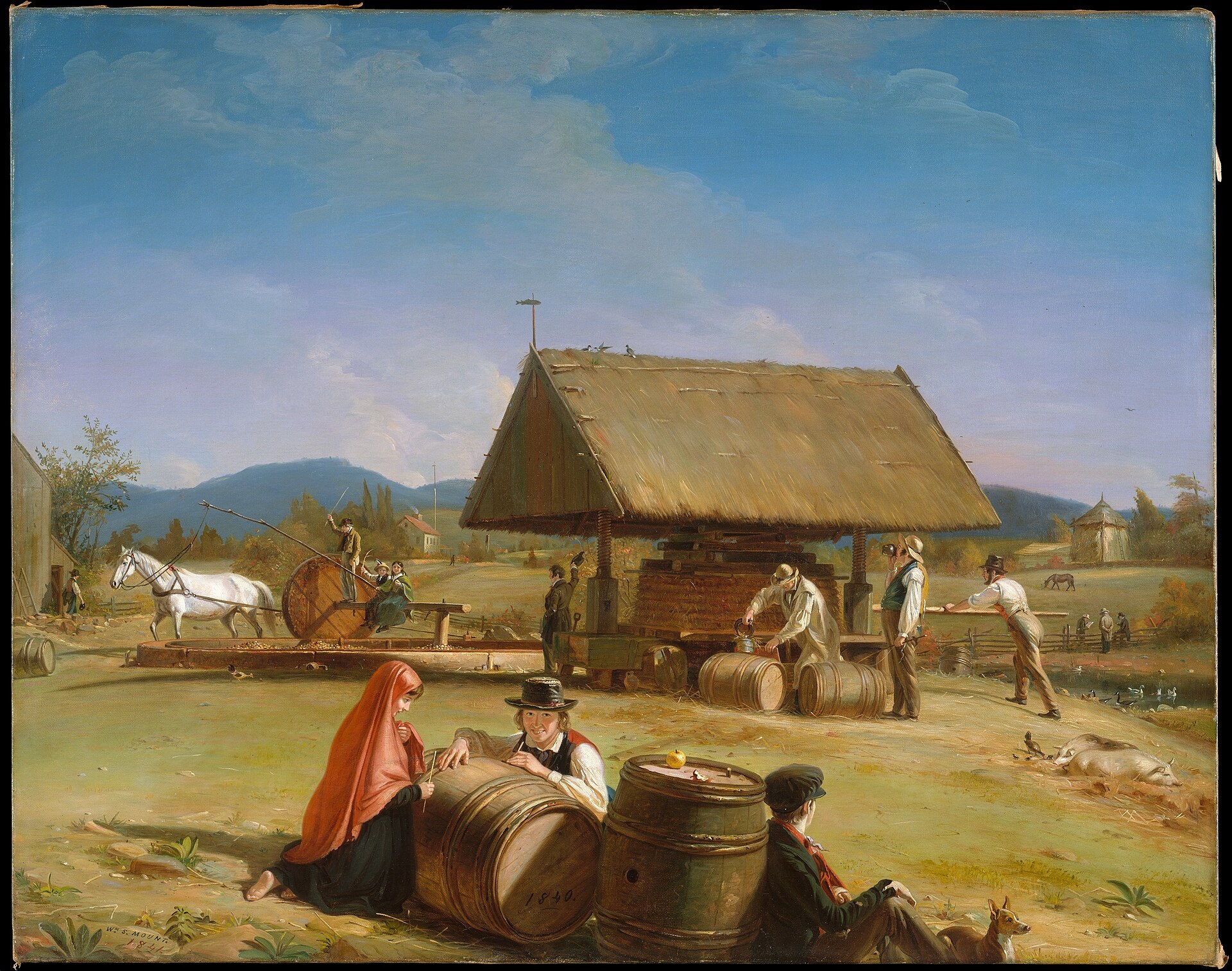
William B. Alwood's cider for farm use, from the U.S. Department of Agriculture's Bulletin 129 (1909): juice straight from the press into clean casks, a pure yeast culture started three days before, a vent on the bung instead of a cotton plug, a cool cellar, one racking once the cider is bright, and bottling in June. He wrote that the results "establish clearly a method which any person of ordinary means can use".
Intermediate
About 8 months

Instructions

1

His measures and gravities

Loading Jupyter Notebook...
2

Read Alwood

"The following notes give in detail the operation of making cider in the simplest possible manner after cold weather begins ... The work was intended to approximate as closely as possible the conditions under which a farmer might ferment his cider for family use." (Bulletin 129, p. 10.)
3

Press the juice

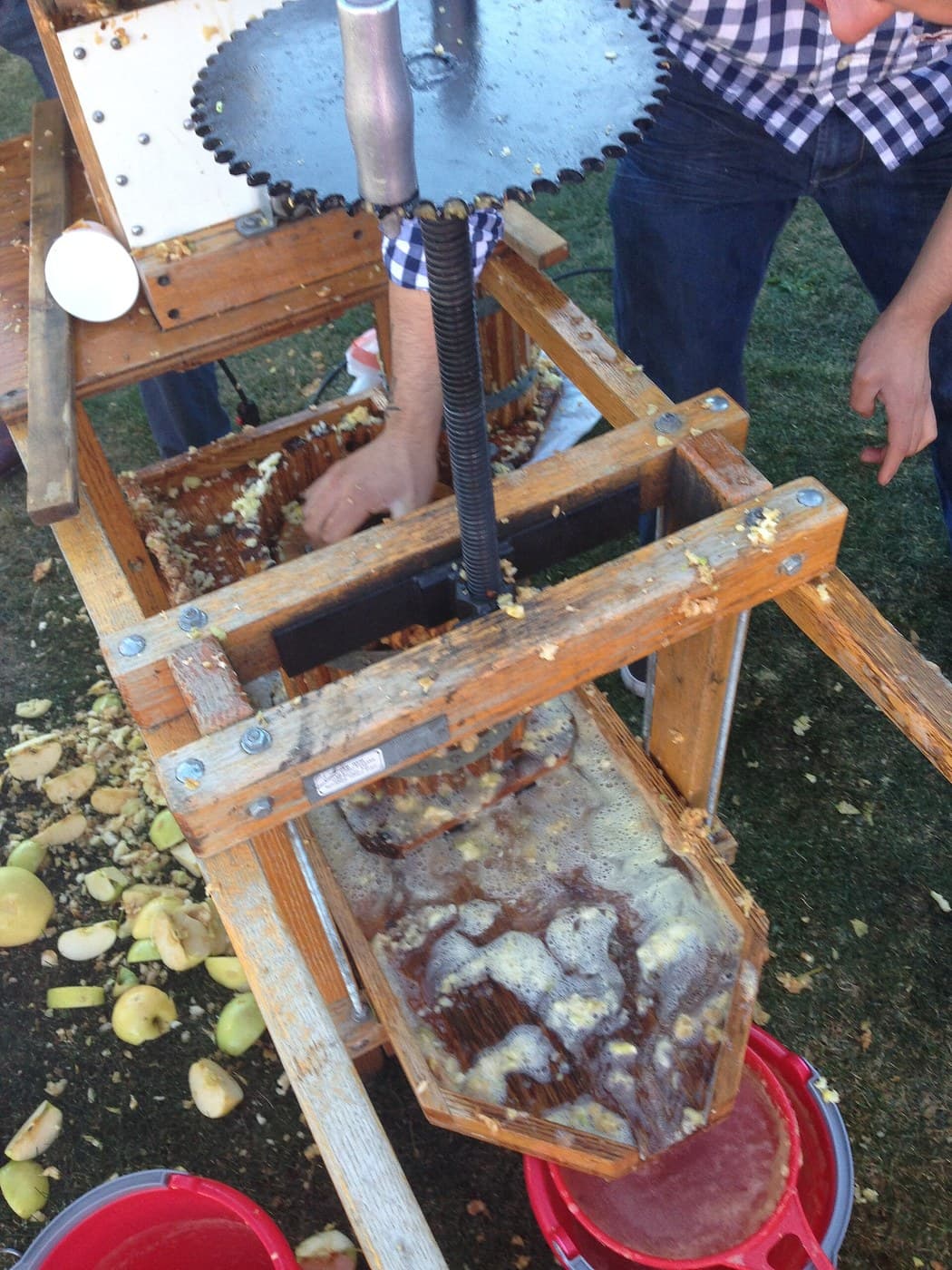
Alwood crushed and pressed 60 bushels of Winesap apples, "of a grade called unmerchantable, but ... not rotten nor soiled". His juice read 1.055 (13.6 Brix).
4

Prepare the casks

Steam each cask for twenty minutes, rinse with clean water and drain. Pour in one-half pint of 90 per cent alcohol, bung it tight, and leave it two weeks before use.

Tools needed:

Wooden BarrelWooden Barrel
Steam BoilerSteam Boiler
WaterWater
Ethanol - Lab Grade, 95%Ethanol - Lab Grade, 95%
Wooden BungWooden Bung
5

Start the yeast

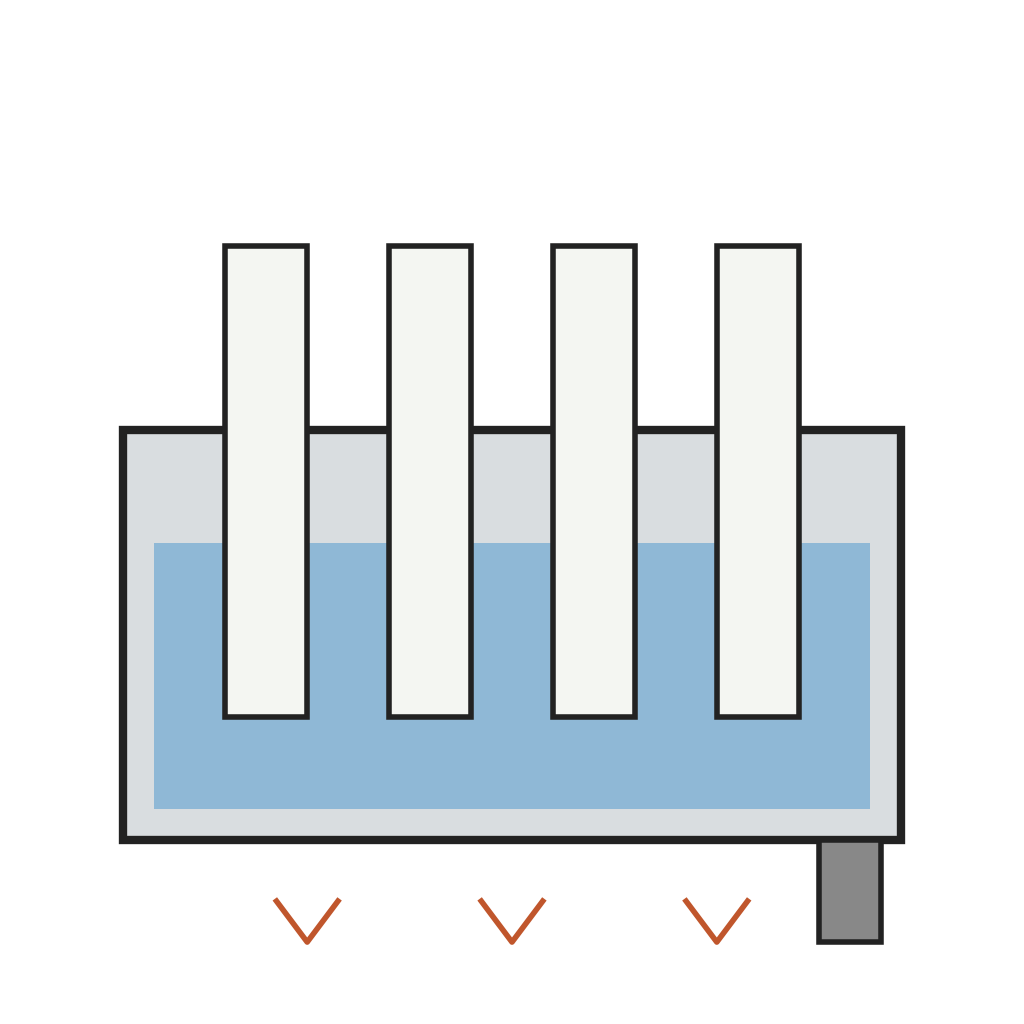
Three days before pressing, boil 400 ml of apple juice in a flask in a water bath for fifteen minutes. Cool it and sow it with a pure wine yeast. It should be in full fermentation when used.

Materials for this step:

Apple CiderApple Cider0.4 liter
Wine YeastWine Yeast1 piece

Tools needed:

Erlenmeyer FlaskErlenmeyer Flask
Water BathWater Bath
6

Fill and pitch

Fill the casks straight from the press; do not sulphur them. Add the yeast culture at once. Read the gravity: his was 1.055.

Materials for this step:

Apple CiderApple Cider189 liters

Tools needed:

Wooden BarrelWooden Barrel
HydrometerHydrometer
7

Fit the vent

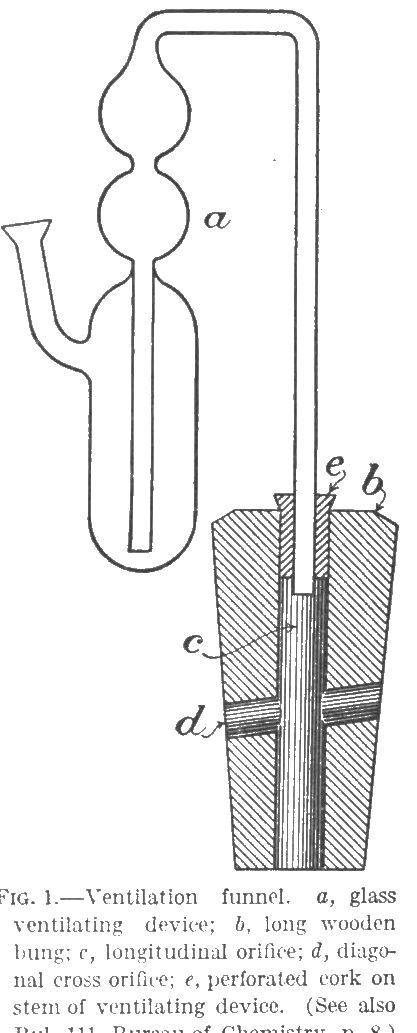
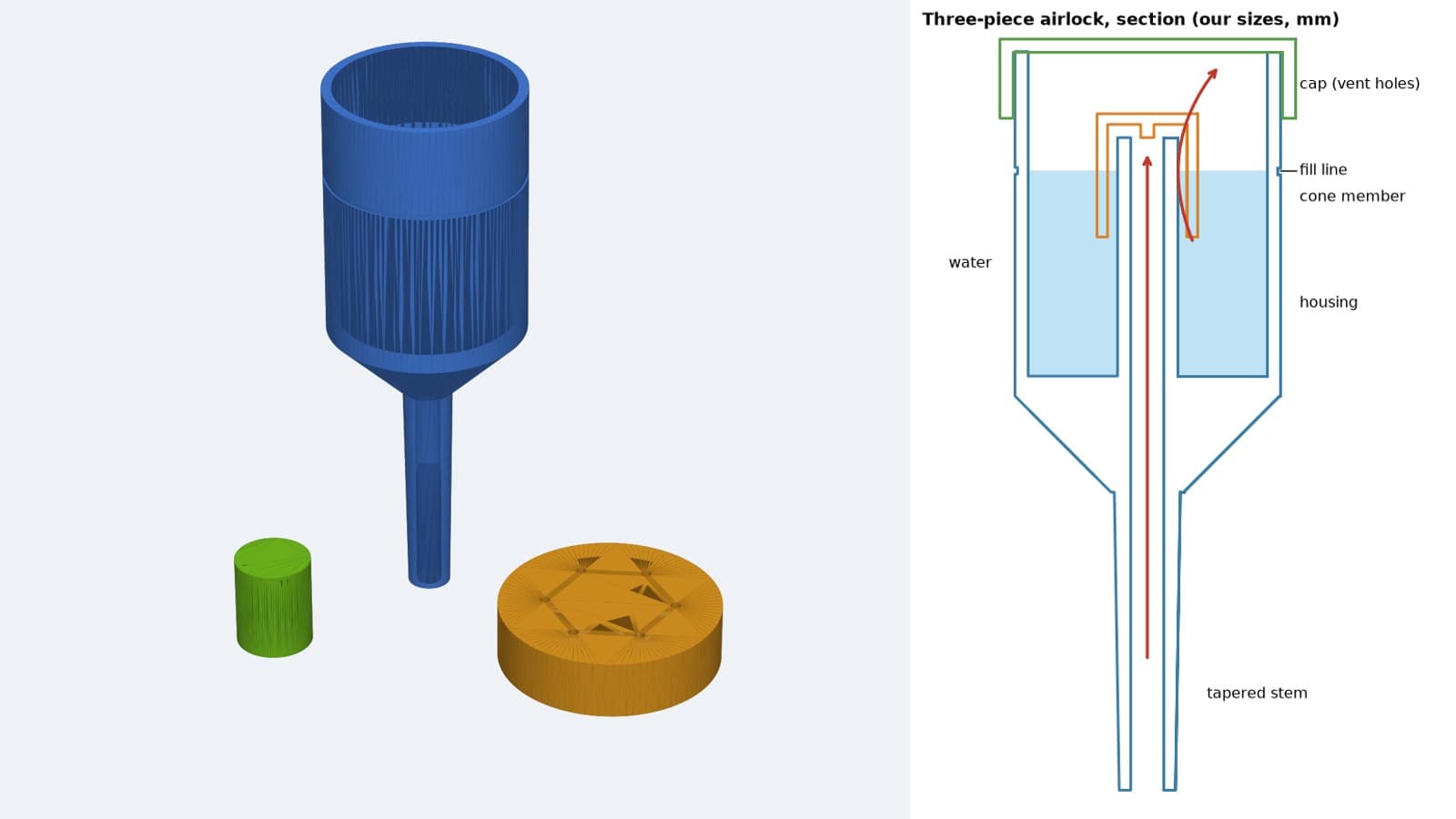
Do not plug with cotton: "if the cotton becomes the least bit damp, malferments readily find entrance". Put a vent funnel on a perforated cork in a long wooden bung, as his Fig. 1.
Step 7 - Image 1

Tools needed:

AirlockAirlock
Wooden BungWooden Bung
CorksCorks
8

Keep it cool

His cold storeroom stopped the fermentation; he moved the casks to a cellar at 13 to 14 °C. Through the winter he held the cellar at 11 to 14 °C. Check it with a thermometer.

Tools needed:

ThermometerThermometer
9

Follow the gravity

Read the gravity every few weeks. His cask No. 3 went from 1.055 in October to 1.018 by 10 January.

Tools needed:

HydrometerHydrometer
ThermometerThermometer
10

Rack when bright

Wait until the cider is "practically bright and free from sediment" (his: 13 January, at 10 °C). Wash fresh casks with warm water and burn one-third of a sulphur match in each; pour the cider in on the fumes.

Tools needed:

Wooden BarrelWooden Barrel
WaterWater
Sulphur MatchSulphur Match
11

Draw off the dregs

Draw the cider down to within 1 inch (2.5 cm) of the bottom, through a funnel covered with a thin woven towel. Ours: with a siphon. About 2 quarts (1.9 litres) of dregs stayed in his cask.

Tools needed:

Siphon TubeSiphon Tube
Kitchen FunnelKitchen Funnel
Cotton Face TowelCotton Face Towel
12

Keep the casks full

Top each cask up with cider of the same pressing. With the cask entirely full, a long bung bored crosswise under the vent funnel lets the gas out.

Tools needed:

Wooden BungWooden Bung
AirlockAirlock
13

Bottle in June

His final bottling was 25 June, at 1.006. Draw it into pint champagne bottles, cork them and tie the corks down. Use champagne bottles only: his unfiltered bottles opened "with high pressure".

Materials for this step:

Champagne BottleChampagne Bottle1 piece
CorksCorks1 piece

Tools needed:

Siphon TubeSiphon Tube
Cotton TwineCotton Twine
14

Troubleshooting

What went wrong in Alwood's casks, and the fix.

Flow

Loading...
15

History and honest limits

**William B. Alwood**, *Enological Studies. I. Experiments in Cider Making Applicable to Farm Conditions*, USDA Bureau of Chemistry Bulletin No. 129 (1909), under H. W. Wiley. He filled three 50-gallon whisky barrels on 23 October 1907: No. 1 left to natural fermentation, No. 2 with yeast No. 73 (Sauternes), No. 3 with yeast No. 161 (Ahrweiler). He called No. 3 the "Finest cider ever handled here", and found the total acid "about right for a sprightly cider—namely, approximately 0.40 per cent". A 10-gallon keg left with a cotton plug turned to vinegar. His yeast cultures came from his own laboratory and are not sold today; a pure wine yeast takes their place. He does not say how he drew the cider off; ours is a siphon. The alcohol estimate in the notebook is ours.

Materials

4

Tools Required

16

This blueprint makes

CC0 Public Domain

This blueprint is released under CC0. You are free to copy, modify, distribute, and use this work for any purpose, without asking permission.

Support the Maker by purchasing products through their Blueprint where they earn a Maker Commission set by Vendors, or create a new iteration of this Blueprint and include it as a connection in your own Blueprint to share revenue.

Discussion

(0)

Log in to join the discussion

Loading comments...