Collaboration
ART
BEAUTY & WELLNESS
CRAFT
CULTURE & HISTORY
ENTERTAINMENT
ENVIRONMENT
FOOD & DRINKS
REVERSE ENGINEERING
SCIENCES
SPORTS
TECHNOLOGY
WEARABLES
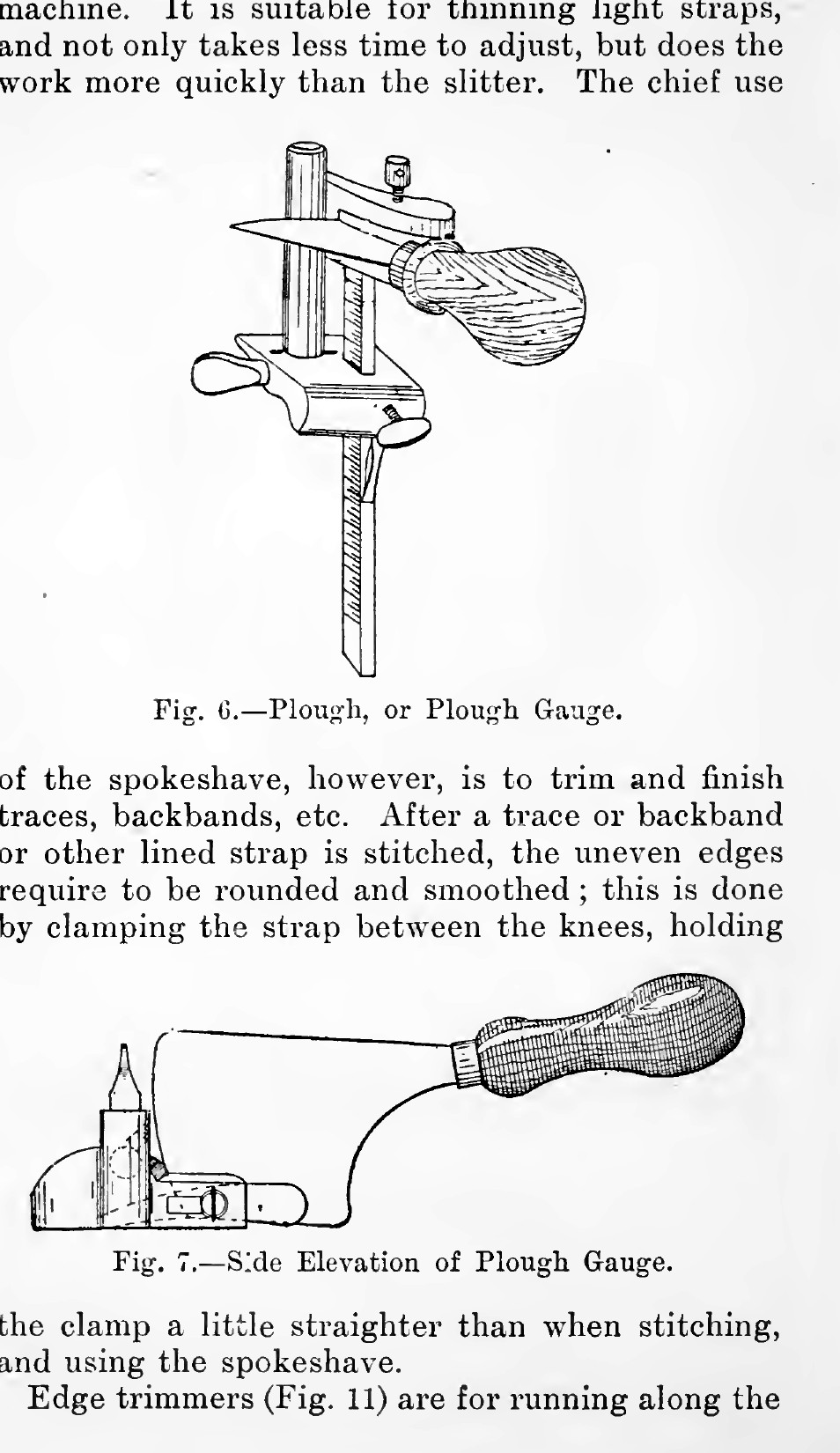


Harness Straps: Cut Along the Hide With Compass and Round Knife (or Plough), Edges Finished With Bone (Hasluck, 1904)
How a harness maker cuts and finishes straps, from P. N. Hasluck's Harness Making (1904): marked along the hide with an 8 ft straightedge or a compass, cut with the round knife on a cutting-board (or with a plough gauge, 1/2 to 5-1/2 in), always along the hide, then the edges knocked, trimmed with the spokeshave, scraped, sanded and polished with gum and a smooth bone.
Beginner
About 1 hour
Instructions
1
1
Widths
Widths
Loading Jupyter Notebook...
2
2
Read Harness Making
Read Harness Making
"Straps are always cut along the hide and not across it, the hide being much stronger lengthways."
3
3
Lay out
Lay out
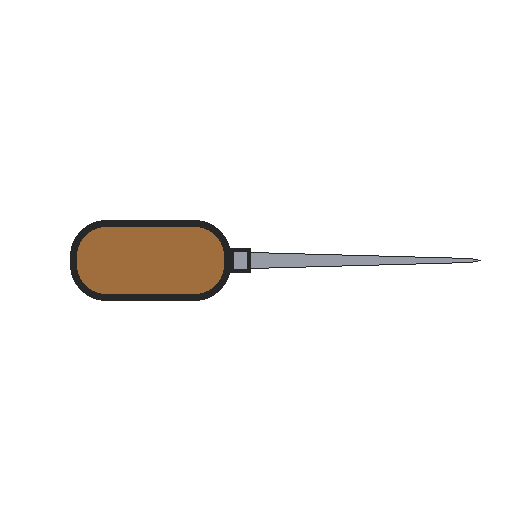
Lay the side on the bench with the back toward you. Mark straight lines with a blunt-pointed awl or seat-awl against a straightedge at least 8 ft long, without cutting the grain. Do not cut lower into the hide than the strap's width; cut shaped pieces from patterns.
Materials for this step:
 Harness Leather1 piece
Tools needed:
 Straightedge
 Seat Awl
4
4
Cut
Cut
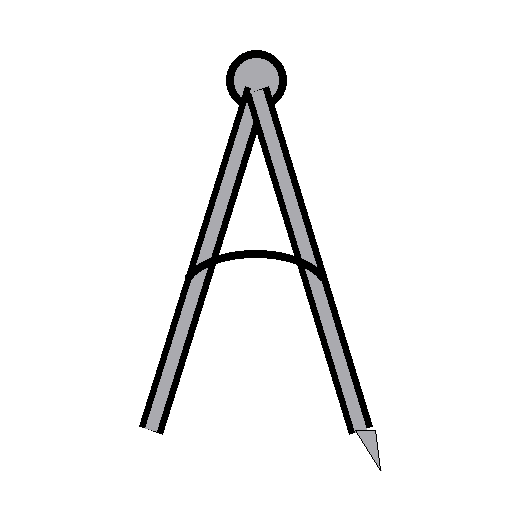
With the round knife: set the compass to the width, run one point along the edge and draw it toward you to leave a line, then cut from the right-hand end on a cutting-board, holding the leather steady with the left hand. With the plough: set the knife on the gauge (1/2 to 5-1/2 in) with the thumb-screw, hold the leather flat and press it forward with the guard tight to the edge. Cut reins first, then traces, back-bands and the rest; linings from the belly.
Tools needed:
 Race Compass
 Leather Knife
 Cutting Board
5
5
Finish the edges
Finish the edges
Knock the edges along to consolidate them, trim them round and level with the spokeshave, run a glass scraper over them and sandpaper. For brown work, wipe with a thin solution of gum and water and rub with brown paper and a smooth bone to a polish. For black, dye, rub dry with a rag, and polish with brown paper and bone.
Materials for this step:
 Gum Arabic1 piece
 Brown Paper1 piece
 Sandpaper1 piece
Tools needed:
 Spokeshave
 Glass Cullet
 Bone Folder
 Hammer
6
6
Troubleshooting
Troubleshooting
Strap troubleshooting.
Flow
Loading...
7
7
History and honest limits
History and honest limits
From Paul N. Hasluck, **Harness Making** (1904) (checked on the archive.org scan harnessmaking00hasl, pp. 12, 42-44). Using broken glass (cullet) as the glass scraper, the tools and the metric figures are ours.
Materials
4- 1 piecePlaceholder
- 1 piecePlaceholder
- 1 piecePlaceholder
- 1 piecePlaceholder
Tools Required
9- Placeholder
- Placeholder
- Placeholder
- Placeholder
- Placeholder
- Placeholder
- Placeholder
- Placeholder
- Placeholder
This blueprint makes

Related Blueprints
These blueprints share knowledge with this one — techniques, materials, or principles that connect them in the learning graph.
CC0 Public Domain
This blueprint is released under CC0. You are free to copy, modify, distribute, and use this work for any purpose, without asking permission.
Support the Maker by purchasing products through their Blueprint where they earn a Maker Commission set by Vendors, or create a new iteration of this Blueprint and include it as a connection in your own Blueprint to share revenue.