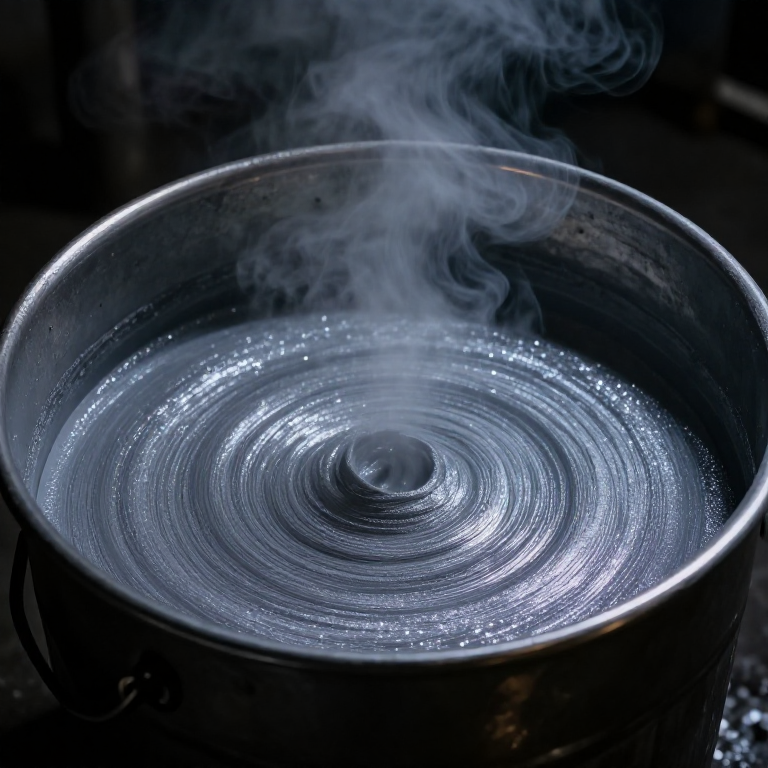


Galvanizing Iron with Zinc — A Coat That Rusts So the Iron Will Not
Iron's great weakness is rust. Left in the weather, an iron roof or bucket flakes away to nothing in a few years. In 1837 the French engineer Stanislas Sorel patented a cure that is still used on a vast scale today: dip the iron in a bath of molten zinc. The zinc bonds to the surface and shields the iron beneath, and galvanized iron suddenly lasted for decades outdoors.
The zinc protects in two ways at once. It is a barrier, sealing the iron from air and water — but more cleverly, it is a sacrifice. Zinc is more reactive than iron, so even where the coating is scratched and bare iron shows, the surrounding zinc corrodes first and spares the iron. The coating gives up itself to save the metal underneath.
Hot-dip galvanizing clad the Industrial Revolution's wire, nails, pipes, and the corrugated iron roofs that sheltered half the world. It is simple in principle — clean the iron, flux it, and dip it in molten zinc — but every step matters, because a missed patch of grease or rust leaves a hole in the armour.
Instructions
Understand galvanizing
Understand galvanizing
Degrease the iron
Degrease the iron
Materials for this step:
 Sodium Hydroxide200 g
Pickle off the rust
Pickle off the rust
Materials for this step:
 Sulphuric Acid2 liters
Tools needed:
 Acid Tank
Rinse and flux
Rinse and flux
Materials for this step:
 Zinc Ammonium Chloride300 g
Dry the fluxed part
Dry the fluxed part
Melt the zinc bath
Melt the zinc bath
Materials for this step:
 Zinc Ingots50 kg
Dip the iron
Dip the iron
Tools needed:
 Crucible Tongs
Hold until soaked through
Hold until soaked through
Tools needed:
Crucible TongsWithdraw and drain
Withdraw and drain
Tools needed:
 Dipping Basket
Cool the coating
Cool the coating
Materials for this step:
 Water20 liters
Inspect the coat
Inspect the coat
Tools needed:
 Calipers
Understand sacrificial protection
Understand sacrificial protection
Materials
5- Placeholder
- 2 litersPlaceholder
- Placeholder
- 50 kgPlaceholder
- 20 litersPlaceholder
Tools Required
4- Placeholder
- Placeholder
- Placeholder
- Placeholder
Connected Blueprint Materials
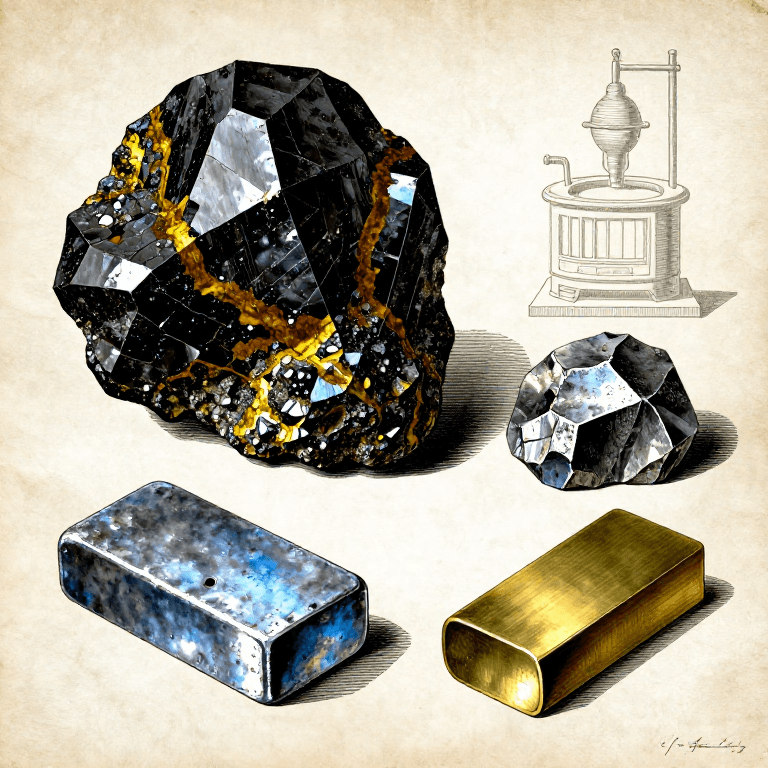


This blueprint makes

Related Blueprints
These blueprints share knowledge with this one — techniques, materials, or principles that connect them in the learning graph.

CC0 Public Domain
This blueprint is released under CC0. You are free to copy, modify, distribute, and use this work for any purpose, without asking permission.
Support the Maker by purchasing products through their Blueprint where they earn a Maker Commission set by Vendors, or create a new iteration of this Blueprint and include it as a connection in your own Blueprint to share revenue.