ART
BEAUTY & WELLNESS
CRAFT
CULTURE & HISTORY
ENTERTAINMENT
ENVIRONMENT
FOOD & DRINKS
REVERSE ENGINEERING
SCIENCES
SPORTS
TECHNOLOGY
WEARABLES
English

Huad (Sticky-Rice Steamer Basket) — Strips of 3-Year-Old Village Bamboo, Lengths 25/30/35 in, Slats 0.5/0.6/0.8 cm, a 4×8-Strip Twill-3 Base, Lift 3 Turn 3, a Phai Kao Rim; Steams Sticky Rice over a Pot
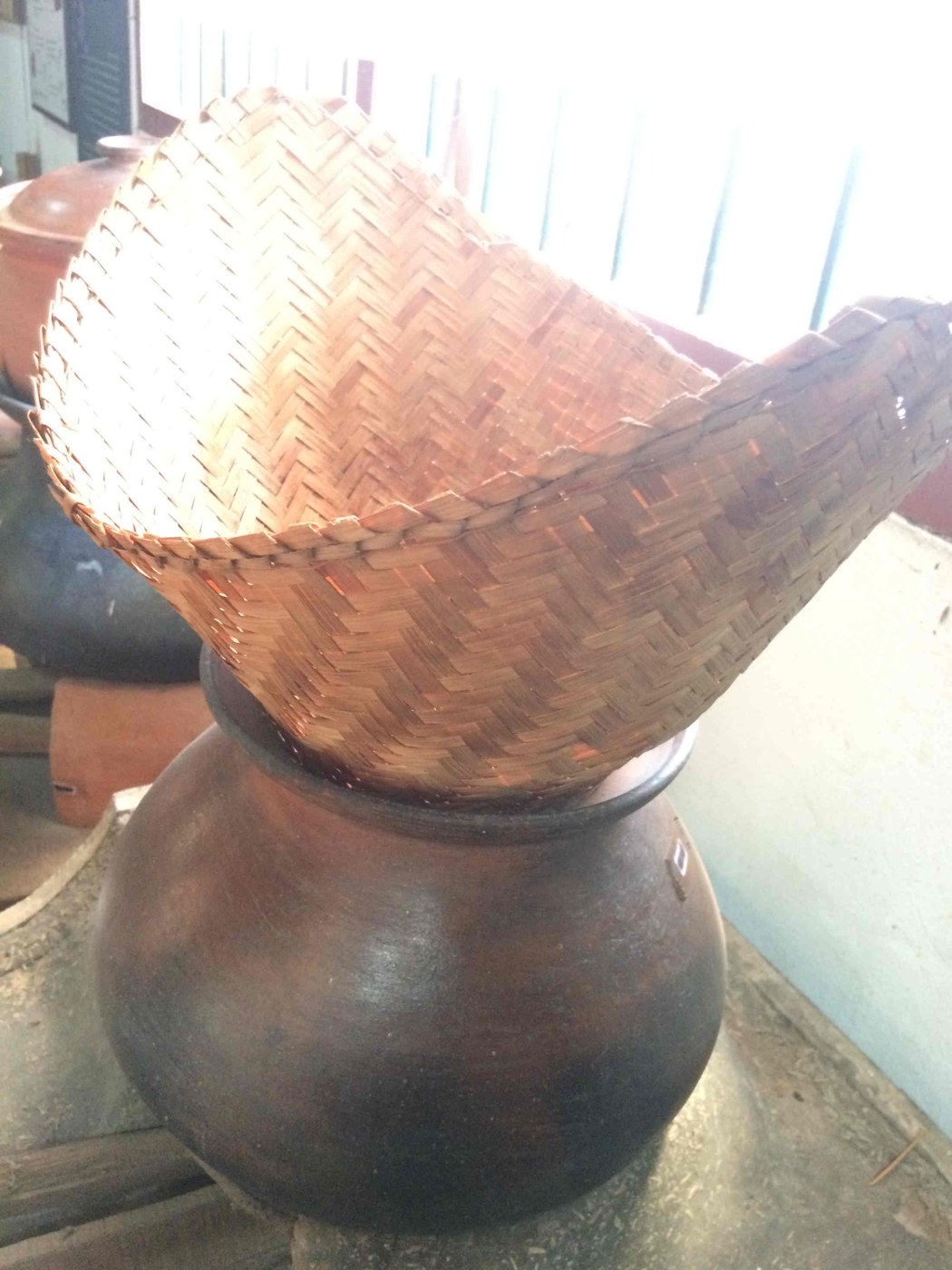
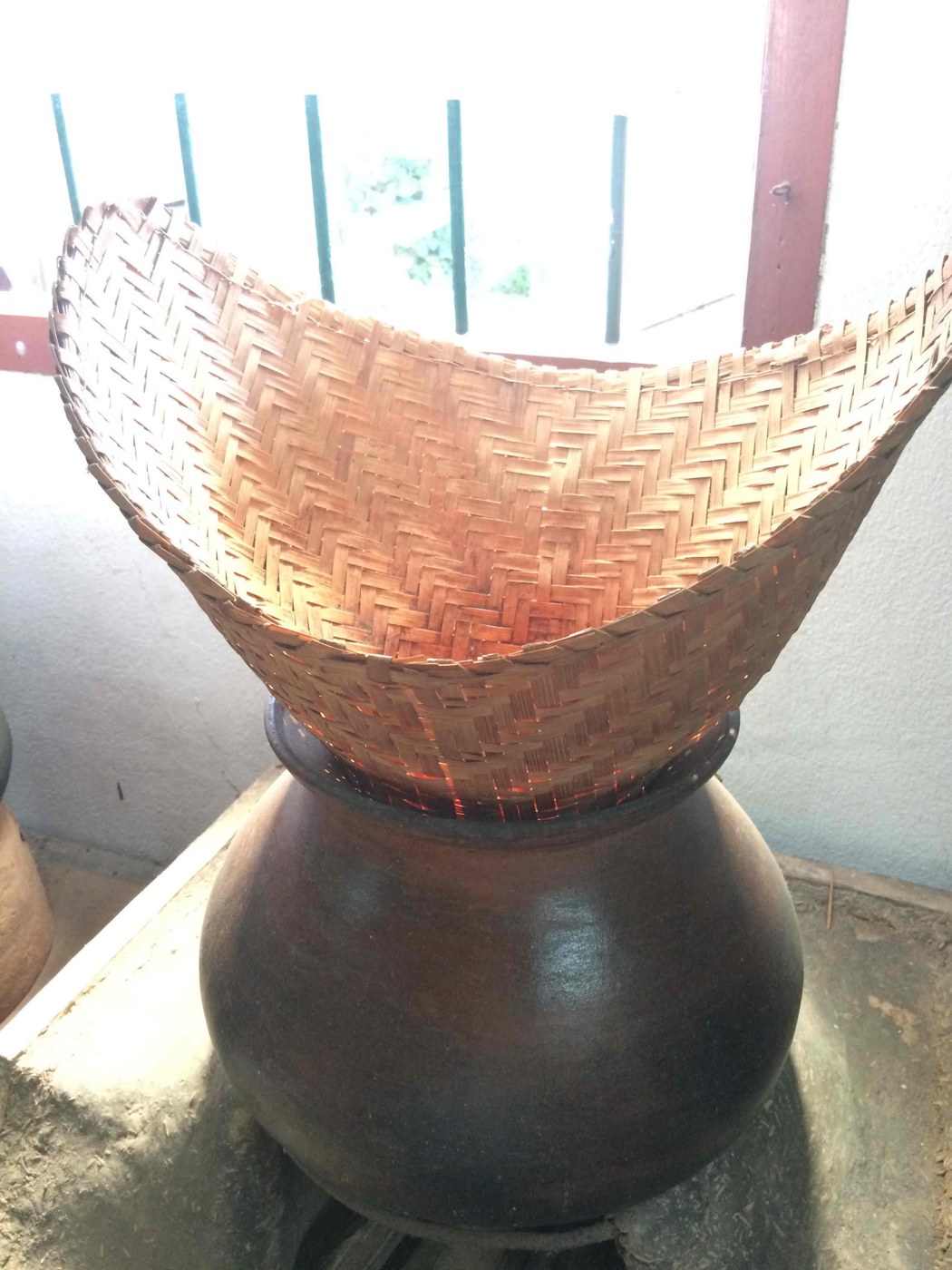
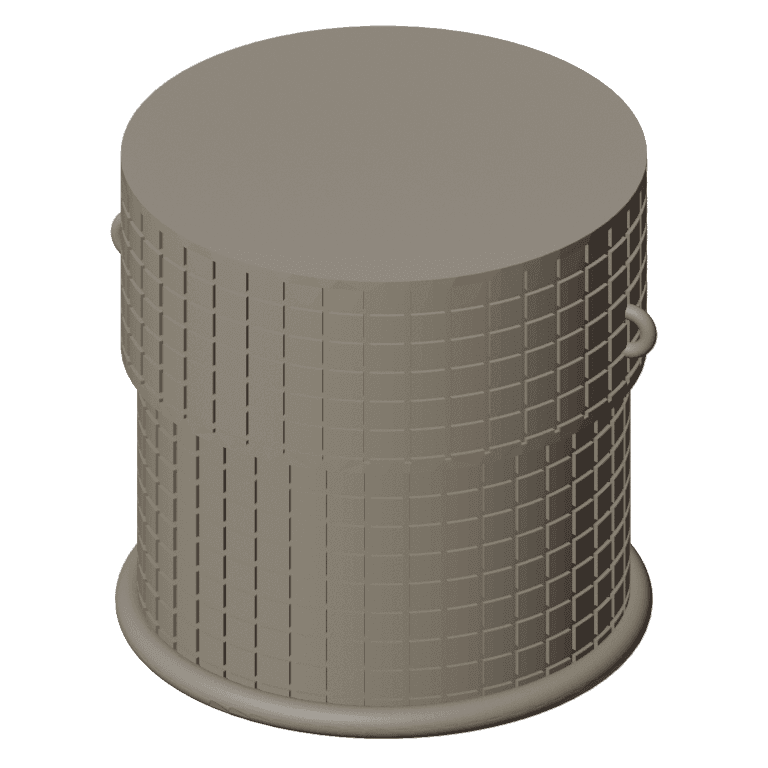
หวด (huad) is a woven vessel for steaming sticky rice, vegetables, beans and sesame. It is cone-shaped, narrow at the base and flared at the mouth, woven solid from bamboo strips. Steam passes through the gaps in the weave, cooking the rice evenly without making it soggy.
This blueprint weaves a real huad to the sizes in the source.
Advanced
2-3 days drying the strips, plus weaving time
Instructions
1
1
Real sizes
Real sizes
Loading Jupyter Notebook...
2
2
Sticky-rice vessels, before it
Sticky-rice vessels, before it
The huad steams sticky rice over a pot; the krathip holds steamed sticky rice and keeps it warm.
3
3
Read from the source
Read from the source
"A huad woven from bamboo strips has gaps between the strips that let steam pass in and out, so hot steam circulates and cooks the contents evenly without making them soggy." (Sirindhorn Anthropology Centre, author พิชชา ทองขลิบ (Phitcha Thongkhlip), CC BY 4.0)
4
4
Prepare the strips
Prepare the strips
Use village bamboo about 3 years old: just mature, it does not shrink and has long internodes. Saw it into internode lengths, discarding the nodes: 35 inches (large), 30 inches (medium) or 25 inches (small). Split it with a machete into slats 0.8 / 0.6 / 0.5 cm wide to match. Shave off the sharp middle edge and taper both ends (chak suai tok), then split the inner wood from the skin (chak tok): one slat gives about 8-10 strips. Dry them in the sun for 2-3 days and bundle them by length.
Materials for this step:
 Bamboo Poles1 piece
Tools needed:
 Hand Saw
 Machete
5
5
Base and phai huad
Base and phai huad
Weave the base first: lay 4 strips one way and 8 the other and weave a three-strip twill from the centre, 13 crossings to each side, counted in "bi" (lift 3 strips, cover 3). When the base is big enough, fold two corners, then phai huad: change from the base pattern to the body pattern, which sets the size of the huad, lifting 3 and turning 3, though this is not fixed and depends on the weaver's skill.
6
6
Body, phai kao rim and rolling
Body, phai kao rim and rolling
Weave the body pattern, mostly with 10 strips. Sprinkle water now and then so the strips stay soft and easy to weave. At full height, add the phai kao at the top rim: about 6 small round strips woven lift 3, turn 3 round the body. Finally roll the huad: cut off over-long strips and roll in the remaining ends, to prevent splinters and sharp ends.
7
7
Real photos
Real photos
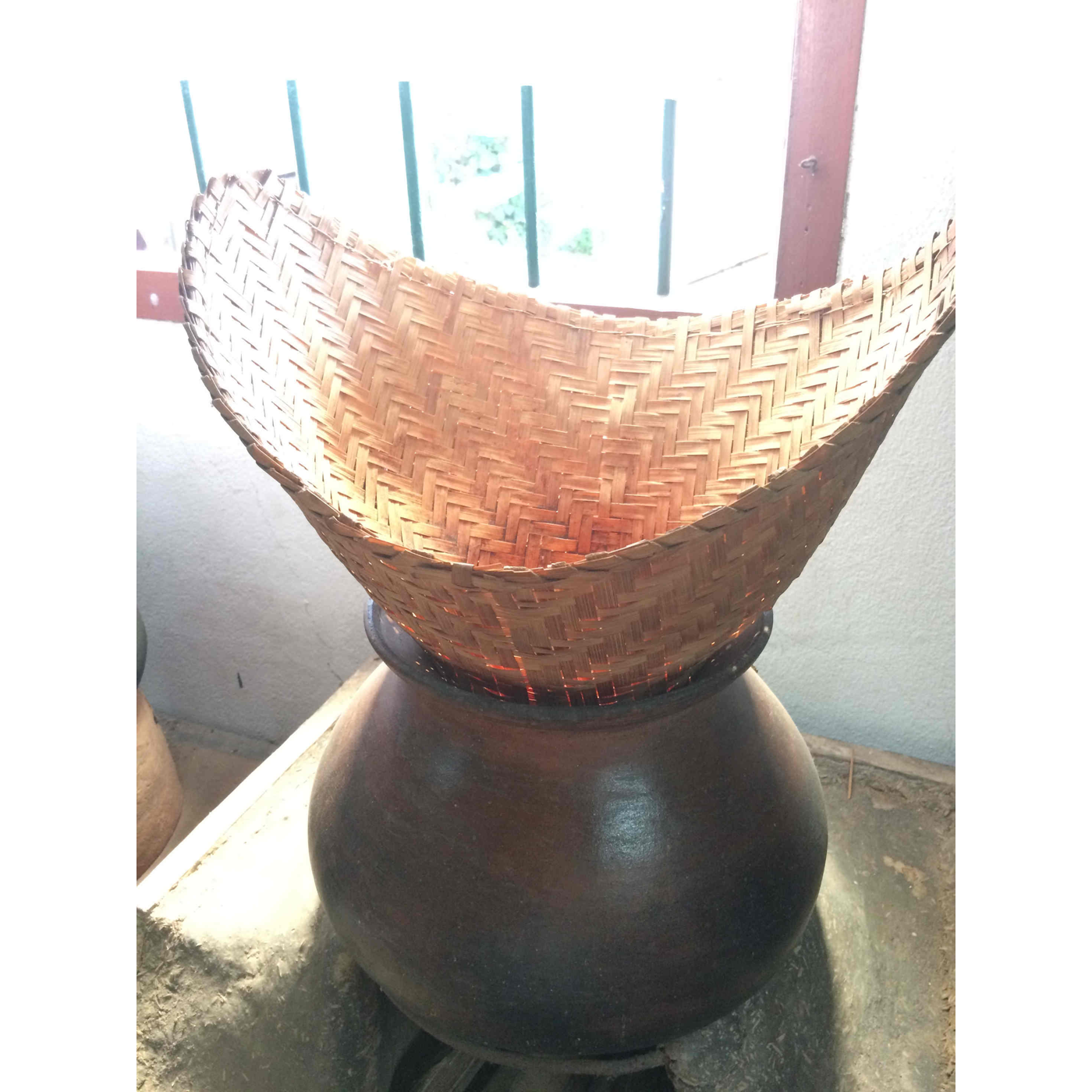
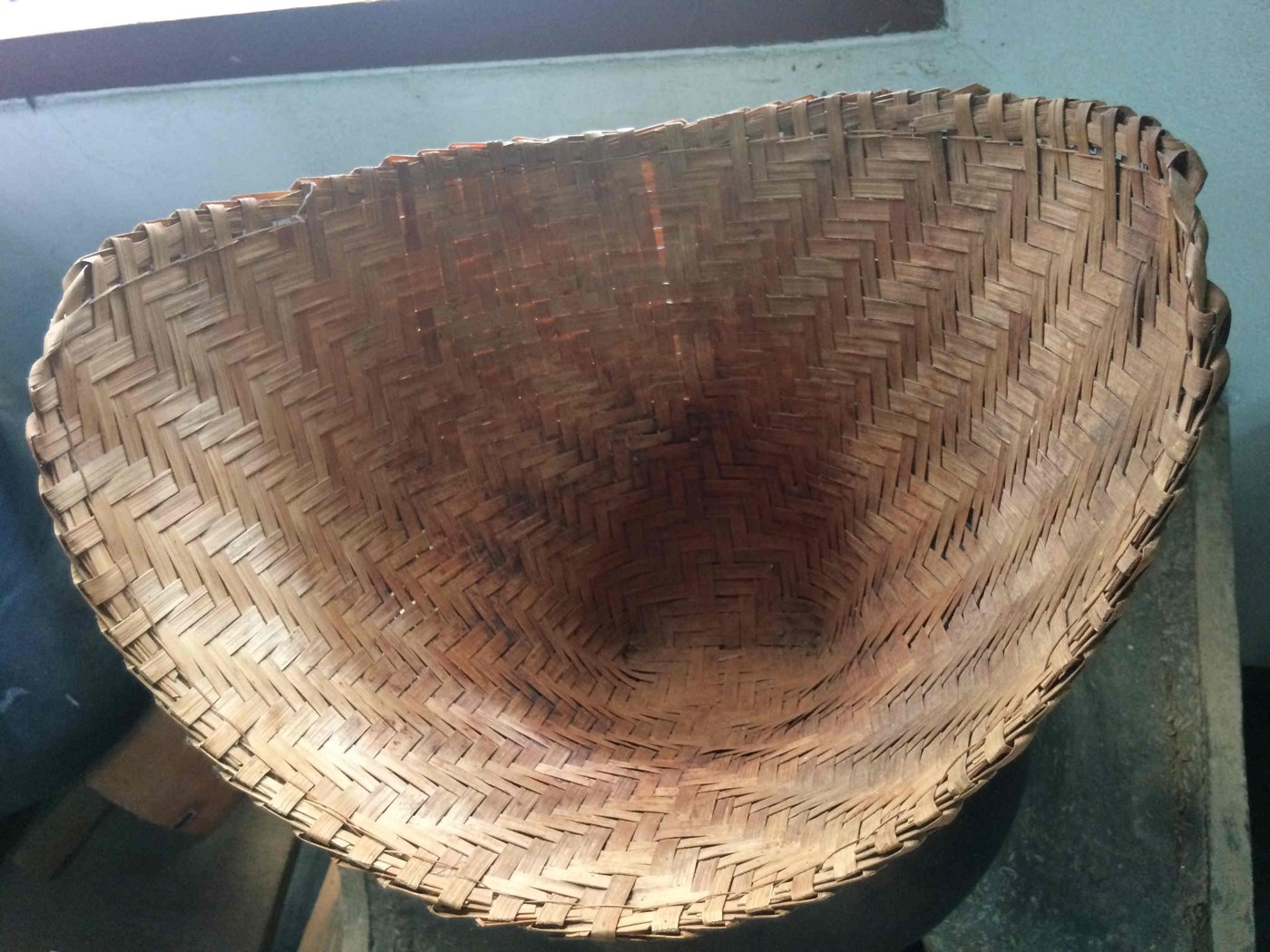
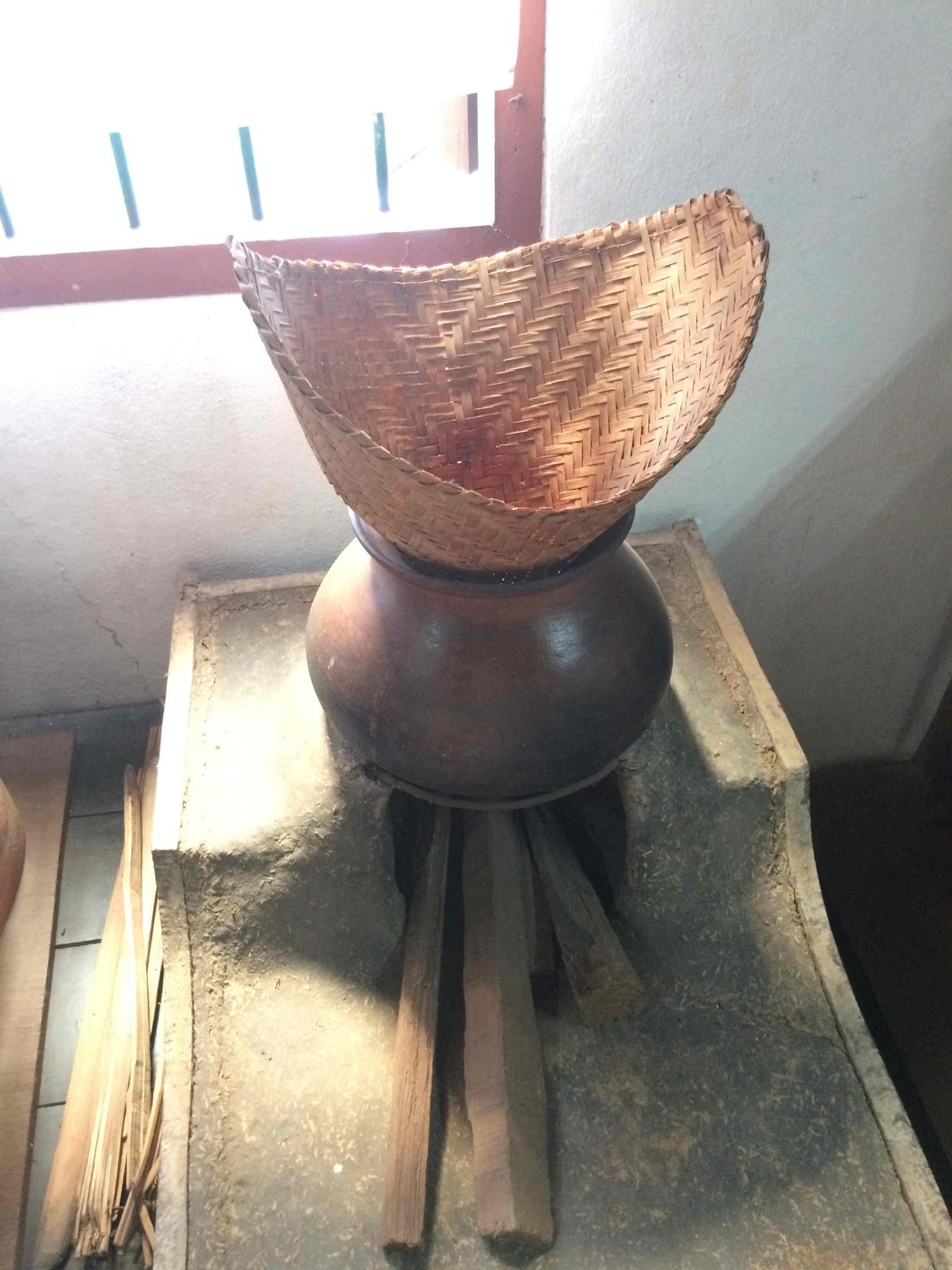
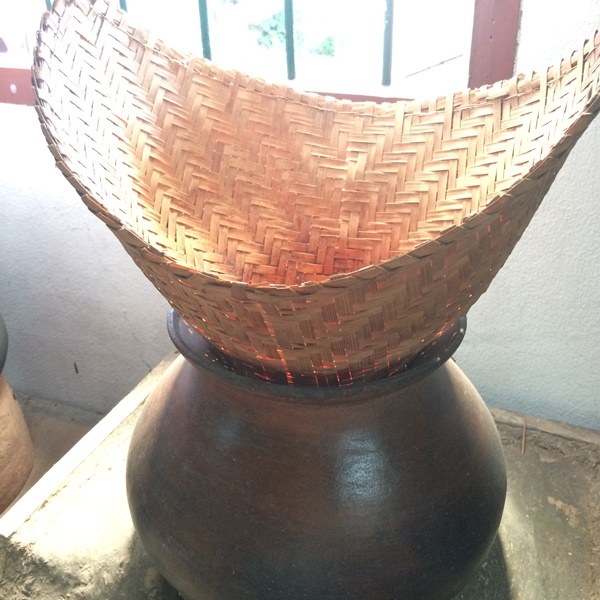
Photos of a real huad on a clay pot, from the Ja Thawi Folk Museum, Phitsanulok (Sirindhorn Anthropology Centre, author พิชชา ทองขลิบ (Phitcha Thongkhlip), CC BY 4.0)
8
8
How to use it
How to use it
Rinse the sticky rice clean, put it in the huad and let it drain. Set the huad on the mouth of a pot of water, with the water not touching the bottom of the huad. Cover the huad with banana leaf or muslin and heat until the water boils; the steam passes through the weave until the rice is cooked.
9
9
Troubleshooting
Troubleshooting
Troubleshooting the huad.
Flow
Loading...
10
10
History and limits
History and limits
Today there are new huad shapes made to fit electric rice cookers. A bamboo huad gives sticky rice a bamboo scent and keeps it from going soggy. Take care with the machete and saw when cutting and splitting bamboo.
Source: Sirindhorn Anthropology Centre, Traditional Objects of Everyday Use database, "หวดนึ่งข้าว", author พิชชา ทองขลิบ (Phitcha Thongkhlip), Ja Thawi Folk Museum, Phitsanulok (CC BY 4.0 licence).
**Limits** The source gives no height or diameter for the finished huad.
Related Blueprints
These blueprints share knowledge with this one — techniques, materials, or principles that connect them in the learning graph.
CC0 Public Domain
This blueprint is released under CC0. You are free to copy, modify, distribute, and use this work for any purpose, without asking permission.
Support the Maker by purchasing products through their Blueprint where they earn a Maker Commission set by Vendors, or create a new iteration of this Blueprint and include it as a connection in your own Blueprint to share revenue.