ART
BEAUTY & WELLNESS
CRAFT
CULTURE & HISTORY
ENTERTAINMENT
ENVIRONMENT
FOOD & DRINKS
REVERSE ENGINEERING
SCIENCES
SPORTS
TECHNOLOGY
WEARABLES
Translated

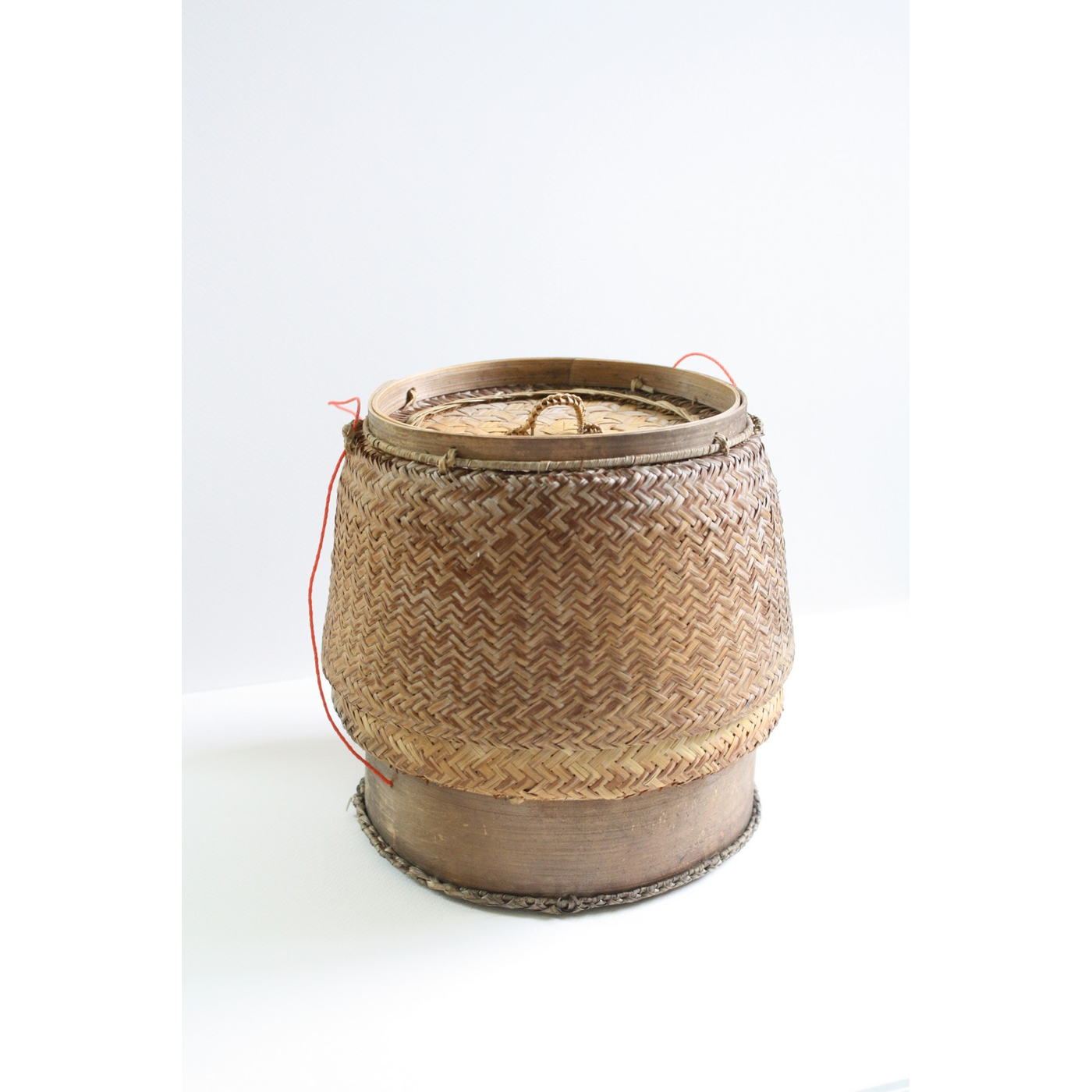
กระติบ (krathip) — a Woven Bamboo Cylinder, Two Layers Deep, with a Fitted Lid, Keeps Steamed Sticky Rice Warm
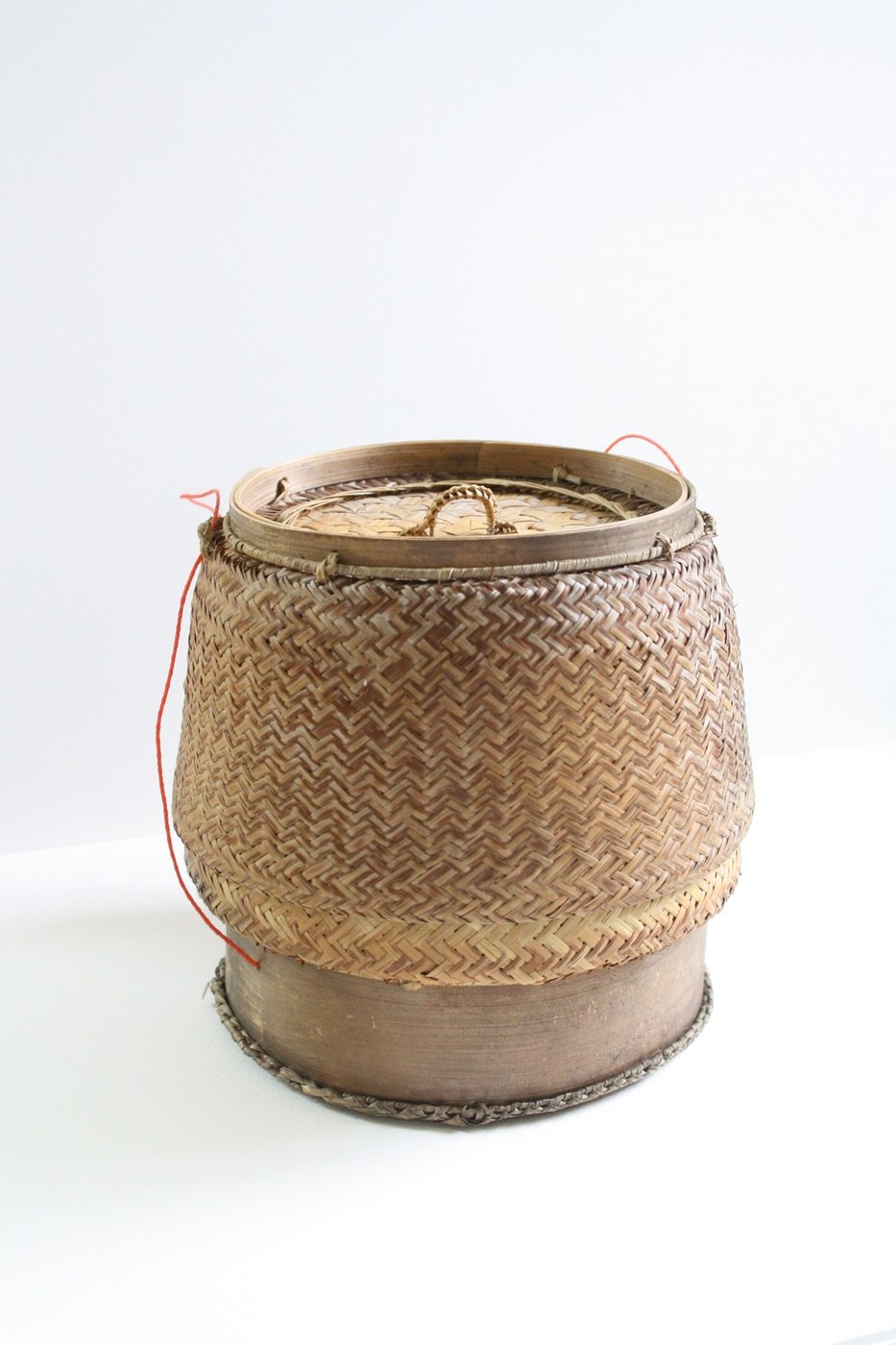
กระติบ (krathip) is a woven vessel, usually of bamboo, cylindrical, with a lid, used to hold steamed sticky rice and other things. It is used mostly in the North and Northeast of Thailand.
This blueprint weaves a real krathip from bamboo strips.
Beginner
About 1-2 days (splitting strips and weaving)
Instructions
1
1
Size
Size
Loading Jupyter Notebook...
2
2
Before the krathip
Before the krathip
Steamed sticky rice is first turned in the bom so the steam escapes, then put into the krathip.
3
3
Read from the source
Read from the source
"A krathip for sticky rice is usually woven of bamboo strips in different sizes, nested two layers deep to keep the heat in well, so the sticky rice stays soft and warm for a long time and does not get soggy, because the steam from the steamed rice escapes slowly through the weave and does not collect into drops." (Sirindhorn Anthropology Centre, author พิชชา ทองขลิบ (Phitcha Thongkhlip), CC BY 4.0)
4
4
Split the strips
Split the strips
Split bamboo and cut it into thin strips of several sizes; scrape them smooth, with no splinters.
Materials for this step:
 Bamboo Poles1 piece
Tools needed:
 Machete
 Knife
Knife5
5
Weave body and lid
Weave body and lid
Weave the strips into a cylinder two layers deep for the body, and weave a lid slightly larger than the body so it fits over it, also two layers deep.
6
6
Foot and cord
Foot and cord
Make a rounded foot round the bottom from palmyra stalk or bamboo so it stands firmly, and thread a cord on the body for carrying it by hand or on the shoulder, or for hanging it.
Materials for this step:
 Jute Twine1 piece
7
7
Real photos
Real photos
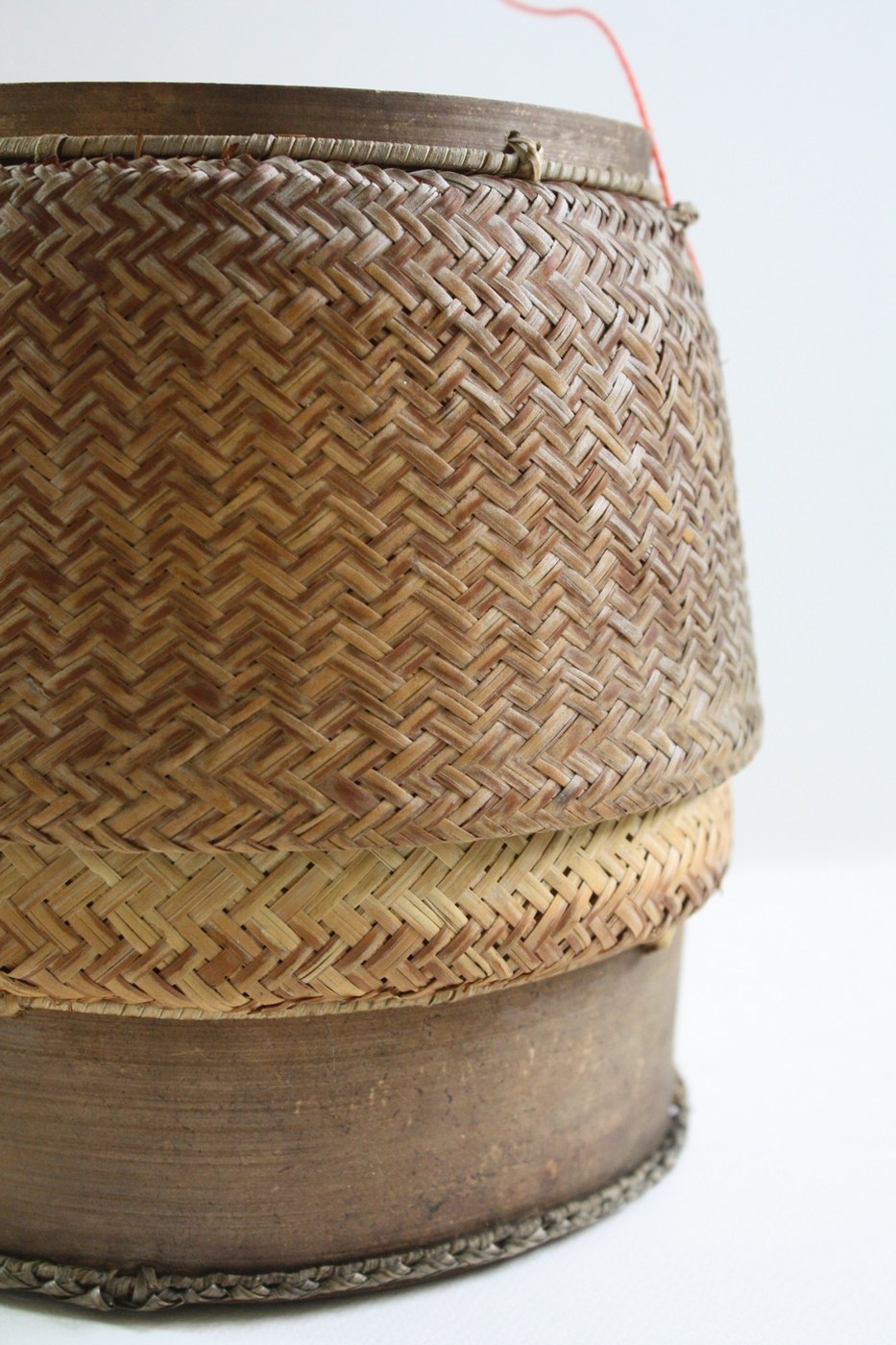
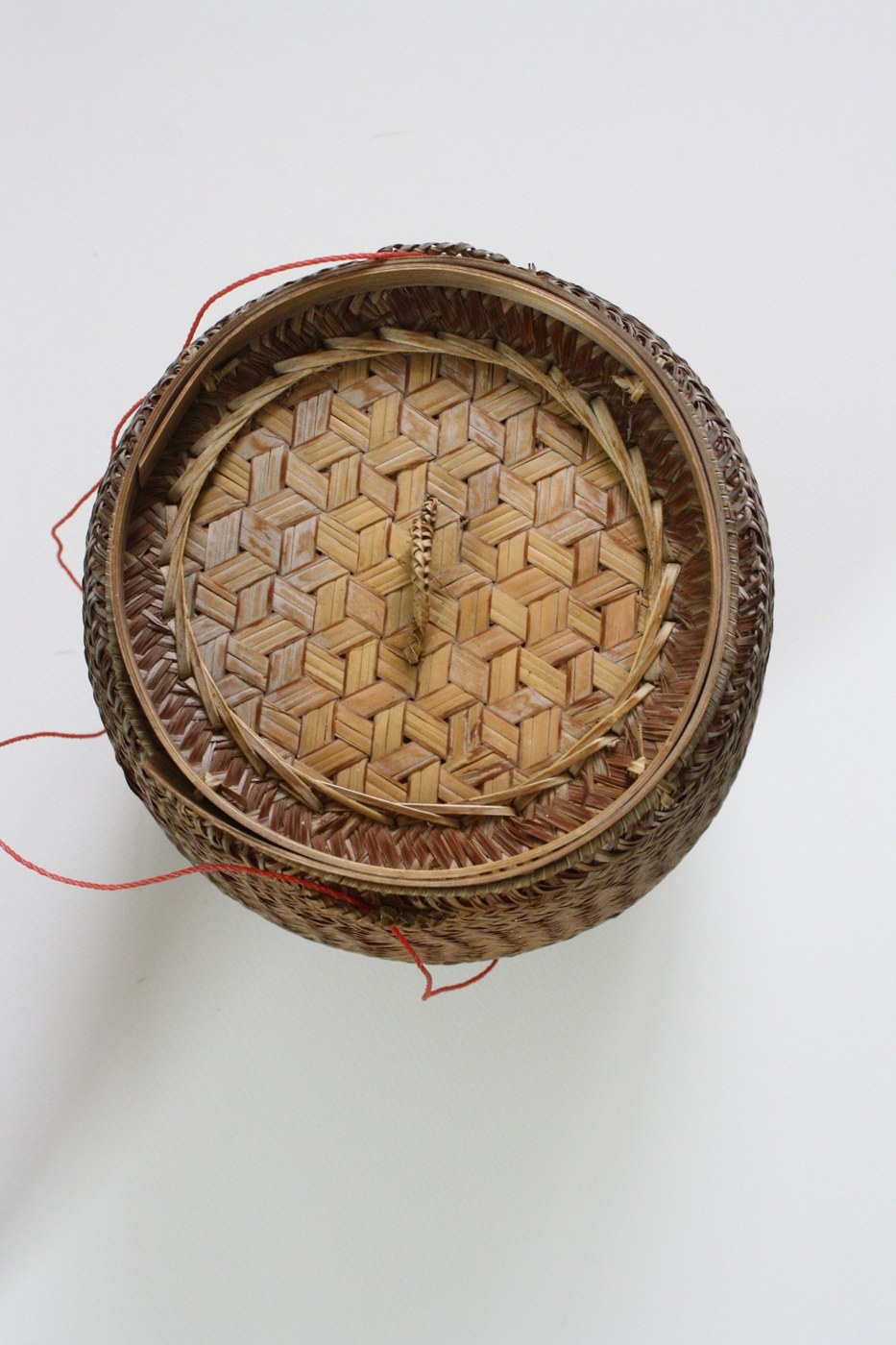
Real photos of a กระติบ (krathip) from พิพิธภัณฑ์พื้นบ้านหนองบัวโคก (Nong Bua Khok Folk Museum) (Sirindhorn Anthropology Centre, author พิชชา ทองขลิบ (Phitcha Thongkhlip), CC BY 4.0)
8
8
How to use it
How to use it
Put the aired steamed sticky rice into the krathip and close the lid. The steam escapes slowly through the weave, so the rice stays soft and warm for a long time and does not get soggy. A krathip has no tall foot like a kong khao, so it is used for eating at home, not set down in a flooded field.
9
9
Troubleshooting
Troubleshooting
Troubleshooting the krathip.
Flow
Loading...
10
10
History and limits
History and limits
A krathip can be woven from nipa, lan or palmyra leaves, but bamboo is usual. It is named by its use, such as krathip khao, krathip mak and krathip lot. It is also used in the folk dance serng krathip khao. Other name: กระติ๊บ.
Source: Sirindhorn Anthropology Centre, Traditional Objects of Everyday Use database, "กระติบ" (CC BY 4.0 licence).
**Limits** The source gives no size or weave pattern.
Materials
2- 1 piecePlaceholder
- 1 piecePlaceholder
Related Blueprints
These blueprints share knowledge with this one — techniques, materials, or principles that connect them in the learning graph.
CC0 Public Domain
This blueprint is released under CC0. You are free to copy, modify, distribute, and use this work for any purpose, without asking permission.
Support the Maker by purchasing products through their Blueprint where they earn a Maker Commission set by Vendors, or create a new iteration of this Blueprint and include it as a connection in your own Blueprint to share revenue.