ART
BEAUTY & WELLNESS
CRAFT
CULTURE & HISTORY
ENTERTAINMENT
ENVIRONMENT
FOOD & DRINKS
REVERSE ENGINEERING
SCIENCES
SPORTS
TECHNOLOGY
WEARABLES
English


I Bue (Bamboo Bullroarer) — a Thin Bamboo Blade One Internode Long and 3-5 cm Wide on a 1-Foot String, Tied to a 1 m Handle; Whirled Until It Roars
อีบื๋อ (i bue, also mak bue) is a toy whirled to make a loud noise; it is named after the sound the blade makes against the air. It can be made from bamboo or any scrap of board; children mostly use bamboo because it is easy to work and easy to find.
This blueprint makes a real i bue to the sizes in the source.
Beginner
About 1 hour
Instructions
1
1
Real sizes
Real sizes
Loading Jupyter Notebook...
2
2
Wind-sound toys, before it
Wind-sound toys, before it
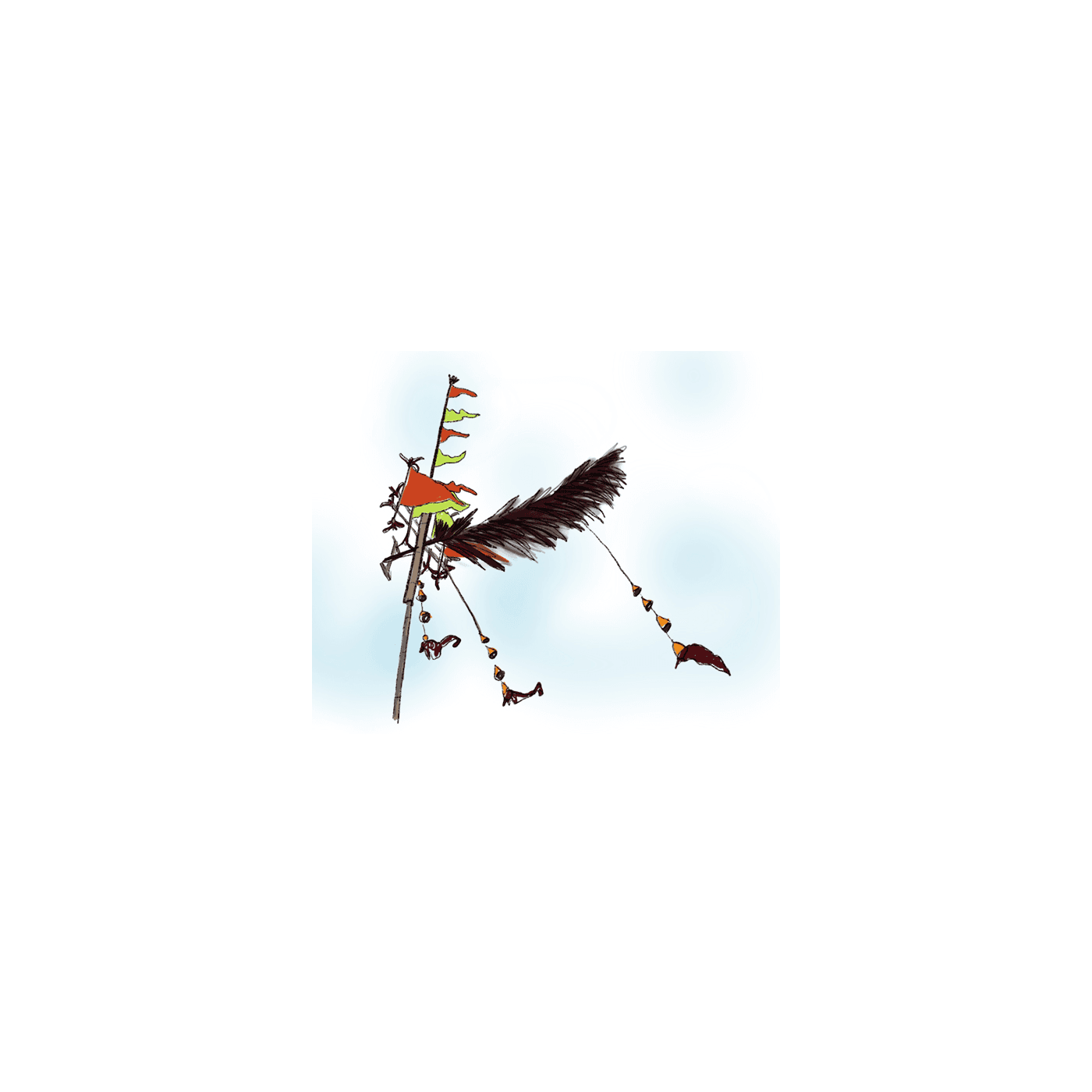
The luk lom is turned by the wind on a pole; the i bue is whirled by the player's hand.
3
3
Read from the source
Read from the source
"When the blade spins fast it strikes the air, making a loud whoosh or bue sound." (Sirindhorn Anthropology Centre, author not named, CC BY 4.0)
4
4
Blade
Blade
Take bamboo one internode long, or about 1 foot, and split it thin, about 3-5 cm wide. Drill a hole at one end for the string.
Materials for this step:
 Bamboo Poles1 piece
Tools needed:
 Knife
Knife5
5
Handle
Handle
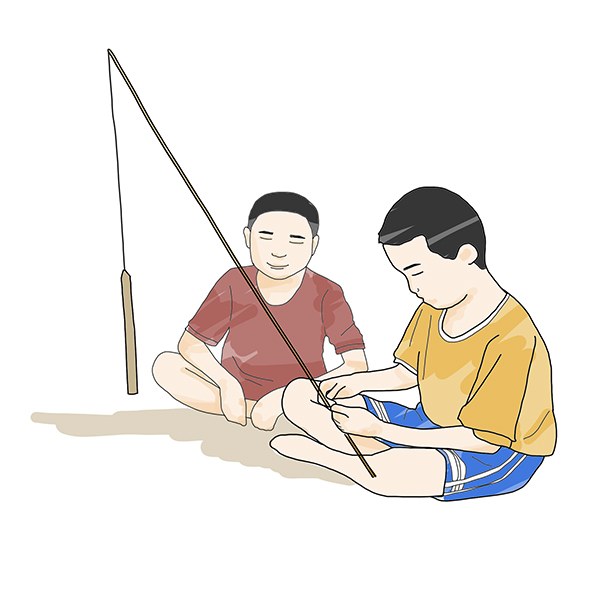
Take bamboo about 1 metre long and shave the end to a taper, like a switch.
6
6
String
String
Thread a string about 1 foot long through the hole in the blade and tie the other end to the tip of the handle.
Materials for this step:
 String1 piece
7
7
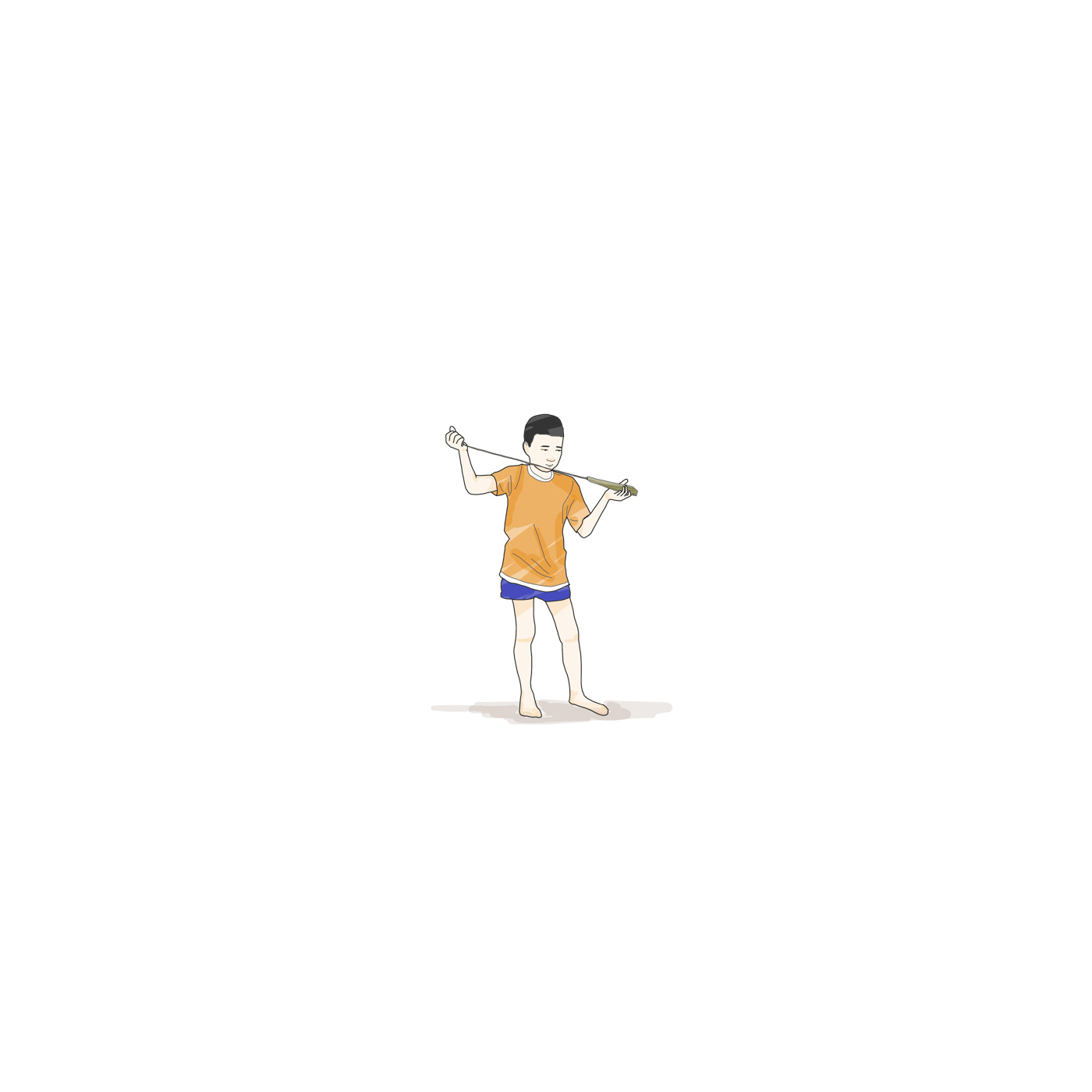
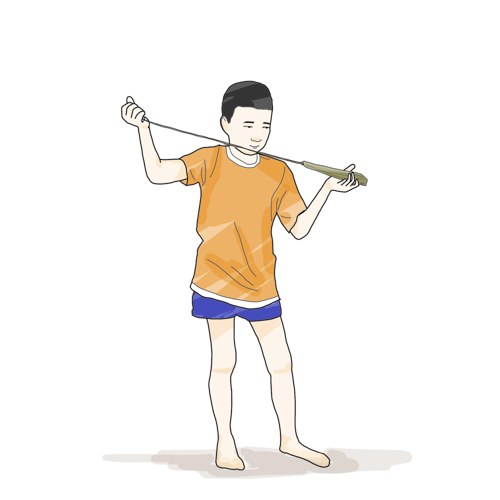
Real images
Real images
Drawings of making and playing the i bue (Sirindhorn Anthropology Centre, author not named, CC BY 4.0)
8
8
How to play
How to play
Swing the blade round by hand, or whirl it over your head. When it spins fast the blade strikes the air, making a loud whoosh or bue sound.
9
9
Troubleshooting
Troubleshooting
Troubleshooting the i bue.
Flow
Loading...
10
10
History and limits
History and limits
In some places it is called mak bue or mak bi; it can also be made from a scrap of board. Take care with the knife when splitting and shaving the bamboo.
Source: Sirindhorn Anthropology Centre, Traditional Objects of Everyday Use database, "อีบื๋อ", author not named (CC BY 4.0 licence).
**Limits** The source gives no blade thickness; the illustrations are drawings.
Related Blueprints
These blueprints share knowledge with this one — techniques, materials, or principles that connect them in the learning graph.
CC0 Public Domain
This blueprint is released under CC0. You are free to copy, modify, distribute, and use this work for any purpose, without asking permission.
Support the Maker by purchasing products through their Blueprint where they earn a Maker Commission set by Vendors, or create a new iteration of this Blueprint and include it as a connection in your own Blueprint to share revenue.