ART
BEAUTY & WELLNESS
CRAFT
CULTURE & HISTORY
ENTERTAINMENT
ENVIRONMENT
FOOD & DRINKS
REVERSE ENGINEERING
SCIENCES
SPORTS
TECHNOLOGY
WEARABLES
English

Luk Lom (Southern Thai Wind-Whistle Vane) — a Twisted Khae-Wood Blade, Bamboo Shark-Mouth Whistles Tuned with Bee Resin, a Swivel Tube and a Rattan Tail, Sounding to Scare Birds
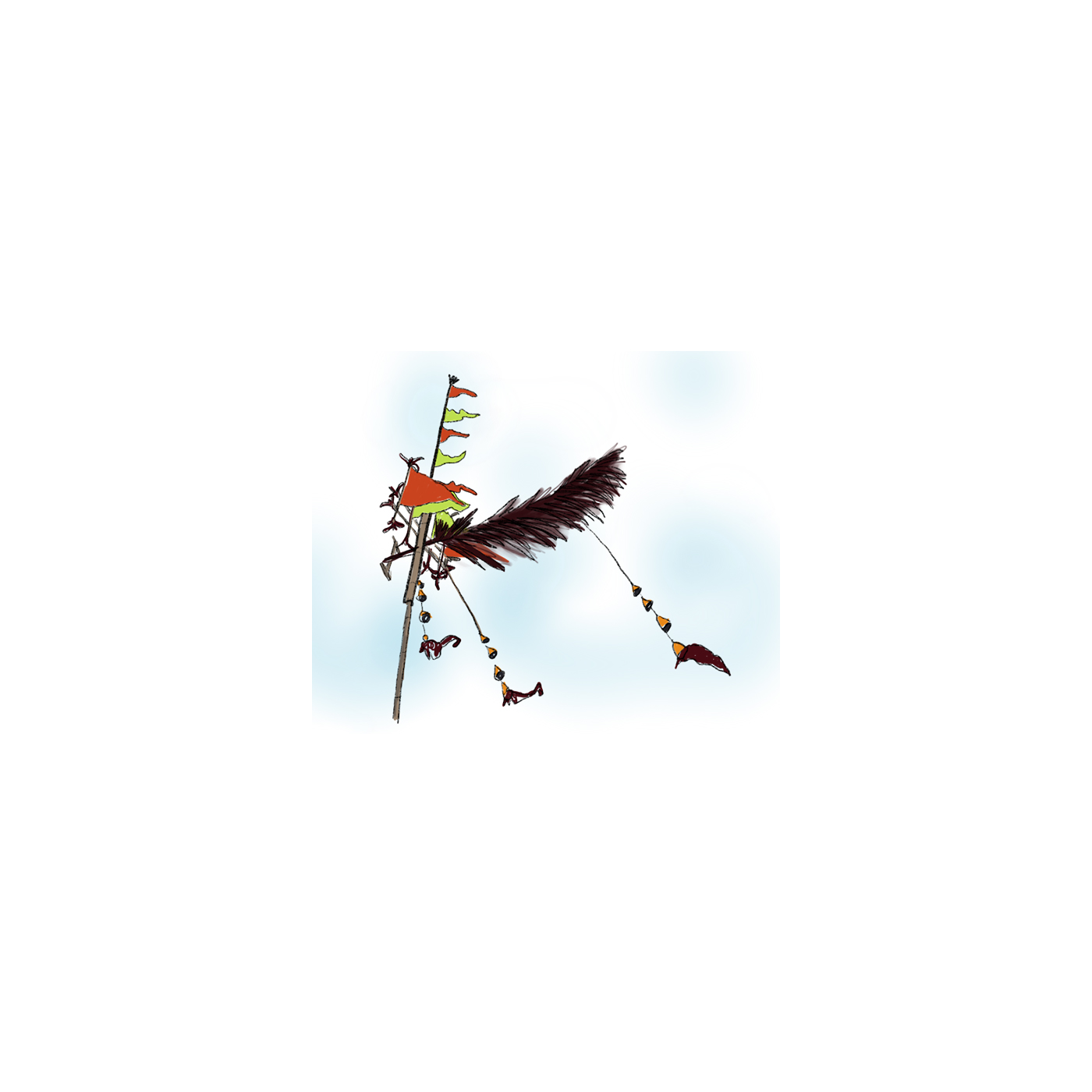
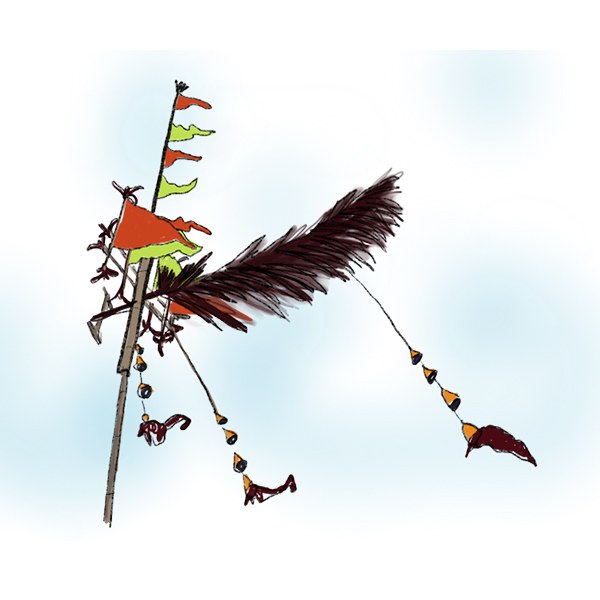
ลูกลม (luk lom; also lin lom, ling lom, kanghan) of southern Thailand is both a toy and a bird-scarer. It turns in the wind; the whistles at each end catch the air and sound as far as 3 km, and its tail points the wind direction.
This blueprint makes a real luk lom by the method in the source.
Advanced
Several days
Instructions
1
1
Size
Size
Loading Jupyter Notebook...
2
2
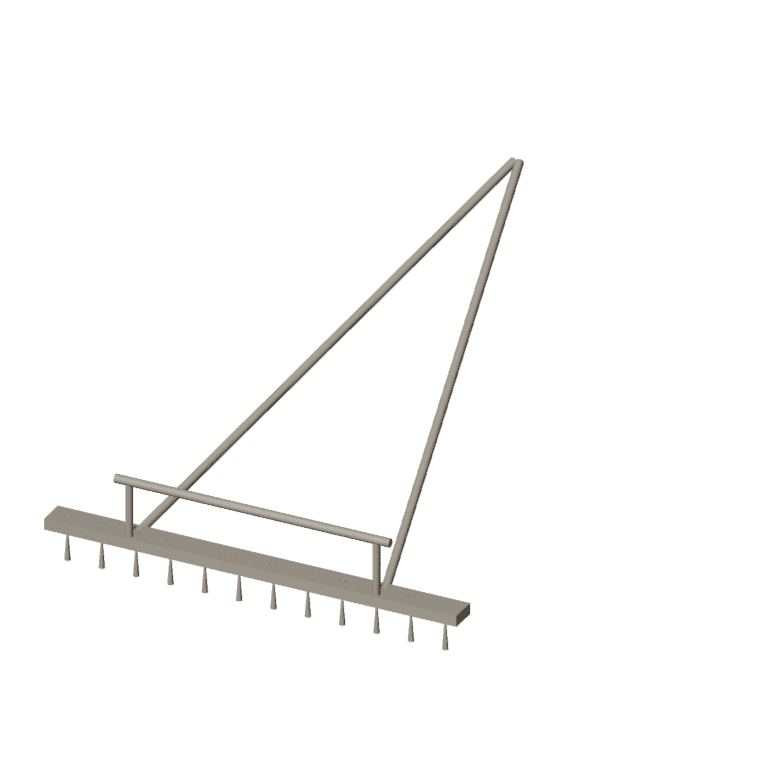
Farm tools, before it
Farm tools, before it
The khrat harrow prepares the paddy; the luk lom is set up to scare birds from the rice and show the wind direction.
3
3
Read from the source
Read from the source
"If the sound is not yet harmonious, add more chan ung (stingless-bee resin) at the whistle mouths and run it again to test, until it pleases." (Sirindhorn Anthropology Centre, informant ประเสริฐ คงหมุน (Prasoet Khongmun), Ban Na Muen Si luk lom conservation group, CC BY 4.0)
4
4
Blade
Blade
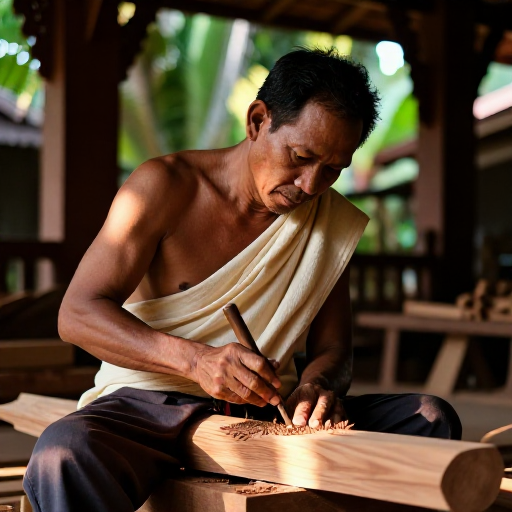
Use straight khae na wood without knots, its butt dried in the sun for at least about 2 weeks. Rough-hew with an axe and finish with a one-handed hewing adze and a knife. Divide it in three: the middle, at the balance point, about 1 krabiat thicker than the ends, with a square hole for the ria hub; the two arms hewn with a twist, one to the left and one to the right, of even thickness, the back slightly curved like a propeller. Notch both tips and drill 2 pairs of holes in each for tying the whistles.
Tools needed:
 Axe
Axe Adze
Adze Knife
Knife5
5
Hub, whistles and wuei
Hub, whistles and wuei
The ria hub is mature phai si suk bamboo, one end notched square to fit the blade's middle, the inside waxed so it does not overheat turning on the boom. The whistles (luk rong) are phai si suk (for small vanes, phai lot or ruak): keep the node at one end and shave the skin neither too thick nor too thin; cut the other end in a shark-mouth bevel about half an inch from the tip and set chan ung on it. Tie them with rattan so they stick out 2 inches beyond each tip, mouths facing opposite ways. The wuei is made the same way but shorter and smaller, without chan ung, tied outside the whistle with its mouth reversed.
Materials for this step:
 Bamboo Poles1 piece
 Beeswax1 piece
Tools needed:
 Hand Saw
6
6
Mast, swivel, boom and tail
Mast, swivel, boom and tail
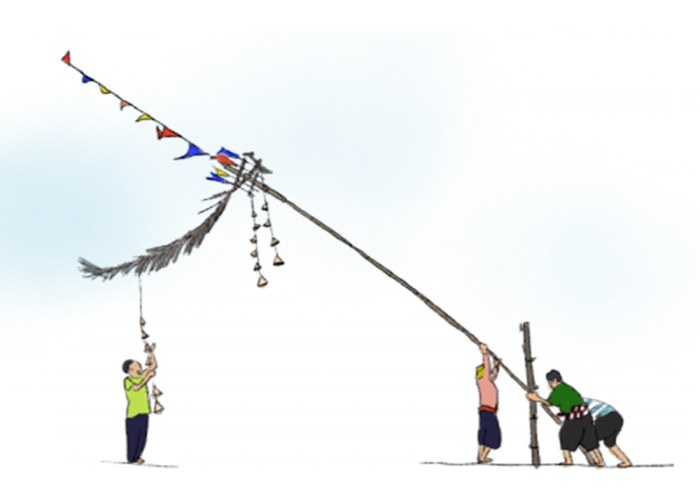
The mast is mature, straight phai si suk, its top cut square at a node, fitting into the swivel tube; for a large vane, lash 3 more bamboo poles under the swivel in 3 places and splay them as 3 legs. The swivel tube is thick, long-jointed phai si suk with the end nodes removed and the middle node kept; its lower end goes over the mast top, bound with rattan against splitting, and above the node a hole takes the boom. The boom is tough, strong wood, the blade at the front and running back to carry the tail. The tail is at least 3 water-rattan fronds layered on the boom, with a tassel at the end. A pennant pole above the swivel carries at least 3 cloth flags of alternating colours.
Materials for this step:
 Cotton Cloth1 piece
7
7
Real photos
Real photos
Drawings of the luk lom and of setting it up (Sirindhorn Anthropology Centre, informant ประเสริฐ คงหมุน (Prasoet Khongmun), CC BY 4.0).
8
8
Test and use
Test and use
For a small vane, have someone run holding the boom while you listen; if the sound is not harmonious, add chan ung at the whistle mouths and run again. A large vane is first set on a low tree to test, perhaps for a week, then raised high. It scares birds from the rice and shows the wind direction. Raising a large vane onto a tall tree takes many people: beware of falls.
9
9
Troubleshooting
Troubleshooting
Troubleshooting the luk lom.
Flow
Loading...
10
10
History and limits
History and limits
The luk lom is found mostly in the South, set on a tall tree near a rest pavilion. Raising a large one is a ceremony with at least 5 monks. Trang now holds a yearly contest in February, judging sound and proportion; the Ban Na Muen Si conservation group makes small ones as toys and gifts. Raising a large vane onto a tall tree takes many people: beware of falls.
Source: Sirindhorn Anthropology Centre, Traditional Objects of Everyday Use database, "ลูกลม", informant ประเสริฐ คงหมุน (Prasoet Khongmun), chair of the Ban Na Muen Si luk lom conservation group (CC BY 4.0 licence).
**Limits** The source gives no size for the hub, boom or mast, and there is no listing for khae wood, rattan or chan ung, so they are named in the text.
Materials
3- 1 piecePlaceholder
- 1 piecePlaceholder
- 1 piecePlaceholder
Related Blueprints
These blueprints share knowledge with this one — techniques, materials, or principles that connect them in the learning graph.
CC0 Public Domain
This blueprint is released under CC0. You are free to copy, modify, distribute, and use this work for any purpose, without asking permission.
Support the Maker by purchasing products through their Blueprint where they earn a Maker Commission set by Vendors, or create a new iteration of this Blueprint and include it as a connection in your own Blueprint to share revenue.