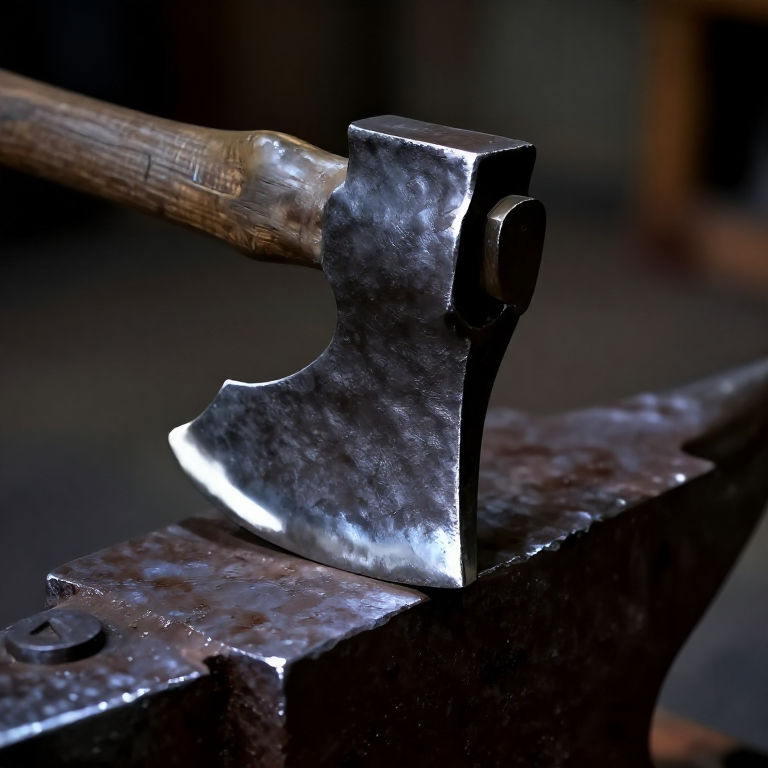

Forging an Iron Axe Head — The Tool That Cleared the Forests
The iron axe transformed human settlement more than any weapon. Bronze axes existed, but bronze is too soft and too expensive for heavy clearing work. Iron axes — harder, cheaper, and more easily resharpened — allowed Iron Age peoples to fell old-growth forest at a pace that reshaped entire landscapes. The cleared land became farms, and the farms became civilisations.
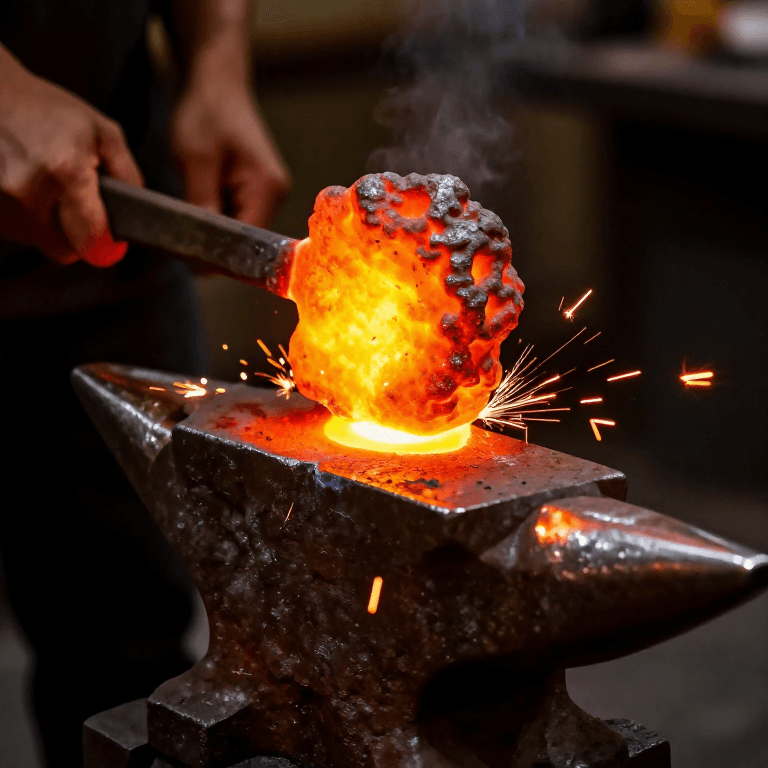
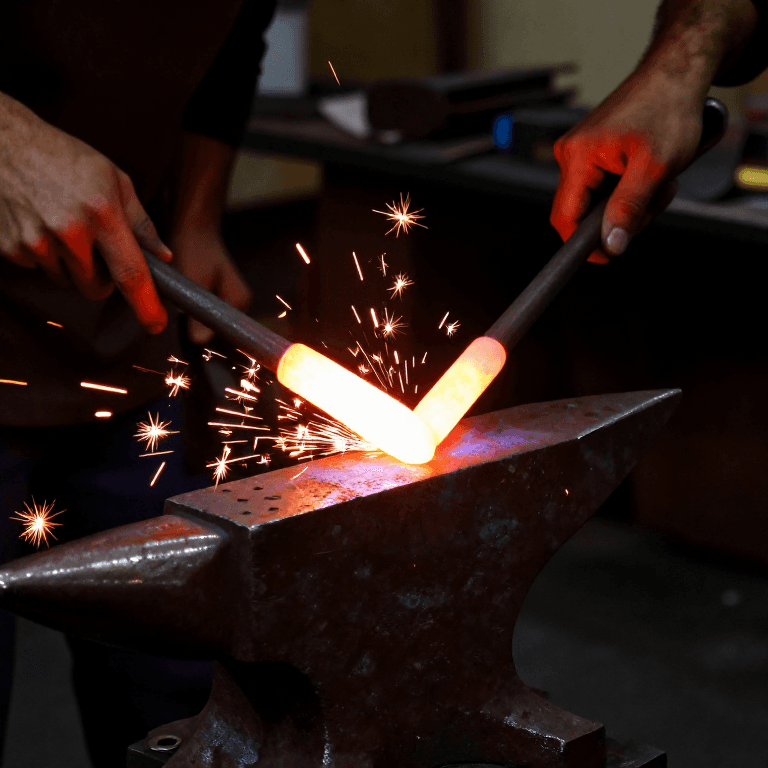
An iron axe head is forged from a single bar of wrought iron by a technique called punching and drifting: a hole (the eye) is punched through the bar to accept the wooden handle, then a tapered drift is driven through to shape the eye into an oval. The blade is drawn out from one side of the eye and the poll (the flat striking back) is left heavy on the opposite side for balance.
The cutting edge is case-carburised or steel-welded for hardness — the same principle as the iron knife and chisel. A well-forged iron axe lasts decades of daily use and can be resharpened hundreds of times before the steel edge is consumed.
Instructions
Select the bar stock
Select the bar stock
Mark and punch the eye
Mark and punch the eye
Materials for this step:
 Charcoal5 kg
Tools needed:
 Forge Hammer
 Forge Tongs
 Hearth (Forge Fire)
Drift the eye to final shape
Drift the eye to final shape
Draw out the blade
Draw out the blade
Shape the poll
Shape the poll
Refine the blade profile
Refine the blade profile
Case-carburise the cutting edge
Case-carburise the cutting edge
Grind and haft the axe
Grind and haft the axe
Tools needed:
 Sandstone (Abrasive)
Tools Required
4- Placeholder
- Placeholder
- Placeholder
- Placeholder
Connected Blueprint Materials
This blueprint makes
Related Blueprints
These blueprints share knowledge with this one — techniques, materials, or principles that connect them in the learning graph.
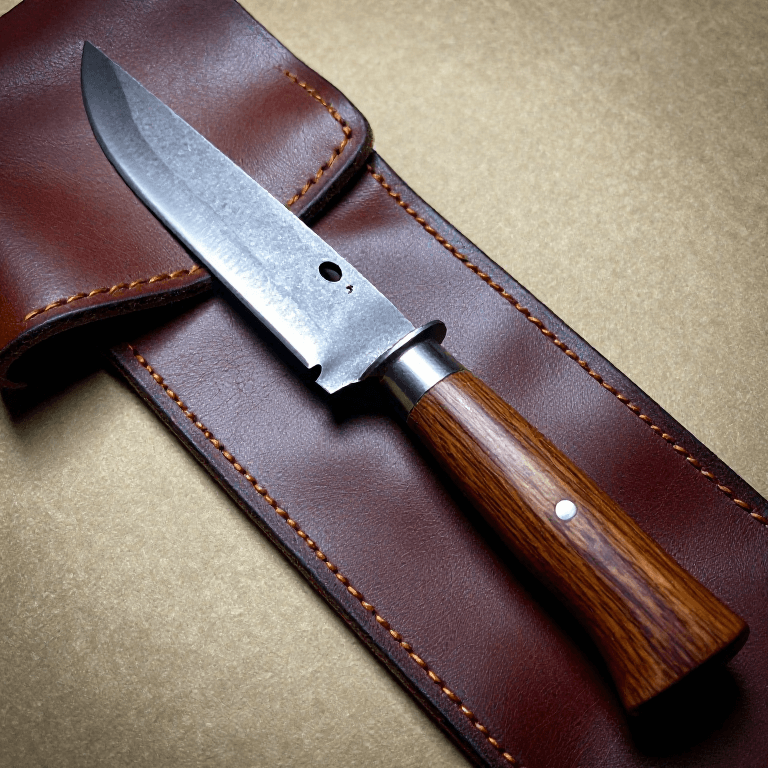
Forging an Iron Knife from a Wrought Iron Bar — The Smith's First Project
by Forge
Metalworking
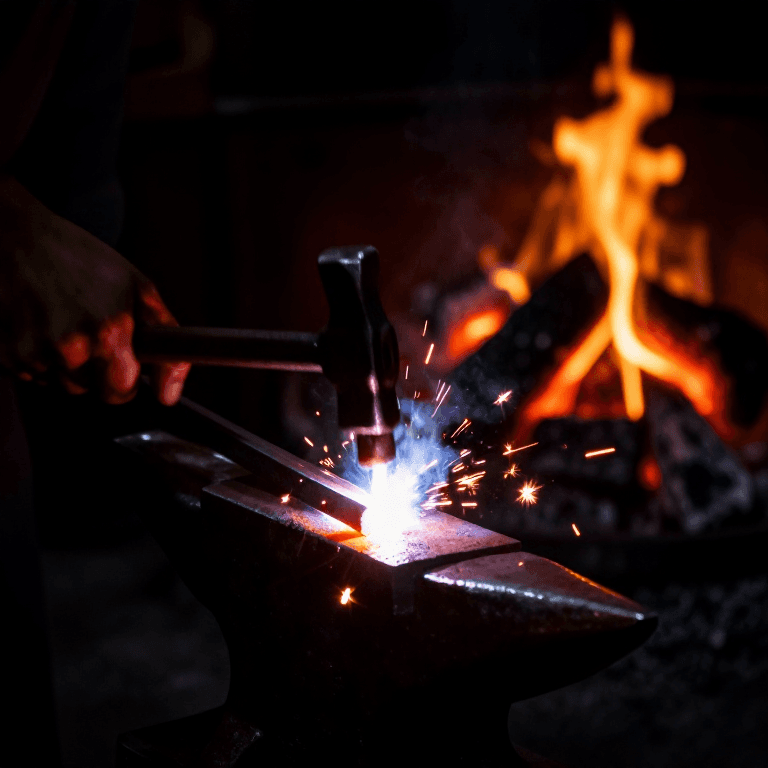
Forging an Iron Chisel — The Cutting Tool That Shapes Stone, Wood, and Metal
by Forge
Metalworking
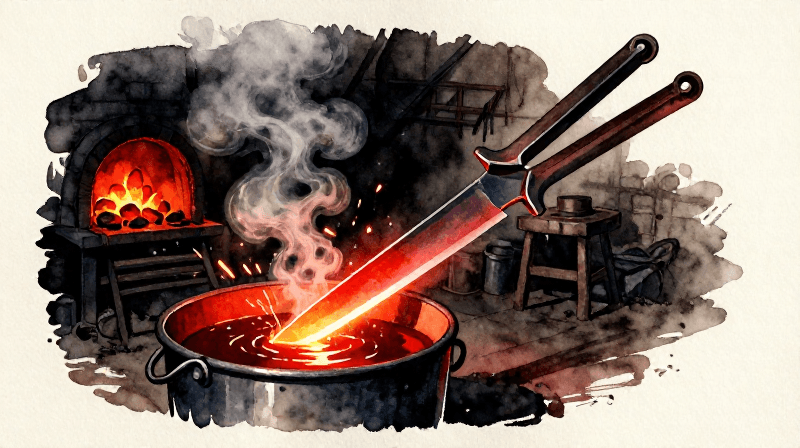
Quench Hardening and Tempering a Steel Blade — Heat Treatment Fundamentals
by Forge
Metalworking
CC0 Public Domain
This blueprint is released under CC0. You are free to copy, modify, distribute, and use this work for any purpose, without asking permission.
Support the Maker by purchasing products through their Blueprint where they earn a Maker Commission set by Vendors, or create a new iteration of this Blueprint and include it as a connection in your own Blueprint to share revenue.