ART
BEAUTY & WELLNESS
CRAFT
CULTURE & HISTORY
ENTERTAINMENT
ENVIRONMENT
FOOD & DRINKS
REVERSE ENGINEERING
SCIENCES
SPORTS
TECHNOLOGY
WEARABLES
English

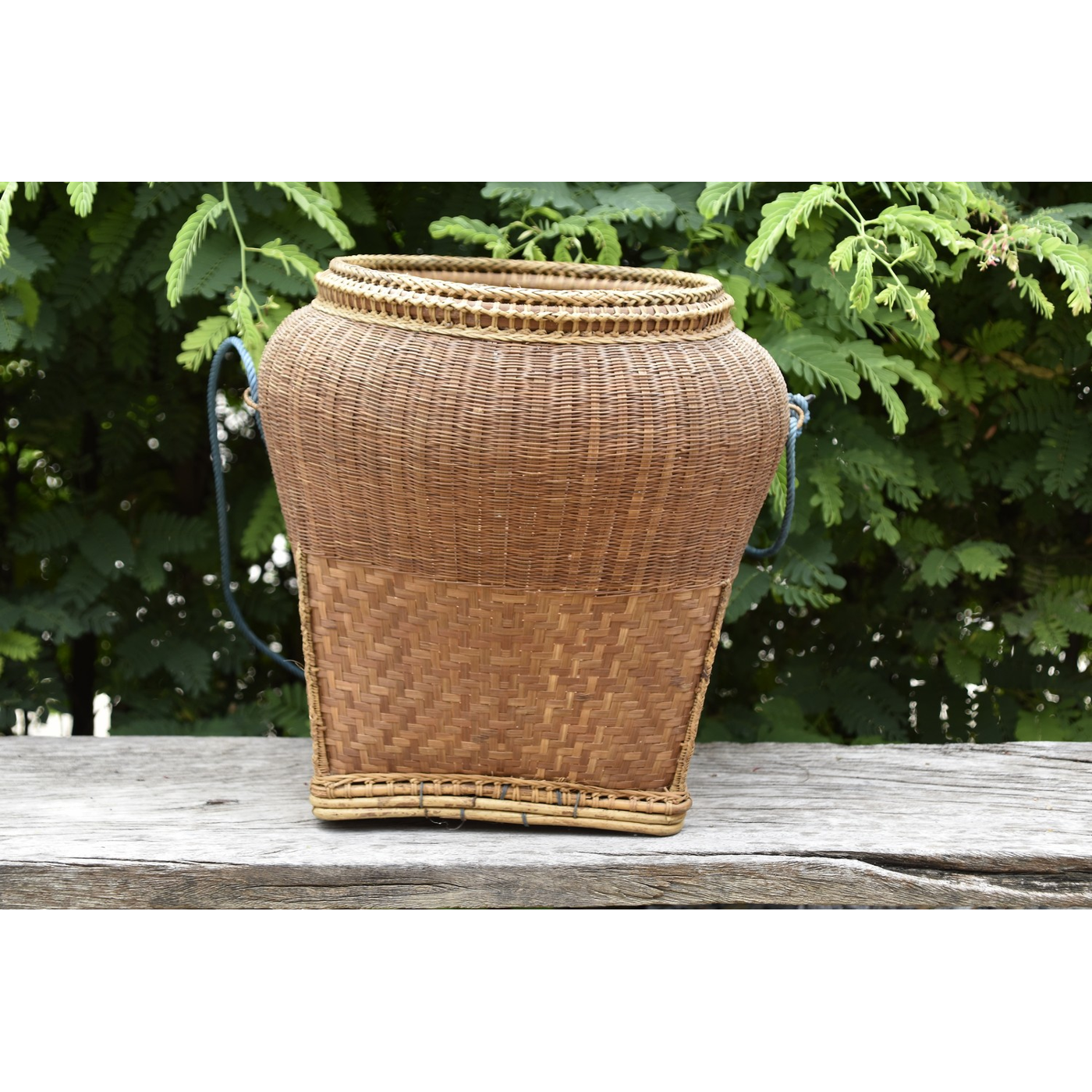
Kalep (Tai Dam Back Basket) — Rectangular Bottom, Twill to 20 cm, then Phrai Yak Khio, Rattan-Bound Mouth, Three Cord Loops for the Back
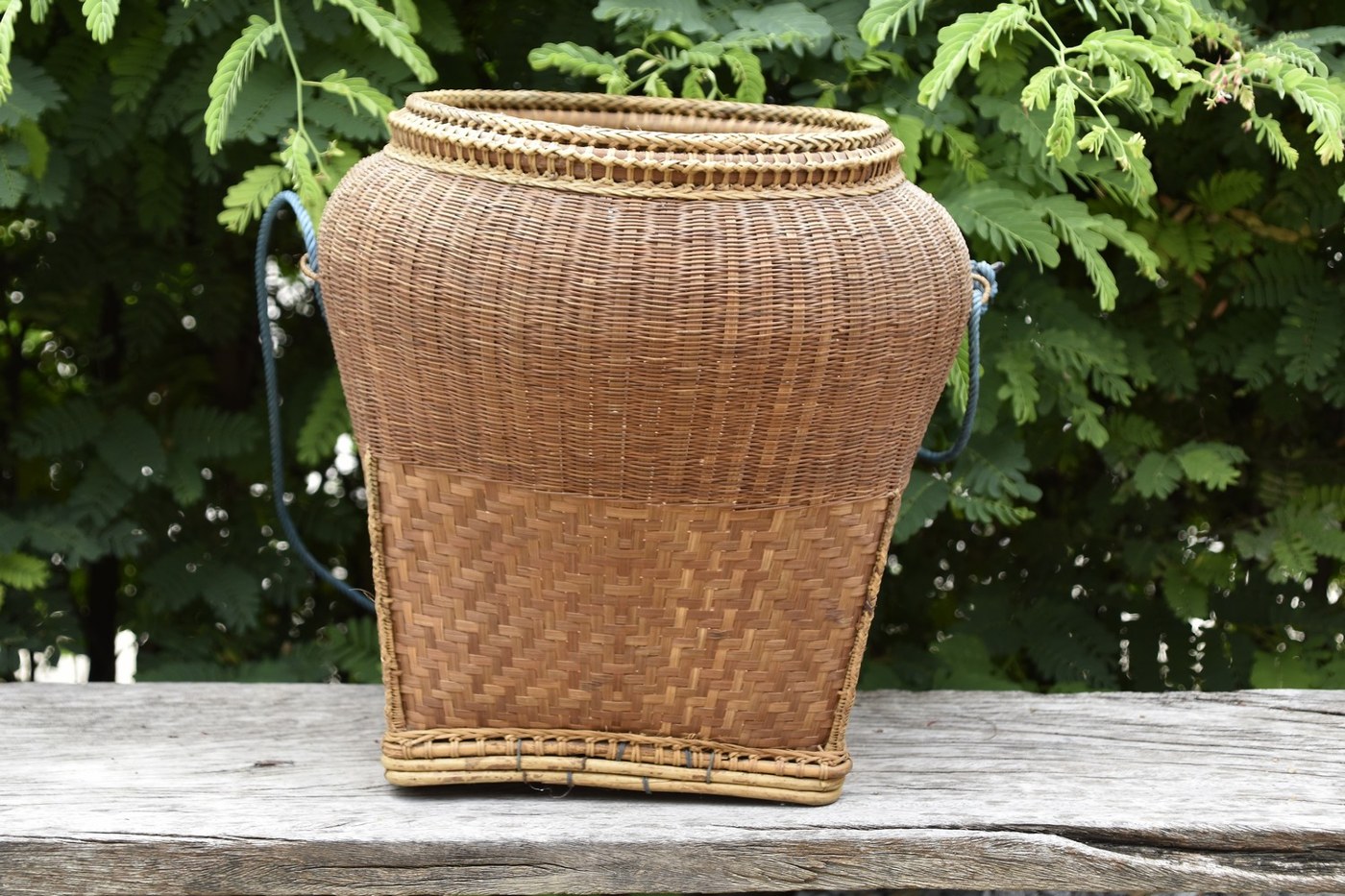
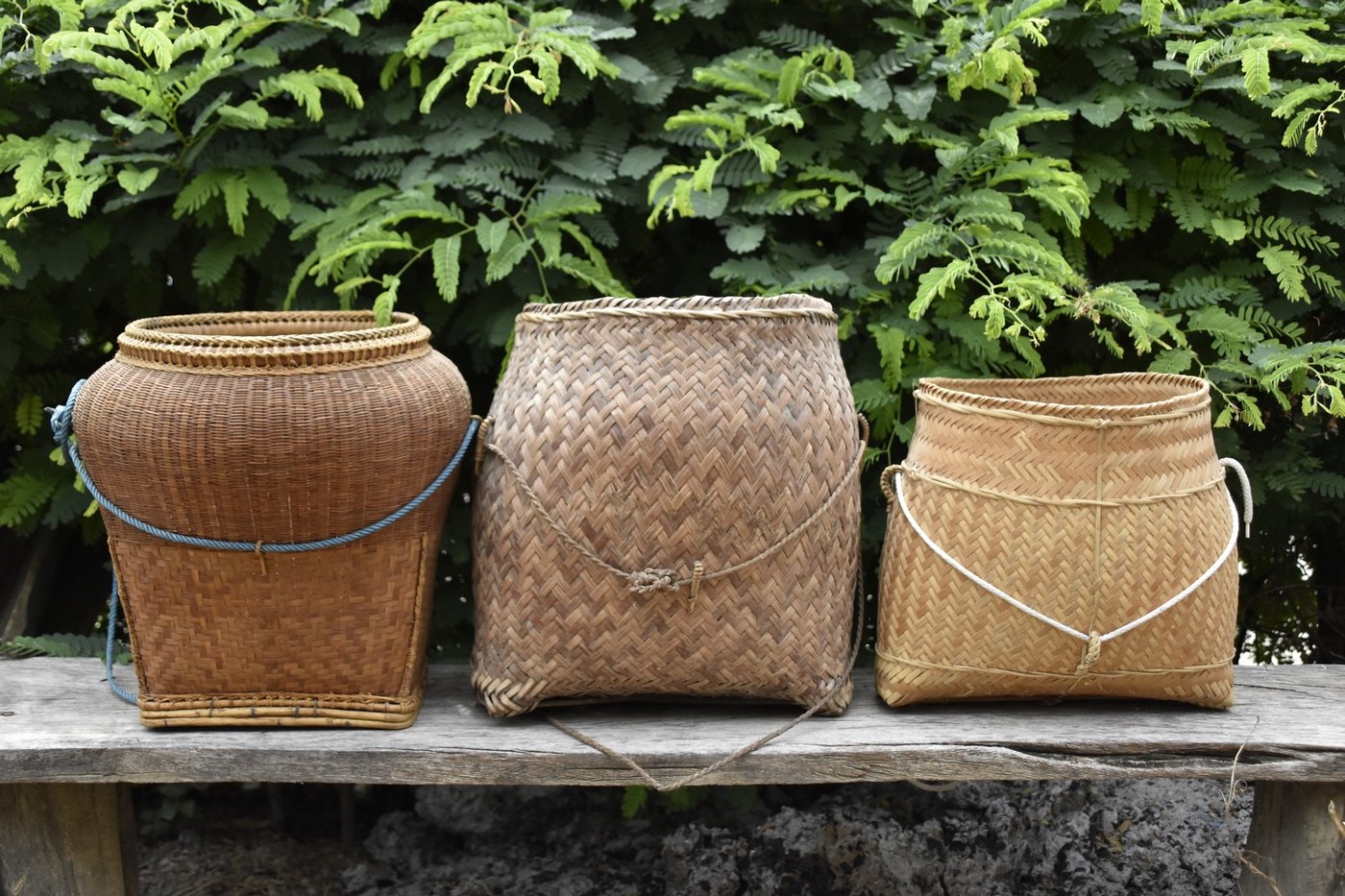
กะเหล็บ (kalep) is a close-woven basket like a krabung but flatter and taller, with a rectangular bottom, carried on the back for all kinds of goods. It was an essential of the Tai Dam, who carried it whenever they moved.
This blueprint weaves a real kalep by the method in the source.
Advanced
Several days
Instructions
1
1
Size
Size
Loading Jupyter Notebook...
2
2
Phrai yak khio, before it
Phrai yak khio, before it
The talum uses the phrai yak khio weave at its mouth; the kalep weaves its whole upper part in it, which the Tai Dam call the kalep pattern.
3
3
Read from the source
Read from the source
"Weave in twill of twos or threes to about 20 centimetres high, then in the phrai yak khio pattern, weaving alternately; villagers call it lai yak khio, but the Tai Dam call it lai kalep." (Sirindhorn Anthropology Centre, author พิชชา ทองขลิบ (Phitcha Thongkhlip), CC BY 4.0)
4
4
Strips and bottom
Strips and bottom
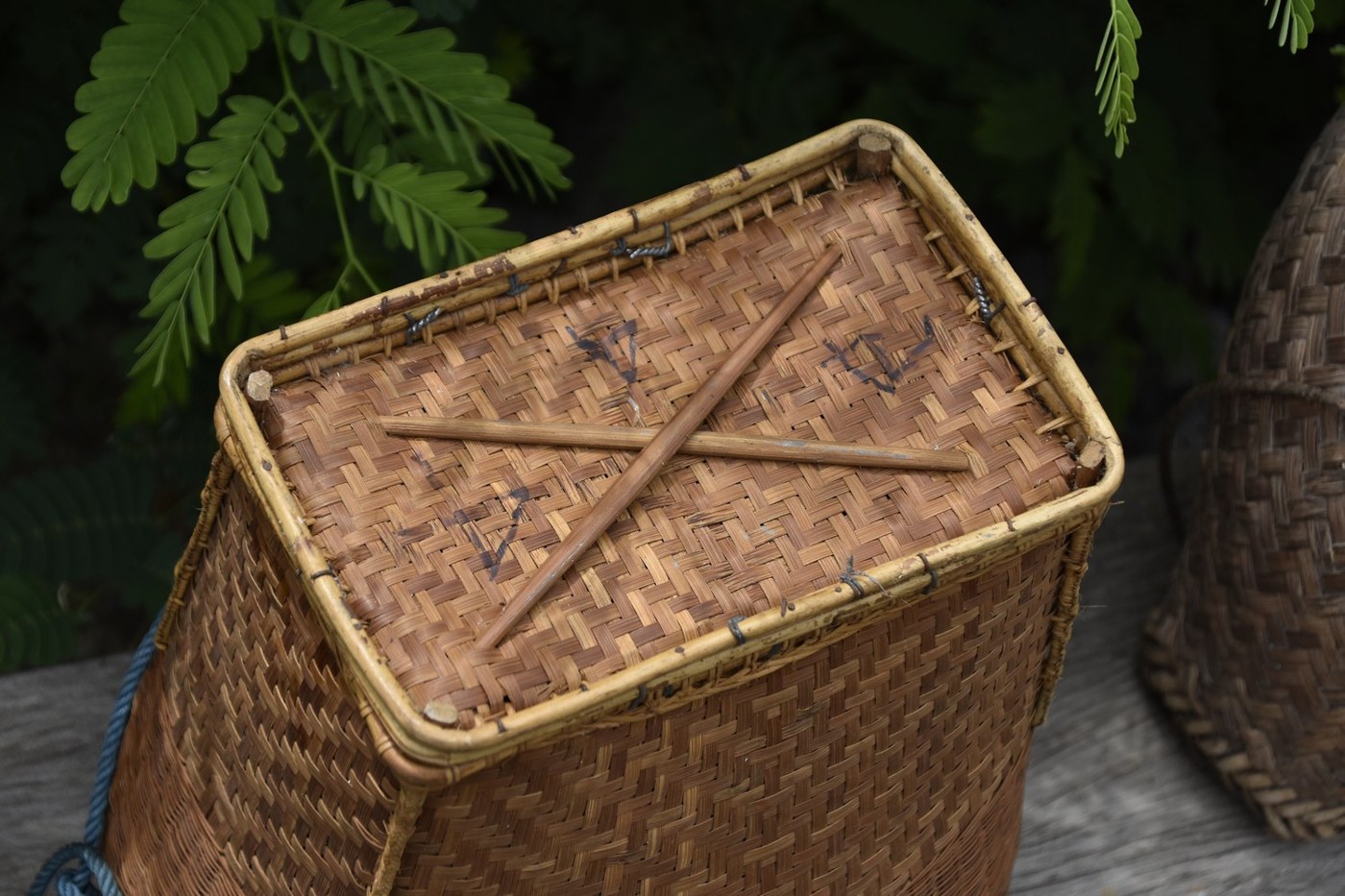
Split strips in two sizes: thin flat ones for the bottom, and small round ones for the upper part. Start with the bottom; the starting strips are called di. Make it rectangular, then weave up tall in twill of twos or threes to about 20 cm.
Materials for this step:
 Bamboo Poles1 piece
Tools needed:
 Machete
 Knife
Knife5
5
Body and mouth
Body and mouth
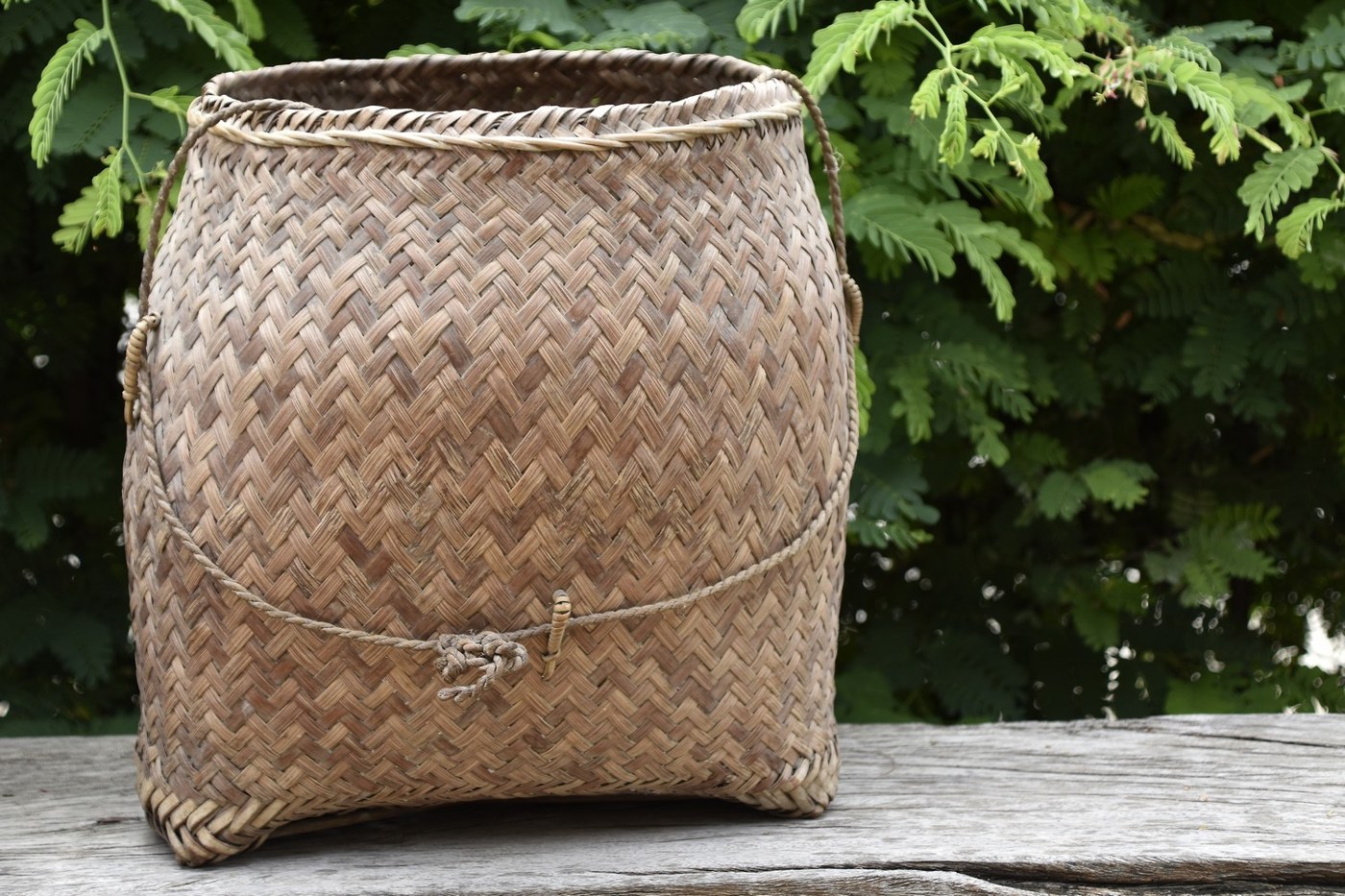
Change to phrai yak khio with the round strips, bulging out like a water jar and then curving in. Bind a bamboo hoop round and braid rattan tight to make the mouth.
6
6
Rattan base and loops
Rattan base and loops
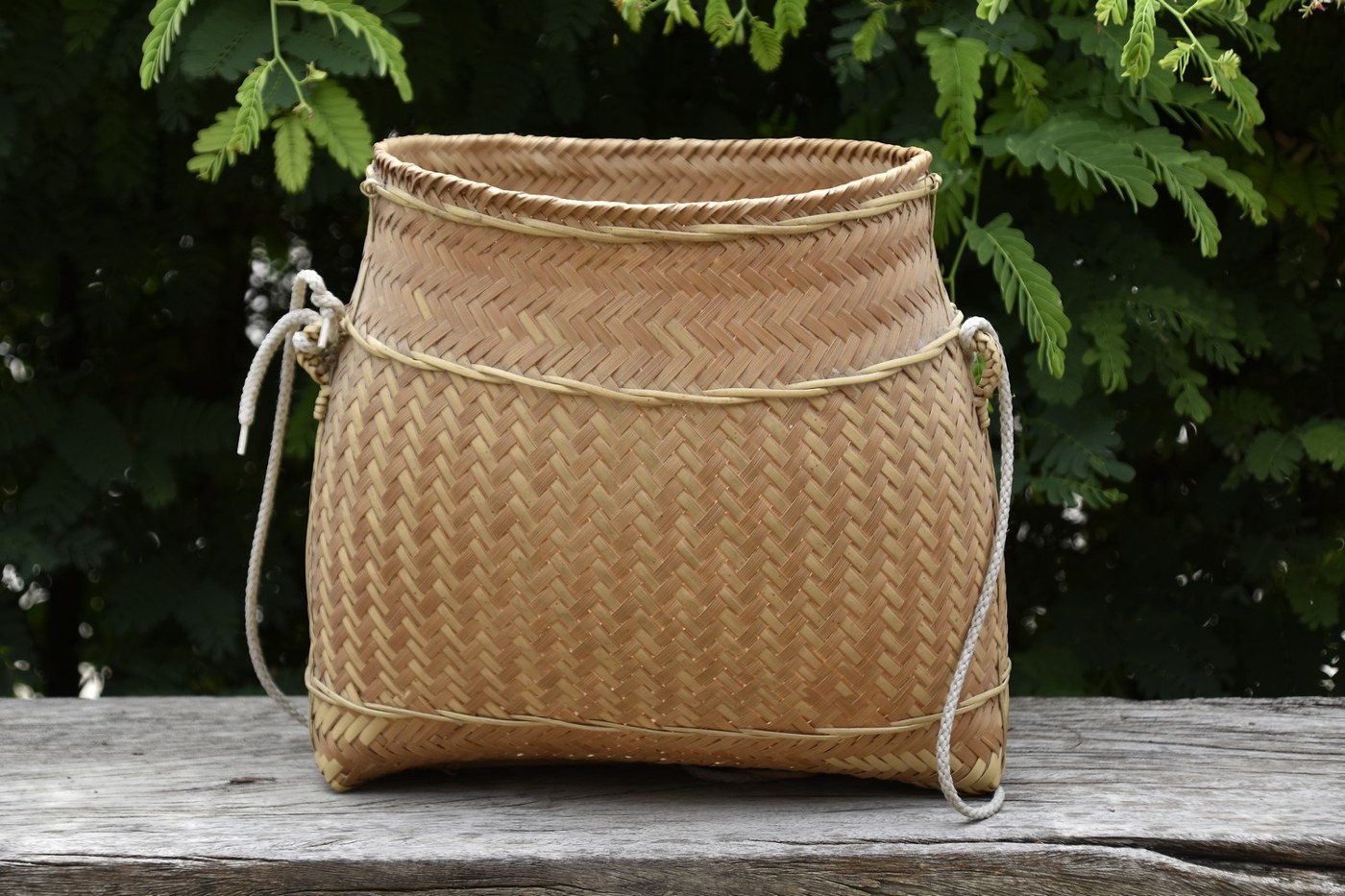
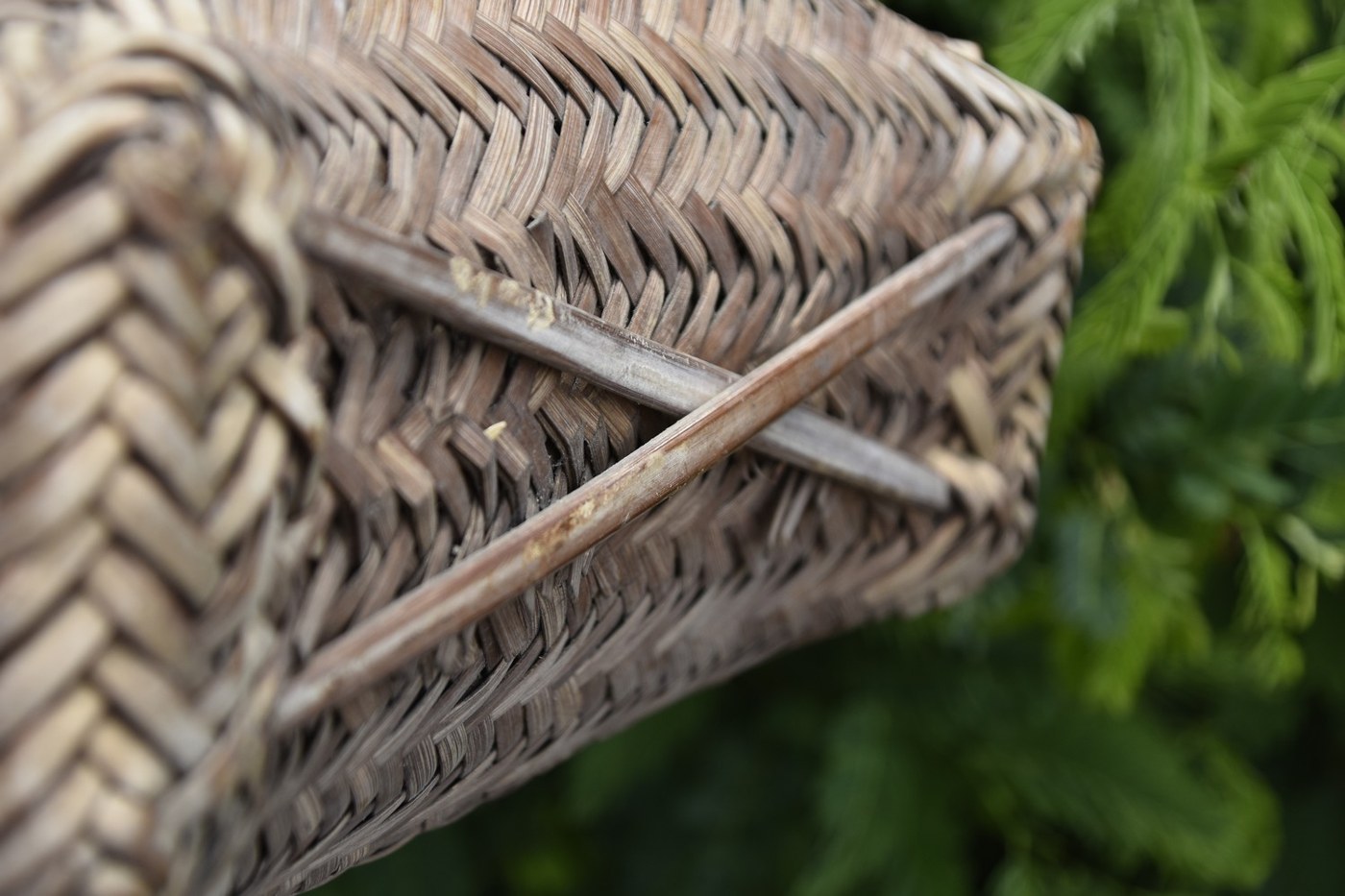
Line the bottom with rattan strands for wear, and tie rattan into three loops for the cords, so it can be carried on the back.
Materials for this step:
 Cord1 piece
7
7
Real photos
Real photos
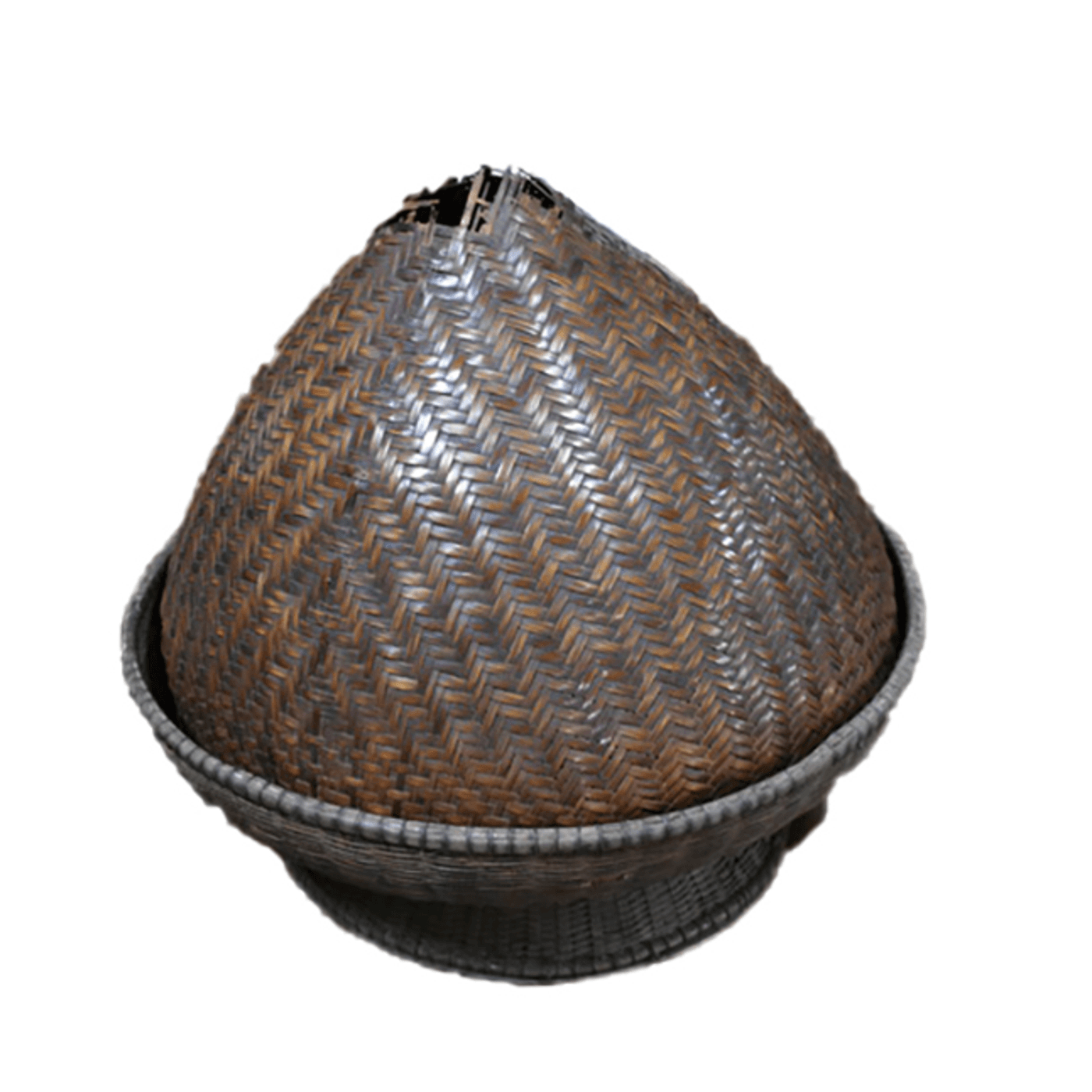
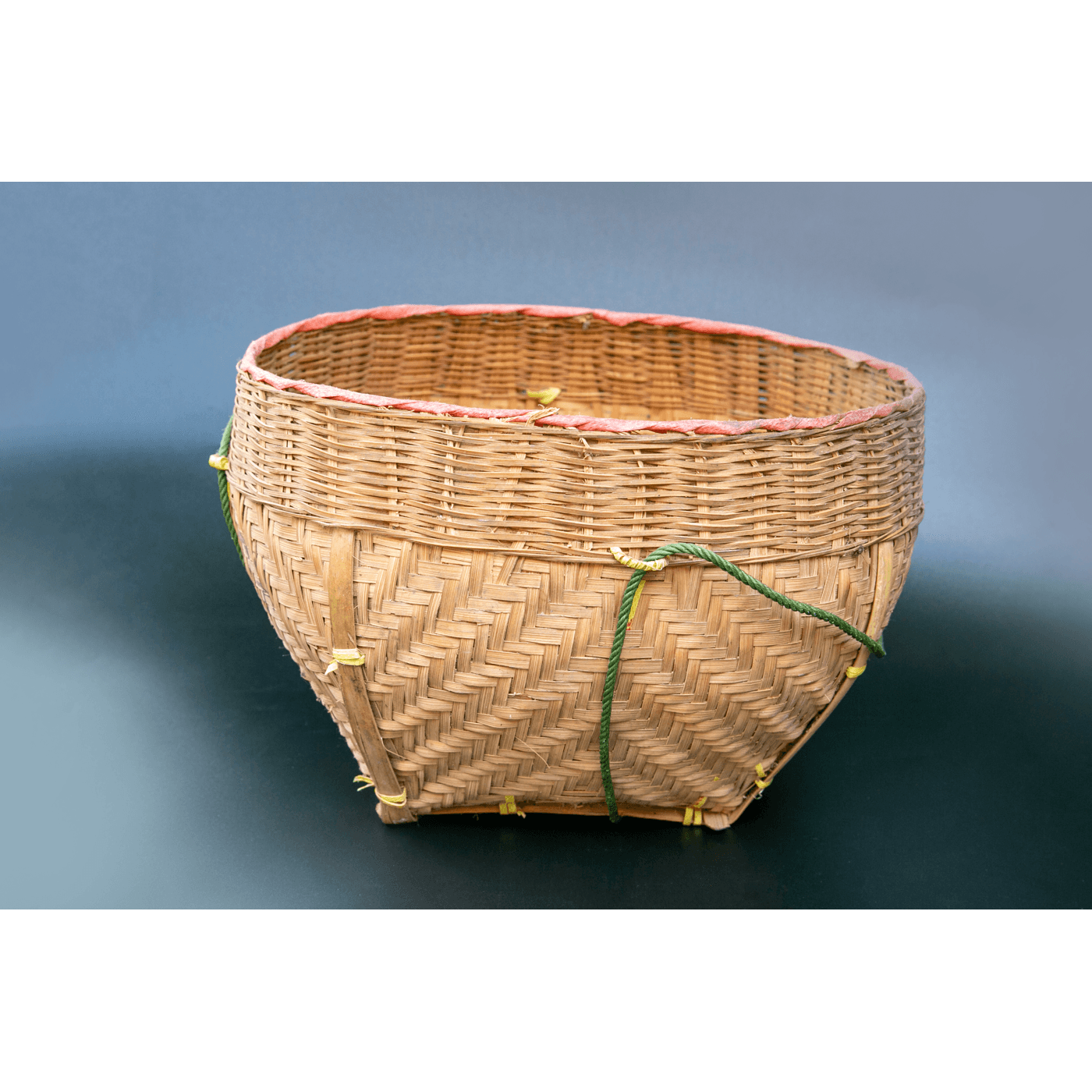
Photos of real kalep, Ancient Tai Dam Cultural Revival Centre, U Thong, Suphan Buri (Sirindhorn Anthropology Centre, author พิชชา ทองขลิบ (Phitcha Thongkhlip), CC BY 4.0).
8
8
How it is used
How it is used
Carry clothes, flour, rice, food, vegetables, fruit or seed in it on your back to the fields or on a journey. At weddings it serves as the groom's betel offering, filled with areca and betel.
9
9
Troubleshooting
Troubleshooting
Troubleshooting the kalep.
Flow
Loading...
10
10
History and limits
History and limits
Almost every Tai Dam household in the northern towns had a kalep, because they moved their fields often and needed things easy to carry. At a wedding a groom of rank uses four kalep, a commoner two; it is still used today. Take care with the knife when splitting strips.
Source: Sirindhorn Anthropology Centre, Traditional Objects of Everyday Use database, "กะเหล็บ", author พิชชา ทองขลิบ (Phitcha Thongkhlip), Ancient Tai Dam Cultural Revival Centre, Suphan Buri (CC BY 4.0 licence).
**Limits** The source gives no width, length or overall height, and there is no listing for rattan, so it is named in the text.
Related Blueprints
These blueprints share knowledge with this one — techniques, materials, or principles that connect them in the learning graph.
CC0 Public Domain
This blueprint is released under CC0. You are free to copy, modify, distribute, and use this work for any purpose, without asking permission.
Support the Maker by purchasing products through their Blueprint where they earn a Maker Commission set by Vendors, or create a new iteration of this Blueprint and include it as a connection in your own Blueprint to share revenue.