ART
BEAUTY & WELLNESS
CRAFT
CULTURE & HISTORY
ENTERTAINMENT
ENVIRONMENT
FOOD & DRINKS
REVERSE ENGINEERING
SCIENCES
SPORTS
TECHNOLOGY
WEARABLES
Translated

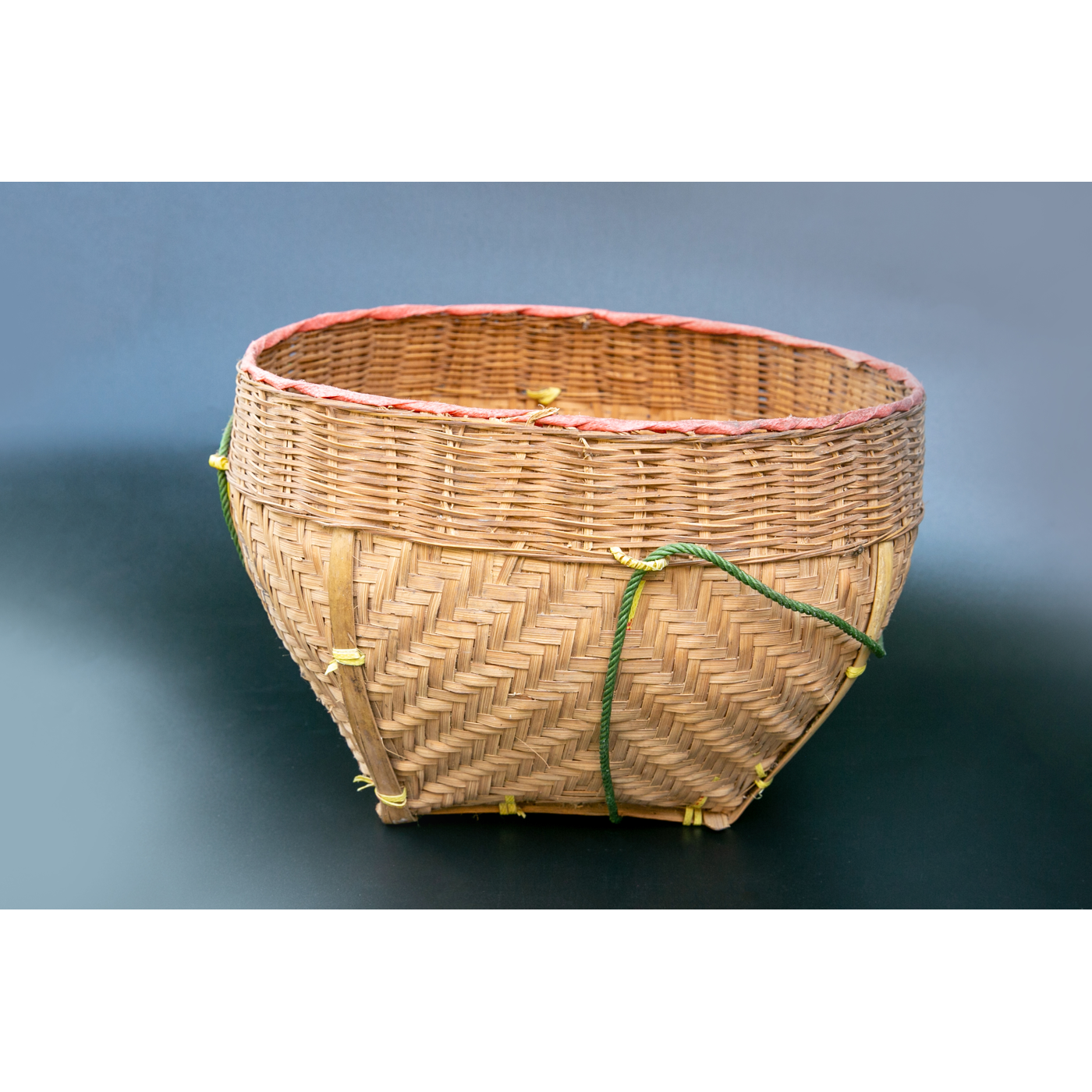
Krabung (Thai Carrying Basket) — a Close-Woven Bamboo Basket, Square Bottom, Flared Mouth, Rattan Rim in Fly-Head and Chung Nang Patterns, Carried in Pairs
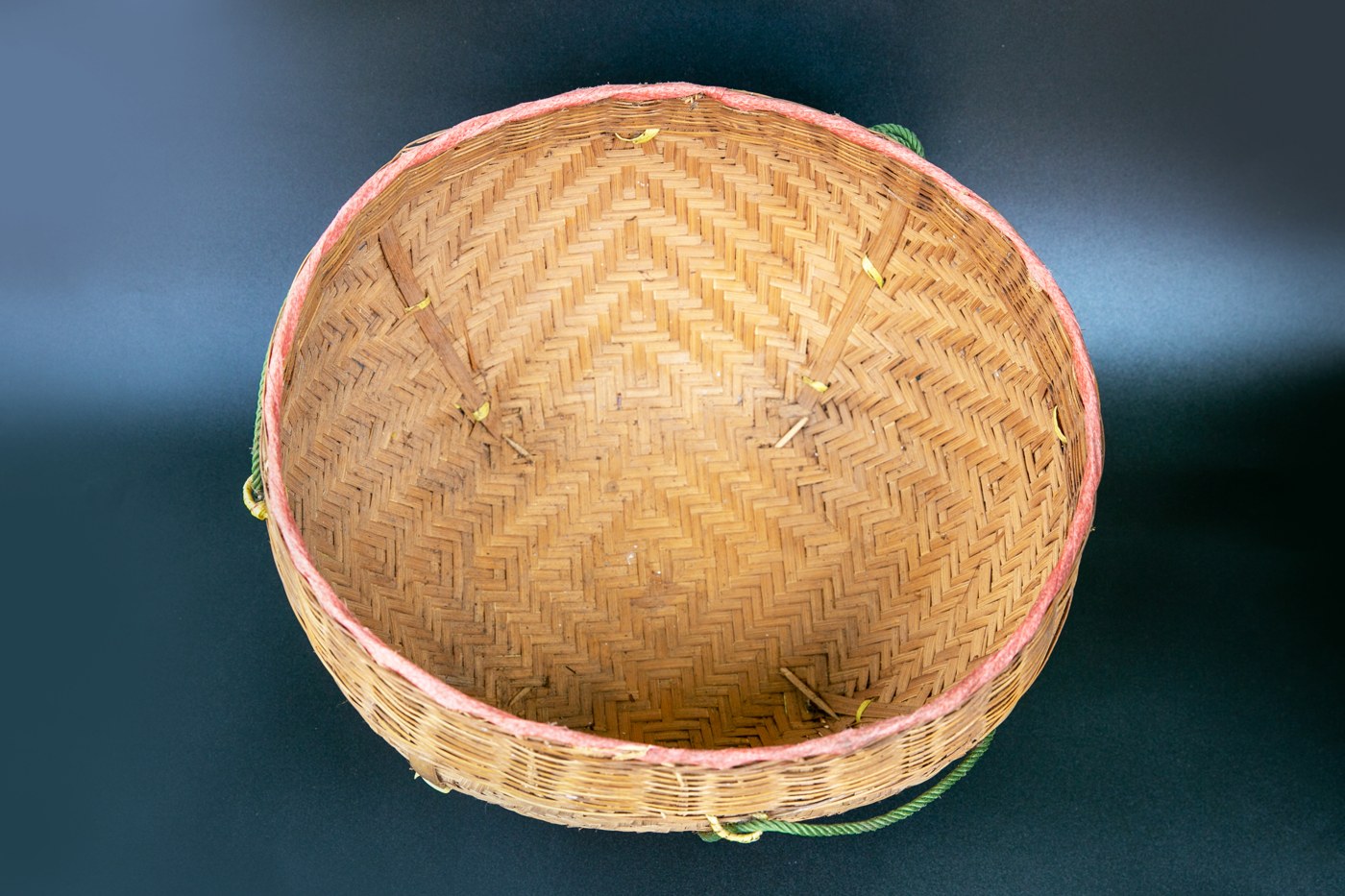
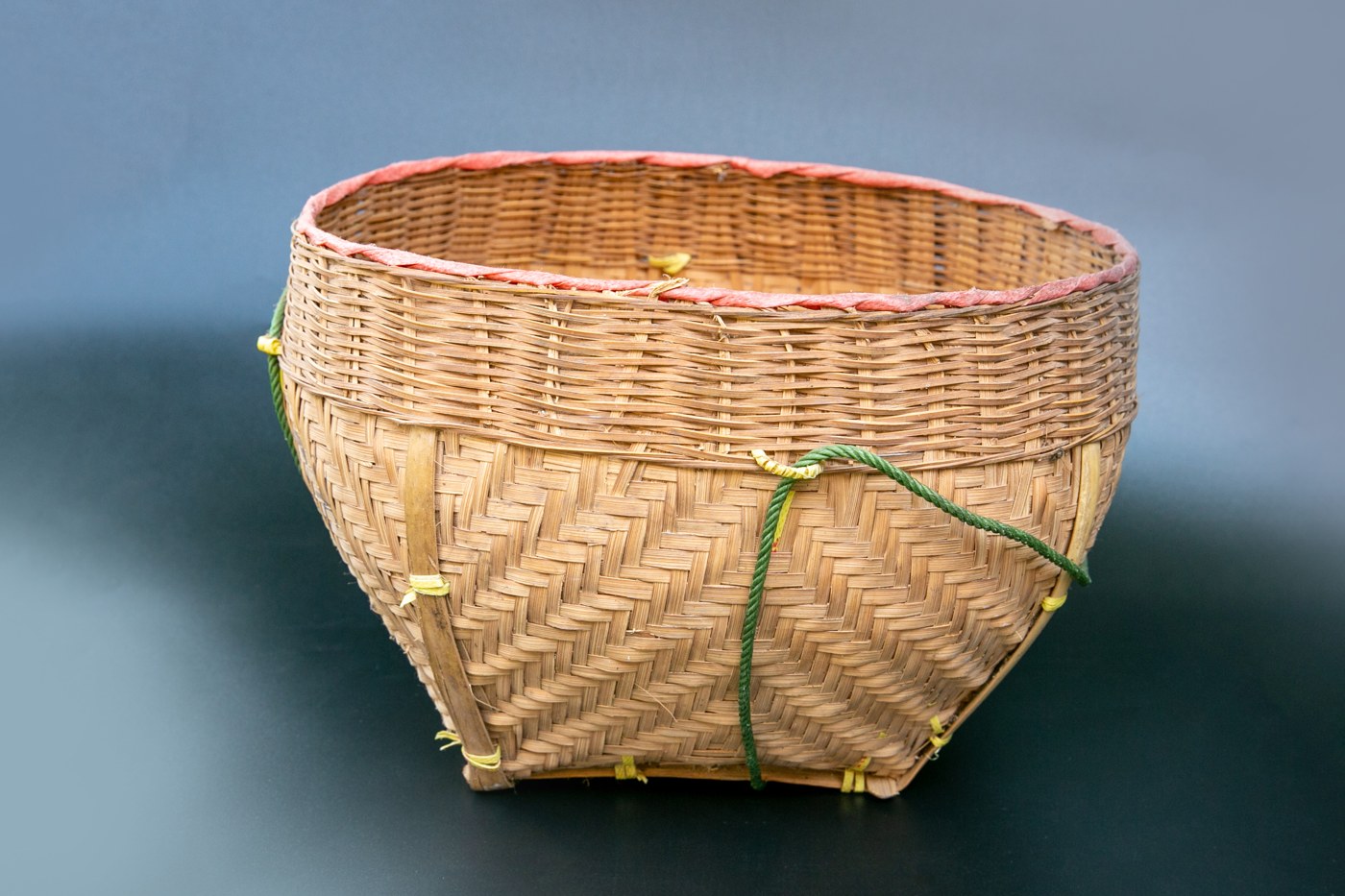
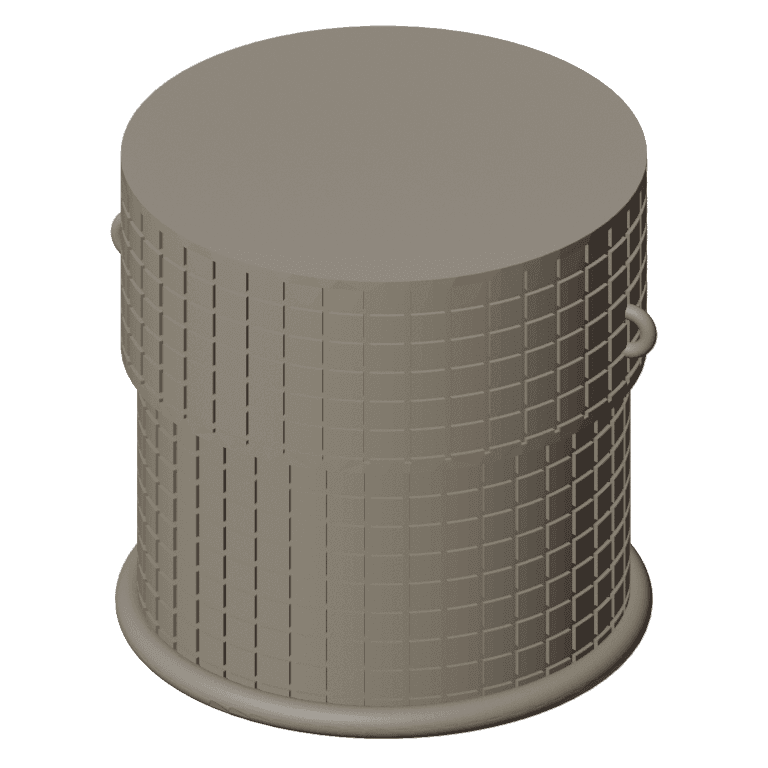
กระบุง (krabung) is a close-woven basket, tall and round with a flared mouth and a square tapered bottom, a rim, rattan binding at the corners, and 4 ears for the carrying cords. It is usually made in pairs and carried on a shoulder pole, for seed, paddy or milled rice.
This blueprint weaves a real krabung by the method in the source.
Advanced
Several days
Instructions
1
1
Size
Size
Loading Jupyter Notebook...
2
2
Basketry, before it
Basketry, before it
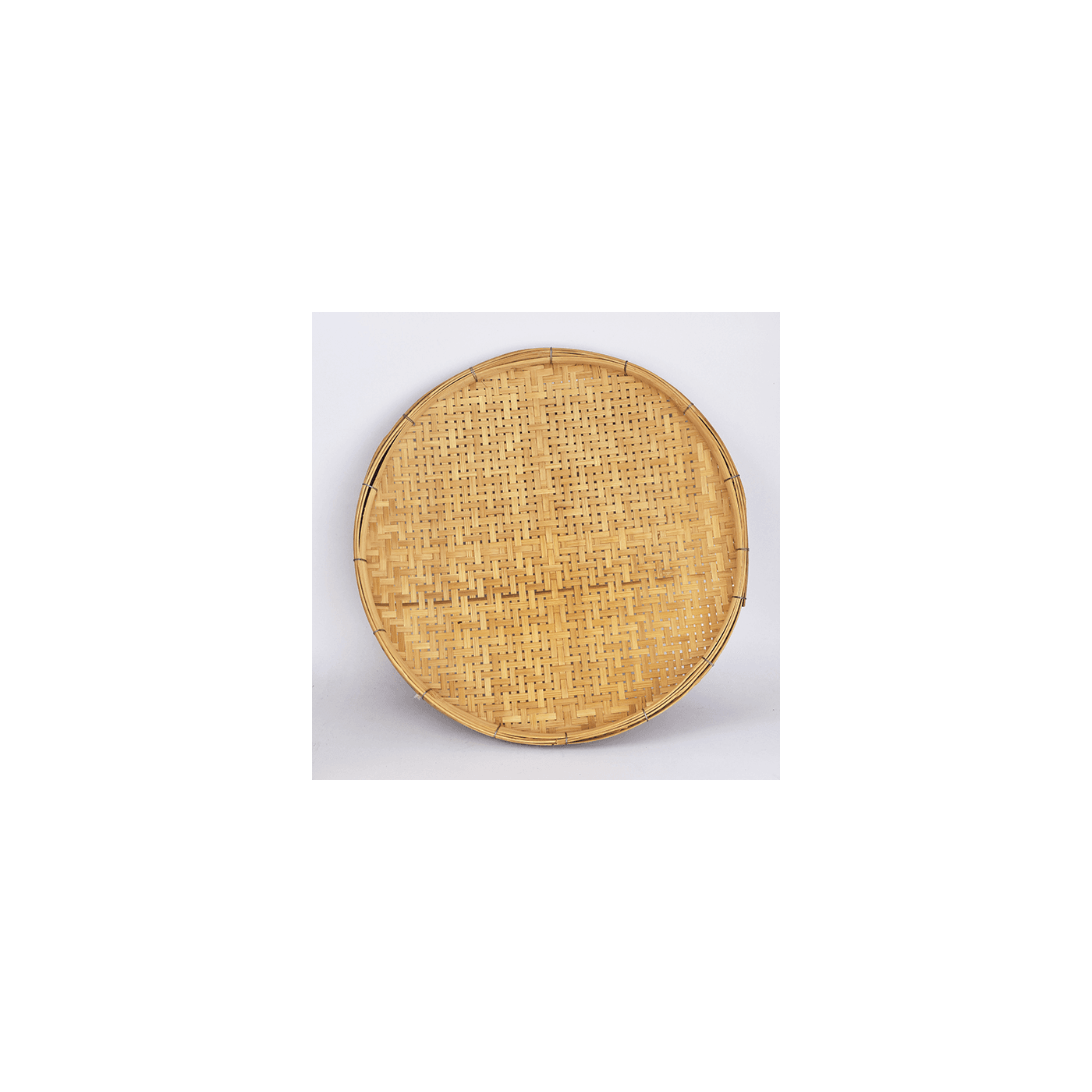
The kradong is woven flat; the krabung is woven up into a tall shape from a square bottom, then rimmed with rattan.
3
3
Read from the source
Read from the source
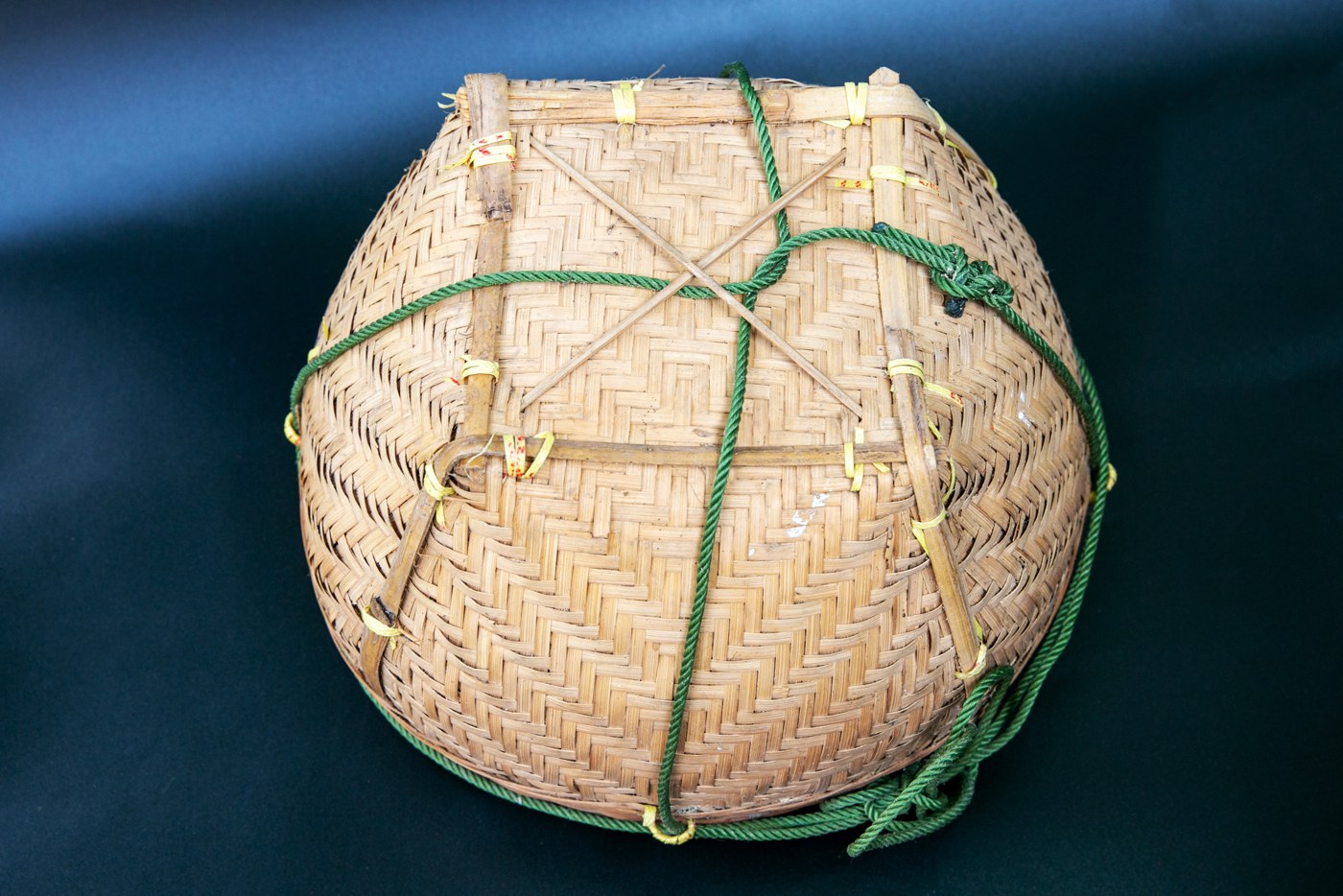
"Bamboo is shaved into two slats, each end tapered to a point, and threaded crosswise through the woven base to strengthen it as the floor or bottom of the krabung." (Sirindhorn Anthropology Centre, author พิชชา ทองขลิบ (Phitcha Thongkhlip), CC BY 4.0)
4
4
Strips and bottom
Strips and bottom
Cut phai si suk bamboo into lengths of about 50 cm, split them and shave them into strips with both ends equal. Weave in plain twill (lai song). Shave two bamboo slats tapered to a point at each end and thread them crosswise through the woven base to stiffen it as the bottom.
Materials for this step:
 Bamboo Poles1 piece
Tools needed:
 Hand Saw
 Machete
 Knife
Knife5
5
Body
Body
Weave, steering the direction, into the round shape wanted; then weave fine strips crosswise through the standing strips up to the rim, and fold the protruding strip ends back into the weave all round.
6
6
Rattan rim
Rattan rim
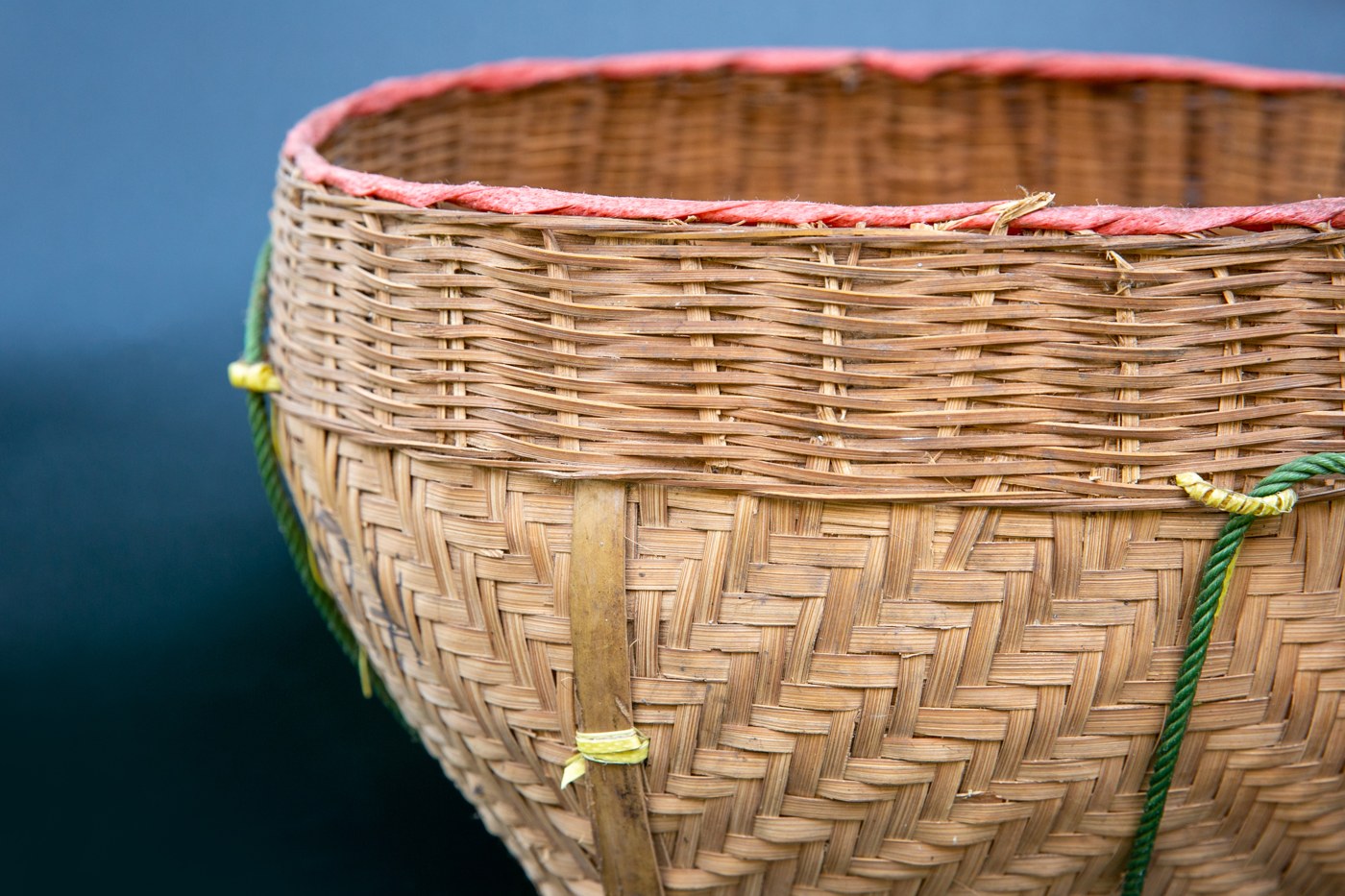
Split rattan into 4-5 strands per cane and draw them through a sizing plate made by punching holes of various sizes in a milk-tin lid with a nail. Clamp rim strips to the mouth inside and out and thread rattan to fix them, all round until the ends meet. Braid rattan round the lower part of the rim in the fly-head pattern (lai hua malaeng wan), then above it thread rattan in the chung nang pattern so it covers the top edge.
7
7
Real photos
Real photos
Photos of a real krabung (Sirindhorn Anthropology Centre, author พิชชา ทองขลิบ (Phitcha Thongkhlip), CC BY 4.0).
8
8
How it is used
How it is used
Fill it with seed, paddy or milled rice, thread the carrying cords through its 4 ears, and carry a pair on a shoulder pole. Some localities also use it as a measure, for example of 15 or 20 litres.
9
9
Troubleshooting
Troubleshooting
Troubleshooting the krabung.
Flow
Loading...
10
10
History and limits
History and limits
In the North the krabung is called piat: smaller, rounder and plumper, not squared; in some places it is woven finely and coated with yang oil to a glossy finish. Take care with the knife when splitting strips and rattan.
Source: Sirindhorn Anthropology Centre, Traditional Objects of Everyday Use database, "กระบุง", author พิชชา ทองขลิบ (Phitcha Thongkhlip) (CC BY 4.0 licence).
**Limits** The source gives no basket size and no method for the ears or the corner rattan binding, and there is no listing for rattan, so it is named in the text.
Materials
1- 1 piecePlaceholder
Related Blueprints
These blueprints share knowledge with this one — techniques, materials, or principles that connect them in the learning graph.
CC0 Public Domain
This blueprint is released under CC0. You are free to copy, modify, distribute, and use this work for any purpose, without asking permission.
Support the Maker by purchasing products through their Blueprint where they earn a Maker Commission set by Vendors, or create a new iteration of this Blueprint and include it as a connection in your own Blueprint to share revenue.