ART
BEAUTY & WELLNESS
CRAFT
CULTURE & HISTORY
ENTERTAINMENT
ENVIRONMENT
FOOD & DRINKS
REVERSE ENGINEERING
SCIENCES
SPORTS
TECHNOLOGY
WEARABLES
English

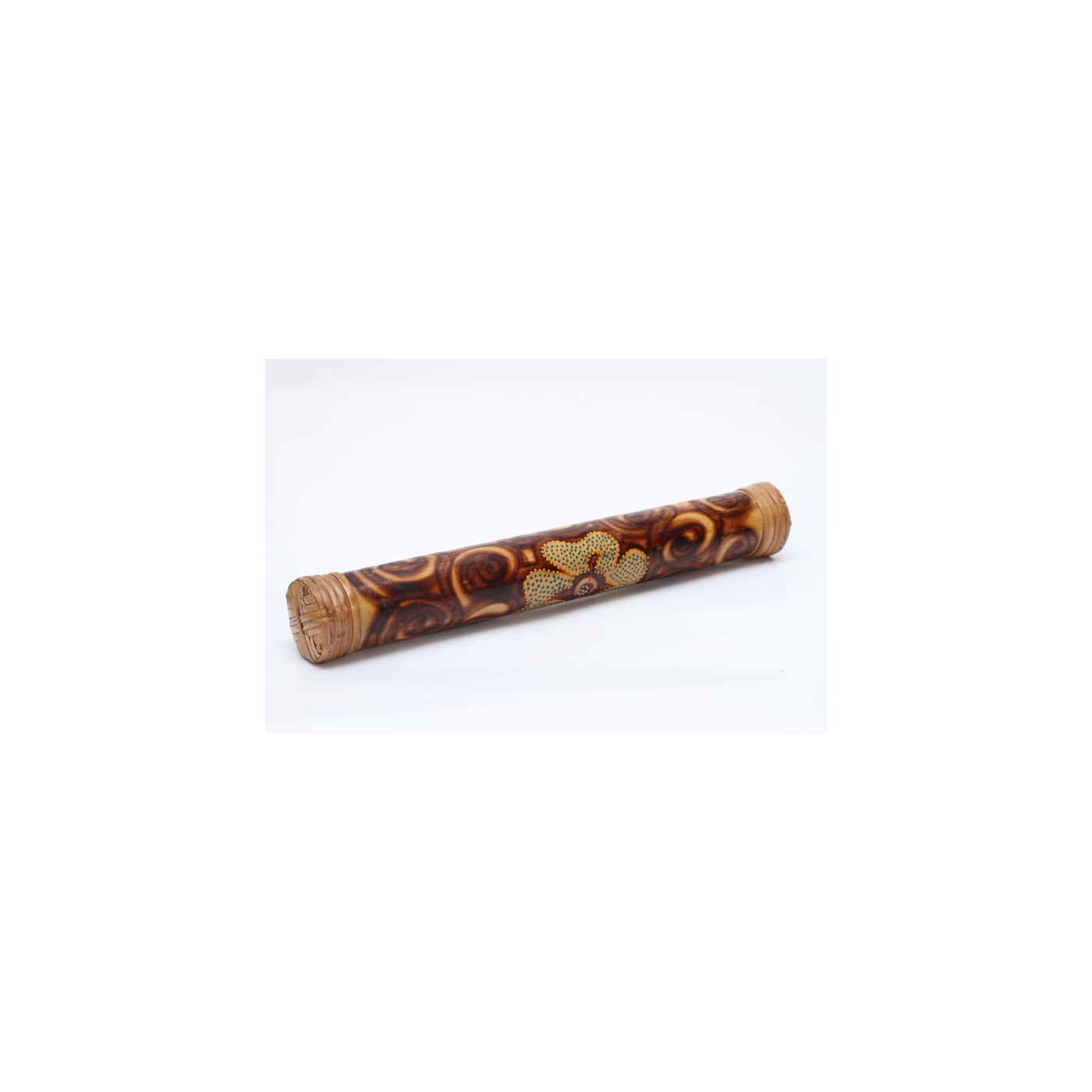
Krabok Siang Nam Lai (Bamboo Rain Tube) — Mature Bamboo 8-10 cm Across and 40 cm Long, Iron Spikes Set in Rings Down Its Length, Pebbles Inside, Woven Bamboo End Caps; Tip It and It Sounds Like Running Water
This sound tube (krabok siang nam lai) is found throughout Thailand, Vietnam and Indonesia. It is a bamboo tube with handsome patterns outside; tipped over, it sounds like running water. The longer the tube, the longer and sweeter the sound.
This blueprint makes a real rain tube to the sizes in the source.
Intermediate
About half a day
Instructions
1
1
Real sizes
Real sizes
Loading Jupyter Notebook...
2
2
Nature-sound toys, before it
Nature-sound toys, before it
The jakjan imitates an animal's call; this tube imitates running water.
3
3
Read from the source
Read from the source
"How sweet the running-water sound is depends on the length of the tube; a long tube makes the sound last longer and sweeter." (Sirindhorn Anthropology Centre, author not named, CC BY 4.0)
4
4
Tube and spikes
Tube and spikes
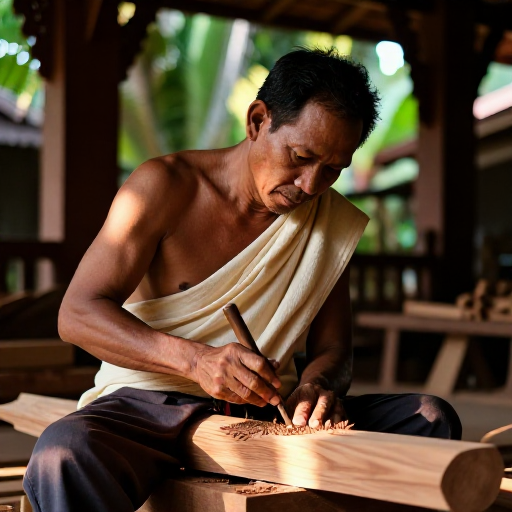
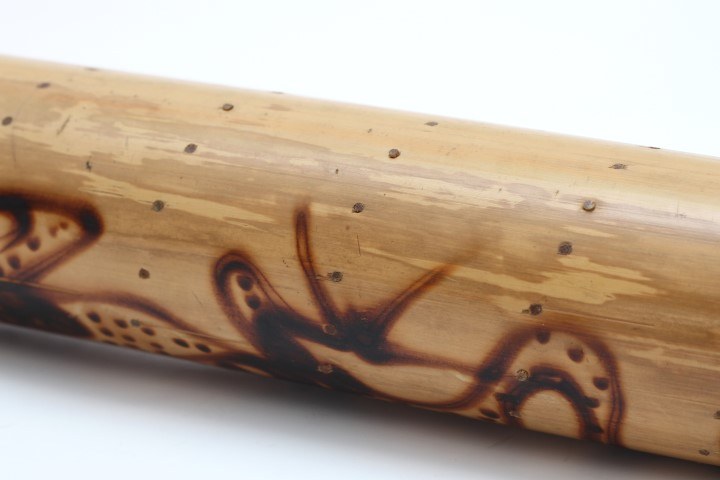
Choose mature bamboo 8-10 cm across and about 40 cm long. Pierce iron spikes into the tube and leave them set in it, in rings running down its length.
Materials for this step:
 Bamboo Poles1 piece
5
5
Caps and pebbles
Caps and pebbles
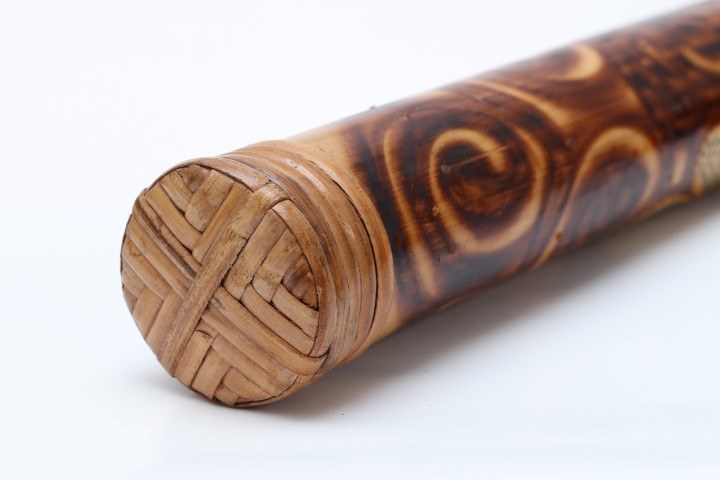
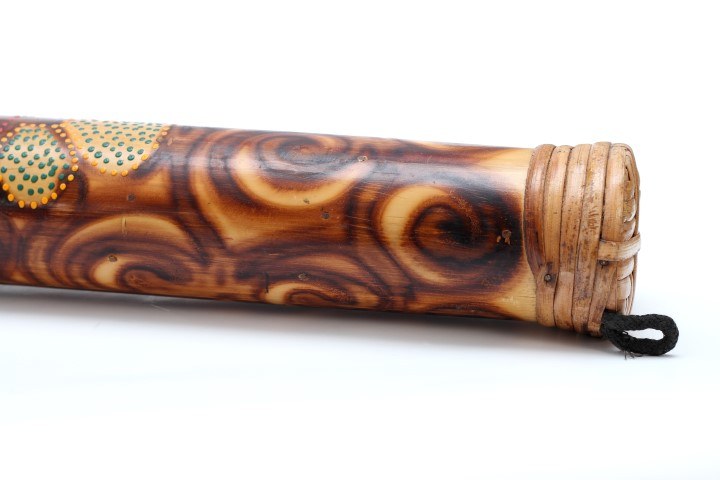
Weave bamboo caps to close the two ends, closing one end first. Put pebbles into the tube, then close the other end with the second woven cap so the pebbles cannot fall out.
Materials for this step:
 Gravel1 piece
6
6
Decorate
Decorate
Decorate the outside with patterns.
7
7
Real photos
Real photos
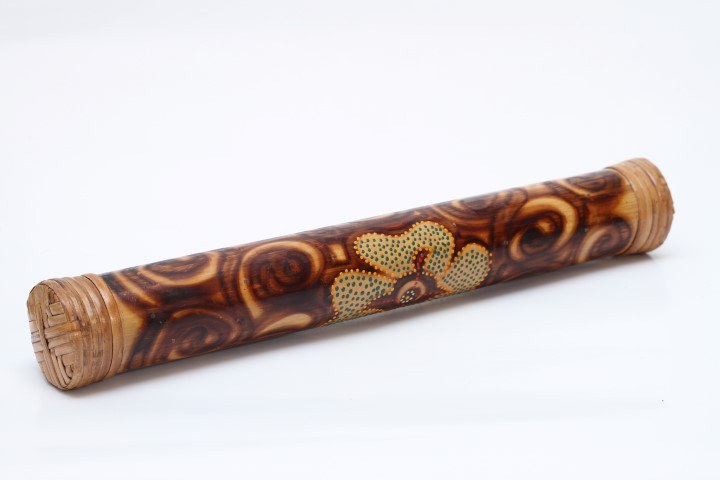
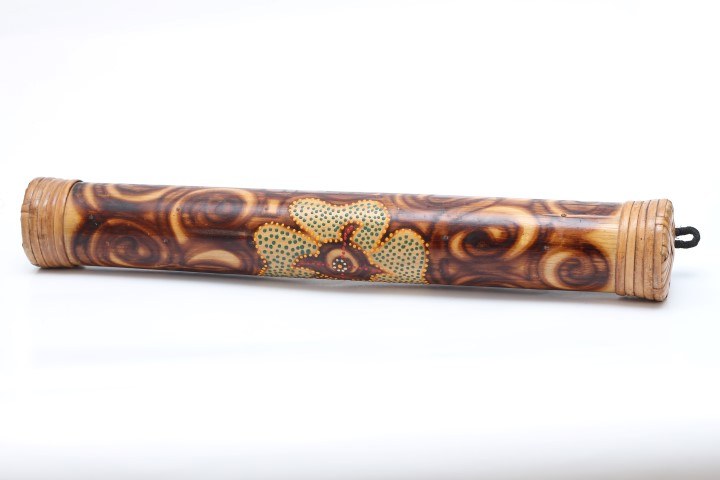
Photos of a real rain tube (Sirindhorn Anthropology Centre, author not named, CC BY 4.0)
8
8
How to play
How to play
Tip the tube up and down; it sounds like running water.
9
9
Troubleshooting
Troubleshooting
Troubleshooting the rain tube.
Flow
Loading...
10
10
History and limits
History and limits
Sound tubes like this imitate nature, and are found in Thailand, Vietnam and Indonesia. Take care with the iron spikes when piercing.
Source: Sirindhorn Anthropology Centre, Traditional Objects of Everyday Use database, "กระบอกเลียนเสียงน้ำไหล", author not named (CC BY 4.0 licence).
**Limits** The source gives no number or spacing for the spikes, no amount of pebbles and no decorating method. There is no product line for the iron spikes.
Related Blueprints
These blueprints share knowledge with this one — techniques, materials, or principles that connect them in the learning graph.
CC0 Public Domain
This blueprint is released under CC0. You are free to copy, modify, distribute, and use this work for any purpose, without asking permission.
Support the Maker by purchasing products through their Blueprint where they earn a Maker Commission set by Vendors, or create a new iteration of this Blueprint and include it as a connection in your own Blueprint to share revenue.