Collaboration
ART
BEAUTY & WELLNESS
CRAFT
CULTURE & HISTORY
ENTERTAINMENT
ENVIRONMENT
FOOD & DRINKS
REVERSE ENGINEERING
SCIENCES
SPORTS
TECHNOLOGY
WEARABLES
Translated

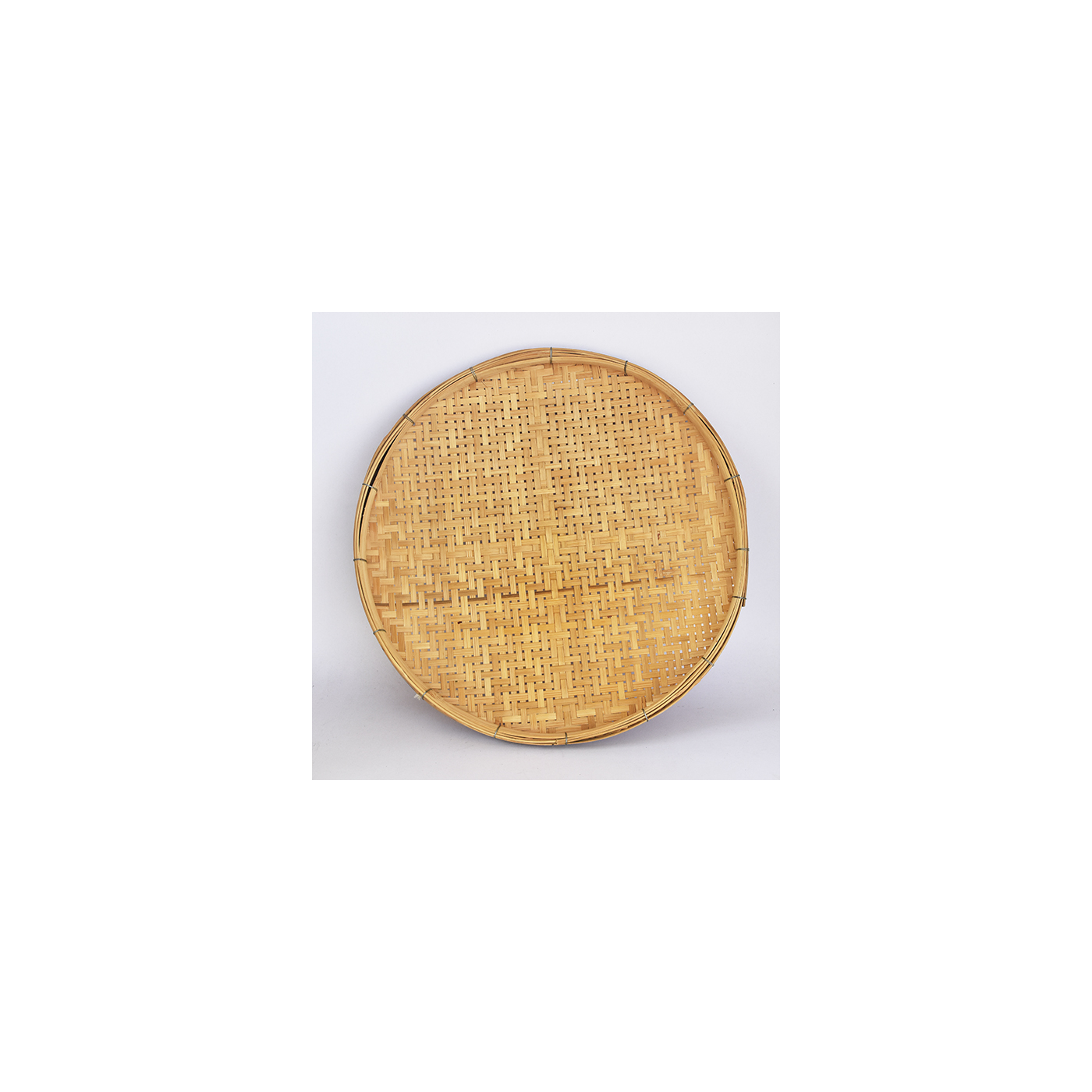
Kradong — a flat circular bamboo-woven container with bent bamboo rim, for winnowing rice to separate husk
Kradong is a flat circular bamboo-woven container used for winnowing rice to separate dust and husk from rice grains or other husked seeds such as beans. It is used widely in almost every region.
This blueprint weaves a kradong exactly according to the method in the source.
Intermediate
About 1-2 days
Instructions
1
1
Size
Size
Loading Jupyter Notebook...
2
2
Previous woven works
Previous woven works
A sticky rice basket woven into a cylindrical shape for holding glutinous rice, and a winnowing tray woven into a flat circular sheet for winnowing rice.
3
3
Read from the source
Read from the source
"Weaving a kradong (winnowing tray) begins by cutting bamboo about 2 meters long, then splitting the bamboo into fairly thin strips and laying 8 strips side by side. The bamboo is woven in a pattern of 2 strips crossing each other." (Sirindhorn Anthropology Centre, author Pitcha Thongkhlip, CC BY 4.0)
4
4
Bamboo splitting tool
Bamboo splitting tool
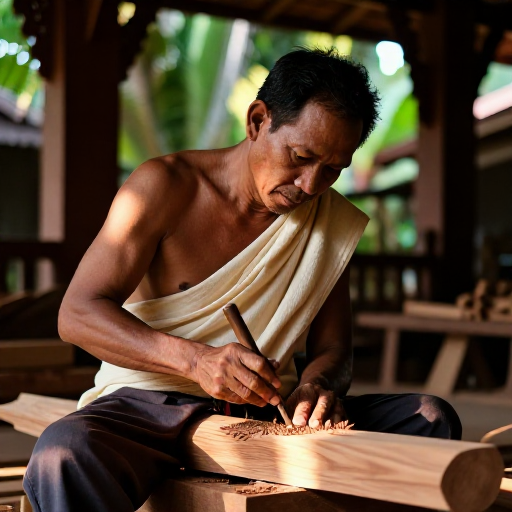
Cut bamboo about 2 meters long and shave it into fairly thin strips.
Materials for this step:
 Bamboo Poles1 piece
Tools needed:
 Hand Saw
 Machete
 Knife
5
5
Weaving a winnowing tray
Weaving a winnowing tray
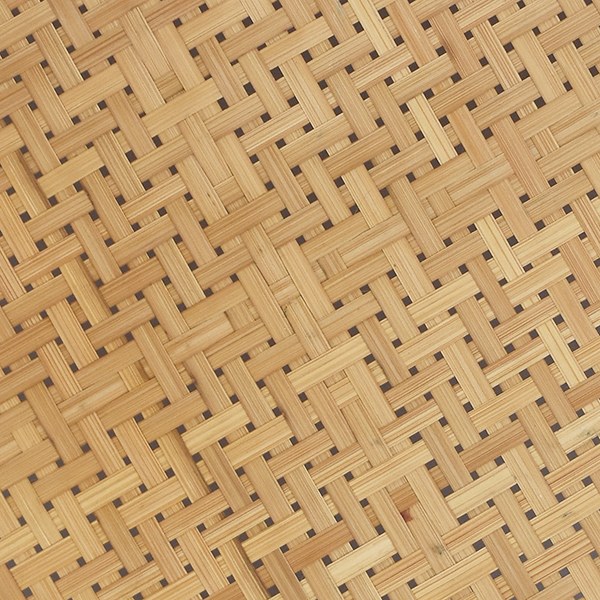
Lay 8 strips side by side, weave them into a pattern of 2 strips crossing each other, and continue weaving until the desired size is reached.
6
6
Rim
Rim
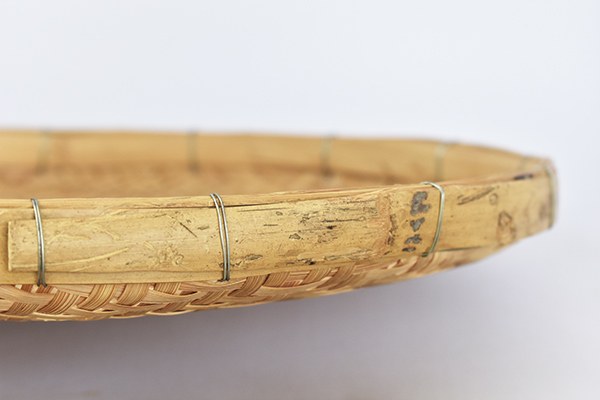
Sharpen bamboo sticks and bend them into the rim of the sieve, attach them to the sieve body, then tie them with rope, rattan, or wire
Materials for this step:
 Cord1 piece
7
7
Actual image
Actual image
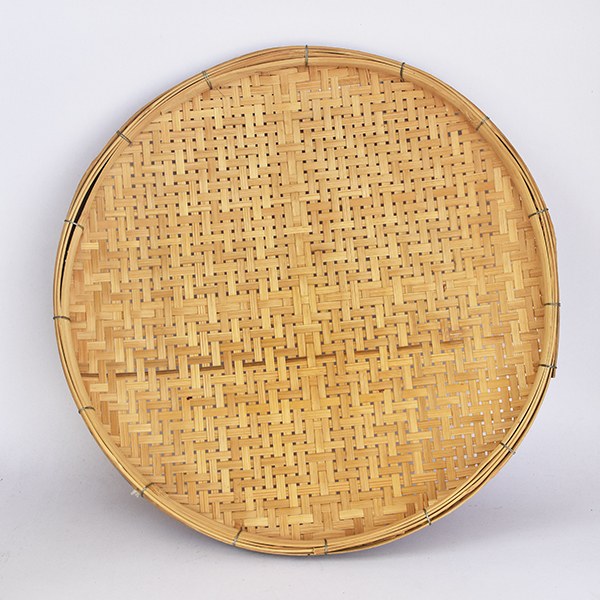
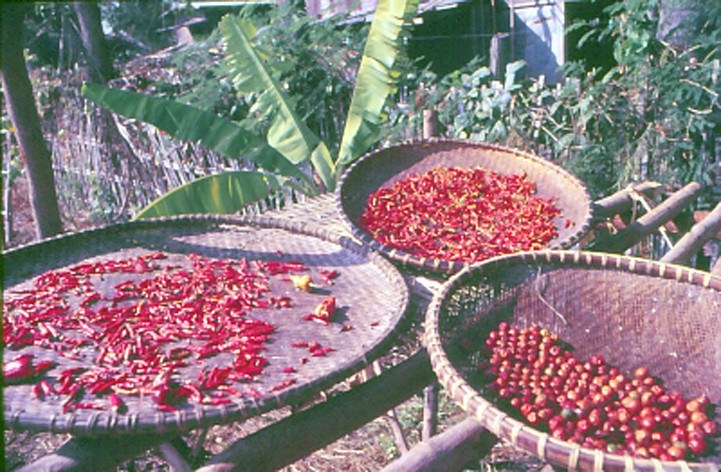
Actual image of a winnowing tray (Sirindhorn Anthropology Center, author Pichcha Thongkhlip, CC BY 4.0)
8
8
How to use
How to use
Put the pounded rice into the winnowing tray. Hold the rim of the tray with both hands and shake it up and down. Bits and husks that are lighter will be blown away by the wind, while heavier rice grains will fall back onto the tray. The tray is also used to hold and dry produce, such as chili peppers, mustard greens, and tea leaves.
9
9
Troubleshooting
Troubleshooting
Sieve troubleshooting
Flow
Loading...
10
10
History and Restrictions
History and Restrictions
The Southern region has a patterned sieve (kradong lai kho), round-oval and heart-like in shape, woven with unpolished bamboo strips with the nodes left in, arranged in a zigzag (fishbone) pattern. Southerners believe that the sieve must not be brought up into the rice barn, and it should be kept high so that people do not step over it. It is often kept above the hearth so that the smoke protects it from weevils. The Pgaz K'nyau people call the sieve kor laer, and it is used to hold the dowry in wedding ceremonies. Be careful with the knife while shaping the strips.
Source: Sirindhorn Anthropology Centre, Thai Household Tools Database "Kradong" (sieve), author Pichcha Thongkhlip (license CC BY 4.0)
**Restrictions** The source does not specify the diameter, the width of the strips, or the total number of strips.
This blueprint makes


Related Blueprints
These blueprints share knowledge with this one — techniques, materials, or principles that connect them in the learning graph.

CC0 Public Domain
This blueprint is released under CC0. You are free to copy, modify, distribute, and use this work for any purpose, without asking permission.
Support the Maker by purchasing products through their Blueprint where they earn a Maker Commission set by Vendors, or create a new iteration of this Blueprint and include it as a connection in your own Blueprint to share revenue.