ART
BEAUTY & WELLNESS
CRAFT
CULTURE & HISTORY
ENTERTAINMENT
ENVIRONMENT
FOOD & DRINKS
REVERSE ENGINEERING
SCIENCES
SPORTS
TECHNOLOGY
WEARABLES
English

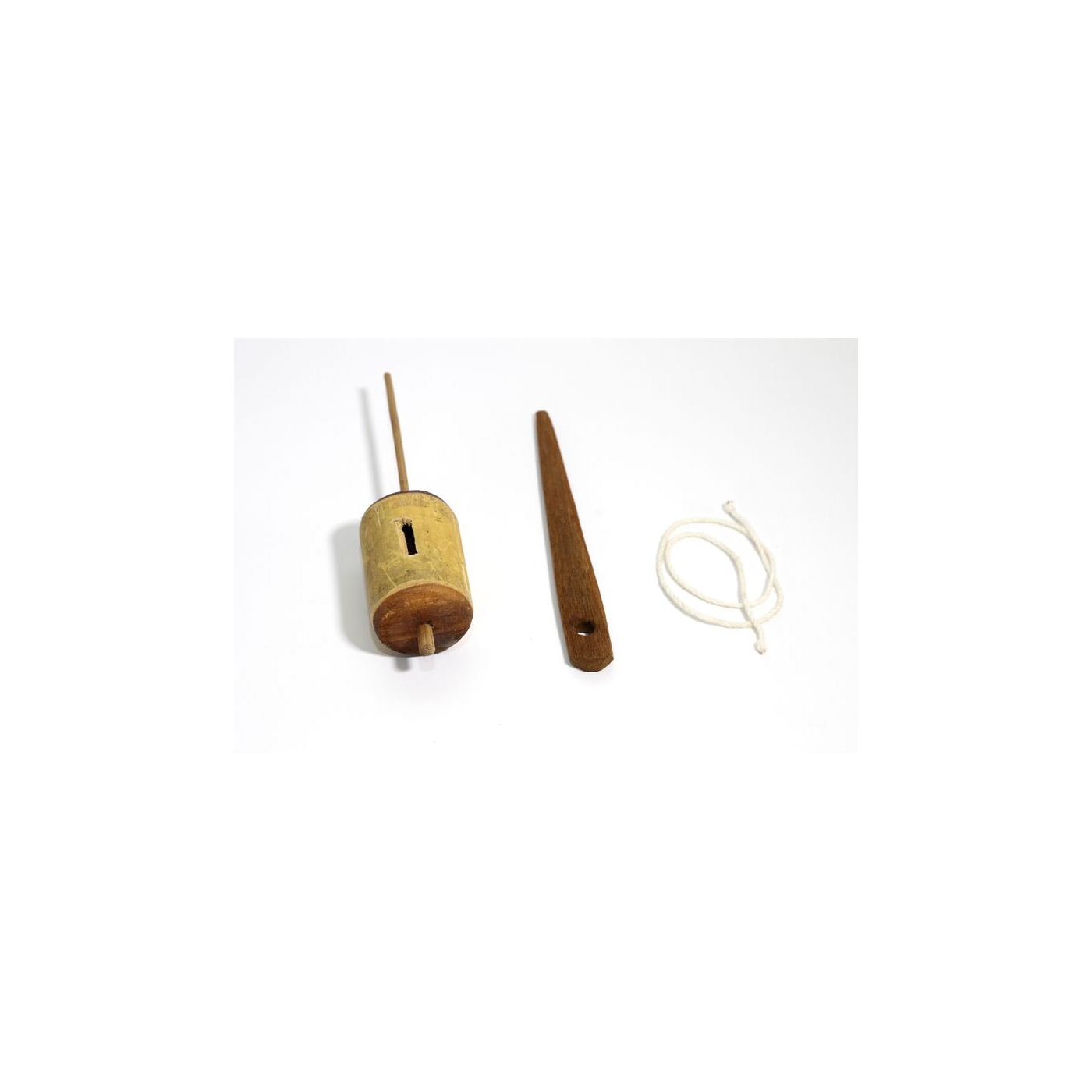
Luk Khang Wo (Humming Top) — a 4-6 × 6.5-7.5 cm Bamboo Drum Capped with 0.5 cm Boards, a 20 cm Spindle, a 0.5×2.5 cm Sound Slot Cut at 45°, a 15 cm Launcher and 50 cm String; Hums "Wo" as It Spins
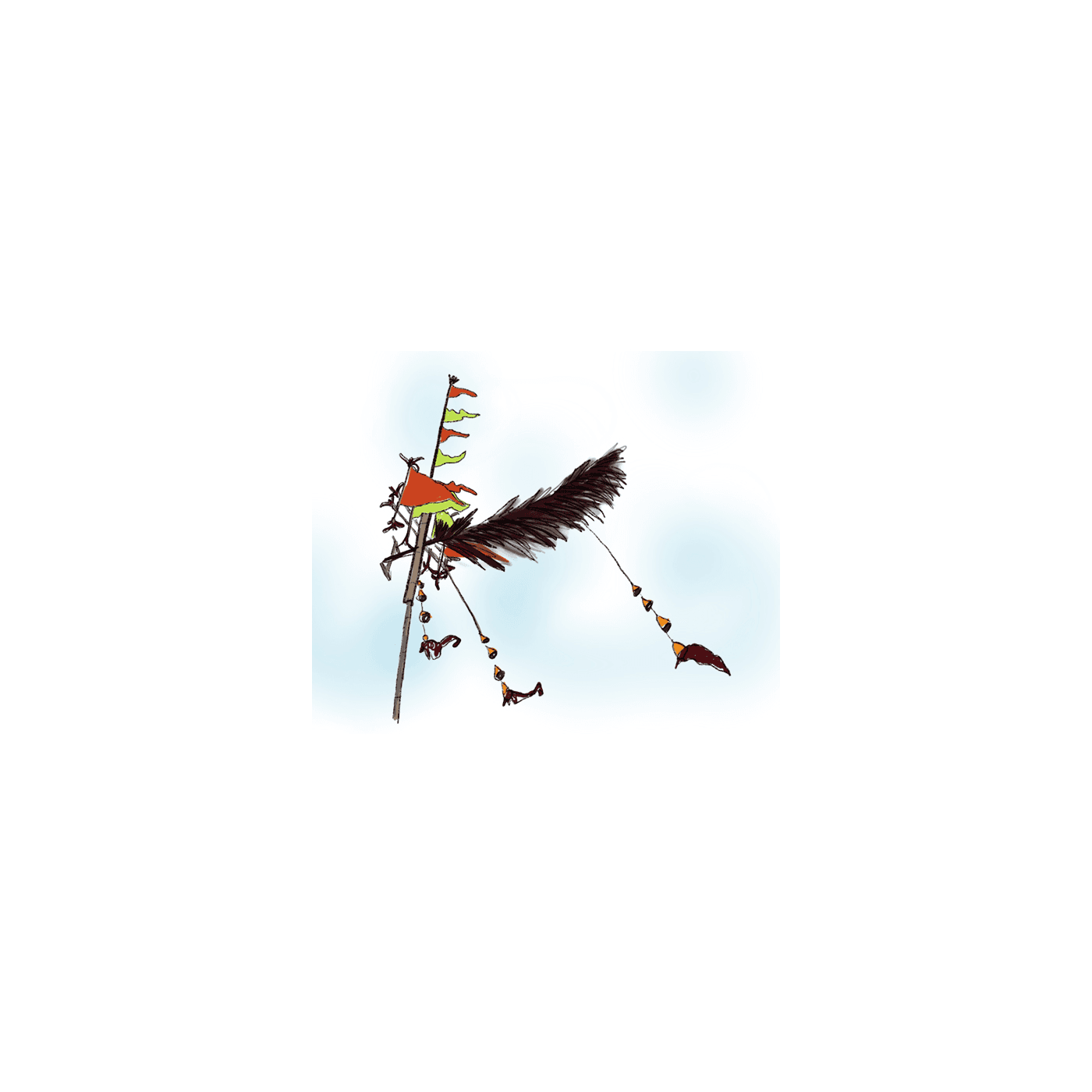
ลูกข่างโว้ (luk khang wo, also ba khang wo) is a top that makes a loud "wo" sound as it spins, launched with a string and a launching stick. It came from the tung poles of northern Thailand, whose bamboo internodes were pierced so the wind made them hum to announce a temple festival.
This blueprint makes a real luk khang wo to the sizes in the source.
Intermediate
At least 1 day for the glue to dry, plus making time
Instructions
1
1
Real sizes
Real sizes
Loading Jupyter Notebook...
2
2
Wind-sound toys, before it
Wind-sound toys, before it
The luk lom sounds when the wind blows; the luk khang wo sounds when it spins fast on the ground.
3
3
Read from the source
Read from the source
"If the top spins but makes no sound, it has not been thrown hard enough." (Sirindhorn Anthropology Centre, author not named, CC BY 4.0)
4
4
Body
Body
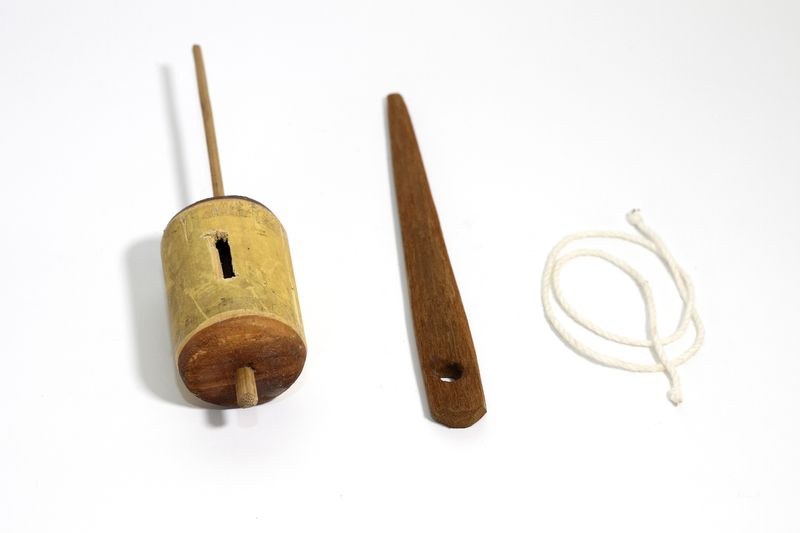
Choose bamboo 4-6 cm across and cut a piece about 6.5-7.5 cm long. Cut boards about 0.5 cm thick, larger than the bamboo piece, glue them tightly over both ends and leave to dry for at least 1 day. Then pare the boards round, flush with the bamboo, with a knife.
Materials for this step:
 Bamboo Poles1 piece
 Wood Glue1 piece
Tools needed:
 Knife
Knife5
5
Spindle and sound slot
Spindle and sound slot
Drill a hole through the centre of both ends, in line. Shave a spindle about 20 cm long, the upper part the size of the hole and the lower part larger than the hole, and push the thin end in from below. Cut a sound slot in the body about 0.5 cm wide and 2.5 cm long, and pare the left edge of the slot at 45°, slanting to the right.
Tools needed:
 Awl
Awl6
6
Launcher and string
Launcher and string
Shave a stick that fits the hand, about 15 cm long, and drill a hole at the top for the string. Cut a string about 50 cm long.
Materials for this step:
 String1 piece
7
7
Real photos
Real photos
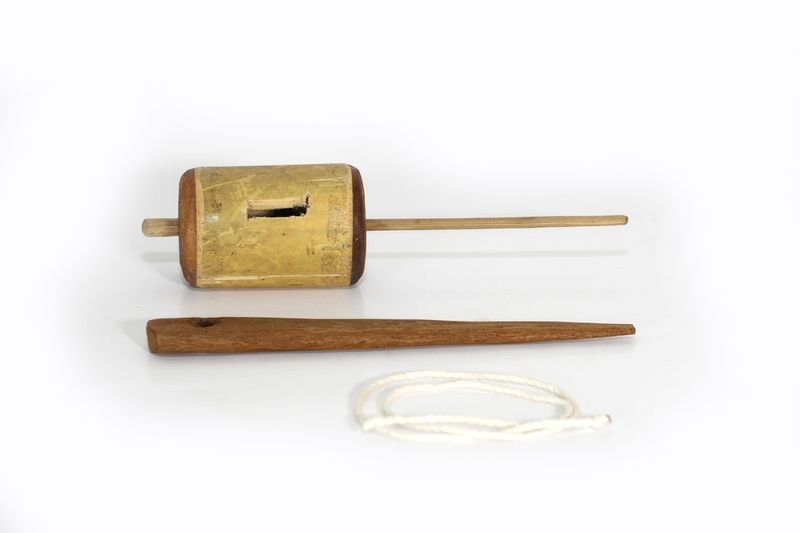
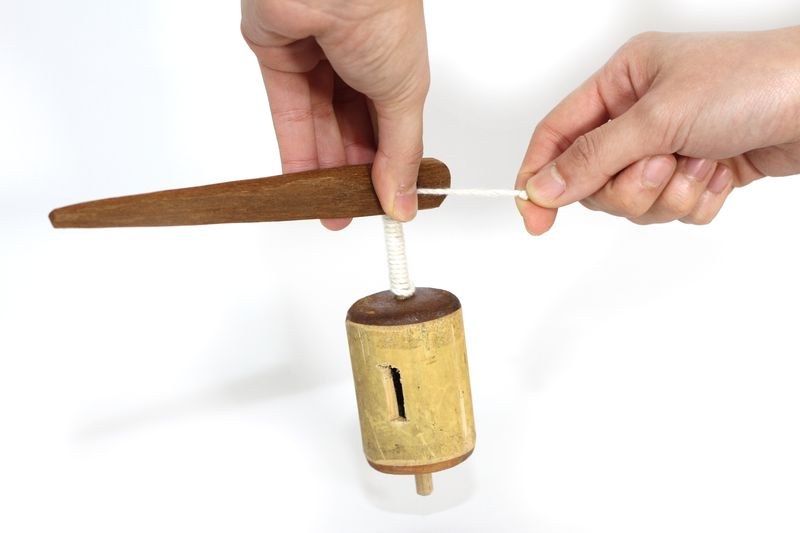
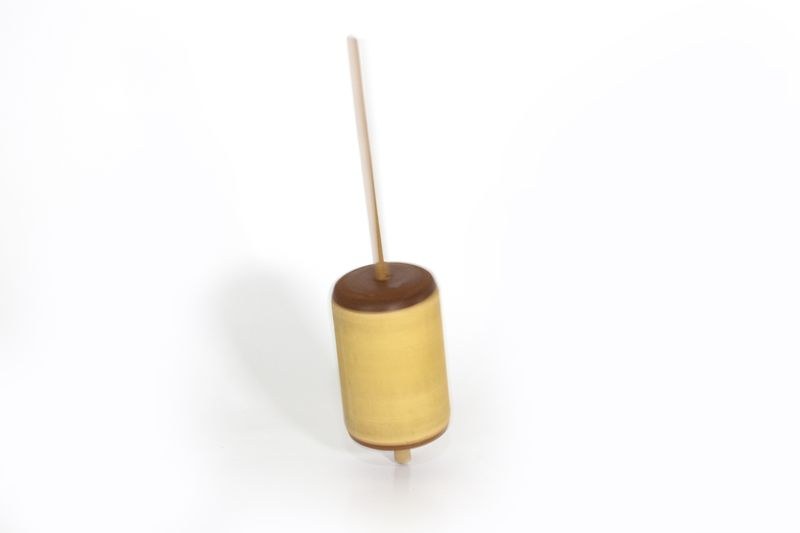
Photos of a real luk khang wo (Sirindhorn Anthropology Centre, author not named, CC BY 4.0)
8
8
How to play
How to play
Wind the string clockwise round the spindle in neat turns, leaving about a hand-span free, and thread the end through the hole in the launcher. Pull the string with one hand while pushing the stick away with the other, hard and fast together; the top drops to the ground and spins, humming "wo".
9
9
Troubleshooting
Troubleshooting
Troubleshooting the luk khang wo.
Flow
Loading...
10
10
History and limits
History and limits
Northern tung poles had long slots cut along the bamboo internodes, slanting in like a wedge, not aligned from one internode to the next, so they hummed whichever way the wind blew; the luk khang wo came from making these tung poles. Take care with the knife when paring and shaving.
Source: Sirindhorn Anthropology Centre, Traditional Objects of Everyday Use database, "ลูกข่างโว้", author not named (CC BY 4.0 licence).
**Limits** The source does not name the wood for the end boards or the launcher.
Related Blueprints
These blueprints share knowledge with this one — techniques, materials, or principles that connect them in the learning graph.
CC0 Public Domain
This blueprint is released under CC0. You are free to copy, modify, distribute, and use this work for any purpose, without asking permission.
Support the Maker by purchasing products through their Blueprint where they earn a Maker Commission set by Vendors, or create a new iteration of this Blueprint and include it as a connection in your own Blueprint to share revenue.