ART
BEAUTY & WELLNESS
CRAFT
CULTURE & HISTORY
ENTERTAINMENT
ENVIRONMENT
FOOD & DRINKS
REVERSE ENGINEERING
SCIENCES
SPORTS
TECHNOLOGY
WEARABLES
Translated

คราด (khrat) — a Hardwood Beam, 10-15 Pointed Teeth and Bamboo Shafts, Raking Ploughed Soil Fine
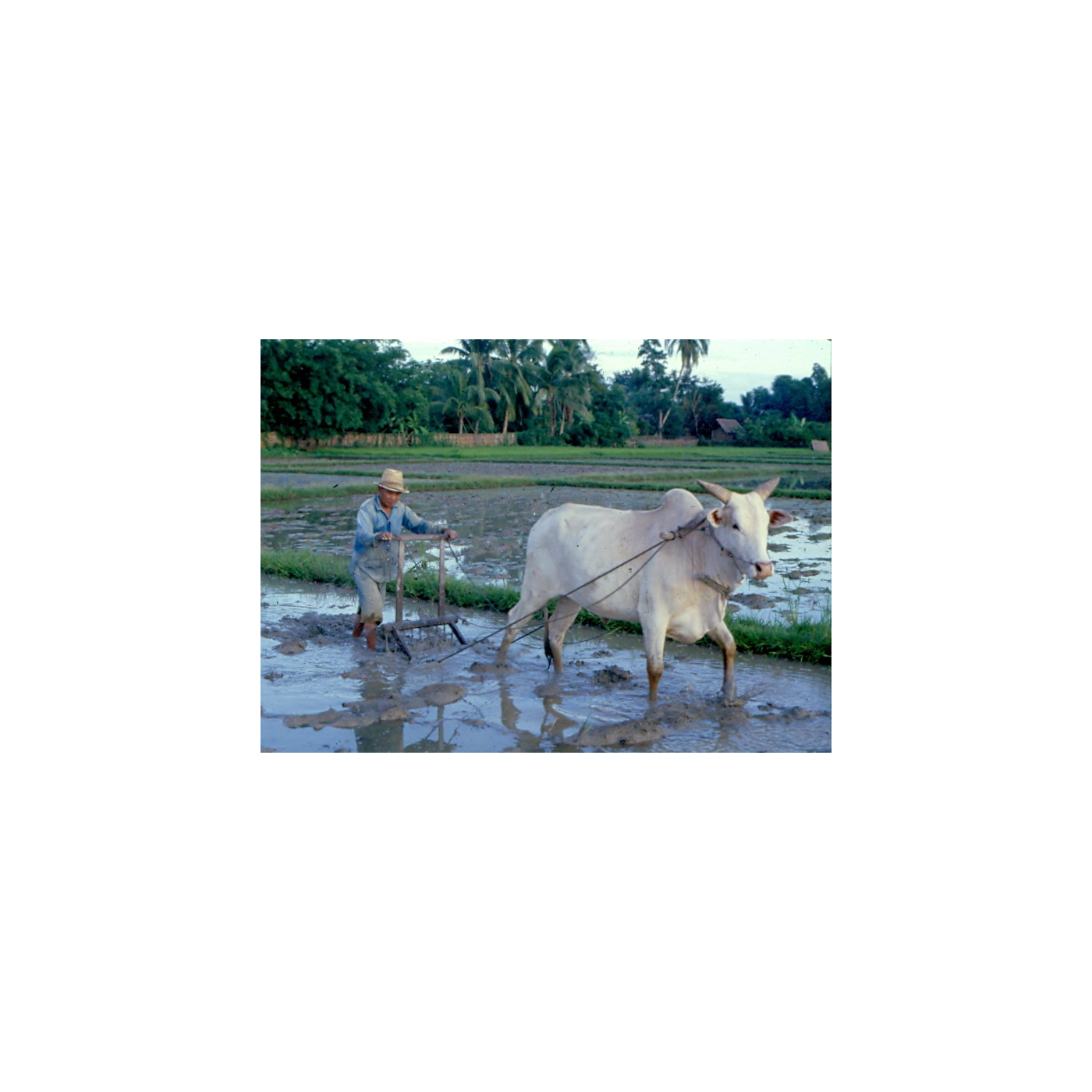
คราด (khrat) is a rice-farming tool dragged over ploughed soil to break the clods fine before planting rice or sowing paddy. It is made of the beam (mae khrat), the teeth (luk khrat), the handle (mue khrat) and the shafts (khan khrat).
This blueprint builds a real khrat from hardwood and bamboo, to the sizes in the source.
Beginner
About 2-3 days
Instructions
1
1
Real sizes
Real sizes
Loading Jupyter Notebook...
2
2
Field work before it
Field work before it
The harrow prepares the soil before planting; the khan lao carries the sheaves after the harvest.
3
3
Read from the source
Read from the source
"The teeth are shaved into spikes about 30 centimetres long, thick at the base and tapering to a point where they scrape the soil; the base of each tooth is driven into a hole drilled in the beam; the holes are dressed square with a chisel, and the base of each tooth is hewn square too." (Sirindhorn Anthropology Centre, author สนม ครุฑเมือง (Sanom Khrutmueang), CC BY 4.0)
4
4
The beam
The beam
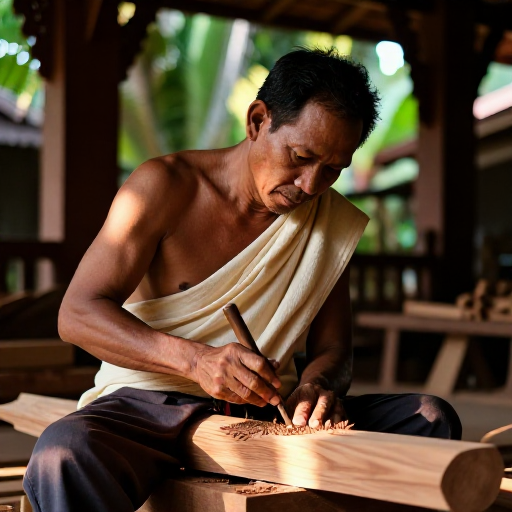
Use a hardwood board such as mai daeng, pradu or teng and plane it smooth. Bore 10-15 holes through to the top, well spaced, and square them with a chisel. Bore two more holes for the handle posts and two for the shafts.
Materials for this step:
 Teak Lumber1 piece
Tools needed:
 Hand Plane
 Auger
Auger Chisel Set - Wood
 Wooden Mallet
5
5
The teeth
The teeth
Shave wood into spikes about 30 cm long, thick at the base and tapering to a point. Hew the base square and drive it into a hole of the beam; if it is loose, drive in a wedge.
Materials for this step:
 Hardwood Block1 piece
Tools needed:
 Adze
Adze Knife
Knife6
6
Handle and shafts
Handle and shafts
Tenon two posts into a handle almost as long as the beam, and round the handle. Put the base ends of two bamboos 3-5 metres long into their holes in the beam, wedge them tight, and join their tips together in a pennant shape.
Materials for this step:
 Hardwood Dowels1 piece
 Bamboo Poles1 piece
Tools needed:
 Hand Saw
7
7
Real photos
Real photos
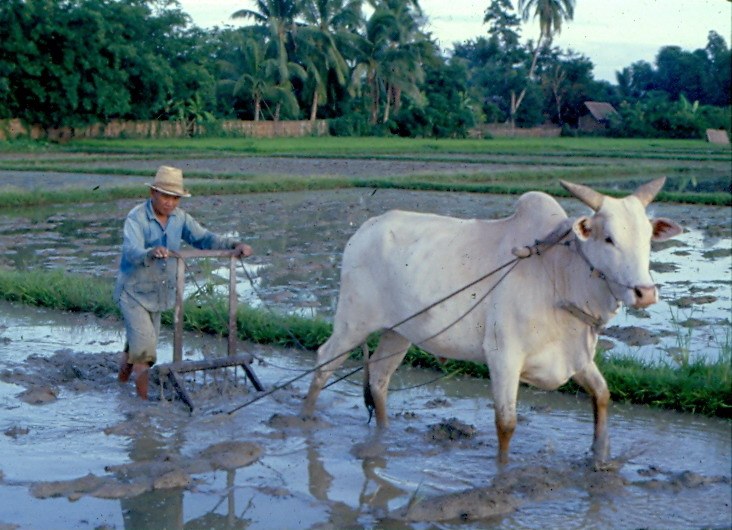
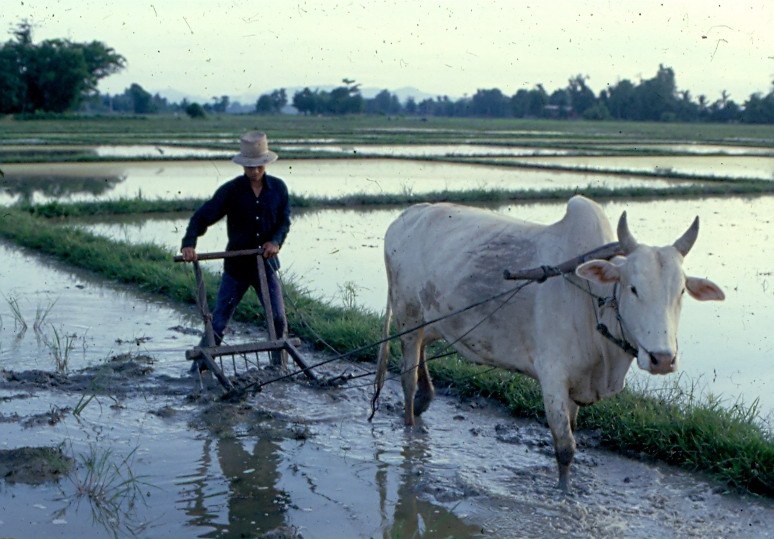
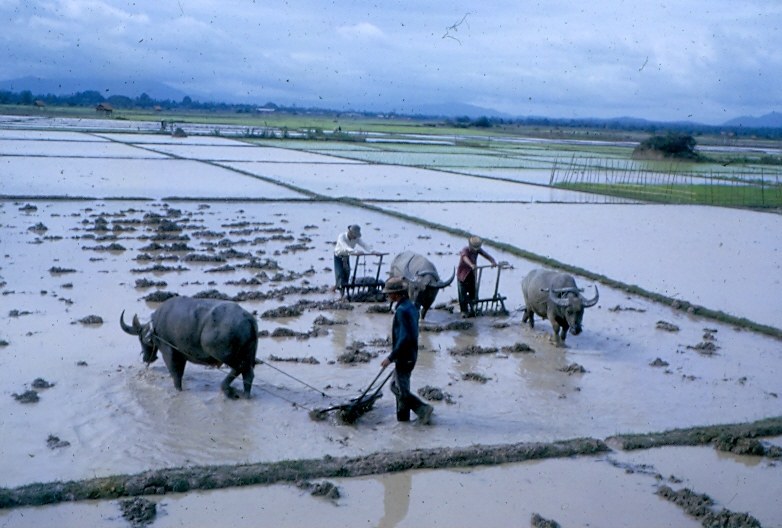
Real photos of a คราด (khrat) (Sirindhorn Anthropology Centre, author สนม ครุฑเมือง (Sanom Khrutmueang), CC BY 4.0)
8
8
How to use the khrat
How to use the khrat
Tie a rawhide rope (nang hua khrat) or a thick rope to the tip of the shafts and lash it to the middle of the yoke of an ox or buffalo. Let the teeth scrape the ploughed soil loose and crumbly. To scrape deeper, press down on the handle or stand on the beam. The khrat can also level the ground.
Materials for this step:
 Rawhide1 piece
9
9
Troubleshooting
Troubleshooting
Troubleshooting the khrat.
Flow
Loading...
10
10
History and limits
History and limits
A khrat for one ox or buffalo is small with few teeth; for two it is longer with more teeth. In some places iron is used for the teeth instead of wood. Today iron harrows and walking tractors are used instead.
Source: Sirindhorn Anthropology Centre, Traditional Objects of Everyday Use database, "คราด" (CC BY 4.0 licence).
**Limits** The source gives neither the spacing of the teeth nor the size of the handle.
Materials
5- Teak Lumber10% commission1 piecePlaceholder
- 1 piecePlaceholder
- 1 piecePlaceholder
- 1 piecePlaceholder
- 1 piecePlaceholder
Related Blueprints
These blueprints share knowledge with this one — techniques, materials, or principles that connect them in the learning graph.
CC0 Public Domain
This blueprint is released under CC0. You are free to copy, modify, distribute, and use this work for any purpose, without asking permission.
Support the Maker by purchasing products through their Blueprint where they earn a Maker Commission set by Vendors, or create a new iteration of this Blueprint and include it as a connection in your own Blueprint to share revenue.