ART
BEAUTY & WELLNESS
CRAFT
CULTURE & HISTORY
ENTERTAINMENT
ENVIRONMENT
FOOD & DRINKS
REVERSE ENGINEERING
SCIENCES
SPORTS
TECHNOLOGY
WEARABLES
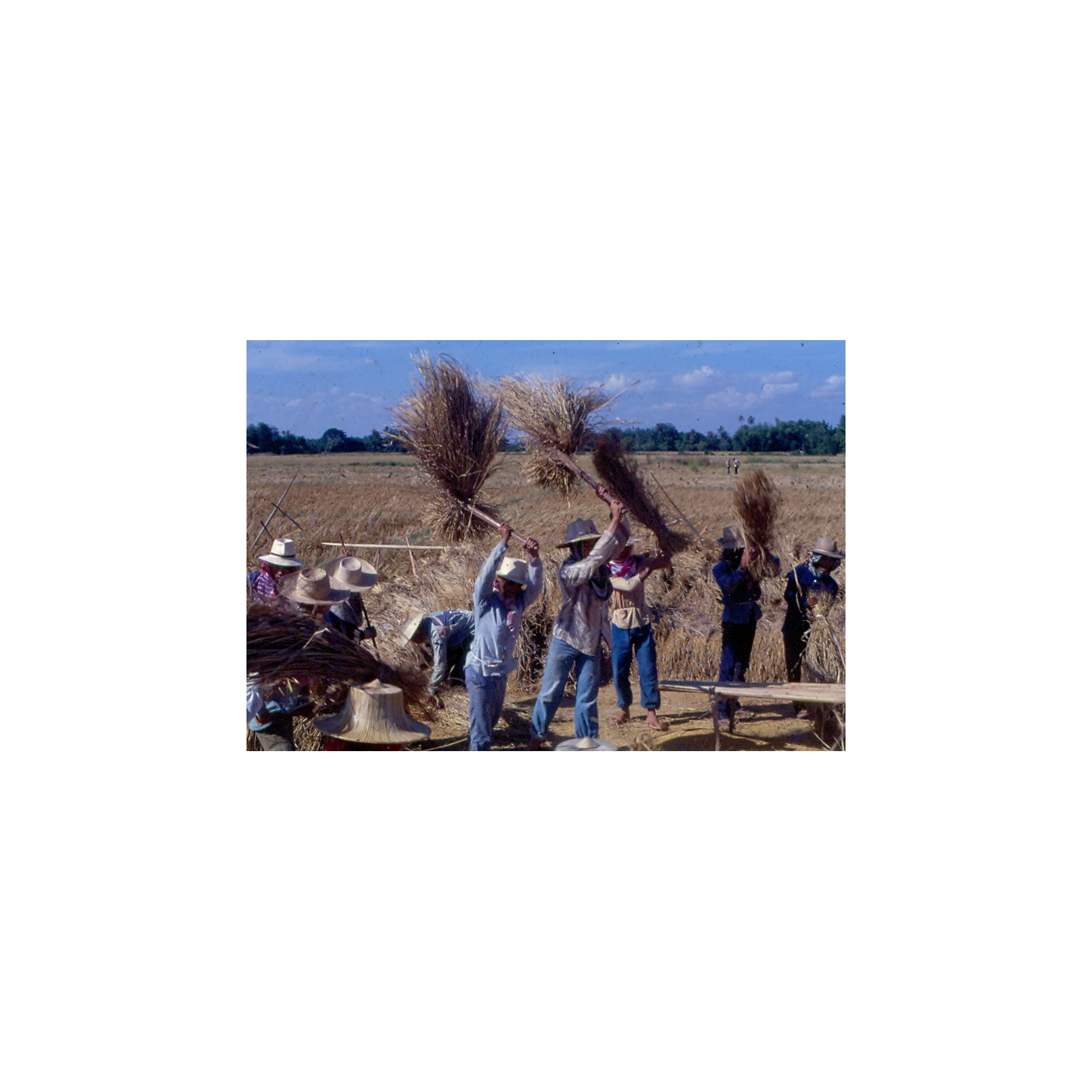
Translated
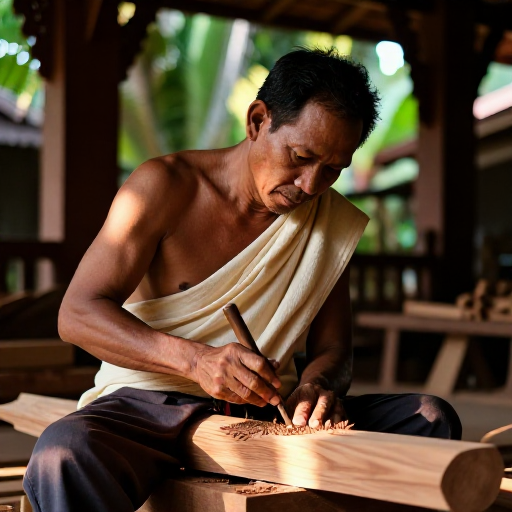

Mai Nuat Khao (Rice-Threshing Sticks) — Two Sticks and a Cord Grip the Sheaf, Then Beat the Grain from the Ears
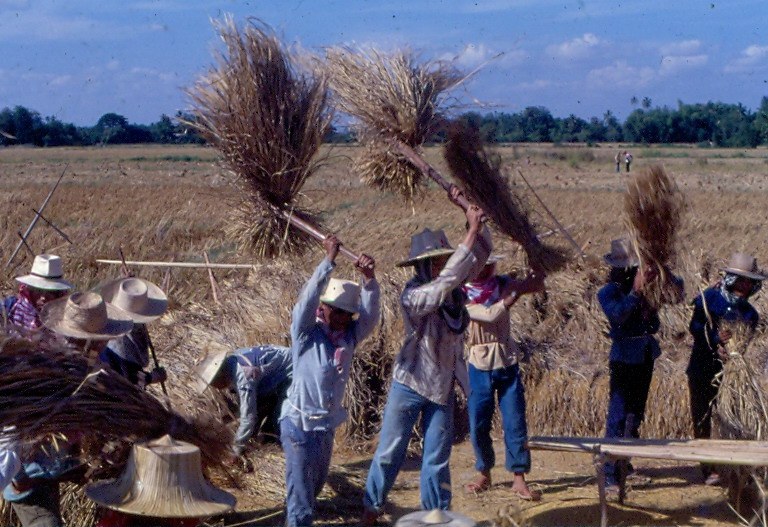
ไม้นวดข้าว (mai nuat khao), in some places called mai ti khao, mai thup khao, mai nip or mai hip, is a farmer's tool for gripping a sheaf of rice so that the ears tied in the sheaf can be beaten or struck until the grains fly out of them. It is made of two sticks joined by a cord.
This blueprint makes one pair of threshing sticks following the source.
Beginner
About 1 hour
Instructions
1
1
Length of the cord
Length of the cord
Loading Jupyter Notebook...
2
2
The next step for the rice
The next step for the rice
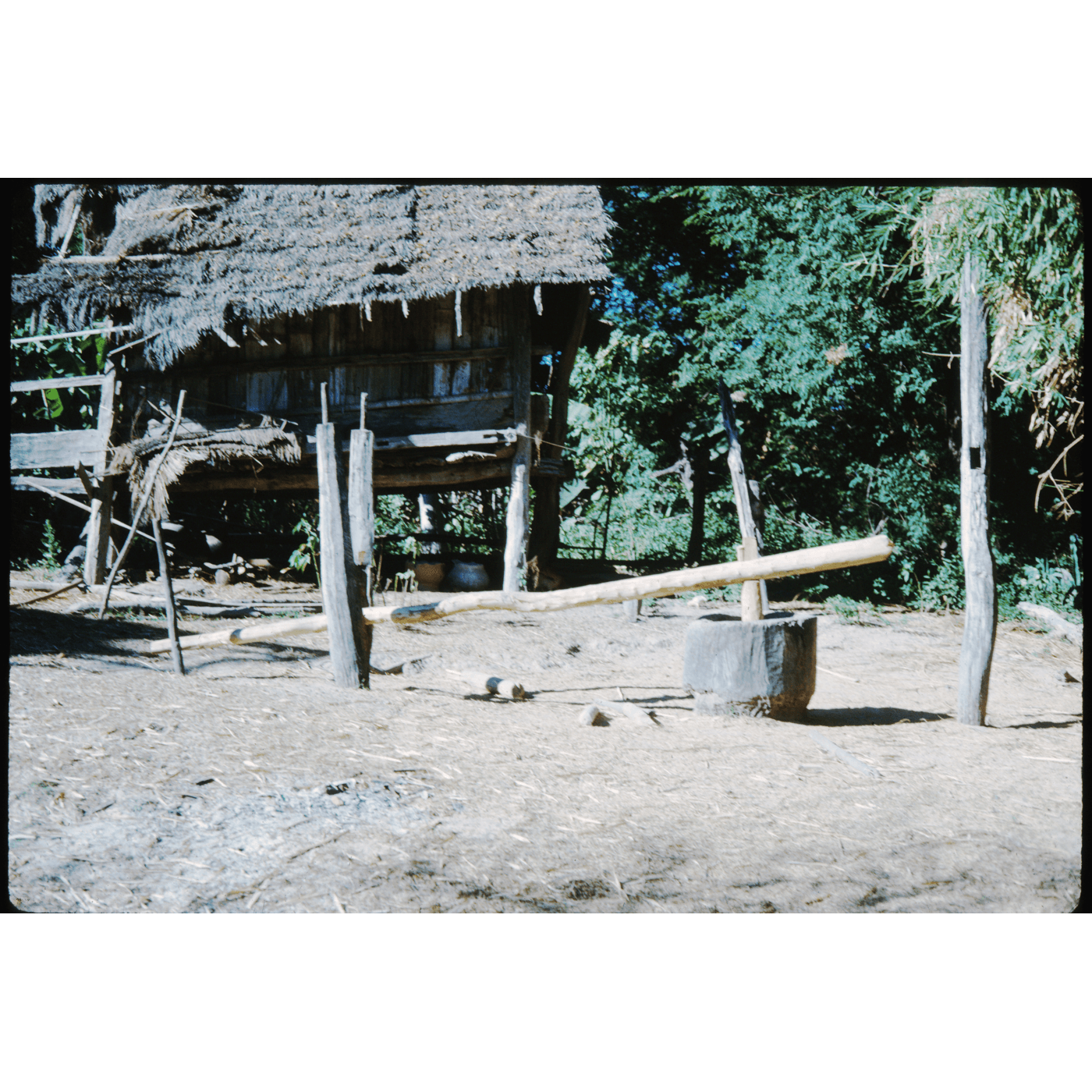
The threshing sticks free the paddy grains from the ears; the krok kradueang pounds the paddy into milled rice.
3
3
Read from the source
Read from the source
"To use the threshing sticks, the farmer holds both sticks, loops the cord round the sheaf at the part where the sheaf is tied, then crosses the sticks so that they bind against each other to grip the sheaf tight, and then lifts the sheaf and beats it against a log laid down until the paddy grains fall from the ears." (Sirindhorn Anthropology Centre, author พิชชา ทองขลิบ (Phitcha Thongkhlip), CC BY 4.0)
4
4
Choose the wood
Choose the wood
Use dense, fully mature bamboo with short internodes and a small stem, a size that fits the hand and can be gripped all round, or another wood such as pradu, mai daeng, chingchan or teak.
Materials for this step:
 Bamboo Rod2 pieces
5
5
Cut and shave
Cut and shave
Cut 2 sticks about 50 centimetres long and 3 centimetres across and shave them smooth. If you use timber, plane it and then rub it smooth.
Tools needed:
 Hand Saw
 Knife
Knife Sandpaper
6
6
Drill and thread the cord
Drill and thread the cord
Drill a hole near the end of each stick. Thread a leather cord, or a cord about 50 centimetres long, or about as long as the sheaf's girth, through the holes of both sticks, and tie a knot at each end of the cord.
Materials for this step:
 Leather Strip1 piece
Tools needed:
 Hand Drill
7
7
Real photos
Real photos
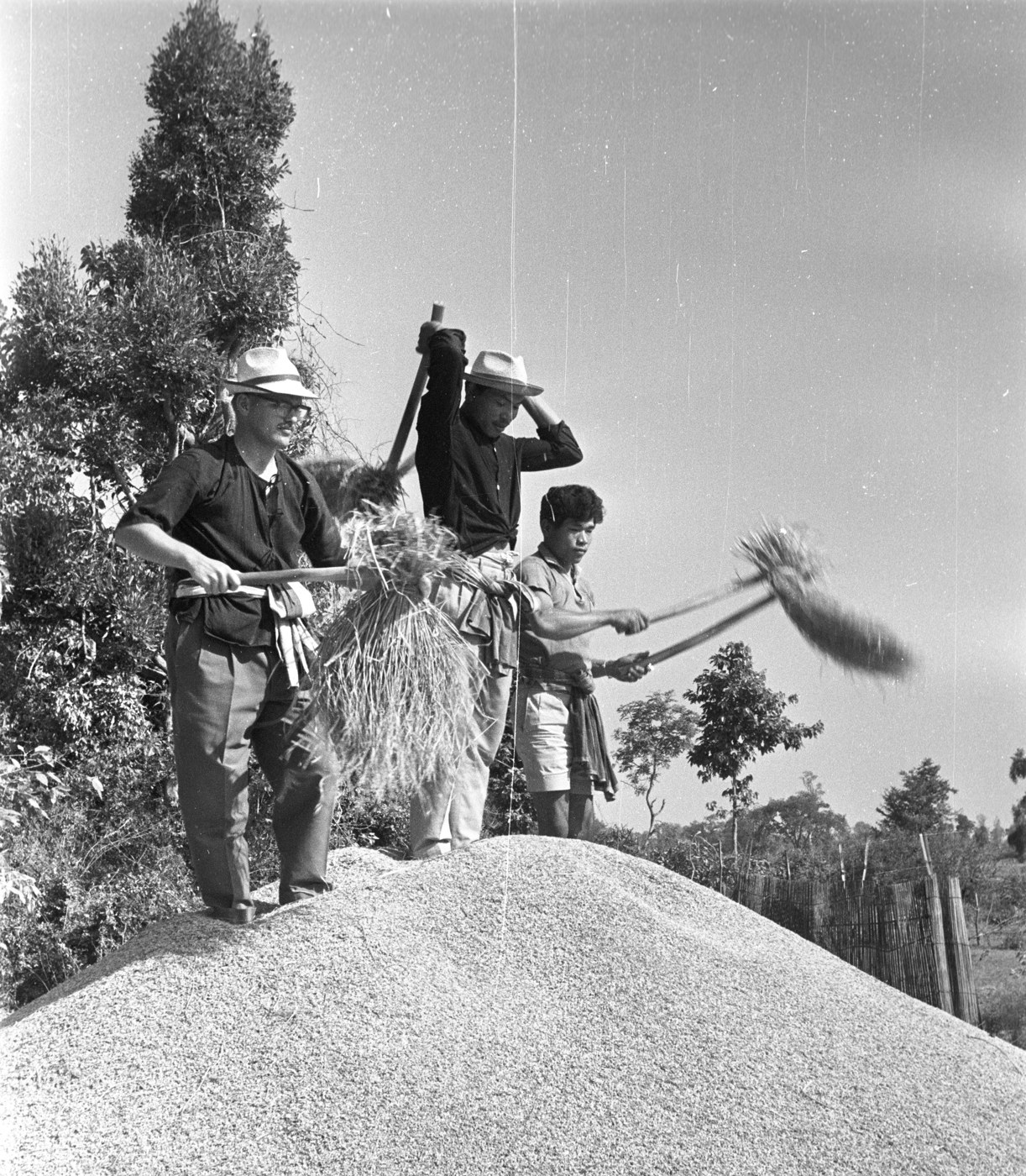
Real photos of a ไม้ตีข้าว (mai ti khao) (Sirindhorn Anthropology Centre, author พิชชา ทองขลิบ (Phitcha Thongkhlip), CC BY 4.0)
8
8
How to use
How to use
Loop the cord round the sheaf at the part where the sheaf is tied, cross the two sticks so that they bind against each other to grip the sheaf tight, then lift the sheaf and beat it against a log laid on the threshing floor, on a mat or on a wide tarpaulin spread on the ground, until the paddy grains fall from the ears.
9
9
Troubleshooting
Troubleshooting
Troubleshooting the threshing sticks.
Flow
Loading...
10
10
History and limits
History and limits
A similar tool, the mai khuang, is used to beat the pods of mung beans, soybeans and black beans. Threshing sticks are now little used, because walking tractors, tractors and threshing machines have replaced them.
Source: Sirindhorn Anthropology Centre, database of traditional everyday objects, "ไม้นวดข้าว", author พิชชา ทองขลิบ (licence CC BY 4.0), citing สนม ครุฑเมือง (Sanom Khrutmueang) (2531 BE) and วิบูลย์ ลี้สุวรรณ (Wibun Lisuwan) (2532 BE).
**Limits.** The source gives both the stick length and the distance of the hole from the end as "about 50 centimetres", so this blueprint gives no exact hole position; drill near the end.
Materials
2- 2 piecesPlaceholder
- 1 piecePlaceholder
Related Blueprints
These blueprints share knowledge with this one — techniques, materials, or principles that connect them in the learning graph.


CC0 Public Domain
This blueprint is released under CC0. You are free to copy, modify, distribute, and use this work for any purpose, without asking permission.
Support the Maker by purchasing products through their Blueprint where they earn a Maker Commission set by Vendors, or create a new iteration of this Blueprint and include it as a connection in your own Blueprint to share revenue.