ART
BEAUTY & WELLNESS
CRAFT
CULTURE & HISTORY
ENTERTAINMENT
ENVIRONMENT
FOOD & DRINKS
REVERSE ENGINEERING
SCIENCES
SPORTS
TECHNOLOGY
WEARABLES
English

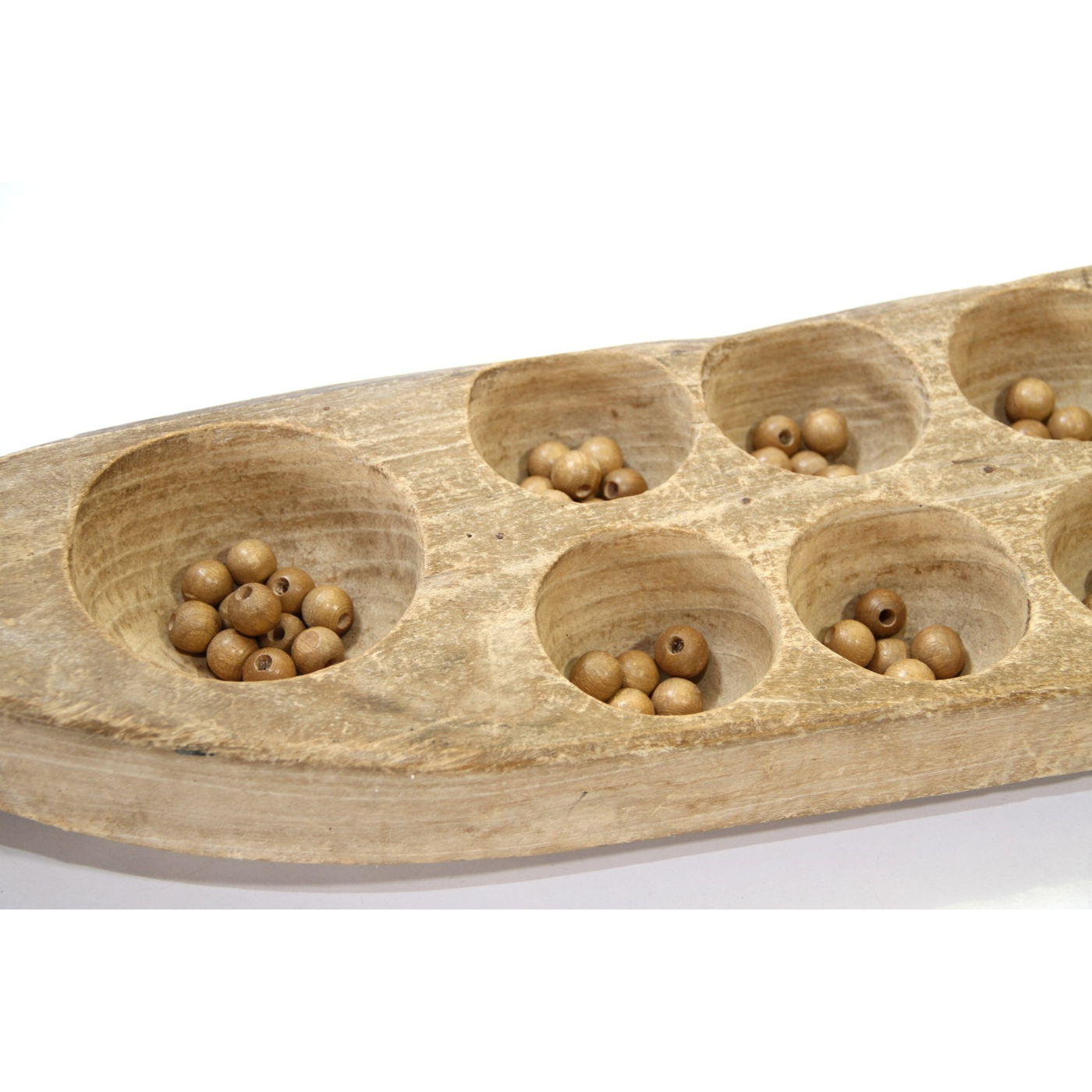
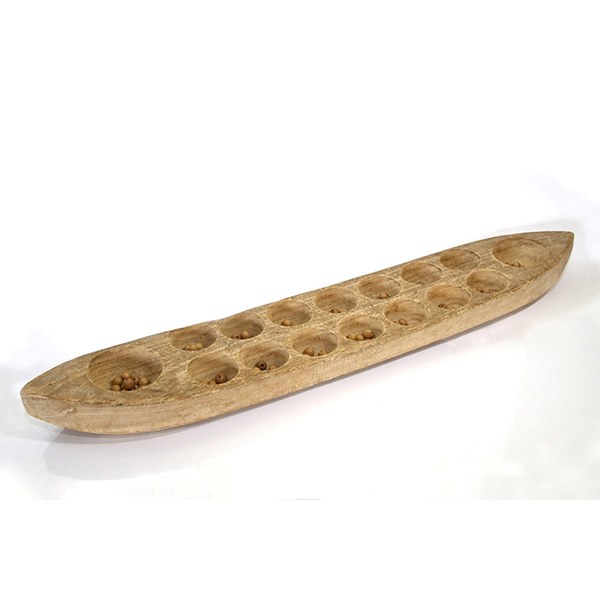
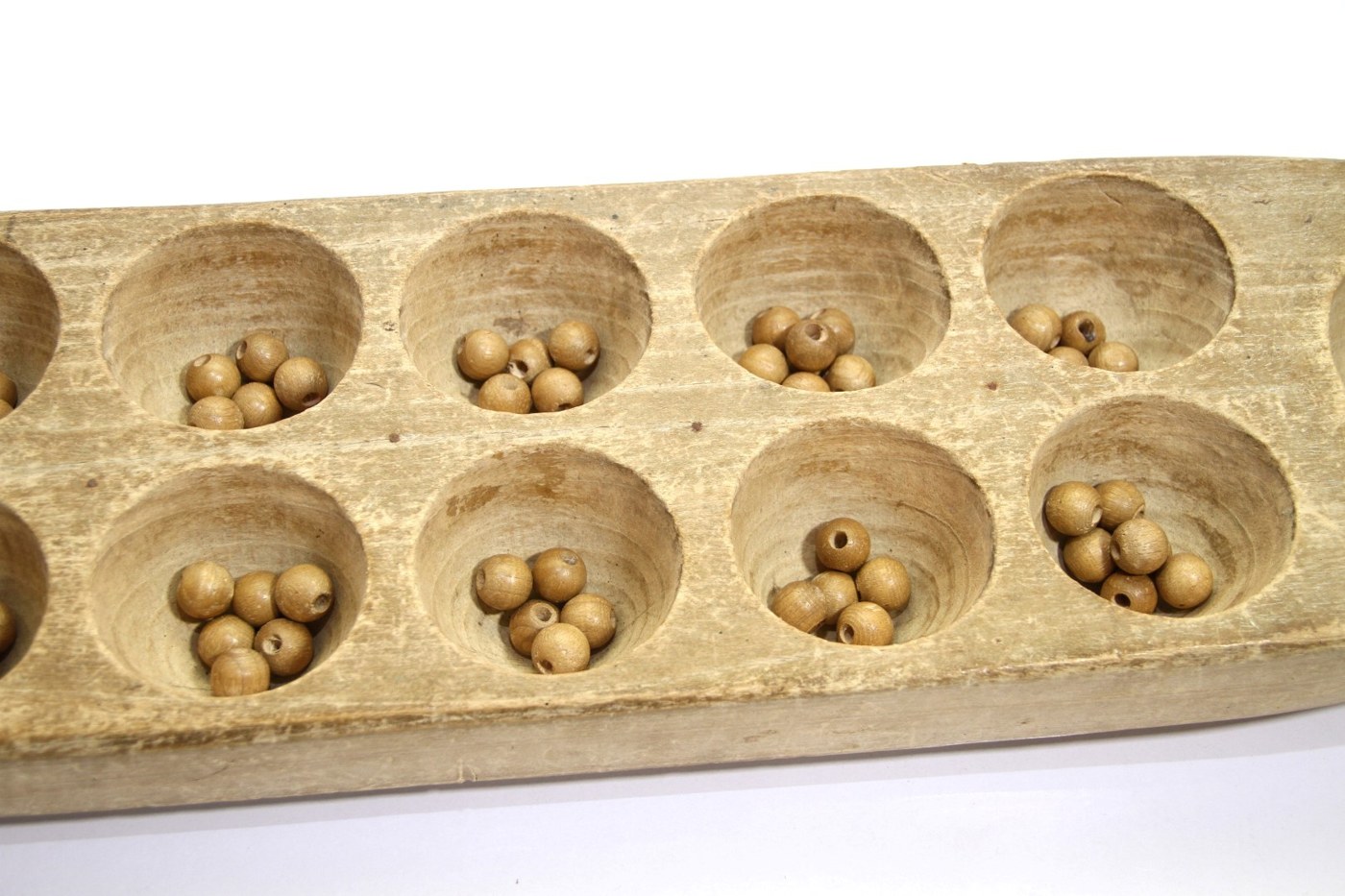
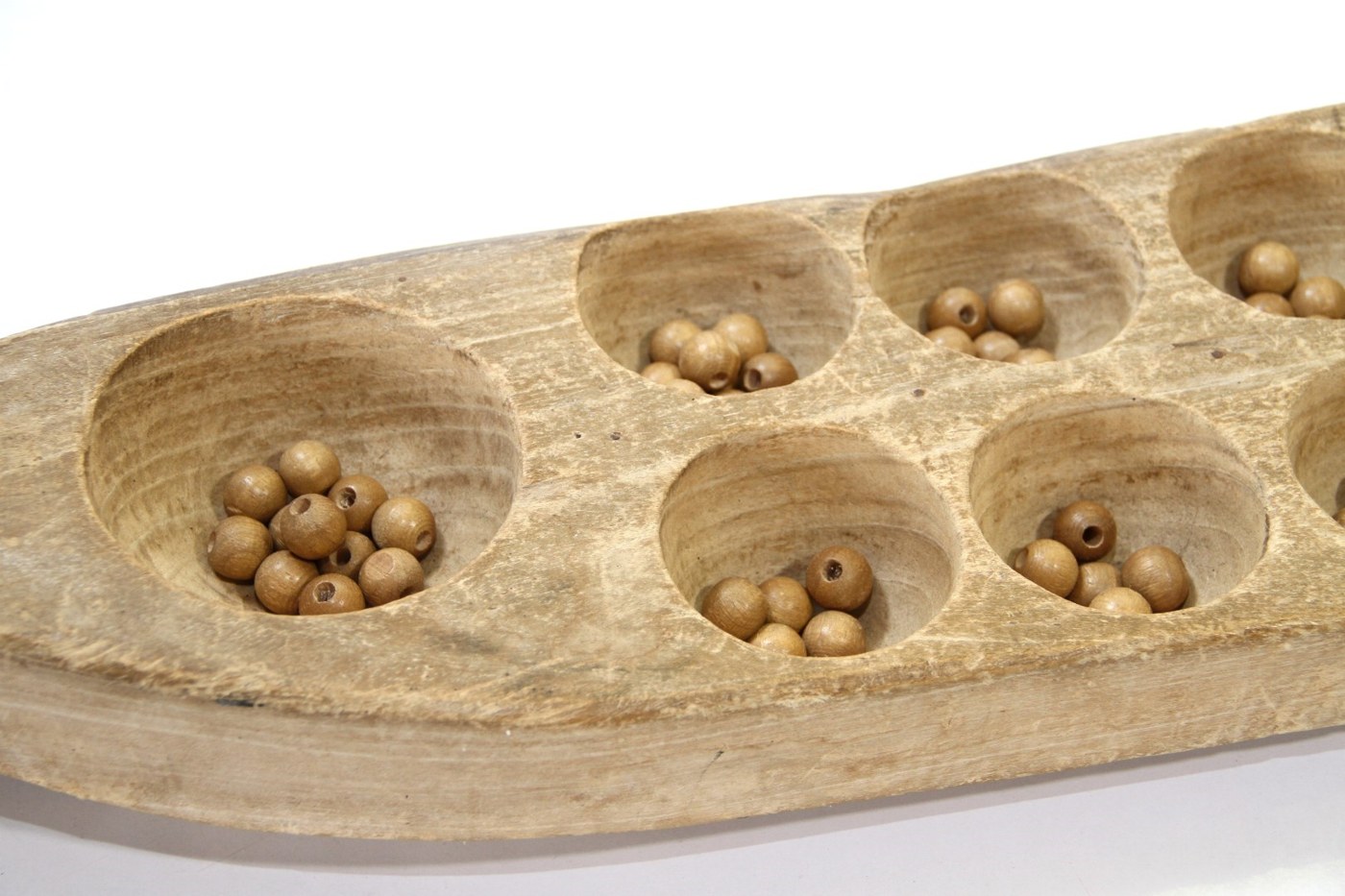
Mak Khum (Thai Mancala Board) — a 90 cm Boat-Shaped Wooden Trough, Two Rows of 7 Pits 8-9 cm Across and 4-5 cm Deep, a 10-13 cm Home Pit at Each End; 7 Counters per Pit
หมากขุม (mak khum) is a pastime for children and adults, mostly played by women, that trains calculation and planning. The game is widespread from Africa to India, Sri Lanka, Thailand, Malaysia, Indonesia and the Philippines.
This blueprint makes a real mak khum board to the sizes in the source.
Intermediate
About 1-2 days
Instructions
1
1
Real sizes
Real sizes
Loading Jupyter Notebook...
2
2
Pit-and-counter boards, before it
Pit-and-counter boards, before it
Pit games are played from Africa to Asia; the Thai mak khum uses a boat-shaped trough with 2 rows of 7 pits and a home pit at each end.
3
3
Read from the source
Read from the source
"The top is hollowed into pits of equal size in 2 rows, round pits like the moulds of a khanom khrok pan." (Sirindhorn Anthropology Centre, author not named, CC BY 4.0)
4
4
Trough
Trough
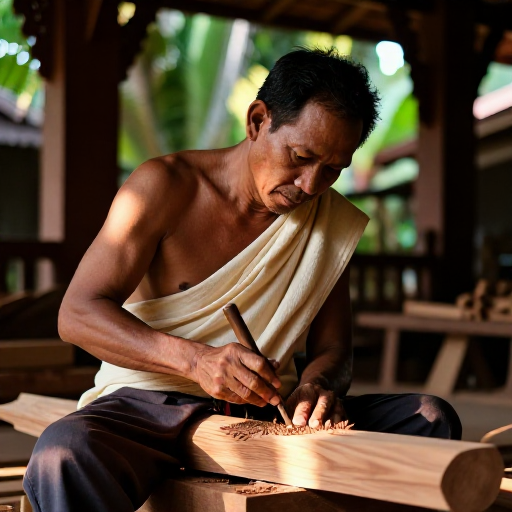
Use kapok, thong lang (coral tree) or jackfruit wood, shaped like a boat, about 90 cm long and about 10-13 cm high.
Tools needed:
 Knife
Knife5
5
Pits
Pits
Hollow out round pits of equal size, like khanom khrok moulds, in 2 rows of 7, about 8-9 cm across and 4-5 cm deep. At each end hollow one larger pit, about 10-13 cm across, round or triangular, called mae roen (mae ruean), hua mae roen or hua mueang.
Materials for this step:
 Sandpaper1 piece
Tools needed:
 Chisel Set - Wood
6
6
Counters
Counters
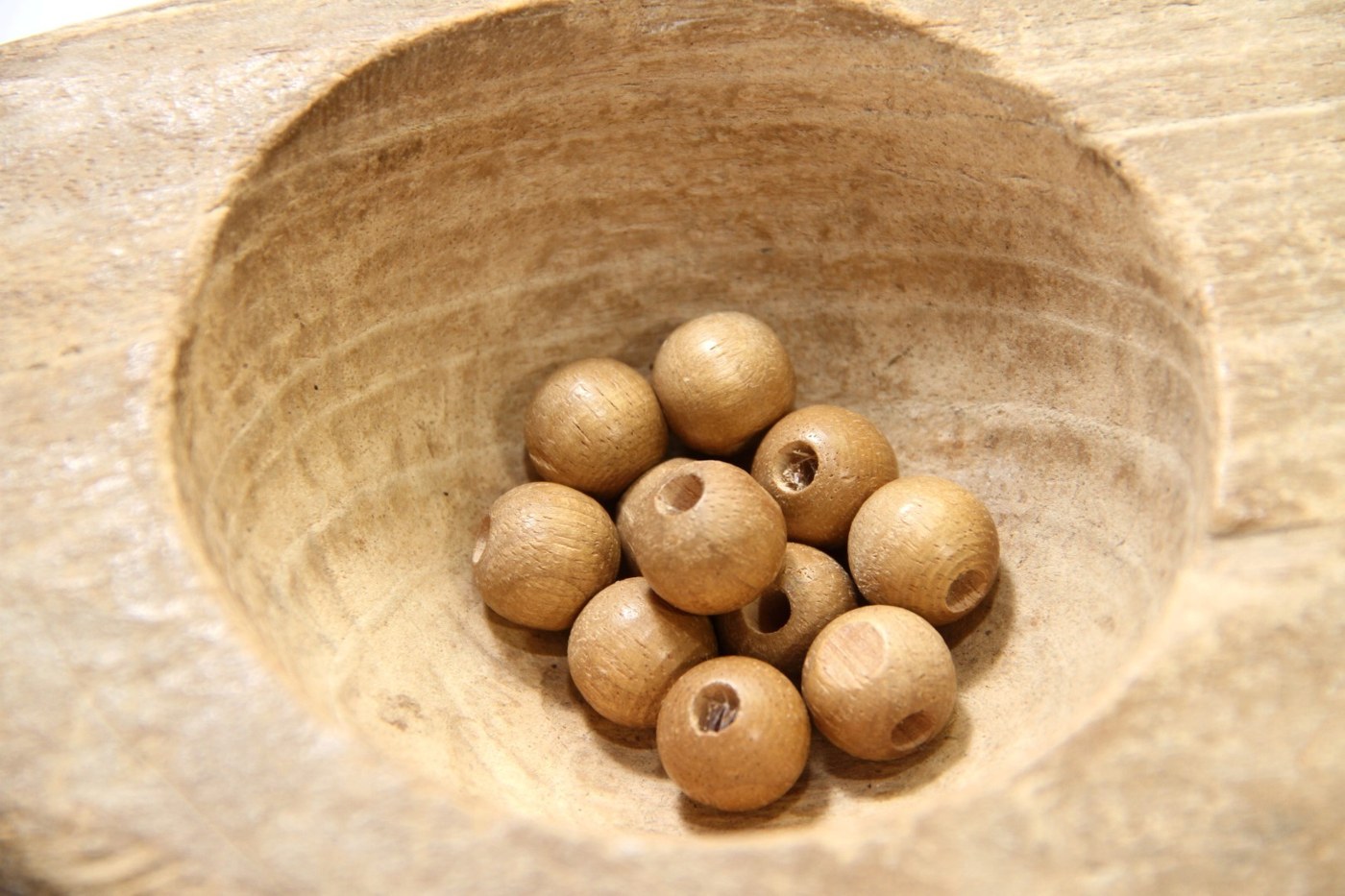
Sawat seeds are preferred: oval, hard-shelled, pale grey, light and durable; ripe tamarind seeds also serve. Dried clay balls are not favoured because they do not last and soil the hands. Today glass marbles are usually used.
Materials for this step:
 Glass Marbles1 piece
7
7
Real photos
Real photos
Photos of a real mak khum (the counters shown are wooden beads) (Sirindhorn Anthropology Centre, author not named, CC BY 4.0)
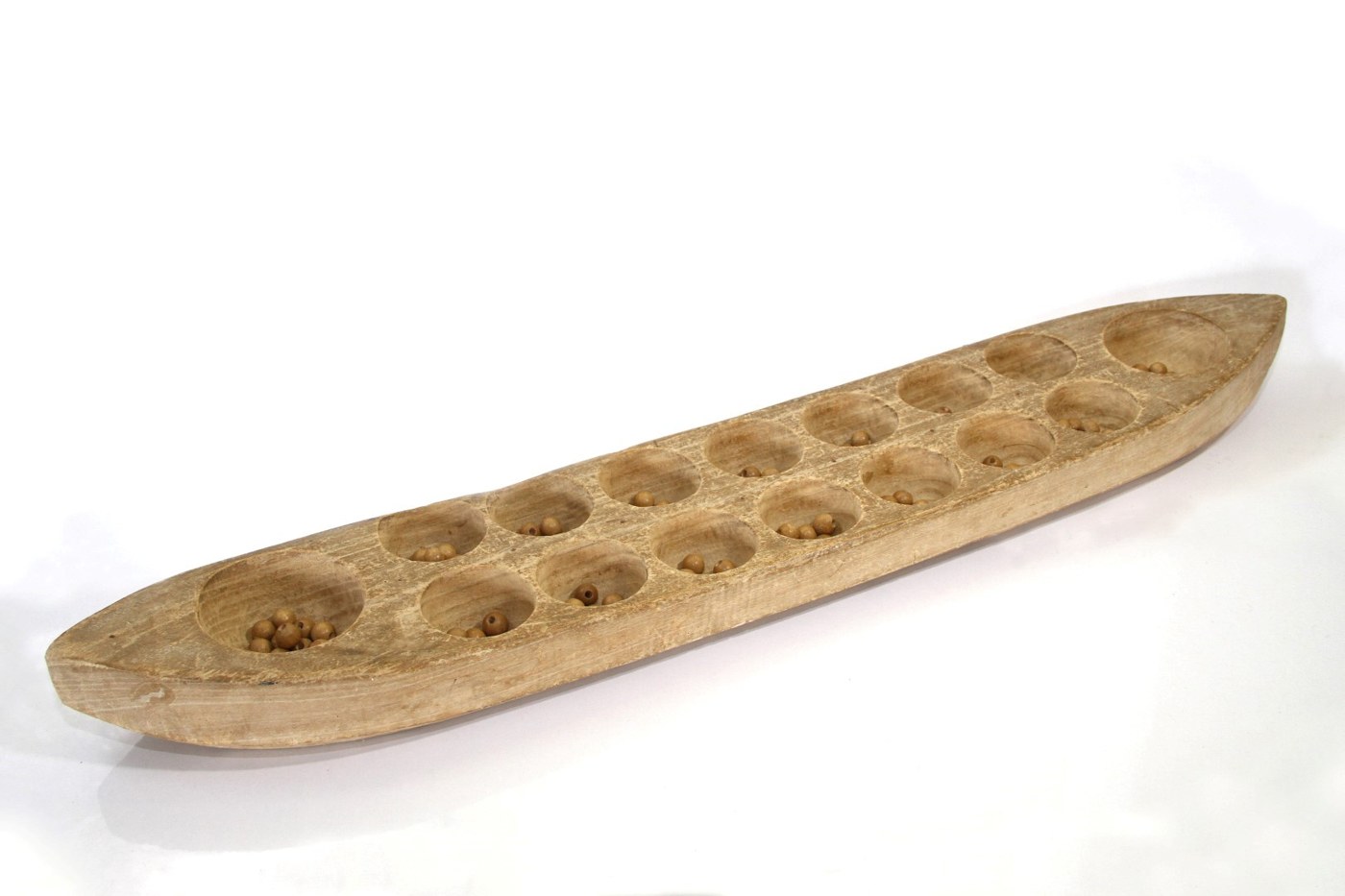
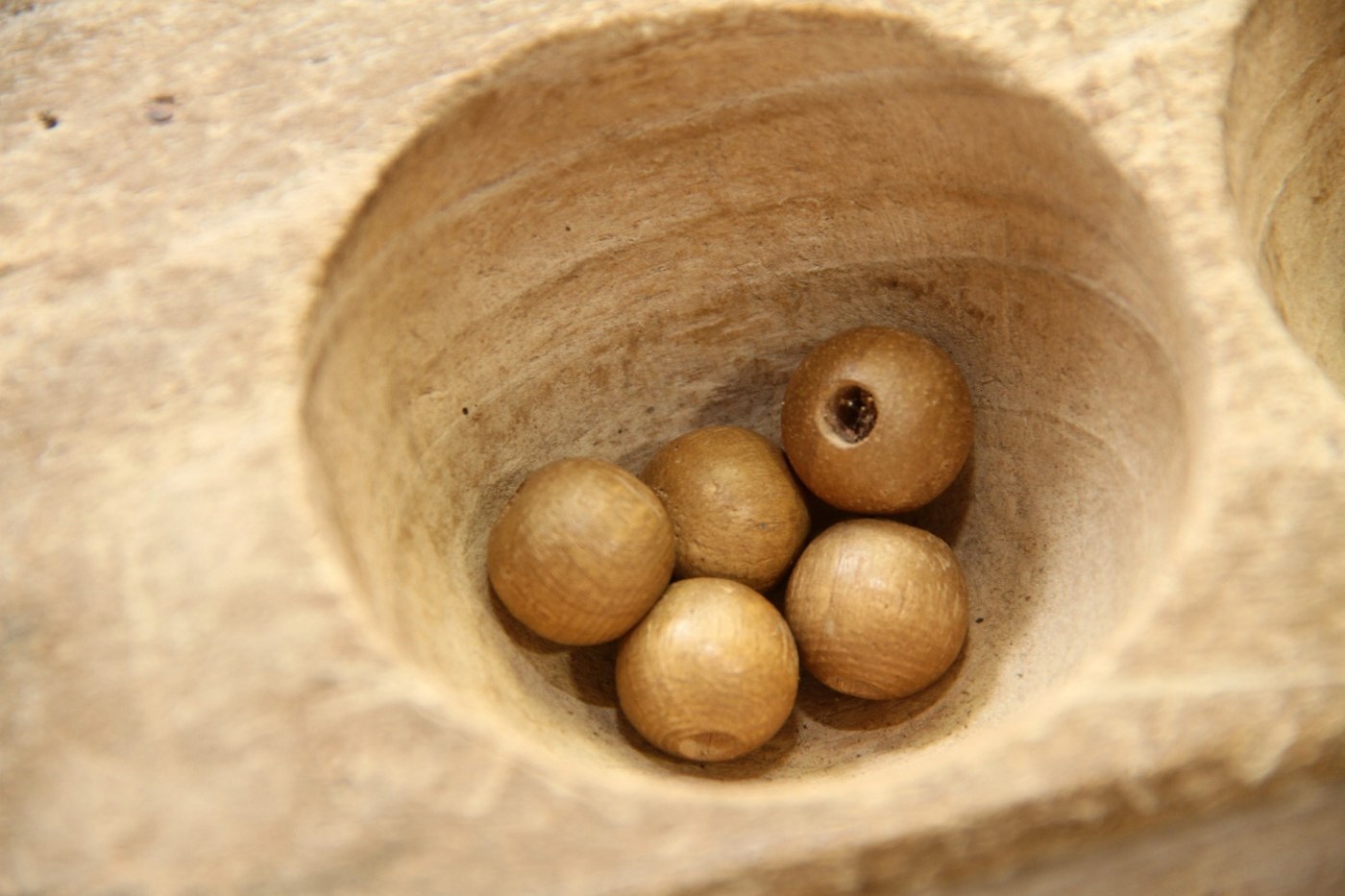
8
8
How to play
How to play
Two players sit on either side and put 7 counters in each of their 7 pits, leaving the home pits empty. In the first round both move at once (khaeng mueang), taking counters from one of their own pits and sowing right to left, one per pit, including their own home pit but skipping the opponent's. When the last counter lands in a pit with counters, take them all and keep sowing; landing in an empty pit means the move dies. Dying on your own side captures the opposite pit into your home pit (kin thaen). In later rounds players move in turn; a pit with no counters is a mueang mai (widowed town), and whoever has more of them loses.
9
9
Troubleshooting
Troubleshooting
Troubleshooting the mak khum.
Flow
Loading...
10
10
History and limits
History and limits
The game has different names in different countries: in the Philippines sunga, and among Malays congkak. Take care with the chisel and knife when hollowing the pits.
Source: Sirindhorn Anthropology Centre, Traditional Objects of Everyday Use database, "หมากขุม", author not named (CC BY 4.0 licence).
**Limits** There is no product line for kapok, thong lang or jackfruit wood. The materials list names softwood, a knife, a chisel, sandpaper and glass marbles.
Related Blueprints
These blueprints share knowledge with this one — techniques, materials, or principles that connect them in the learning graph.

CC0 Public Domain
This blueprint is released under CC0. You are free to copy, modify, distribute, and use this work for any purpose, without asking permission.
Support the Maker by purchasing products through their Blueprint where they earn a Maker Commission set by Vendors, or create a new iteration of this Blueprint and include it as a connection in your own Blueprint to share revenue.